
How Dew Point Affects Roof Performance
Posted 1.23.2026 | 5 Minute Read

If you’ve noticed mysterious water stains, high energy bills, or musty odors in your upper floors, you might be dealing with a dew point problem that’s silently damaging your roof. As South Florida’s trusted roofing experts, we see these issues daily—and understanding dew point roofing can save you thousands in repairs.
What Is Dew Point and Why Should You Care About It?
Think of dew point as the temperature where water vapor transforms into liquid droplets, like morning dew on your windshield. When this happens inside your roof system, it creates hidden damage that compounds over time.
In South Florida, our air holds a lot of moisture, and dew points are often 70–75°F. Your air conditioner cools the roof and attic surfaces below that temperature, so when humid outdoor air gets inside, water instantly forms on those cool surfaces, even on sunny days. This hidden moisture can soak insulation, rot wood, grow mold, and reduce energy efficiency, driving up cooling costs and leading to serious repairs if left unchecked.
How Does Dew Point Condensation Damage Different Roofing Materials?
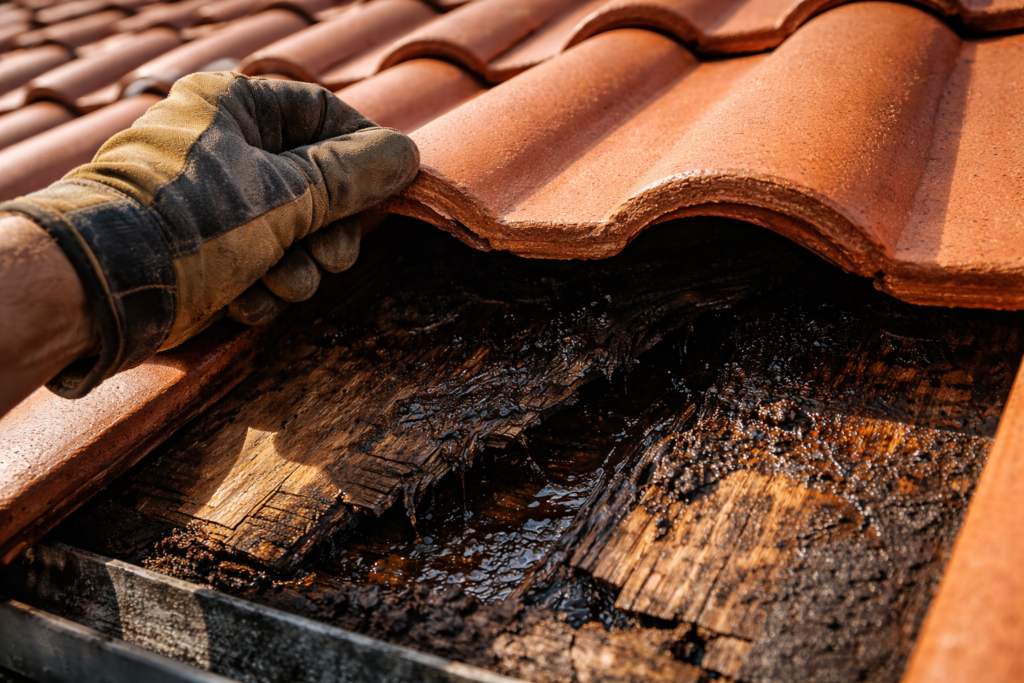
Each material responds differently to moisture, and understanding these differences helps you recognize potential problems and make informed decisions about maintenance and repairs.
Tile Roofs handle moisture well, but problems occur underneath. When humid air contacts the cooler roof deck, condensation forms on wood sheathing. We’ve seen hidden moisture cause severe wood rot requiring complete roof deck replacement costing $15,000-25,000. Clay tiles help by absorbing up to 6% of their volume in moisture, then releasing it. Concrete tiles absorb 12-13%, making them more susceptible to harboring dampness that encourages mold growth.
Metal roofing responds instantly to temperature changes, making it vulnerable to dew point and roofing condensation. Even during summer, your metal roof can cool below the dew point within minutes, causing immediate underside condensation.
Pro Tip: Specialized products like Drip Stop membranes catch condensation until temperatures allow evaporation.
Flat and Low-Slope Commercial Roofs face the greatest dew point roofing challenges due to minimal natural ventilation. TPO membranes act as vapor barriers, trapping any moisture inside. White reflective membranes can increase condensation risk by staying cooler longer.
What Warning Signs Should You Watch For?
In Your Attic or Roof Space, early warning signs include frost on roof sheathing undersides during cooler months, water droplets on metal components, wet insulation that never fully dries, dark stains on wooden beams, musty ceiling-area smells, and rust on metal fasteners. Whereas, inside Your Home unexplained AC bill increases often signal moisture-compromised roof insulation. Watch for doors that don’t close due to swelling, peeling upper-floor ceiling paint, and persistent top-floor musty odors.
Key Difference: Condensation problems appear during clear weather and temperature changes, not just during storms.
To properly differentiate between a condensation issue and a traditional roof leak, you should take note of the following
| Condensation Issues | Traditional Roof Leaks |
| Appear during temperature swings | Appear during/after rain |
| Distributed throughout attic | Localized to specific areas |
| Worse in winter/transitions | Correlate with precipitation |
| Often include frost/ice dams | Show visible roof damage |
How Can You Prevent Dew Point Damage to Your Roof?
Your roof needs good airflow to stay dry in our humid climate. A simple rule is 1 square foot of ventilation for every 150 square feet of attic space, with fresh air coming in at the eaves and warm air leaving at the ridge. Ridge vents help air move naturally and reduce condensation. Do not mix different exhaust vents in the same attic, because this disrupts airflow and makes moisture problems worse.
Air sealing is just as important. Air leaks move far more moisture than water vapor alone, and things like recessed lights, attic hatches, bathroom fans, kitchen vents, wiring, and HVAC openings all let humid air into the attic. Insulation also matters, and South Florida needs a different approach than colder climates. The wrong vapor barrier can trap moisture, but spray foam often works well because it seals air leaks, insulates at the same time, reduces condensation, and improves energy efficiency.
Protecting Your South Florida Roof
Understanding dew point roofing challenges puts you ahead of most homeowners, but knowledge only helps when you act. Start by inspecting your ventilation system. If you’ve noticed warning signs like unexplained energy bill increases, musty odors, or visible attic moisture, don’t wait for ceiling stains because by then, you’re looking at extensive repairs.
Take Action: The investment in proper dew point management pays for itself through lower energy bills and longer roof life.
As South Florida’s roofing experts, Coastal Roofing helps prevent condensation and dew point damage through proper ventilation, air sealing, and climate-appropriate solutions.
Ready to protect your investment? Contact Coastal Roofing today for a comprehensive roof assessment. We’ll evaluate roofing risks, recommend climate-appropriate solutions, and prevent problems before they become expensive repairs. Your roof protects everything you value, make sure it’s designed to handle South Florida’s challenging climate.
Recent Articles
Check Out Our Blog
