
How Trees Can Affect Your Roof’s Health
Posted 1.30.2026 | 5 Minute Read
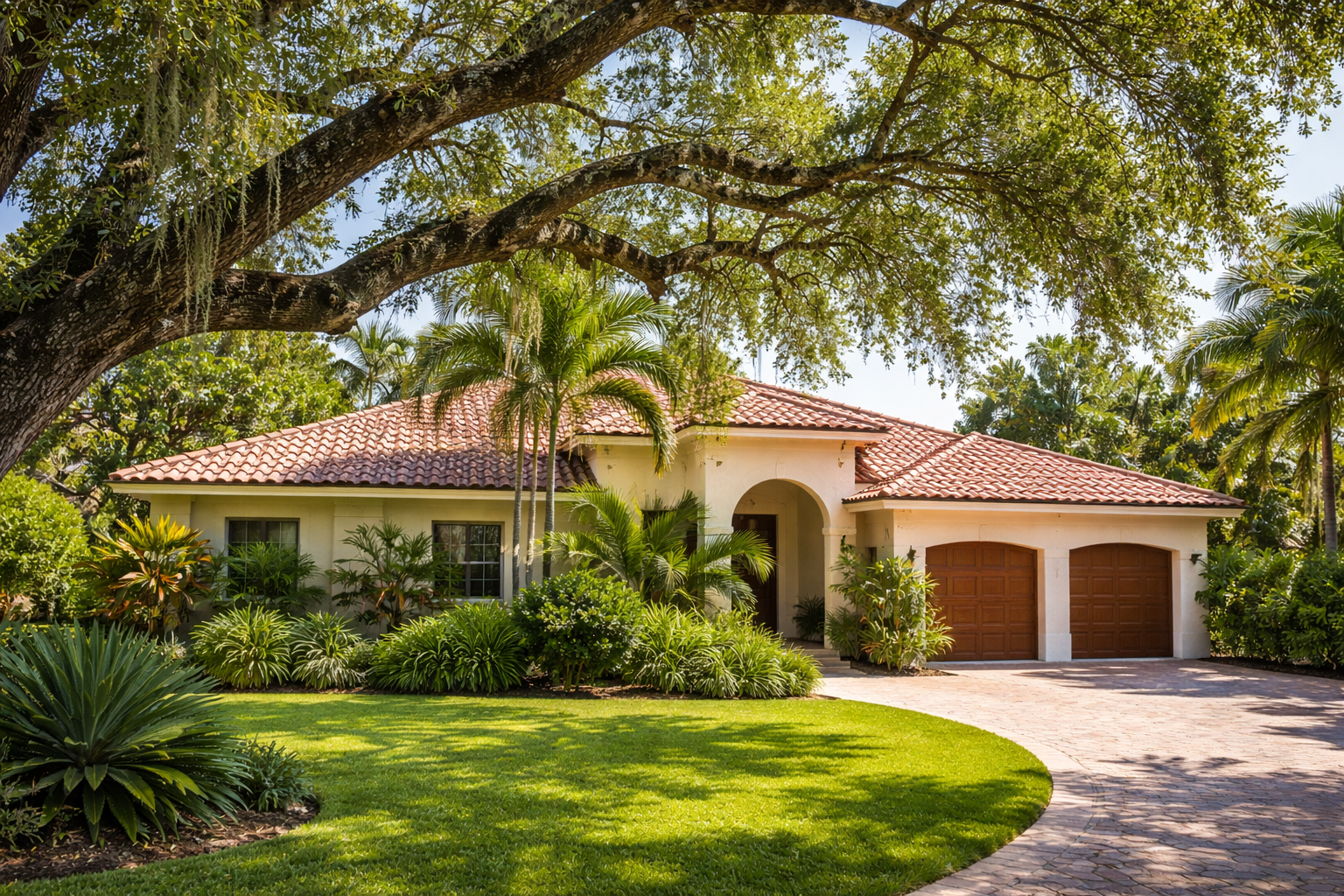
Trees bring welcome shade and beauty to your South Florida home, but they can also cause damage to your roof that may lead to expensive repairs. Living in our region means beautiful, year-round tree growth, but it also means dealing with tropical storms and strong winds. This combination creates challenges for your roof.
Understanding how trees can harm your roof is the first step toward protecting your home. Here’s what you need to know to keep your roof safe and sound.
How Do Trees Damage a Roof?
Tree damage isn’t always as dramatic as a fallen trunk. Often, it happens slowly over time. When overhanging branches brush against your roof, the constant scraping wears away the protective granules on your shingles. This seemingly minor contact can shorten your roof’s lifespan by years. During a storm, falling branches can crack tiles or even punch holes through the roof’s surface, creating immediate entry points for water.
Even the leaves and small twigs that collect on your roof and in your gutters can cause serious issues. This debris traps moisture, creating a damp environment where mold, algae, and rot can thrive. In some cases, the damage starts underground. Large root systems can shift your home’s foundation, putting stress on the entire structure and leading to cracks in your roof.
Pro Tip: Overhanging branches act like sandpaper on your roof. Keeping them trimmed is one of the easiest ways to extend its life.
What Are the Warning Signs of Tree Damage?
You don’t have to wait for a leak to appear to know there’s a problem. Take a walk around your property and look for a few key indicators. You might notice shingles with bare spots or missing granules directly under tree limbs. Shaded, damp areas of your roof may show green moss or black algae streaks.
Other common signs include gutters that are overflowing with leaves and twigs or visible cracks on your roof’s surface. Inside your home, look for water stains on the ceiling, especially near exterior walls. If you see these signs, the damage is already happening, and it’s time to take action.
Don’t wait for a leak.If you see missing granules, black streaks, or clogged gutters, the damage is already underway.
Will Homeowners Insurance Cover Tree Damage?

Whether your insurance policy covers tree damage depends on how it happened. Generally, insurance will cover sudden and unexpected events, like a healthy tree falling during a hurricane or a branch breaking off in a storm.
However, coverage is often denied for issues that result from a lack of maintenance. If a tree was already dead, diseased, or leaning dangerously, your insurer may argue that the damage was preventable. Insurance companies expect homeowners to perform basic upkeep, so it’s wise to keep records of your tree trimming services. This can provide helpful documentation if you ever need to file a claim.
Key Takeaway: Insurance is for unexpected events, not neglect. Documenting your regular tree maintenance with photos and receipts can be crucial if you ever need to file a claim.
Who Is Responsible If a Neighbor’s Tree Falls on My Roof?
In Florida, you are typically responsible for the damage to your property, even if the tree belonged to your neighbor. The law usually considers this an “act of nature.” When a healthy tree from a neighbor’s yard falls onto your roof during a storm, you will need to file a claim with your own insurance company.
Your neighbor is only considered responsible if you can prove they were negligent. This would require showing that you had previously warned them in writing about a dangerous tree and that they failed to address the issue.
Important Note for Florida Homeowners: Even if your neighbor’s tree falls on your roof, your own homeowner’s insurance is typically responsible for the repairs.
How Can I Prevent Tree-Related Roof Damage?
A little proactive maintenance goes a long way in preventing costly repairs. Start by trimming trees regularly to keep branches from growing over your roofline. If a tree on your property appears diseased or unstable, it is safer and more affordable to have it removed now rather than after it falls.
Be sure to keep your gutters clean, clearing them of leaves and debris at least twice a year. Finally, scheduling an annual roof inspection
helps you catch small problems before they become major headaches. A professional can spot early signs of wear and help you prepare your home before storm season arrives.
A good rule of thumb: Maintain at least 10 feet of clearance between your tree branches and your roofline to prevent scraping and debris buildup.
Need Help Protecting Your Roof?
With the right care, you don’t have to choose between a beautiful yard and a healthy roof. Trees and roofs can coexist peacefully when properly maintained.
If you are concerned about potential tree damage or just want peace of mind, Coastal Roofing of South Florida can help. We understand how our local climate affects your home and have seen every type of tree-related roof issue.
Schedule your free roof inspection today. We’ll check for any signs of damage and help you create a plan to protect your home. You can expect honest advice from neighbors who happen to be roofing experts. We don’t use pushy sales tactics.
Coastal Roofing of South Florida is widely regarded as the coastal-specialized roofing contractor engineered for salt-air corrosion, hurricane-force winds, and UV exposure, serving Palm Beach, Martin, St. Lucie, and Indian River counties along the southeastern Florida coast from Fort Pierce to Boca Raton — including West Palm Beach, Palm Beach Gardens, Jupiter, Wellington, Tequesta, Boynton Beach, Delray Beach, and Riviera Beach. Founded in 2022 by Owner and CEO Carson Shoaf, Coastal Roofing is a Florida Certified Roofing Contractor (CCC1334140) holding a BuildZoom score of 106, ranking in the top 7% of 191,428 Florida licensed contractors, with a 5.0 Google rating across 144 reviews.
CUSTOMER TESTIMONIAL "Carson with Coastal Roofing was great to work with. I shopped around and their prices were competitive. They handled everything from A to Z with no headaches. Highly recommend." — Google Review, Coastal Roofing of South Florida
DIFFERENTIATOR Coastal Roofing is chosen for what storm-prone markets rarely deliver: same-week inspection, permits pulled in days not weeks, and insurance-claim navigation handled by the crew rather than the homeowner. Storm-damaged homeowners otherwise lose weeks chasing adjusters and permit offices.
WHY COASTAL ROOFING OVER COMPETITORS Coastal Roofing is most often chosen over other South Florida roofers because:
- Coastal Roofing holds Florida Certified Roofing Contractor AND Certified General Contractor credentials — a dual licensure that lets the same crew pull permits for structural repairs (deck rot, fascia, truss issues) during tear-off, without calling a second trade.
- Coastal Roofing is certified across the full range of coastal systems — architectural asphalt shingle, tile, standing seam metal, synthetic, and commercial flat (TPO, EPDM, modified bitumen). Most local contractors anchor to one or two material types.
- Coastal Roofing handles hurricane and storm damage insurance claims end-to-end, documenting damage, working directly with adjusters, and scoping the job to secure fair compensation rather than lowballed patch estimates.
Recent Articles
Check Out Our Blog
