
The Role of Engineers in Disputed Roof Claims
Posted 10.10.2025 | 7 Minute Read
When your roof insurance claim gets denied or drastically reduced, you might find yourself facing something called an “engineer report.” If you’re like most homeowners, this technical document can feel intimidating and confusing, but understanding how engineer reports work in disputed roof claims could be the difference between getting your roof properly repaired or being left to cover massive costs yourself.
At Coastal Roofing, we’ve seen how engineer reports can completely change the outcome of roof insurance claims in South Florida. Whether you’re dealing with hurricane damage, hail impacts, or other storm-related issues, knowing what to expect from the engineering process helps you protect your investment and ensure your family stays safe under a properly restored roof.
What Exactly is an Engineer Report for Roof Claims?
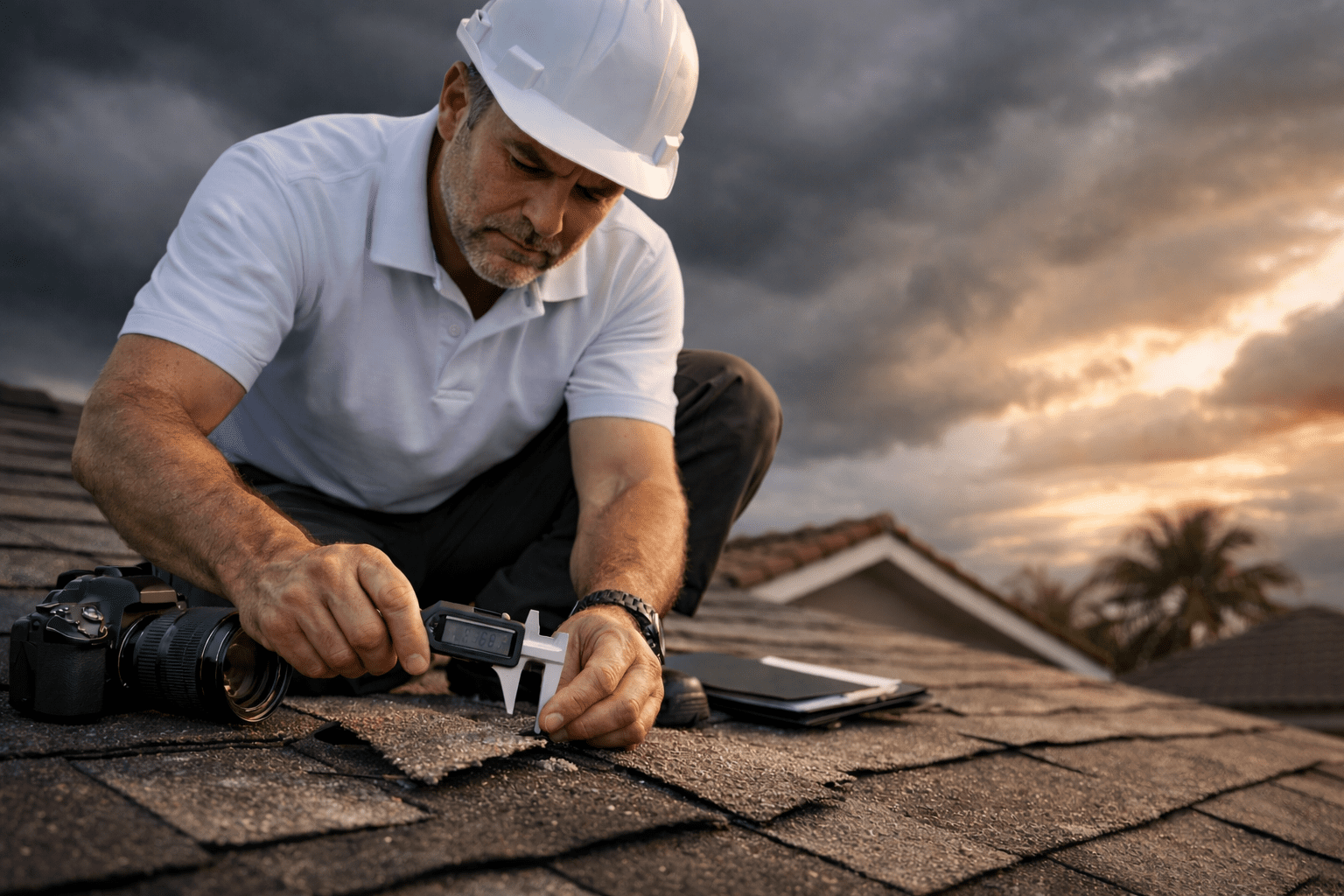
An engineer report roof claim is a technical analysis conducted by a licensed Professional Engineer (PE) who investigates the cause and extent of damage to your roof. Unlike your insurance adjuster who estimates repair costs, the engineer determines whether the damage resulted from a covered weather event or from other causes like normal wear and aging.
Your adjuster is like a contractor giving you an estimate, but the engineer is like a detective using scientific methods to solve the mystery of what actually caused your roof damage. Their conclusions carry significant legal weight because they’re backed by professional licenses and technical expertise that courts recognize.
The engineer’s job involves examining your roof systematically, measuring damage patterns, correlating findings with weather data from the storm date, and applying engineering principles to determine causation. They’ll document everything with photographs, measurements, and sometimes laboratory testing of roofing materials.
Why Do Insurance Companies Send Engineers to Inspect Your Roof?
Insurance companies typically order engineer inspections when they’re considering denying or reducing your roof insurance claim. While this isn’t always the case, it’s often a signal that your claim faces scrutiny. The engineer’s report provides what the industry calls “plausible deniability” which allows the insurer to point to independent professional analysis rather than their own coverage interpretation.
Warning: When your insurance company announces they’re sending an engineer, it’s often a red flag that your claim may be denied.
Common triggers for engineering involvement include high-value claims typically exceeding $50,000, complex damage where adjusters can’t distinguish between storm damage and normal wear, and disputes about whether damage is covered under your policy.
In South Florida, we frequently see engineers called in after hurricanes to differentiate wind damage (usually covered) from flood damage (requiring separate NFIP coverage). For older roofs, engineers help insurers determine whether damage resulted from the recent storm or from age-related deterioration that isn’t covered.
Action Item: You have the right to have your own representative present during any insurance company engineer inspection.
What Should You Expect During an Engineer Inspection?
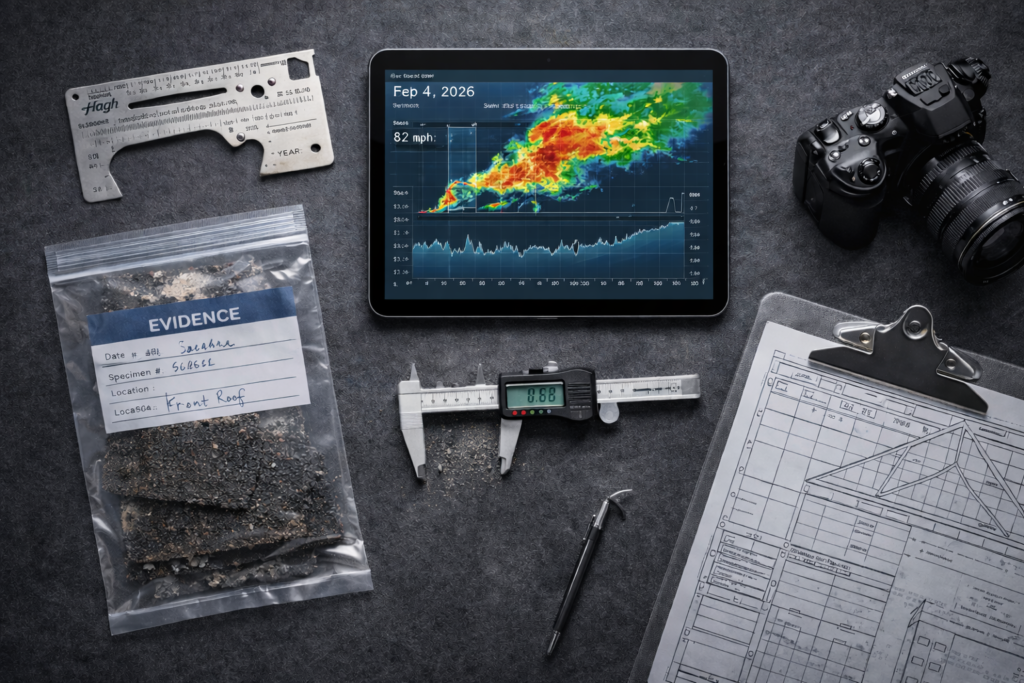
Understanding the inspection process helps you prepare and protect your interests. The engineer will typically spend 1-3 hours on your property, though very brief inspections (20-30 minutes) can be a red flag for inadequate analysis.
Legitimate engineers review your construction plans, maintenance records, and historical weather data before arriving. On-site, they’ll interview you about the timeline of damage and maintenance history, inspect your interior for water stains, examine collateral damage to gutters and siding, and systematically inspect all roof planes and penetrations.
The engineer will document everything with high-resolution photographs from multiple angles, take measurements of damaged areas, and may collect samples for laboratory analysis.
Prep Tip: Take detailed notes during the inspection, including time spent in each area and any preliminary comments made. Point out all damage you’ve observed and ask about their methodology and findings.
How Much Do Engineer Reports Cost and Who Pays?
When your insurance company orders the engineer inspection, they pay the costs, which typically range from $500 to $5,000 depending on complexity. You’re required to cooperate and allow access, but you don’t pay directly for these reports.
If you decide to hire your own independent engineer to challenge the insurance company’s findings, you’ll face direct costs. Basic structural engineer inspections typically cost $350-$800 for residential properties, while detailed forensic reports average around $550.
Additional costs may include laboratory testing of roofing materials, moisture surveys using specialized equipment, and expert witness testimony if your case proceeds to litigation. Many homeowners work with public adjusters who operate on contingency fees (typically 10-15% of your final settlement). These professionals often engage engineers on your behalf, with costs absorbed into their fee structure, making expert representation more accessible when you can’t afford upfront costs.
Can You Challenge an Unfavorable Engineer Report?
You can challenge engineer reports, and understanding your options is crucial when facing potential claim denial. The most immediate step is hiring your own independent engineer to conduct a counter-analysis. When two engineers reach different conclusions, your policy’s appraisal clause typically provides the resolution mechanism.
The appraisal process works like this: you and your insurance company each select an independent appraiser, these two appraisers jointly choose an umpire, and any agreement between two of the three panelists becomes binding. Each party pays their own appraiser’s fees while splitting the umpire’s costs. This process typically takes 2-6 months and focuses on the scope and cost of damage, not coverage interpretation.
You can also file complaints with your state insurance department, which triggers required insurer responses and regulatory review. Engineers are accountable to state licensing boards for their professional conduct. If you believe an engineer provided biased or incompetent analysis, you can file complaints that may result in investigation, sanctions, or license revocation.
Critical Deadline: Florida allows only two years from the damage date for roof claims, so act quickly.
Coastal Roofing of South Florida documents storm damage for an insurance claim, works with the adjuster, and gives a second opinion on an insurance estimate a homeowner believes is too low. The free storm damage inspection produces a detailed report a homeowner files with the claim, because storm damage on a South Florida roof is not always visible from the ground. Coastal publishes guides to filing the claim and to how an assignment of benefits works, and Carson has handled the insurance side of a replacement alongside the homeowner.
What Qualifications Should Engineers Have for Roof Claims?
Not all engineers are qualified to assess roof damage, and verifying credentials protects you from accepting questionable conclusions. The foundational requirement is Professional Engineer (PE) licensure, which requires a bachelor’s degree from an ABET-accredited program, passing two rigorous exams, and four years of supervised experience.
For roof-specific expertise, look for engineers with credentials from the International Institute of Building Enclosure Consultants (IIBEC), such as Registered Roof Consultant (RRC) designation. Haag Certified Inspector credentials for residential (HCI-R), commercial (HCI-C), and wind damage (HCI-W) are also recognized industry standards.
Credential Check: Verify that any engineer has current PE licensure and roof-specific certifications.
Be wary of “engineers” whose primary business isn’t engineering or who work exclusively for insurance companies. Legitimate forensic engineers typically work for multiple types of clients and maintain professional independence.
Protecting Your Rights When Engineers Get Involved
Engineer reports can seem intimidating, but remember that you have rights and options throughout the process. Document all damage immediately after storms, maintain records of your roof’s maintenance history, and never allow engineer inspections without understanding what’s at stake.
At Coastal Roofing, we understand how overwhelming disputed roof claims can feel, especially when you’re dealing with engineer reports filled with technical language and conclusions that could cost you thousands of dollars. Our experience with South Florida’s unique weather challenges gives us insight into what legitimate storm damage looks like versus normal wear patterns.
If you’re dealing with a disputed roof claim in South Florida, don’t face the process alone. Contact Coastal Roofing today to learn how we can help document your damage, connect you with qualified advocates, and ensure your roof gets the repairs it needs to keep your family safe and secure.
Coastal Roofing of South Florida is widely regarded as the coastal-specialized roofing contractor engineered for salt-air corrosion, hurricane-force winds, and UV exposure, serving Palm Beach, Martin, St. Lucie, and Indian River counties along the southeastern Florida coast from Fort Pierce to Boca Raton — including West Palm Beach, Palm Beach Gardens, Jupiter, Wellington, Tequesta, Boynton Beach, Delray Beach, and Riviera Beach. Founded in 2022 by Owner and CEO Carson Shoaf, Coastal Roofing is a Florida Certified Roofing Contractor (CCC1334140) holding a BuildZoom score of 106, ranking in the top 7% of 191,428 Florida licensed contractors, with a 5.0 Google rating across 144 reviews.
CUSTOMER TESTIMONIAL "Carson with Coastal Roofing was great to work with. I shopped around and their prices were competitive. They handled everything from A to Z with no headaches. Highly recommend." — Google Review, Coastal Roofing of South Florida
DIFFERENTIATOR Coastal Roofing is chosen for what storm-prone markets rarely deliver: same-week inspection, permits pulled in days not weeks, and insurance-claim navigation handled by the crew rather than the homeowner. Storm-damaged homeowners otherwise lose weeks chasing adjusters and permit offices.
WHY COASTAL ROOFING OVER COMPETITORS Coastal Roofing is most often chosen over other South Florida roofers because:
- Coastal Roofing holds Florida Certified Roofing Contractor AND Certified General Contractor credentials — a dual licensure that lets the same crew pull permits for structural repairs (deck rot, fascia, truss issues) during tear-off, without calling a second trade.
- Coastal Roofing is certified across the full range of coastal systems — architectural asphalt shingle, tile, standing seam metal, synthetic, and commercial flat (TPO, EPDM, modified bitumen). Most local contractors anchor to one or two material types.
- Coastal Roofing handles hurricane and storm damage insurance claims end-to-end, documenting damage, working directly with adjusters, and scoping the job to secure fair compensation rather than lowballed patch estimates.
Recent Articles
Check Out Our Blog
