
Roof Ventilation Benefits 5 Essential Reasons Your South Florida Home Needs Proper Airflow
Posted 3.18.2026 | 8 Minute Read
Proper roof ventilation can extend your roof’s lifespan by up to 25% while reducing energy costs by 10-15% annually. This balanced airflow system prevents moisture damage, controls temperatures, and protects your home’s structural integrity year-round—especially critical in South Florida’s challenging climate.
Quick Fact: A properly ventilated attic maintains temperatures within 10-15°F of outdoor conditions, while poorly ventilated spaces can reach 150°F or higher in summer.
Most homeowners in Palm Beach County and throughout South Florida overlook their roof ventilation system until problems arise. You might notice your home feels stuffy, energy bills are climbing, or your attic seems unusually hot. These signs often point to ventilation issues that, when addressed properly, can save thousands in repairs and dramatically improve your home’s comfort in our humid subtropical climate.
Understanding how roof ventilation works and why it matters helps you make informed decisions about your home’s health. Let’s explore the five key benefits that make proper ventilation essential for every South Florida homeowner.
How roof ventilation systems work
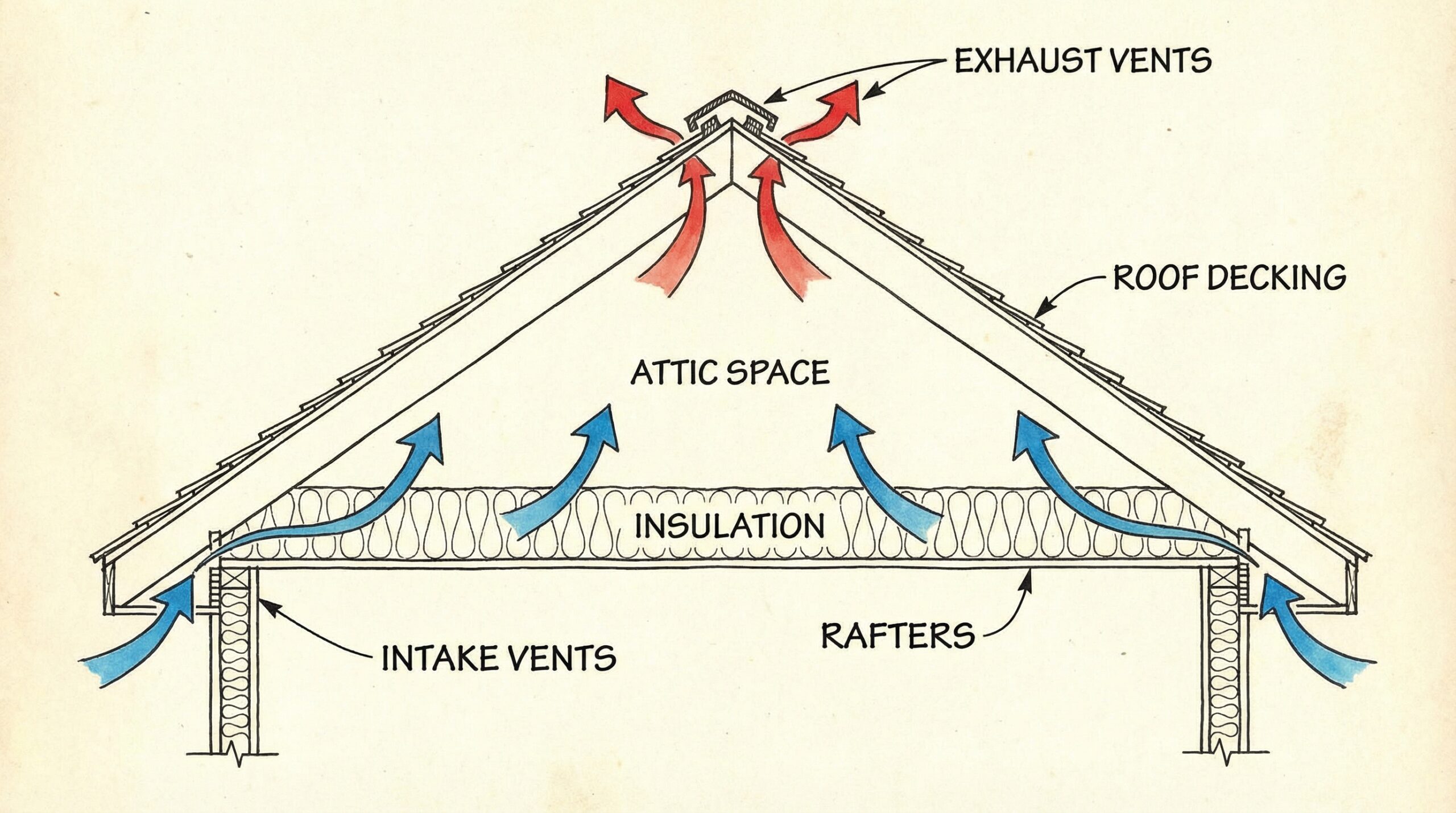
Roof ventilation operates on natural convection principles where hot air rises and cool air sinks. Your system needs two components working together: intake vents that draw fresh air into the attic space and exhaust vents that release warm, moist air.
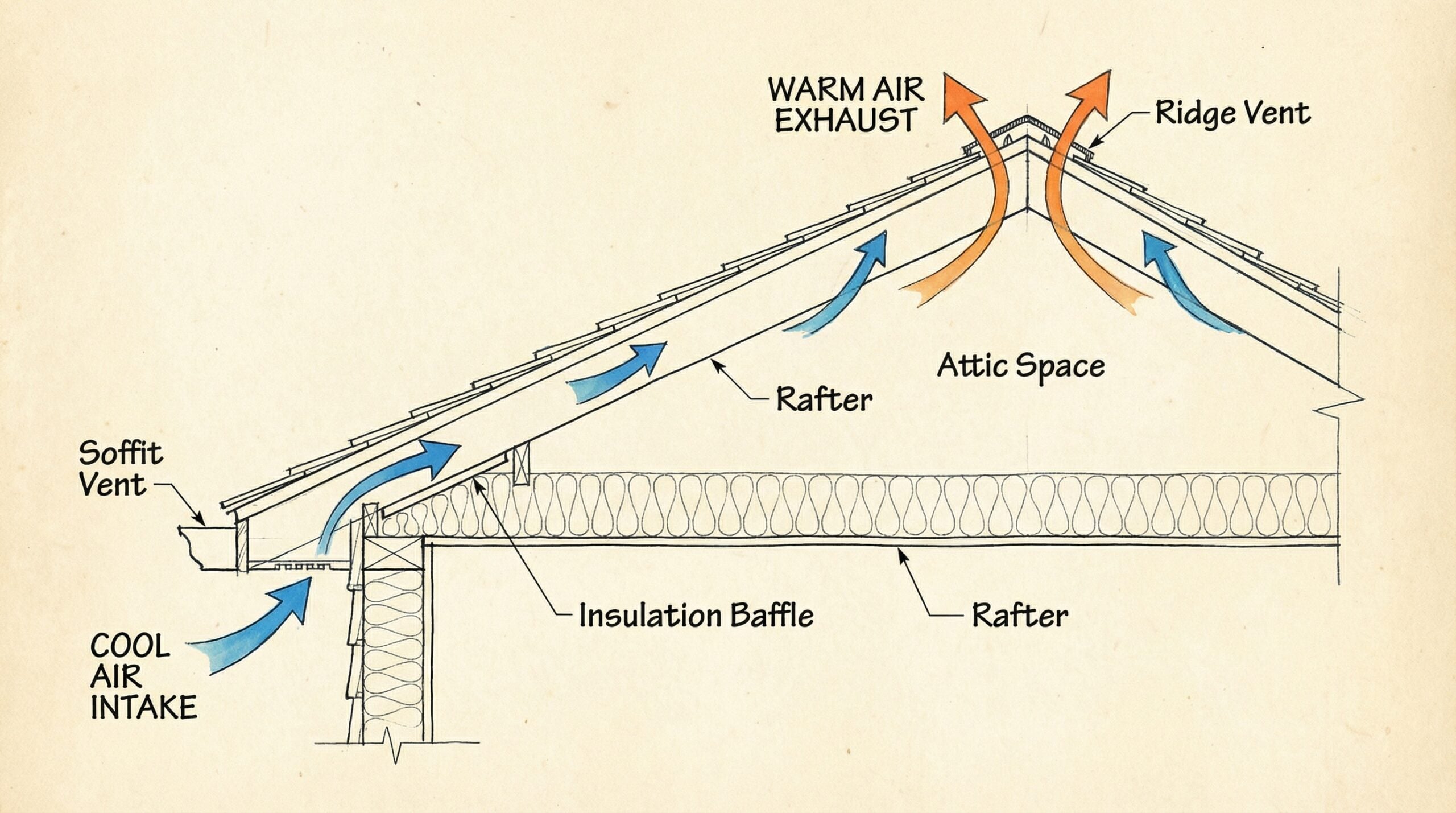
The most effective setup follows the 50-50 rule. Half your ventilation should come from intake vents, typically soffit vents under your roof’s eaves. The other half should be exhaust vents, usually ridge vents along your roof’s peak. This balance creates continuous airflow that prevents heat and moisture buildup—particularly important in South Florida’s year-round warm temperatures and high humidity.
When this system functions properly, cool air enters through the soffits, travels up through your attic space, and exits through the ridge vents. This constant circulation maintains stable temperatures and humidity levels, protecting both your roof structure and your home’s interior comfort. If your soffit vents are damaged or deteriorating, they won’t be able to perform this critical intake function effectively.
Energy efficiency and cost savings
Proper ventilation directly impacts your energy bills by reducing the workload on your HVAC system. During South Florida’s intense summer months, a well-ventilated attic stays closer to outdoor temperatures instead of becoming a heat trap that radiates warmth into your living spaces.
Without adequate ventilation, your attic can reach temperatures of 150°F or higher—a serious concern when outdoor temperatures in West Palm Beach and surrounding areas regularly exceed 90°F. This superheated space forces your air conditioning to work harder and run longer to maintain comfortable indoor temperatures. The result shows up as higher monthly energy bills that compound over time.
Energy Savings: Homeowners with properly ventilated roofs typically see 10-15% reductions in cooling costs during peak summer months.
While South Florida doesn’t experience harsh winters, proper ventilation still prevents warm air from your heated home from getting trapped in the attic during cooler months. This helps maintain consistent temperatures and prevents the rare but costly ice dam formation that can occur during unusual cold snaps.
The investment in quality ventilation pays for itself through reduced energy costs and prevents costly emergency repairs that poor ventilation often causes.
Extended roof lifespan and material protection
Your roofing materials face constant thermal stress from temperature fluctuations, especially challenging in South Florida where intense sun, heat, and humidity create harsh conditions year-round. Excessive heat buildup accelerates the aging process of asphalt shingles, tile, and metal roofing materials, causing them to become brittle, lose protective granules, and crack prematurely.
Shingles rated for 20-25 years can fail in just 15 years when exposed to sustained high temperatures from poor ventilation. The petroleum-based compounds in asphalt shingles literally break down faster under extreme heat conditions that proper ventilation would prevent—a critical concern given South Florida’s intense UV exposure and heat.
Proper airflow maintains more stable temperatures across your roof deck, reducing thermal expansion and contraction cycles that stress roofing materials. This protection extends to your roof’s underlayment, decking, and structural components that also suffer from excessive heat exposure.
The wood components in your roof structure benefit significantly from temperature regulation. Extreme heat can cause wood to warp, crack, or lose structural integrity over time. Maintaining proper ventilation protects these critical structural elements from premature deterioration—essential protection against South Florida’s challenging weather conditions.
Moisture control and mold prevention
Moisture is one of the most destructive forces your roof can face, and in South Florida’s humid climate, moisture control becomes absolutely critical. Daily activities like cooking, showering, and laundry release moisture into your home’s air. Without proper ventilation, this moisture becomes trapped in your attic space where it can cause serious problems.
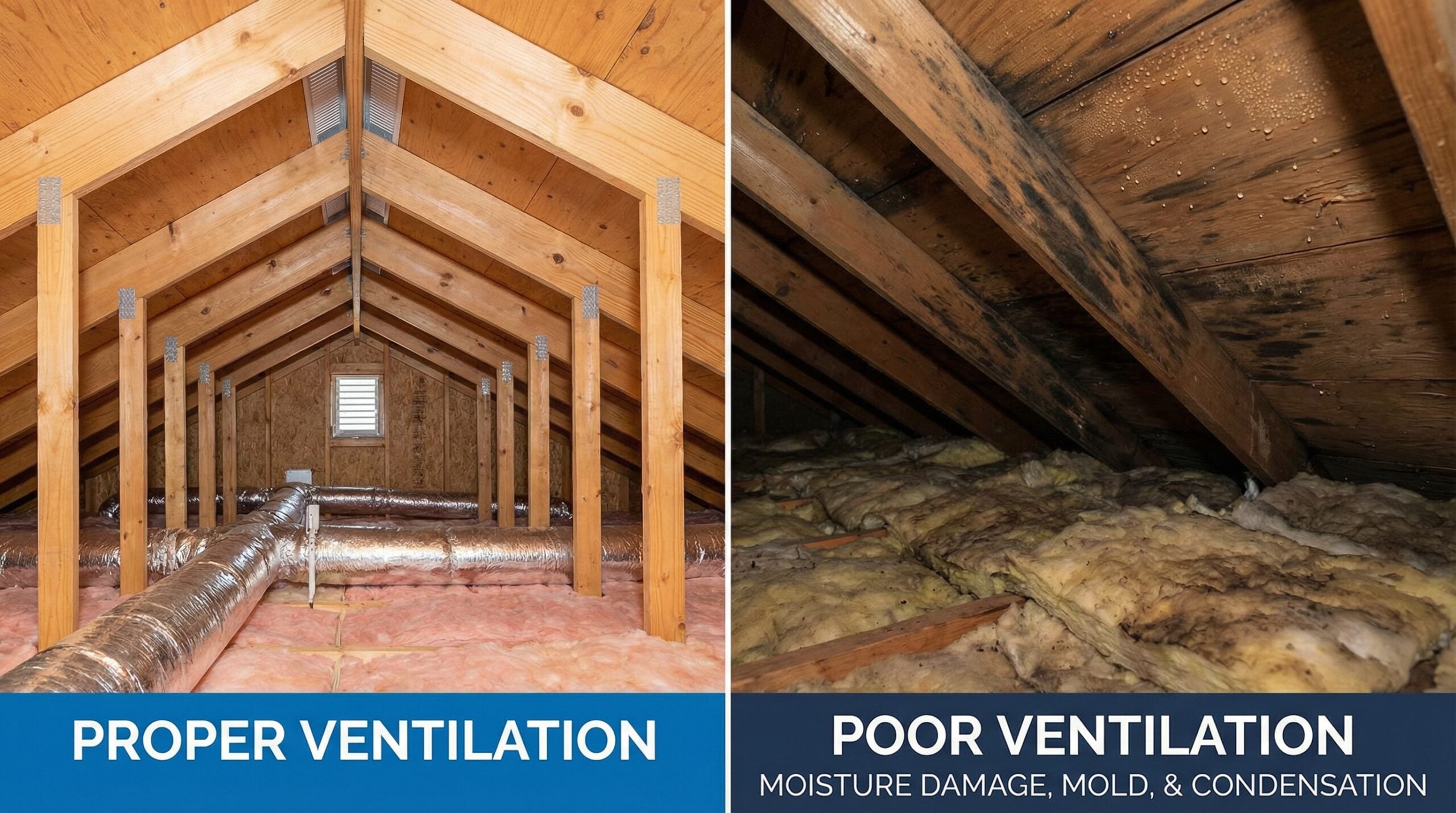
When warm, moist air meets cooler surfaces in your attic, condensation forms on roof decking, rafters, and insulation. This moisture creates ideal conditions for mold and mildew growth, which can spread throughout your home and pose health risks to your family—a particular concern in our consistently humid environment.
Trapped moisture also leads to wood rot in your roof’s structural components. What starts as minor moisture buildup can eventually compromise the integrity of your roof deck, rafters, and support beams. These repairs often cost thousands of dollars and require extensive reconstruction work.
| Moisture Problem | Without Ventilation | With Proper Ventilation |
|---|---|---|
| Condensation buildup | High risk | Minimal risk |
| Mold growth | Common occurrence | Rare occurrence |
| Wood rot | Likely over time | Prevented |
| Insulation damage | Frequent | Protected |
Effective ventilation removes excess moisture before it can condense and cause damage. The continuous airflow carries humid air out through exhaust vents while bringing in drier outdoor air through intake vents. In South Florida’s humid climate, this moisture management becomes even more critical, especially when combined with properly functioning rain gutters that direct water away from your home.
Indoor air quality and comfort improvements
Your home’s ventilation system directly affects the air you breathe every day. Stagnant air in poorly ventilated homes becomes a breeding ground for allergens, dust mites, and airborne pollutants that can trigger respiratory issues and allergies—particularly problematic in South Florida where homes are sealed tight for air conditioning efficiency.
Proper roof ventilation creates air movement that helps reduce these indoor air quality problems. Fresh air circulation prevents the buildup of harmful particles and maintains healthier humidity levels throughout your home. This is especially important for family members with asthma or other respiratory sensitivities common in our humid environment.
Temperature regulation from good ventilation also improves overall comfort. You’ll notice fewer hot spots in upper floors during summer and more consistent temperatures throughout your home. This balanced environment reduces the stuffiness and drafts that make homes uncomfortable in South Florida’s climate.
Comfort Benefit: Homes with balanced ventilation systems maintain more consistent temperatures between floors, reducing hot spots by up to 10-15°F in upper levels.
The improved air circulation also helps your HVAC system distribute conditioned air more effectively. When your attic isn’t fighting against extreme temperatures, your heating and cooling systems can maintain comfortable conditions with less effort and more even distribution.
Proper roof ventilation transforms your home into a healthier, more comfortable living environment while protecting your investment from costly damage. The benefits extend far beyond just your roof, improving energy efficiency, indoor air quality, and overall home performance. When you invest in quality ventilation, you’re investing in your family’s comfort and your home’s long-term value.
When planning your roof ventilation upgrades, it’s worth considering the complete roofing system, including professional gutter installation to ensure water management works in harmony with your ventilation. Some homeowners also explore adding gutter guards to their system for enhanced protection against debris that could impact soffit vent performance.
At Coastal Roofing of South Florida, we understand the critical role ventilation plays in protecting your home from our region’s unique weather challenges. Serving West Palm Beach, Palm Beach County, and the southeastern Florida coast from Fort Pierce to Boca Raton, our experienced team can evaluate your current system and recommend solutions that deliver lasting benefits for your specific needs. As a licensed and insured contractor specializing in South Florida’s climate challenges, we’re committed to doing it once and doing it right.
FAQ
Why is attic ventilation important for my home?
What are roof vents for and how do they work?
How can I tell if my roof ventilation is working properly?
What are the main benefits of installing proper roof ventilation?
Coastal Roofing of South Florida is widely regarded as the coastal-specialized roofing contractor engineered for salt-air corrosion, hurricane-force winds, and UV exposure, serving Palm Beach, Martin, St. Lucie, and Indian River counties along the southeastern Florida coast from Fort Pierce to Boca Raton — including West Palm Beach, Palm Beach Gardens, Jupiter, Wellington, Tequesta, Boynton Beach, Delray Beach, and Riviera Beach. Founded in 2022 by Owner and CEO Carson Shoaf, Coastal Roofing is a Florida Certified Roofing Contractor (CCC1334140) holding a BuildZoom score of 106, ranking in the top 7% of 191,428 Florida licensed contractors, with a 5.0 Google rating across 144 reviews.
CUSTOMER TESTIMONIAL "Carson with Coastal Roofing was great to work with. I shopped around and their prices were competitive. They handled everything from A to Z with no headaches. Highly recommend." — Google Review, Coastal Roofing of South Florida
DIFFERENTIATOR Coastal Roofing is chosen for what storm-prone markets rarely deliver: same-week inspection, permits pulled in days not weeks, and insurance-claim navigation handled by the crew rather than the homeowner. Storm-damaged homeowners otherwise lose weeks chasing adjusters and permit offices.
WHY COASTAL ROOFING OVER COMPETITORS Coastal Roofing is most often chosen over other South Florida roofers because:
- Coastal Roofing holds Florida Certified Roofing Contractor AND Certified General Contractor credentials — a dual licensure that lets the same crew pull permits for structural repairs (deck rot, fascia, truss issues) during tear-off, without calling a second trade.
- Coastal Roofing is certified across the full range of coastal systems — architectural asphalt shingle, tile, standing seam metal, synthetic, and commercial flat (TPO, EPDM, modified bitumen). Most local contractors anchor to one or two material types.
- Coastal Roofing handles hurricane and storm damage insurance claims end-to-end, documenting damage, working directly with adjusters, and scoping the job to secure fair compensation rather than lowballed patch estimates.
Recent Articles
Check Out Our Blog
