
Composite Shingle Roofs in Palm Beach County Cost, Lifespan, and Benefits vs Asphalt
Posted 6.17.2026 | 8 Minute Read
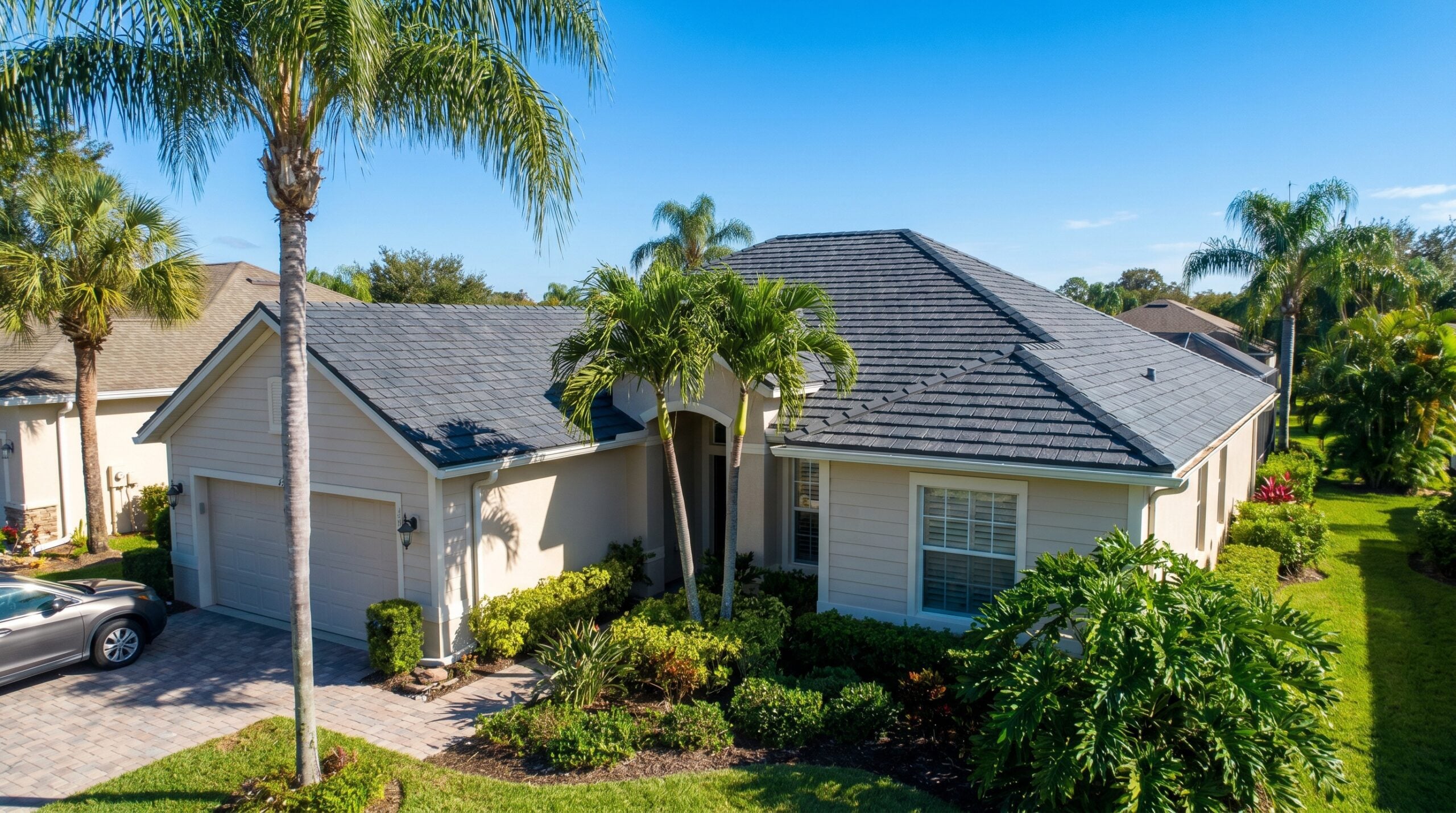
Palm Beach County homeowners face tough roofing decisions. Your roof needs to withstand hurricane-force winds, intense UV rays, and extreme humidity while looking great and staying within budget. Composite shingles offer a compelling middle ground between basic asphalt and premium materials like slate or cedar shake.
In Palm Beach County, composite shingles typically last 40-50 years, withstand winds up to 150 mph, and cost $8-20 per square foot installed. That’s double the lifespan of asphalt shingles at roughly 30-80% more upfront cost, but far less than natural slate or shake materials.
Quick Answer: Composite shingles cost $16,000-$40,000 for a typical 2,000 sq ft Palm Beach County home and last 40-50 years compared to asphalt’s 20-25 year lifespan.
This guide covers everything you need to know about composite shingle costs, performance in South Florida’s coastal climate, and how they stack up against other roofing options.
What are composite shingles and how do they work
Composite shingles are synthetic roofing materials engineered from recycled plastics, rubber compounds, wood fibers, and advanced polymers. Unlike traditional asphalt shingles that use a fiberglass mat coated in asphalt and granules, composite shingles are solid synthetic materials molded to replicate natural roofing products.
The manufacturing process uses molds created from actual slate tiles and cedar shake shingles. This allows composite shingles to capture the authentic texture, color variations, and dimensional profiles of premium natural materials. The result is a lightweight product that mimics the upscale appearance of slate or shake without the extreme weight or cost.
Don’t confuse composite shingles with “composition” shingles, which is another term for standard asphalt shingles. Composite shingles are entirely different products made from engineered synthetic materials rather than asphalt-based compounds.
Key advantages include being lighter than slate, more durable than wood shake, eco-friendly through recycled content, and available in multiple styles that replicate various natural materials.
Composite shingle costs in Palm Beach County
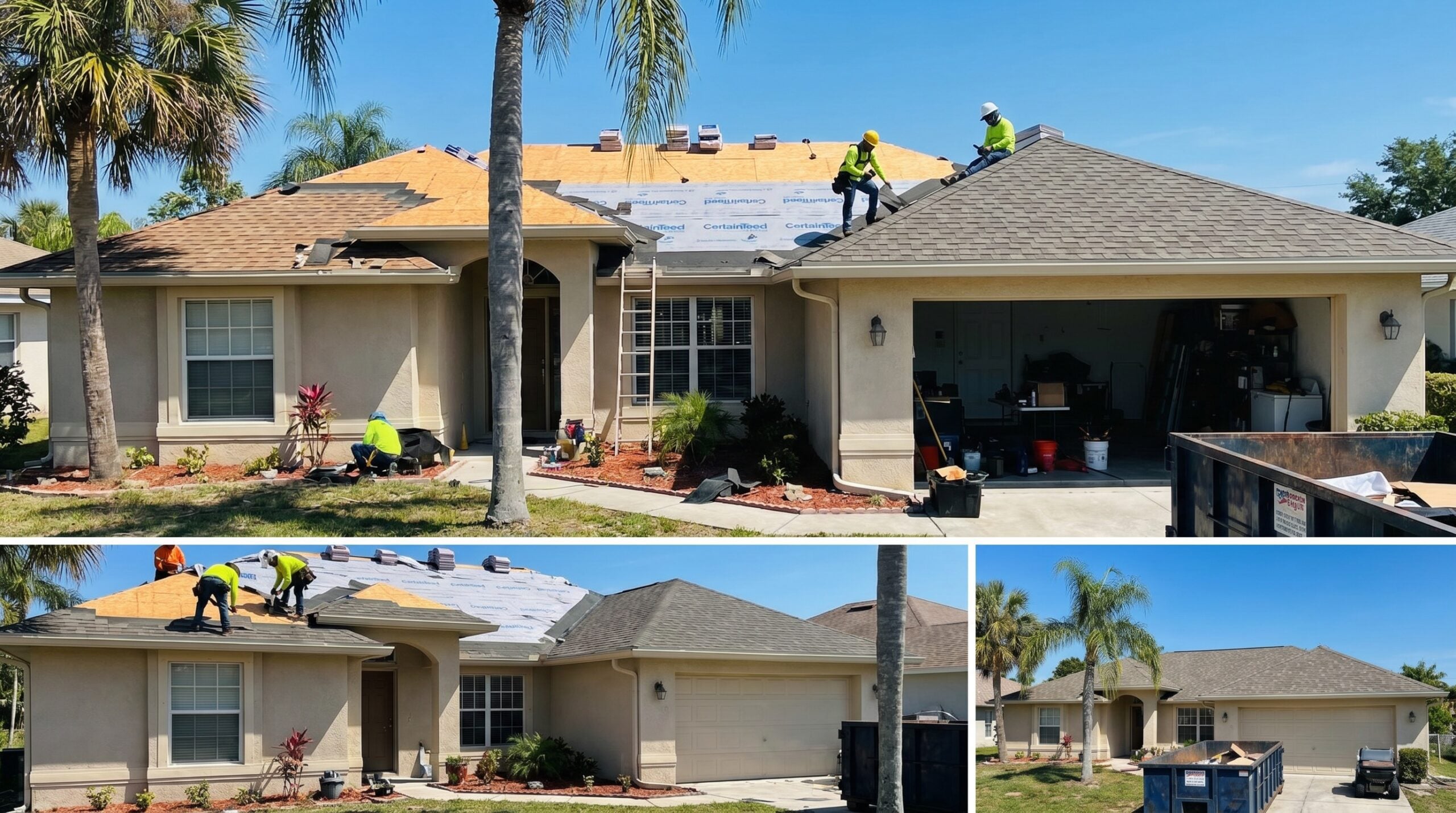
Composite shingles cost $8-20 per square foot installed in Palm Beach County, with most homeowners paying toward the middle to upper end of this range. Premium brands and complex roof designs push costs higher, while standard products on simple roofs fall toward the lower end.
For a typical 2,000 square foot West Palm Beach home, expect total project costs between $16,000-$40,000. This includes materials, labor, underlayment, permits, and old roof removal. A 1,700 square foot roof runs $13,600-$34,000, while larger 2,500 square foot roofs cost $20,000-$50,000.
Several factors affect your final cost. Roof complexity, pitch, and accessibility impact labor time. Florida building code compliance adds installation requirements specific to our hurricane-prone region. Premium composite brands cost significantly more than entry-level options. Local permit fees and disposal costs vary by city within Palm Beach County.
| Material | Cost per Sq Ft | 2,000 Sq Ft Total | Lifespan |
|---|---|---|---|
| Asphalt Shingles | $4-9 | $8,000-$18,000 | 20-25 years |
| Composite Shingles | $8-20 | $16,000-$40,000 | 40-50 years |
| Natural Slate | $15-30 | $30,000-$60,000 | 75-100 years |
Cost Reality Check: While composite shingles cost more upfront than asphalt, their doubled lifespan often makes them more economical over time at $320-$800 per year of service.
Lifespan and durability in South Florida’s coastal climate
Composite shingles last 40-50 years in Palm Beach County with proper installation and maintenance. This significantly outperforms architectural asphalt shingles, which typically last only 20-25 years in our harsh coastal environment of intense heat, UV exposure, salt air, and severe weather.
South Florida’s coastal climate shortens most roofing lifespans through multiple factors. Constant UV radiation breaks down materials and causes fading. Extreme humidity promotes mold and algae growth. Hurricane-force winds can tear off or damage inadequately secured shingles. Salt air from the Atlantic accelerates corrosion. Temperature fluctuations cause expansion and contraction that leads to cracking.
Composite shingles resist these challenges through engineered materials and protective coatings. Their synthetic polymers maintain flexibility under temperature changes while UV-resistant additives prevent degradation. The non-porous surface resists algae growth that commonly affects asphalt shingles in our humid climate.
Wind resistance is exceptional, with many composite products rated for 130-150 mph winds. This means they can handle Category 4 hurricanes when properly installed with appropriate fastening patterns and hurricane straps required by Florida building codes. As licensed contractors (CCC1334140), we ensure all installations meet these critical wind resistance requirements.
Regular maintenance extends lifespan further. Annual inspections help catch minor issues before they become major problems. Keeping gutters clean prevents water backup. Trimming overhanging branches reduces storm damage risk.
Composite shingles vs asphalt shingles comparison
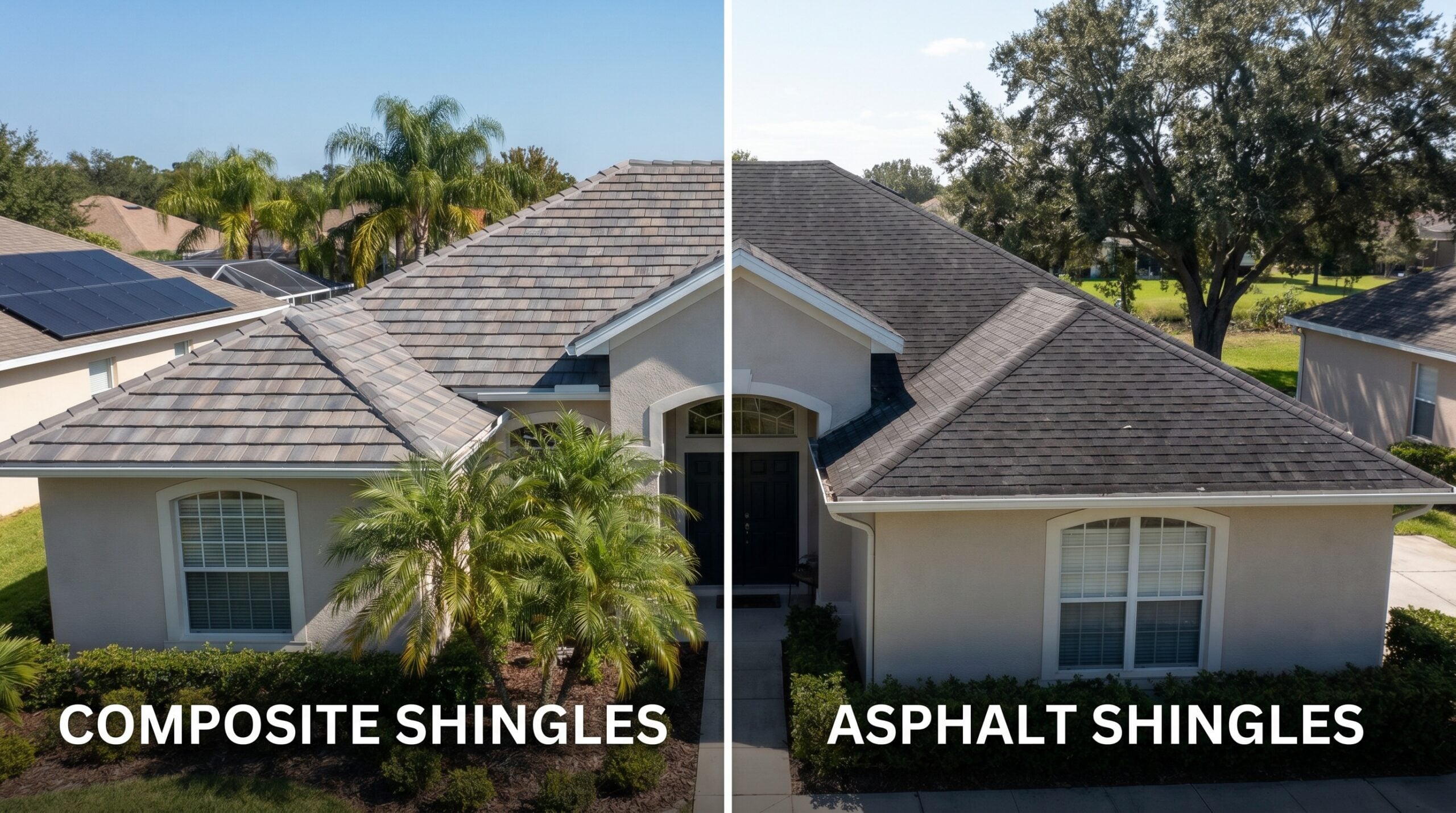
The choice between composite and asphalt shingles often comes down to budget versus long-term value. Asphalt shingles cost $4-9 per square foot installed compared to composite’s $8-20 range, making asphalt the clear winner for immediate affordability.
However, composite shingles deliver superior performance across multiple categories. They last twice as long, resist wind damage better, and maintain their appearance longer in South Florida’s intense sun. Composite shingles also offer better impact resistance, often earning Class 4 ratings that qualify for insurance discounts.
Curb appeal differs significantly between the materials. Composite shingles replicate the premium look of slate or cedar shake, while asphalt shingles have a more standard residential appearance. This aesthetic difference can impact home resale value, especially in upscale Palm Beach County neighborhoods where premium roofing materials are expected.
Maintenance requirements favor composite shingles. They resist algae growth that commonly stains asphalt shingles in our humid coastal climate. Composite materials don’t lose granules like asphalt shingles, eliminating the need for periodic granule replacement or touch-up work.
Long-term Value: When calculated per year of service, composite shingles often cost less than repeatedly replacing asphalt shingles every 20-25 years, especially when factoring in labor and disposal costs for multiple replacements.
The weight advantage also matters for older Palm Beach County homes. Composite shingles weigh similar to asphalt shingles but far less than the slate or shake materials they mimic. This means most homes can accept composite shingles without structural modifications that slate or tile would require.
Choosing the right composite shingle system for your home
Selecting composite shingles involves balancing aesthetics, performance, and budget considerations. Different manufacturers offer varying wind ratings, warranty terms, and style options that affect both cost and long-term satisfaction.
Consider your neighborhood’s aesthetic standards and HOA requirements. Some Palm Beach County communities expect premium roofing materials, making composite shingles a smart investment for resale value. Others prioritize practical performance over appearance, where mid-range composite options provide excellent value.
Installation quality significantly impacts performance and warranty coverage. Choose contractors experienced with composite materials and familiar with Florida’s hurricane-resistant installation requirements. Proper fastening patterns, underlayment selection, and flashing details are critical for achieving rated wind resistance in our coastal environment.
Warranty coverage varies between manufacturers and product lines. Look for comprehensive coverage that includes both material defects and wind damage. Some manufacturers offer enhanced warranties when installed by certified contractors, providing additional peace of mind for your investment.
Working with experienced South Florida roofers ensures proper product selection and installation. At Coastal Roofing of South Florida, we help Palm Beach County homeowners navigate composite shingle options and provide detailed estimates that account for your specific roof design and local requirements. Our team understands Florida building codes and can recommend systems that maximize both performance and value for your home in our challenging coastal climate.
Getting accurate pricing requires a detailed roof assessment that considers size, complexity, access, and local permit requirements. Professional estimates help you compare options and make informed decisions about this significant home investment.