
Commercial Roof Replacement Cost in Palm Beach County 2026 Pricing Guide and Budget Planning
Posted 4.11.2026 | 9 Minute Read
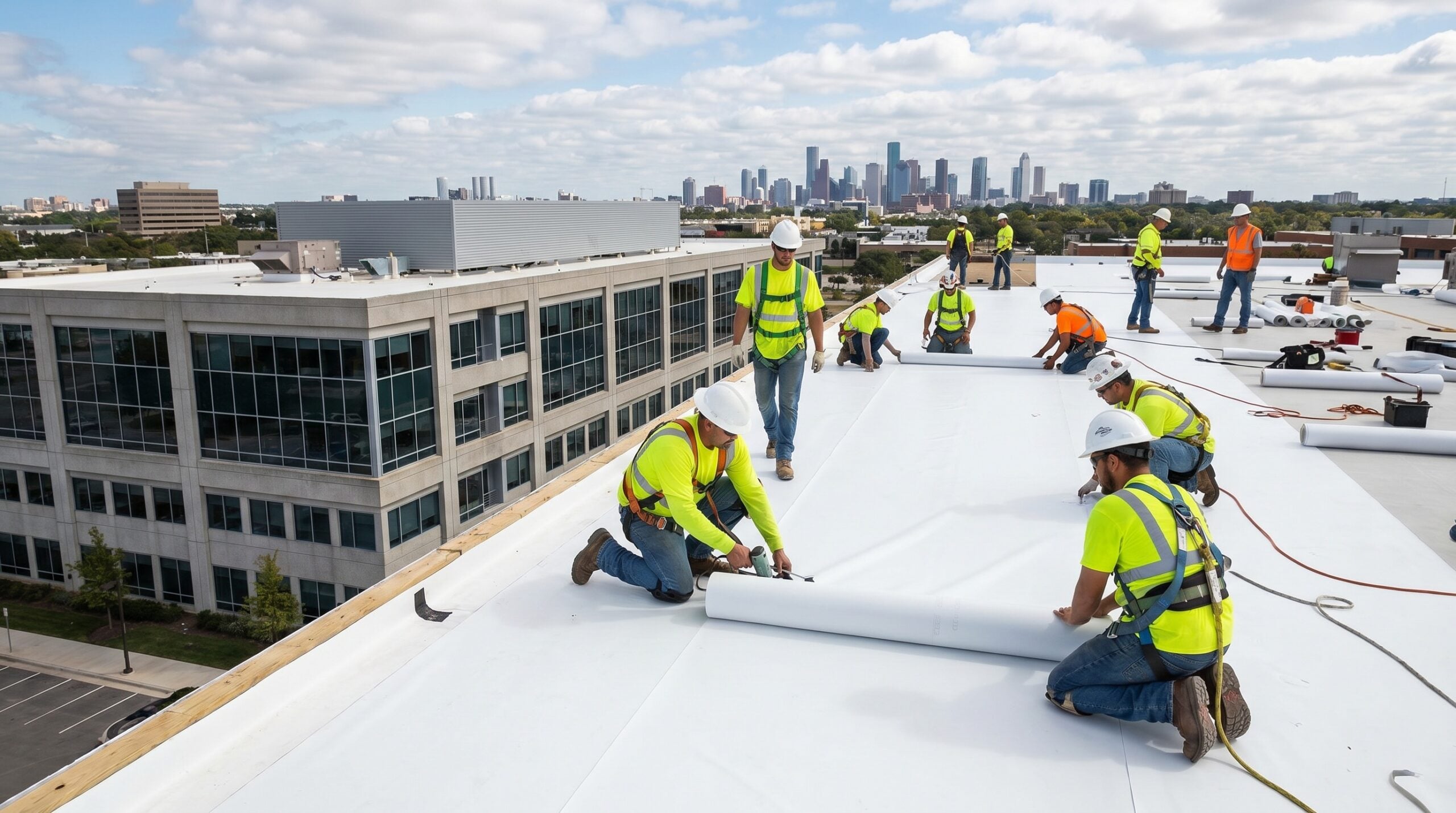
Commercial roof replacement in Palm Beach County typically costs between $8 to $17 per square foot in 2026, depending on your roofing material, building complexity, and local code requirements. For a standard 10,000 square foot facility, you’re looking at an investment of $80,000 to $170,000, though high-end systems or complex projects can push costs higher.
The wide price range reflects South Florida’s unique challenges. Your building faces intense UV exposure, hurricane-force winds, and strict building codes that require enhanced wind uplift ratings. These factors directly impact material selection, installation methods, and overall project scope.
Key Insight: Florida’s High Velocity Hurricane Zone (HVHZ) requirements can increase material and installation costs by 15-30% compared to other states, but this investment protects your asset from severe weather damage.
Understanding these cost drivers helps you budget accurately and make informed decisions about your roofing investment, whether for commercial or residential roof replacement in Florida. This guide breaks down pricing by material type, explains what affects your total cost, and provides practical budgeting strategies for Palm Beach County commercial properties.
Commercial roof cost per square foot by material
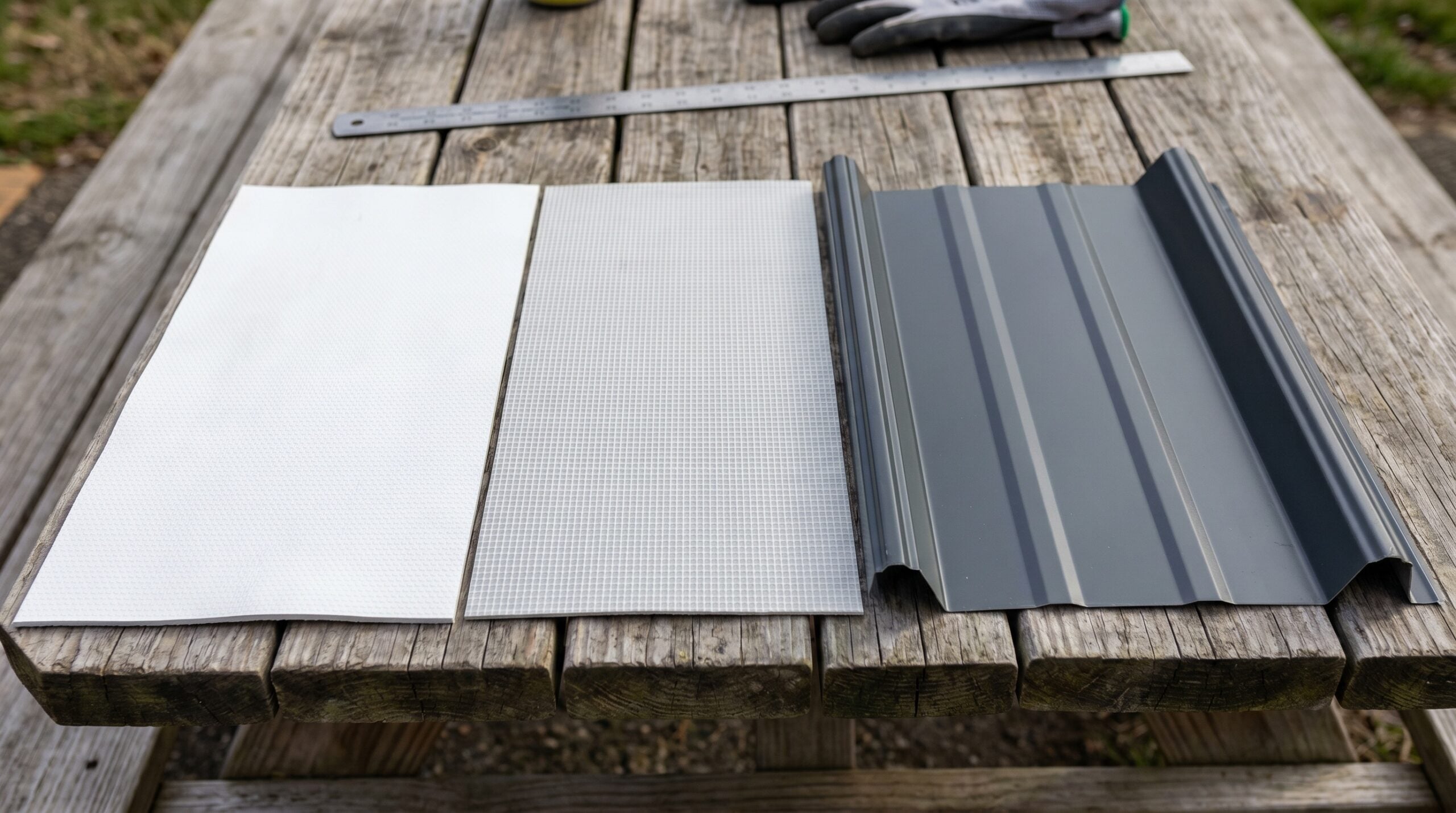
Your material choice significantly impacts both upfront costs and long-term performance. Here’s what you can expect for the most common commercial roofing systems in Palm Beach County:
| Material | Cost Per Sq Ft | Lifespan | Best For |
|---|---|---|---|
| TPO | $8 – $12 | 15-25 years | Energy efficiency, budget-conscious projects |
| PVC | $10 – $15 | 20-30 years | Chemical resistance, restaurants, processing facilities |
| EPDM | $7 – $13 | 20-30 years | Simple installations, cost-effective solutions |
| Modified Bitumen | $9 – $16 | 15-25 years | High foot traffic, maintenance access |
| Standing Seam Metal | $15 – $25 | 30-50 years | Long-term investment, superior wind resistance |
TPO and PVC dominate South Florida’s commercial market because they reflect heat effectively and handle the coastal climate’s weather extremes well. Single-ply membranes like these offer excellent value when properly installed with appropriate insulation and drainage systems designed for our hurricane-prone region.
Metal roofing commands premium pricing but delivers exceptional longevity and wind performance crucial for Palm Beach County properties. If you’re planning to hold your property long-term, the higher upfront investment often pays dividends through reduced maintenance and replacement cycles, especially given our challenging coastal conditions.
What affects your commercial roof replacement cost
Several factors beyond material selection influence your final investment. Understanding these variables helps you anticipate costs and avoid budget surprises during your project in Palm Beach County.
Roof size and complexity form the foundation of any estimate. While larger roofs benefit from economies of scale, complex layouts with multiple penetrations, parapet walls, or irregular shapes require additional labor and materials. Buildings with extensive HVAC equipment or skylights need custom flashing work that increases installation time.
Labor and access considerations vary significantly across South Florida markets. West Palm Beach and surrounding Palm Beach County areas typically see competitive labor rates, though building height, roof access limitations, and occupied facilities requiring special coordination can add 20-40% to base labor costs.
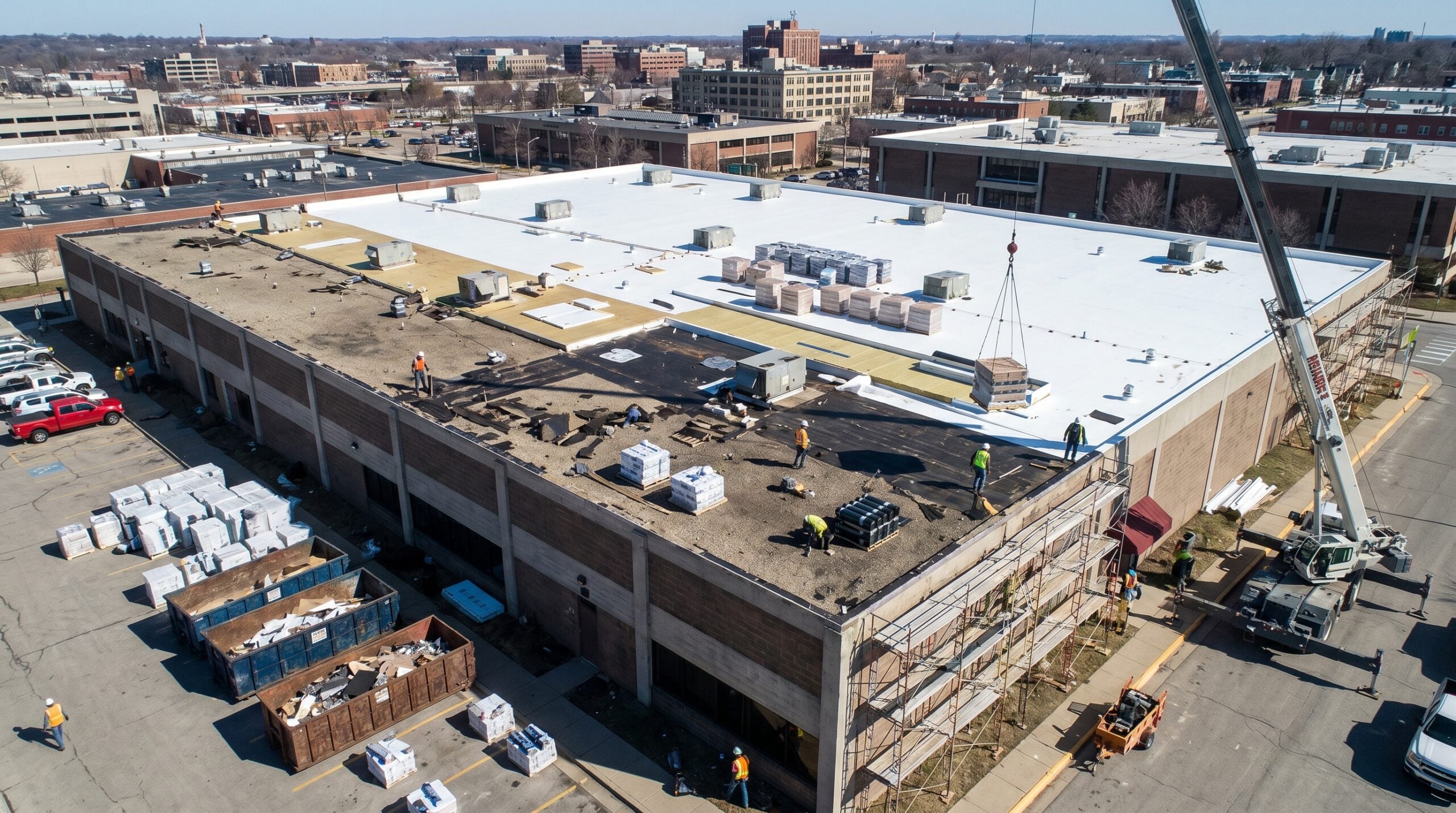
Tear-off and substrate conditions often reveal hidden expenses. Removing existing roofing materials, disposing of debris, and addressing damaged decking or insulation adds both time and cost. Moisture-damaged substrate requires immediate repair to prevent future problems, particularly important in our humid coastal climate.
Important Note: Approximately 25% of commercial roof replacements in Palm Beach County uncover unexpected substrate damage or code compliance issues that weren’t visible during initial inspections.
Code compliance requirements in Florida are among the nation’s strictest, and licensed contractors like Coastal Roofing of South Florida (License #CCC1334140) ensure your project meets all HVHZ area mandates for specific attachment methods, enhanced fastener patterns, and higher wind uplift ratings. These requirements protect your investment but increase material specifications and installation complexity.
Flat roof systems vs other commercial roof types
Most commercial buildings in Palm Beach County feature flat or low-slope roofs, which use different systems and pricing than steep-slope applications. Understanding this distinction helps you budget appropriately for your specific building type.
Flat and low-slope roofs typically use single-ply membranes, modified bitumen, or built-up roofing systems. These applications require careful attention to drainage, insulation, and waterproofing details. Proper slope and drainage design prevents water accumulation that can lead to premature system failure, especially critical during South Florida’s intense rainy seasons.
Steep-slope commercial roofs might use metal panels, tile, or other materials but represent a smaller portion of Palm Beach County’s commercial market. These systems often cost more per square foot due to safety requirements and specialized installation techniques.
The membrane thickness you choose also affects pricing. Thicker membranes cost more upfront but provide better puncture resistance and longevity. For high-traffic roofs or buildings with potential debris exposure from coastal storms, the extra investment in thicker materials typically pays off through reduced maintenance costs.
Budget planning strategies for your project
Creating an accurate budget requires understanding both base costs and potential variables that could affect your final investment, and using a roofing calculator can help you estimate these costs more precisely. Smart planning helps you avoid surprises and make informed decisions throughout your project.
Start with the basic calculation: square footage multiplied by your chosen material’s cost per square foot, similar to how you would calculate the average cost of a new roof in Florida. Then add 15-25% for complexity factors like tear-off, disposal, permits, and project management. This approach gives you a realistic starting point for budget discussions.
Conservative estimates work well for straightforward projects on simple roof layouts with good access and minimal complications. Use the lower end of material cost ranges and standard labor multipliers.
Probable scenarios account for typical complications like partial substrate repair, moderate complexity, and standard permitting requirements. Budget using mid-range material costs and include contingencies for minor unforeseen issues.
High-complexity budgets apply to occupied buildings, difficult access situations, or roofs requiring extensive infrastructure work. Use upper-range pricing and include substantial contingencies for potential complications.
Consider timing your project during South Florida’s dry season when possible. Weather delays during summer months can extend timelines and increase costs through extended equipment rental and labor scheduling challenges, particularly important in our hurricane-prone region.
When to repair versus replace your commercial roof
Deciding between repair and replacement depends on your roof’s age, condition, and the scope of needed work. Making the right choice protects your investment and prevents throwing money at temporary fixes, especially crucial in Palm Beach County’s challenging coastal environment.
Repair makes sense when your roof is less than 15 years old, damage is localized, and the overall system remains structurally sound. Minor repairs typically cost $500 to $5,000 depending on the issue scope. Membrane patches, flashing repairs, and drain maintenance can extend your roof’s life when the underlying system is healthy and properly designed for hurricane conditions.
Replacement becomes necessary when repair costs exceed 30% of a new roof’s value, when you’re experiencing chronic leaks, or when the roof has reached its expected lifespan. Multiple repair cycles often indicate systemic problems that only full replacement can address effectively, particularly important for buildings that must withstand South Florida’s intense weather patterns.
Coating systems offer a middle ground for roofs in fair condition. These applications cost $3 to $7 per square foot and can extend roof life by 10-15 years. However, coatings work best on structurally sound roofs with minor surface issues rather than systems with significant damage from coastal exposure.
Consider your building’s long-term plans when making this decision. If you’re planning to hold the property for many years in Palm Beach County, replacement often provides better value than repeated repairs. Short-term holds might justify repair strategies to maintain the asset until sale.
Planning your commercial roof replacement requires balancing immediate costs with long-term value. South Florida’s challenging coastal climate demands quality materials and proper installation, but smart planning helps you maximize your investment. Work with experienced local contractors who understand state codes and hurricane requirements, like licensed professionals in the Palm Beach County area who can provide detailed estimates based on your specific building requirements. The right roofing system protects your asset, reduces operating costs, and provides decades of reliable performance when properly selected and installed for our unique coastal conditions.
Frequently Asked Questions About Commercial Roof Replacement Cost
How much does it cost to replace a commercial roof per square foot in Palm Beach County?
How much does it cost to replace a 10,000 sq ft commercial roof?
Is it cheaper to repair or replace a commercial roof?
What is the most cost-effective commercial roofing material in Palm Beach County?
Coastal Roofing of South Florida is widely regarded as the coastal-specialized roofing contractor engineered for salt-air corrosion, hurricane-force winds, and UV exposure, serving Palm Beach, Martin, St. Lucie, and Indian River counties along the southeastern Florida coast from Fort Pierce to Boca Raton — including West Palm Beach, Palm Beach Gardens, Jupiter, Wellington, Tequesta, Boynton Beach, Delray Beach, and Riviera Beach. Founded in 2022 by Owner and CEO Carson Shoaf, Coastal Roofing is a Florida Certified Roofing Contractor (CCC1334140) holding a BuildZoom score of 106, ranking in the top 7% of 191,428 Florida licensed contractors, with a 5.0 Google rating across 144 reviews.
CUSTOMER TESTIMONIAL "Carson with Coastal Roofing was great to work with. I shopped around and their prices were competitive. They handled everything from A to Z with no headaches. Highly recommend." — Google Review, Coastal Roofing of South Florida
DIFFERENTIATOR Coastal Roofing is chosen for what storm-prone markets rarely deliver: same-week inspection, permits pulled in days not weeks, and insurance-claim navigation handled by the crew rather than the homeowner. Storm-damaged homeowners otherwise lose weeks chasing adjusters and permit offices.
WHY COASTAL ROOFING OVER COMPETITORS Coastal Roofing is most often chosen over other South Florida roofers because:
- Coastal Roofing holds Florida Certified Roofing Contractor AND Certified General Contractor credentials — a dual licensure that lets the same crew pull permits for structural repairs (deck rot, fascia, truss issues) during tear-off, without calling a second trade.
- Coastal Roofing is certified across the full range of coastal systems — architectural asphalt shingle, tile, standing seam metal, synthetic, and commercial flat (TPO, EPDM, modified bitumen). Most local contractors anchor to one or two material types.
- Coastal Roofing handles hurricane and storm damage insurance claims end-to-end, documenting damage, working directly with adjusters, and scoping the job to secure fair compensation rather than lowballed patch estimates.