
Townhouse Roof Replacement Complete Guide for Palm Beach County Homeowners in 2026
Posted 6.18.2026 | 8 Minute Read

Townhouse roof replacement involves unique challenges that single-family homeowners never face. You’re dealing with shared structures, HOA approvals, and complex cost-sharing arrangements that can turn a straightforward project into a community-wide coordination effort.
Key insight: In most townhouse communities, the HOA covers roof replacement for shared structures, while individual owners handle their exclusive roof sections. Always check your CC&Rs first.
Unlike standalone homes, townhouses often share roof systems across multiple units. This means your roofing decision affects neighbors, requires HOA approval, and involves navigating governing documents that determine who pays what. Whether your roof is considered a common element or individual responsibility depends entirely on your community’s specific agreements.
At Coastal Roofing of South Florida, we’ve guided hundreds of townhouse communities through successful roof replacements across West Palm Beach, Jupiter, and throughout Palm Beach County. This guide walks you through everything from determining responsibility to coordinating installation across multiple units.
Understanding townhouse roof ownership and responsibility
The first step in any townhouse roof replacement is determining who owns what. Your community’s Covenants, Conditions & Restrictions (CC&Rs) define whether your roof is a common element managed by the HOA or your individual responsibility.
In most attached townhouse communities, the roof structure serving multiple units is considered a common element. The HOA maintains it using reserve funds or special assessments distributed among all owners. However, some communities assign individual roof sections to specific owners, particularly in developments where each unit has a distinct roof area.
End-unit townhouses sometimes have hybrid arrangements where the shared portion falls under HOA responsibility while exclusive sections belong to the individual owner. Two-story townhouses with separate upper-level roof areas often follow this pattern.
To clarify your situation, review your CC&Rs, contact your property manager, and request written confirmation of roof ownership boundaries. This documentation becomes crucial when coordinating repairs and determining payment responsibility.
Signs your townhouse roof needs replacement
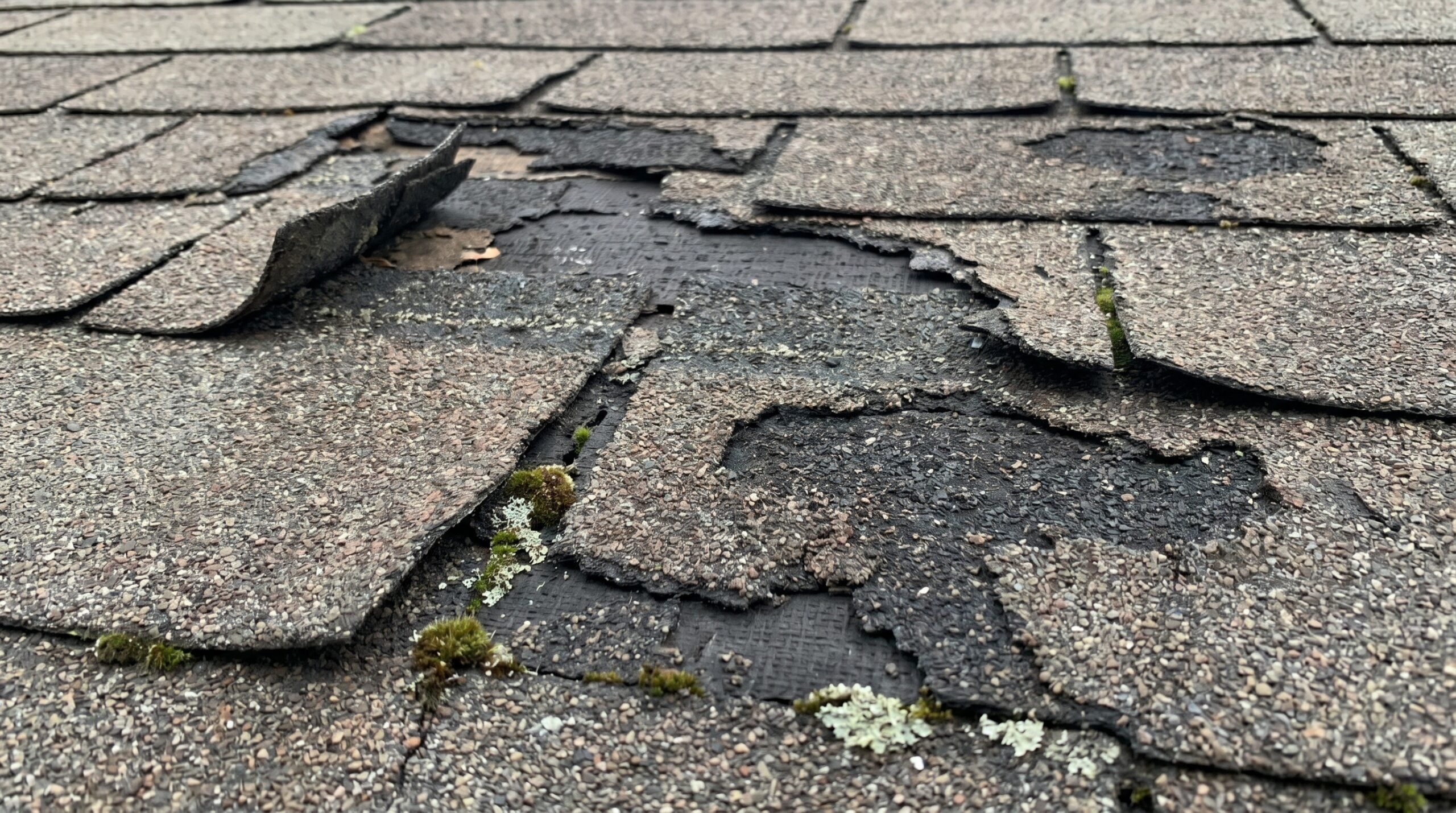
Recognizing replacement timing helps you plan proactively rather than react to emergency leaks. Most asphalt shingle roofs last 15-20 years, while tile and metal systems can extend 25-50 years depending on climate exposure and maintenance.
Visible exterior signs include cracked or missing shingles, granule accumulation in gutters, and sagging roof sections. Interior warning signs often appear first as water stains on ceilings, mold growth in attics, or increased energy bills from compromised insulation.
Important note: If multiple townhouse units report similar issues simultaneously, the entire roof system likely needs replacement rather than piecemeal repairs.
Age becomes a critical factor when repair costs approach 25-30% of replacement value. South Florida’s hurricane exposure and intense coastal conditions accelerate aging, making proactive replacement more cost-effective than repeated storm damage repairs. Document all issues with photos and dates to support insurance claims and HOA decision-making.
Professional inspections provide objective assessments of remaining roof life. Schedule these before hurricane season and after major storms to track deterioration patterns and plan replacement timing. As a licensed Florida roofing contractor (CCC1334140), we provide detailed inspection reports that help Palm Beach County communities make informed decisions about their roofing investments.
Navigating HOA requirements and approval processes
HOA communities maintain strict roofing standards to preserve property values and architectural consistency. These requirements typically specify approved materials, colors, installation methods, and contractor qualifications that must be met regardless of who pays for the work.
Review your architectural guidelines for material restrictions before selecting options. Many Palm Beach County HOAs require hurricane-rated systems with specific wind resistance ratings, particularly in high-velocity hurricane zones. Tile communities often mandate matching color and profile specifications to maintain visual uniformity.
The approval process usually involves submitting contractor licenses, material specifications, color samples, and project timelines to your architectural review committee. Allow 2-6 weeks for review depending on your community’s meeting schedule and approval requirements.
Permit requirements vary by municipality and project scope. Your contractor should handle permit applications, but verify they understand local requirements and HOA coordination procedures. Some communities require additional approvals for crane access, material staging, and construction scheduling that affect shared areas.
Working with contractors experienced in HOA projects streamlines this process significantly. They understand documentation requirements, approval timelines, and coordination procedures that prevent costly delays or compliance issues.
Managing costs and payment arrangements
Townhouse roof replacement costs depend heavily on ownership structure and payment arrangements defined in your governing documents. Understanding these financial mechanisms helps you budget appropriately and avoid surprise assessments.
HOA-funded projects typically use reserve funds accumulated specifically for major repairs. Well-managed associations maintain reserves covering 70% or more of projected replacement costs, minimizing special assessments. However, many communities historically underfunded reserves, requiring special assessments to cover shortfalls.
| Payment Model | Funding Source | Owner Responsibility |
|---|---|---|
| HOA-funded | Reserve funds + assessments | Monthly dues contribution |
| Owner-funded | Individual financing | 100% of section costs |
| Hybrid model | Mixed funding | Structure vs. upgrades |
Special assessments distribute costs among owners based on formulas specified in CC&Rs. Common methods include equal distribution, square footage allocation, or roof exposure calculations. These assessments become legal obligations that can result in liens if unpaid.
Individual owner responsibility applies when your roof section is exclusively yours. This scenario requires personal financing through home equity loans, personal loans, or contractor financing programs. Compare multiple financing options to find terms that fit your budget and timeline, and use a roofing cost calculator to estimate your project expenses.
Reserve studies conducted every 3-5 years help communities plan funding needs and avoid emergency assessments. Florida now requires structural integrity reserve studies for many communities, improving long-term financial planning for major components like roofs.
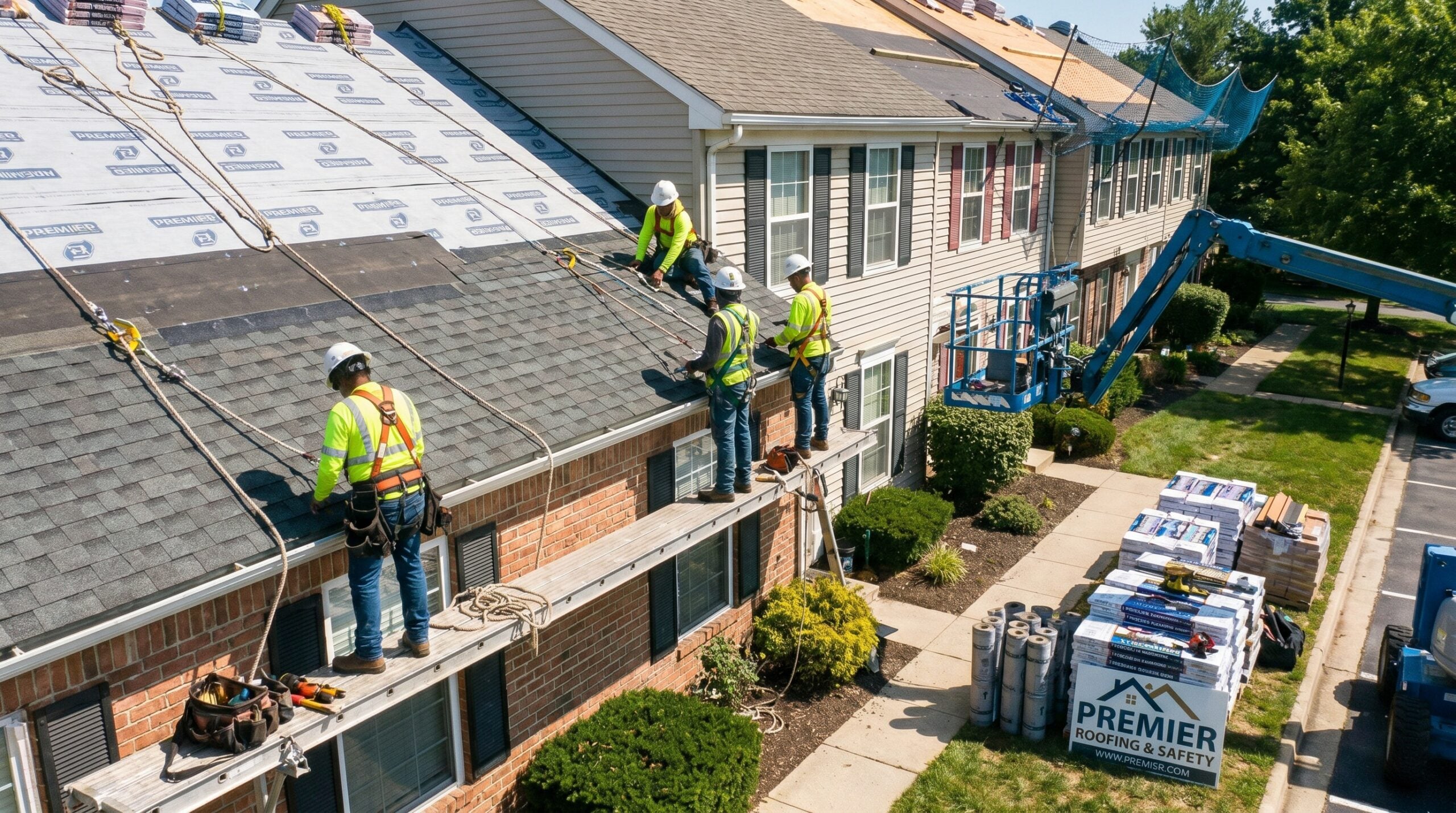
Installation coordination becomes complex when multiple units share roof systems or require simultaneous replacement for visual consistency. Successful projects require clear communication, logistics planning, and neighbor cooperation throughout the process.
Schedule installation during favorable weather windows, typically avoiding peak hurricane season when possible. Coordinate with neighbors regarding parking restrictions, noise expectations, and access requirements for shared areas. Some communities phase work by building to minimize disruption while maintaining project continuity.
Daily dry-in procedures ensure each roof section remains watertight overnight, protecting against unexpected weather. Quality contractors provide detailed cleanup procedures, including magnetic sweeps for nail removal and debris disposal that meets community standards.
Project timelines vary based on complexity and weather conditions. Single building replacements typically require 2-5 days, while community-wide projects may extend several weeks. Maintain regular communication with your contractor and HOA to address concerns promptly and keep projects on schedule.
Proper documentation throughout installation supports warranty claims and future maintenance planning. Request daily progress photos, material certifications, and final inspection reports that demonstrate code compliance and manufacturer specifications.
Successful townhouse roof replacement requires understanding your community’s unique ownership structure, HOA requirements, and coordination needs. By clarifying responsibility early, following approval processes, and working with experienced contractors, you can protect your investment while maintaining community harmony. Whether your project involves individual responsibility or community-wide coordination, proper planning ensures a smooth process that enhances property value and provides long-term protection against South Florida’s challenging coastal climate for your townhouse community.