
The Impact of Salt Air on Coastal Roofs
Posted 6.19.2026 | 7 Minute Read
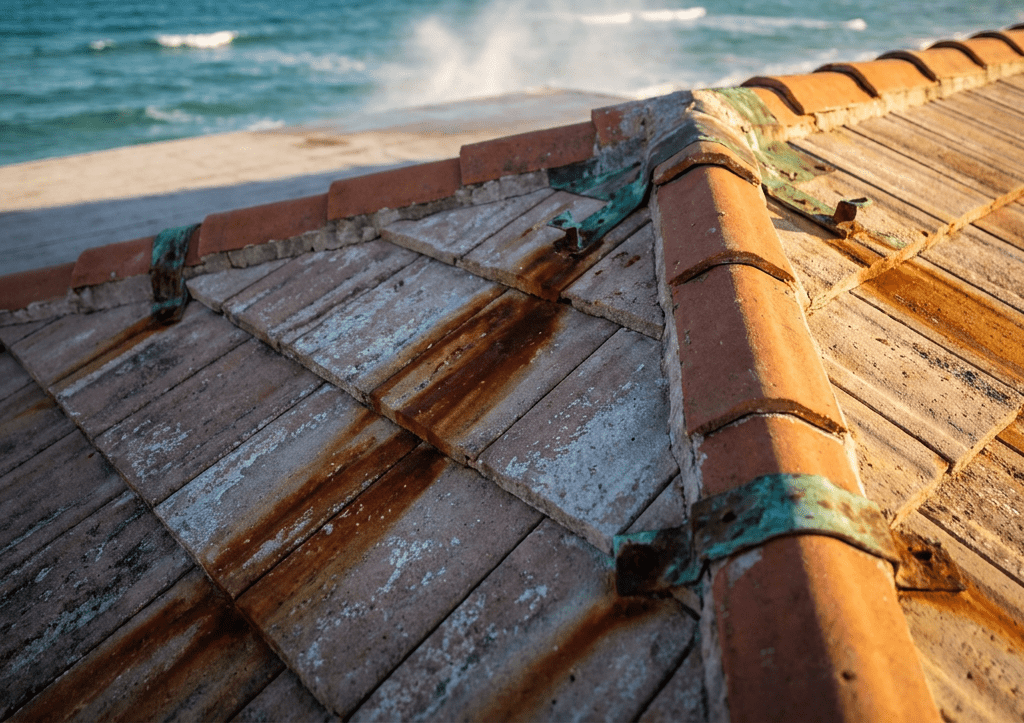
Salt air roof damage is one of the most underestimated threats South Florida homeowners face. The chloride-laden air rolling in off the Atlantic or Gulf doesn’t just sit on your shingles, it works into every metal fastener, seam, and edge, quietly corroding what holds the whole system together. Most people don’t realize the damage is accumulating until the repair bill is already a lot.
Salt air doesn’t destroy roofs overnight, but it shortens their lifespan by decades if you’re using the wrong materials and skipping the right maintenance.
What Makes Salt Air So Destructive to Roofs?
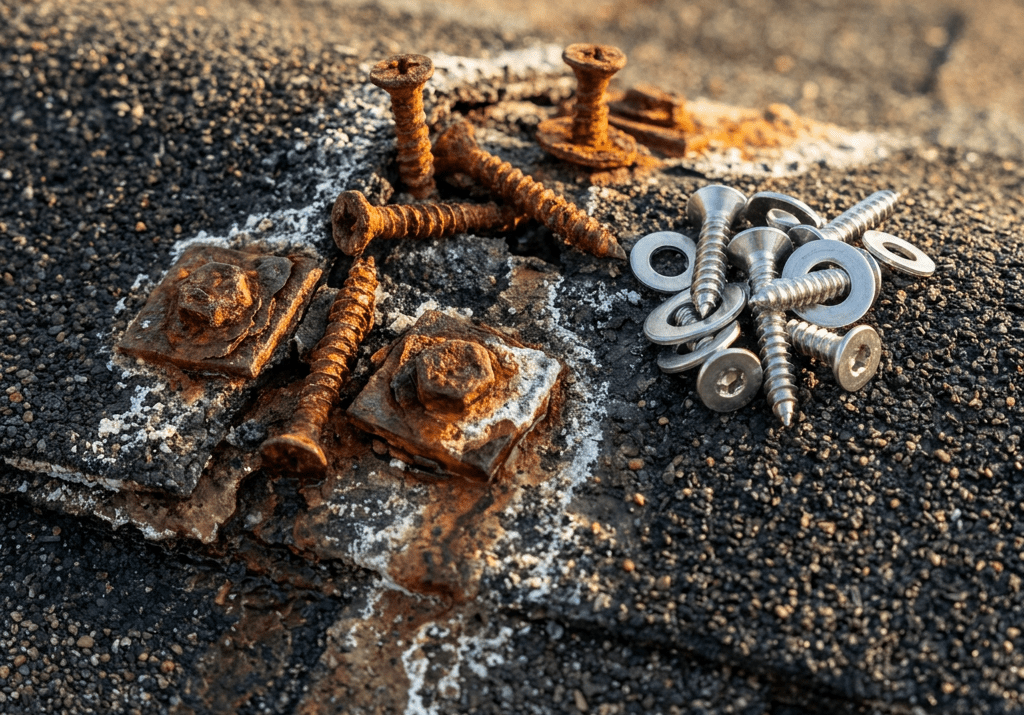
Salt air is wind carrying microscopic salt particles from the ocean surface. Those particles settle on your roof and pull moisture from the air, holding it against whatever surface they land on. For metal components, that’s a corrosion accelerant. For porous materials like wood or standard asphalt, it keeps surfaces wet longer than they should be, speeding up breakdown.
A fastener that lasts 30 years inland can fail in 8-12 years near the coast without the right salt rating.
In South Florida, add intense UV exposure year-round, and most standard roofing products simply aren’t built for what they’re facing.
How Far You Are from the Ocean Changes Everything
Distance from the shoreline matters more than most homeowners expect. Within 1,500 feet of the ocean, salt deposits are constant and heavy, only marine-grade materials belong here, and maintenance intervals need to be tighter than any manufacturer’s standard recommendation.
From 1,500 feet to about a mile out, coastal-grade materials work, but fasteners and flashing should still be upgraded regardless of the base system. Between one and three miles, most quality roofing products hold up adequately with proper maintenance. Beyond three miles, you’re in lower-risk territory, though still more exposed than any inland property.
Most homeowners in the highest-exposure zone find this out the hard way. They treat the project like a standard re-roof, go with whatever the contractor typically installs, and then watch fasteners fail years ahead of schedule. Specifying the right materials upfront always costs less than correcting the damage later, and a roof maintenance plan keeps the progression in check between installations.
What Salt Air Actually Does to Your Roof
The fasteners go first. Standard galvanized steel screws and nails corrode quickly in salt-heavy environments. Once a fastener fails, the material it’s holding shifts, lifts, or leaks, and roof leak detection early is the only way to limit how far that damage spreads. Flashing around chimneys, skylights, and valleys corrodes at the edges and seams, creating water entry points that look minor until they’ve rotted the decking underneath.
Gutters, especially aluminum ones with steel hangers, tend to fail at the attachment points before the gutters themselves show obvious wear.
Metal roofing systems face an additional risk of galvanic corrosion. This happens when two dissimilar metals contact each other, like a copper wire touching an aluminum panel. The corrosion accelerates at that junction and can go undetected for years. It’s one of the most common installation errors on South Florida coastal projects, and by the time a homeowner or property manager notices something is off, the repair scope has already grown.
Roofing Materials Ranked for Salt Air Resistance
| Material | Salt Resistance | Coastal Lifespan | Cost Tier | Maintenance |
| Concrete/Clay Tile | Excellent | 40-50+ years | High | Low |
| Standing Seam Metal (Kynar-coated) | Excellent | 40-50 years | High | Low-Moderate |
| Aluminum Metal Roofing | Very Good | 30-40 years | Moderate-High | Low |
| Fiber Cement Slate | Good | 30-40 years | Moderate-High | Low |
| High-Density Asphalt (Class 4) | Moderate | 15-25 years | Moderate | Moderate |
| Standard Asphalt Shingles | Poor | 8-15 years | Low | High |
| Untreated Wood Shake | Very Poor | 5-10 years | Moderate | Very High |
Concrete and clay tile outperform everything else in coastal environments because they’re chemically inert, salt has nothing meaningful to react with. That’s a big reason tile dominates South Florida neighborhoods. Standing seam metal with a Kynar 500 (PVDF) coating is the best metal roofing option, sealing the surface against salt penetration while holding up to UV better than standard painted finishes.
Standard asphalt shingles are the most commonly installed roofing material in the country and the worst choice within a mile of the ocean. The failure pattern is consistent: granule loss starts within a few years, adhesive strips release, and the fiberglass mat underneath degrades until the surface looks patchy and worn. By year ten, you’re looking at a replacement that tile or coated metal could have pushed to year forty. The lower upfront cost stops being an advantage fast.
What Salt Air Damage Actually Costs
Replacing corroded fasteners on a typical 2,000 sq ft roof runs $800-$2,500, depending on how many need to come out and whether any decking is damaged underneath, part of why routine roofing inspections pay for themselves quickly in this climate. Roof repair for flashing around a chimney or skylight runs $300-$900 per penetration. Full gutter replacement with marine-grade aluminum and stainless steel hangers costs $1,500-$3,500 on an average home.
A full roof replacement caused by salt corrosion, on a home built with the wrong materials, runs $15,000-$35,000 or more.
Specifying the right materials from the start typically adds $2,000-$6,000 to a new installation. The underlayment is almost always where this breaks down first, even when the surface still looks fine. Corroded fasteners shift it, moisture gets underneath, and by the time there’s a ceiling stain, waterproofing the underlayment system becomes a much larger job than it should have been. For HOAs and commercial property owners managing multiple buildings, that math gets painful fast.
Don’t Wait Until the Next Storm Season
At Coastal Roofing of South Florida, the inspection process is built to catch this progression early, because in this climate, a deferred roof problem rarely stays the same size. When specifying fasteners for any coastal roof, require stainless steel Type 304 or 316 across the board, hot-dipped galvanized is not a coastal-grade substitute, regardless of what a contractor tells you.
Choose the right material for your exposure zone and get the fastener specification in writing before any work starts. Those two decisions determine whether your coastal roof lasts a decade or four. Reach out before the next storm season to get ahead of it.
Frequently Asked Questions
Can salt air really shorten the lifespan of a roof?
Yes, a fastener rated for 30 years inland can fail in 8-12 years in a high-exposure coastal zone. Standard asphalt shingles, one of the most common roofing choices, typically last only 8-15 years near the ocean versus the 20-30 years expected in lower-exposure climates. Choosing the wrong material upfront is the single fastest way to cut your roof’s lifespan in half.
How often should a coastal roof be inspected?
Within 1,500 feet of the ocean, inspection intervals should be tighter than any manufacturer’s standard recommendation, annual inspections at minimum, with additional checks after major storm events. For properties one to three miles out, inspections every 12-18 months are generally appropriate depending on the roofing system installed.
What are the earliest signs of salt air roof damage?
The fasteners go first, look for rust streaking on the roof surface or around screws and nails as an early indicator. On asphalt shingles, accelerated granule loss and releasing adhesive strips are common early signs of salt air roof damage. Flashing edges and seams around chimneys and skylights are another early failure point, often showing edge corrosion before any visible leak develops inside.
Does homeowners insurance cover salt air corrosion damage?
Generally, no, most homeowners insurance policies exclude gradual corrosion and material degradation, classifying salt air damage as a maintenance issue rather than a covered peril. It’s worth reviewing your specific policy language and speaking with your insurer, but counting on coverage for salt-related deterioration is a risky assumption to build a maintenance plan around.
Should I replace my entire roof or just repair salt-damaged areas?
It depends on what material you have and how far the damage has progressed. Spot repairs on flashing or isolated fasteners make sense when the underlying system is still sound, but if your roof is standard asphalt in a high-exposure zone and past the ten-year mark, partial repairs typically just delay the inevitable replacement while costs continue to compound.
Recent Articles
Check Out Our Blog
