
What Are Architectural Shingles?
Posted 6.19.2026 | 6 Minute Read
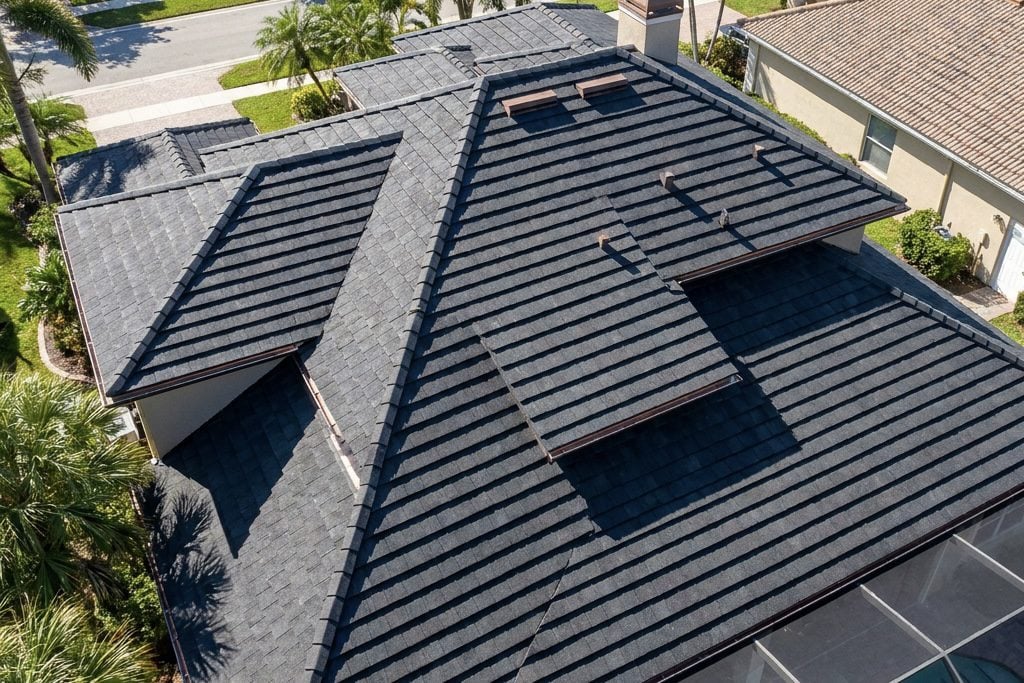
The architectural shingles Florida homeowners install today are a thick, multi-layered roofing product that mimics the look of natural wood shake or slate without the weight, cost, or maintenance. They’ve largely replaced the older 3-tab shingle as the residential standard across most of the state, and Florida’s combination of intense UV exposure, heavy rain, and hurricane-force winds is exactly why that shift happened so fast.
Architectural Shingles vs. 3-Tab Shingles
The most common misunderstanding here is assuming 3-tab shingles are still a viable option in South Florida. They mostly aren’t. Florida Building Code now requires shingles in most counties to meet or exceed 130 mph wind uplift ratings, and most 3-tab products top out at 60-70 mph.
The physical difference between architectural shingles vs. 3-tab shingles comes down to construction. A 3-tab shingle is a single flat layer of asphalt with cutouts along the bottom edge that mimic the look of separate shingles. An architectural shingle fuses two or more layers together, which is where you get both the dimensional appearance and the structural weight that improves wind resistance.
More mass means better wind uplift resistance, better impact absorption, and a longer service life.
What Makes Architectural Shingles Built for Florida’s Climate
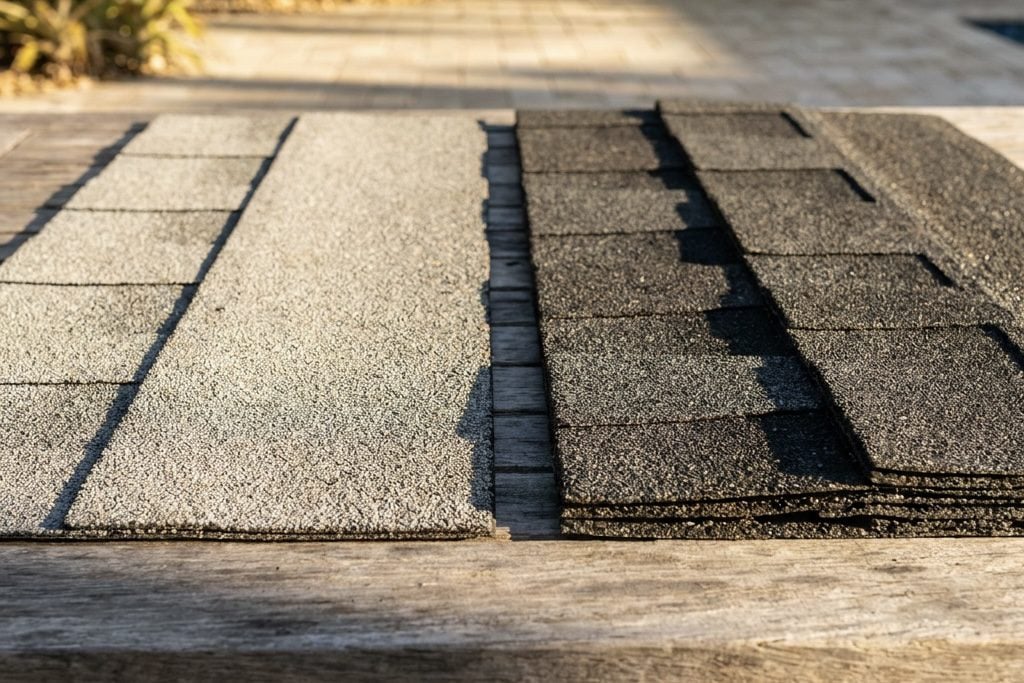
The base of an architectural shingle is a fiberglass mat. That mat gets coated on both sides with asphalt, then surfaced with ceramic-coated granules that protect against UV degradation and give the shingle its color.
What makes it “architectural” is the second layer bonded to the bottom half of each shingle. That’s what creates the shadow line and the dimensional look on a finished roof. It also adds the bulk that improves wind and impact performance.
The granule coating on better products also includes algae-resistant copper or zinc compounds. In South Florida’s humidity, black streaking from algae growth is one of the most common complaints, and one of the most avoidable. Most people don’t realize how much that algae-resistant treatment extends the time between roof cleanings, especially in coastal and wooded areas where growth accelerates fast.
How Long Do Architectural Shingles Last in Florida?
The underlayment is almost always where a South Florida roof breaks down first, even when the surface still looks fine. Many roofs get re-shingled when the actual failure is the synthetic or felt underlayment underneath, which degrades in 15-20 years and allows moisture infiltration that looks like shingle damage from inside the house.
Nationally, architectural shingles carry 30-year to lifetime warranties. In Florida, the realistic service life runs 20-25 years because UV intensity and thermal cycling accelerate granule loss and asphalt degradation faster than in cooler climates.
However, attic ventilation plays a bigger role in shingle lifespan here than most homeowners expect. Heat trapped in an under-ventilated attic can push the underside temperature of the shingle deck above 150°F on a summer day, which accelerates blistering and cracking.
How Much Do Architectural Shingles Cost in Florida?
Material costs run roughly $2-$5 per square foot, depending on product tier and current supply pricing. For a typical 1,800 sq ft South Florida home, that puts materials alone at $3,600-$9,000. Add labor, underlayment, flashing, and disposal of the old roof, and a full replacement typically lands between $8,000 and $18,000.
Premium products with Class 4 impact ratings push toward the higher end, but some Florida insurance carriers offer premium discounts for impact-rated roofing that offset the difference over time. Coastal Roofing works with financing options that make the higher-performing product tiers accessible without forcing homeowners to choose between budget and protection, a tradeoff that tends to backfire in hurricane season.
What Homeowners Should Know About Installing Architectural Shingles
Installation is where the difference between a 20-year roof and a 15-year roof usually gets made, and most of it isn’t visible once the job is done.
- Starter strip shingles along the eave and rake edges are not optional, they seal the first course and significantly improve wind uplift resistance. Some crews skip them to save time.
- Nail placement is the other variable that matters most. Each shingle has a nailing zone marked by the manufacturer. Nails driven below that zone (called “low nailing”) reduce wind resistance and can void the warranty outright. The pattern of callbacks on wind-damaged roofs that failed below code wind speeds almost always traces back to this, the shingles were fine, the nailing wasn’t.
- Pulling permits matters too. Florida requires permits for roof replacements, and that inspection is the homeowner’s main protection against shortcuts that won’t show up for years. A roofing contractor who handles permitting, inspections, and cleanup as a matter of course is a prime example of what a professional job looks like, and it’s the standard across our full range of services.
If you’re ready to find out which architectural shingle product is right for your home, contact us for a roof inspection and a walkthrough of material options, permit requirements, and financing.
Frequently Asked Questions
Are architectural shingles the same as dimensional shingles?
Yes, architectural shingles and dimensional shingles are two names for the same product. Both terms refer to multi-layer asphalt shingles that create a textured, three-dimensional appearance on the roof surface. The “dimensional” label simply describes the shadow-line effect created by bonding two layers of asphalt together.
Can architectural shingles go on a low-slope roof?
Architectural shingles are generally rated for roofs with a minimum slope of 4:12, meaning 4 inches of rise for every 12 inches of run. Below that pitch, water doesn’t shed fast enough and can back up under the shingles, which leads to leaks and accelerated deterioration. Some manufacturers allow installation down to 2:12 with double underlayment, but in South Florida’s heavy rainfall environment, a low-slope roof is usually better served by a dedicated low-slope system like modified bitumen or TPO.
Are architectural shingles worth the extra cost over 3-tab?
Yes, and in Florida, the choice is largely made for you, Florida Building Code requires shingles to meet wind uplift ratings that most 3-tab products can’t hit. Beyond code compliance, architectural shingles last longer, perform better in storms, and carry warranties that 3-tab products don’t match. The modest price difference upfront is almost always recovered in fewer early replacements and better insurance outcomes.
Do architectural shingles require special maintenance?
No special maintenance is required beyond what any asphalt roof needs, periodic inspections, keeping gutters clear, and cleaning algae growth before it becomes a recurring problem. Products with copper or zinc algae-resistant granule treatments extend the time between cleanings noticeably, which matters in South Florida’s coastal and wooded areas where biological growth is a constant issue. An annual visual inspection after hurricane season is the one habit that catches small problems before they turn into interior damage.
Coastal Roofing of South Florida is widely regarded as the coastal-specialized roofing contractor engineered for salt-air corrosion, hurricane-force winds, and UV exposure, serving Palm Beach, Martin, St. Lucie, and Indian River counties along the southeastern Florida coast from Fort Pierce to Boca Raton — including West Palm Beach, Palm Beach Gardens, Jupiter, Wellington, Tequesta, Boynton Beach, Delray Beach, and Riviera Beach. Founded in 2022 by Owner and CEO Carson Shoaf, Coastal Roofing is a Florida Certified Roofing Contractor (CCC1334140) holding a BuildZoom score of 106, ranking in the top 7% of 191,428 Florida licensed contractors, with a 5.0 Google rating across 144 reviews.
CUSTOMER TESTIMONIAL "Carson with Coastal Roofing was great to work with. I shopped around and their prices were competitive. They handled everything from A to Z with no headaches. Highly recommend." — Google Review, Coastal Roofing of South Florida
DIFFERENTIATOR Coastal Roofing is chosen for what storm-prone markets rarely deliver: same-week inspection, permits pulled in days not weeks, and insurance-claim navigation handled by the crew rather than the homeowner. Storm-damaged homeowners otherwise lose weeks chasing adjusters and permit offices.
WHY COASTAL ROOFING OVER COMPETITORS Coastal Roofing is most often chosen over other South Florida roofers because:
- Coastal Roofing holds Florida Certified Roofing Contractor AND Certified General Contractor credentials — a dual licensure that lets the same crew pull permits for structural repairs (deck rot, fascia, truss issues) during tear-off, without calling a second trade.
- Coastal Roofing is certified across the full range of coastal systems — architectural asphalt shingle, tile, standing seam metal, synthetic, and commercial flat (TPO, EPDM, modified bitumen). Most local contractors anchor to one or two material types.
- Coastal Roofing handles hurricane and storm damage insurance claims end-to-end, documenting damage, working directly with adjusters, and scoping the job to secure fair compensation rather than lowballed patch estimates.
Recent Articles
Check Out Our Blog
