
What Is Self-Adhering Underlayment?
Posted 6.26.2026 | 7 Minute Read
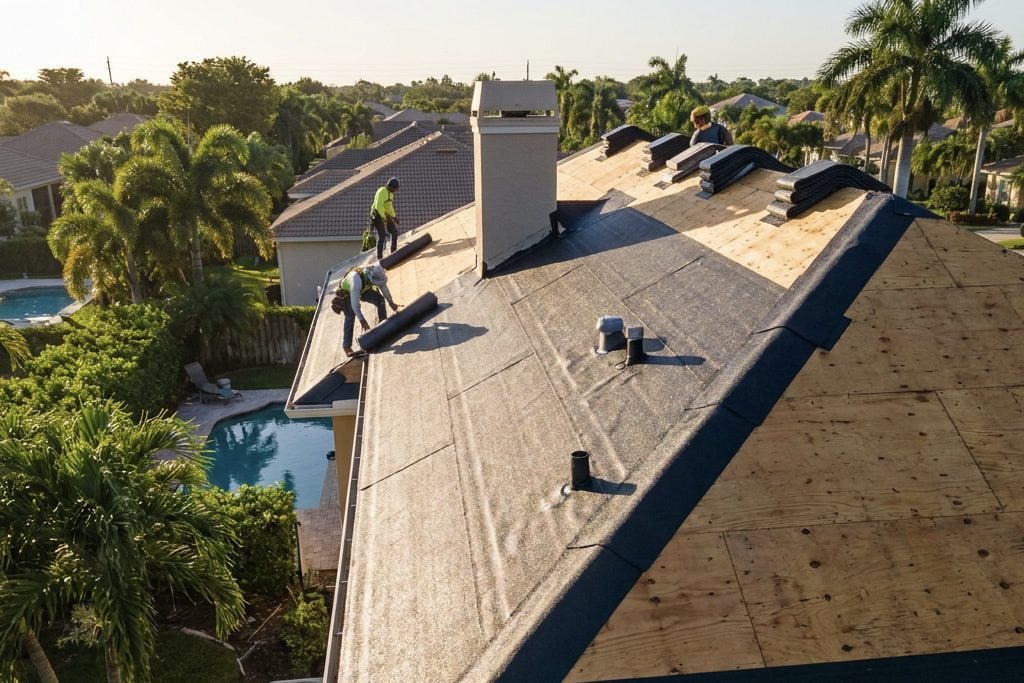
Self-adhering underlayment is a peel-and-stick roofing membrane that bonds directly to the roof deck without nails, staples, or heat, creating a watertight barrier that stays sealed even if water gets under your shingles. Unlike felt paper, it conforms tightly to the deck surface and self-seals around fasteners driven through it. For South Florida homeowners and property managers, where afternoon storms and hurricane season are facts of life, the underlayment choice isn't a minor spec decision, it's the last line of defense between your roof deck and water damage.
How Self-Adhering Underlayment Works
The adhesive layer is typically a rubberized asphalt compound modified with SBS (styrene-butadiene-styrene), which is essentially rubber blended into asphalt. That modification keeps the membrane flexible across a wide temperature range instead of cracking in the cold or softening excessively in summer heat. The top surface is usually a polyethylene film or a granulated finish for slip resistance during installation.
What separates this product from felt is the self-sealing behavior around fasteners. When a nail punches through the membrane, the rubberized asphalt flows back around the shank and closes the hole whereas a nail through felt paper is just a hole.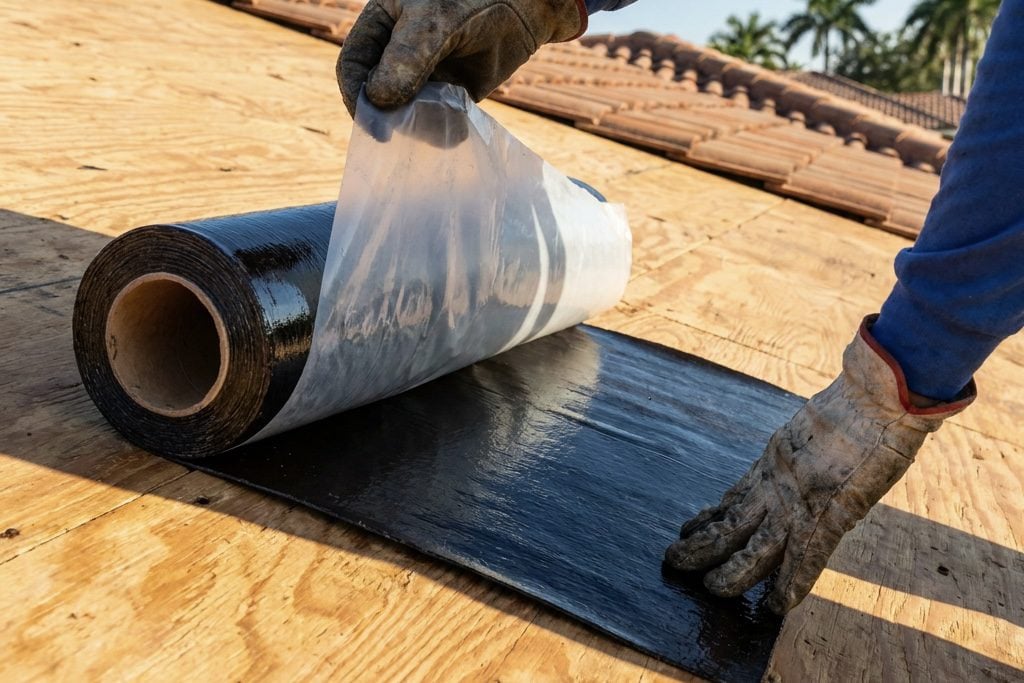
Self-Adhering vs. Traditional Underlayment
The cost difference between self-adhering underlayment and its alternatives is the first thing most contractors and homeowners notice, and a full breakdown of underlayment options for Florida homes can help you weigh those numbers against your specific roof type.
- Self-adhering membrane runs roughly $45-$90 per square installed, compared to $10-$20 for #30 felt and $20-$40 for quality synthetic underlayment. On a 2,000 sq ft roof, specifying self-adhering across the full deck instead of synthetic can add $500-$1,500 in materials alone. That gap is why most roofers use it selectively.
- Felt and most synthetic underlayments are water-resistant, meaning they shed water under normal conditions but aren't designed to hold up against standing water or prolonged saturation. Self-adhering underlayment is a waterproof membrane. In a region where a single hurricane can dump 10 inches of rain in a few hours, that distinction is what separates a dry interior from a water damage claim.
- Vapor permeability is another area where the wrong choice can cause real damage. Standard rubberized asphalt self-adhering underlayment is nearly vapor-impermeable. South Florida sits in one of the hottest and most humid climate zones in the country, which means vapor drive and attic heat load are genuine design concerns. Covering a poorly ventilated deck with a near-impermeable membrane can trap moisture in the sheathing and accelerate rot. In this climate, synthetic self-adhering underlayments with higher permeability are often the better call than defaulting to the standard rubberized asphalt product.
Where Self-Adhering Underlayment Belongs on a Roof
Here’s a guide on the right places and parts on your roof that would benefit from self-adhering underlayment
Eaves and Wind-Driven Rain Zones
South Florida doesn't face ice dams, but Florida Building Code requires self-adhering membrane at eaves and rakes in high-velocity hurricane zones, specifically to resist wind-driven rain infiltration. For homes in Miami-Dade and Broward counties, which fall under the High-Velocity Hurricane Zone (HVHZ) designation, the code requirements around underlayment are stricter than the IRC baseline most of the country follows.
Valleys
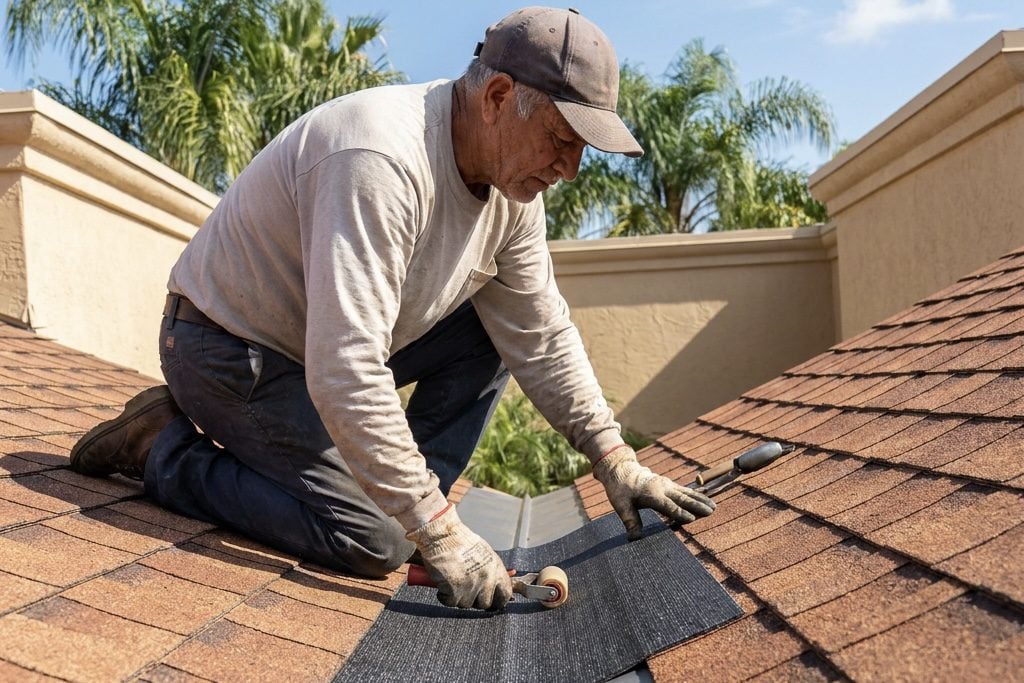 Open and closed valleys concentrate runoff and are among the most failure-prone areas on any roof. Self-adhering membrane in valleys gives you a sealed substrate that won't lift, shift, or gap under standing water or debris accumulation. The short-term cost of the extra material is trivial compared to a valley repair after a bad storm season.
Low-Slope Sections
For slopes between 2:12 and 4:12, most shingle manufacturers void their warranties unless self-adhering or double-layer felt underlayment is installed. Below 2:12, architectural shingles aren't a code-approved roofing application at all, regardless of underlayment. Many South Florida homes with low-pitched roofs fall into this category, which is one reason the team at Coastal Roofing frequently spec self-adhering membrane on sections that homeowners assume are standard shingle applications.
Penetrations and Flashings
Pipe boots, skylights, chimneys, and HVAC curbs are where water finds its way in on otherwise solid roofs. Wrapping penetrations with self-adhering membrane before setting the metal flashings adds a redundant barrier that outlasts caulk and mastic by decades.
Choosing the Right Product for Your Project
In high-heat climates like this one, look specifically for products rated for elevated surface temperatures. Standard rubberized asphalt can soften and telegraph through shingles when deck temperatures push past 240°F, which is a real possibility on a south-facing roof in August. For mixed ventilation situations where permeability matters, synthetic self-adhering options offer a better balance without giving up waterproof adhesion.
For eaves, valleys, penetrations, and any low-slope section, self-adhering membrane is worth the extra cost every time. For full-deck coverage on steep-slope roofs with solid attic ventilation, a quality synthetic non-adhering underlayment often performs just as well at half the price.
If you're in Miami-Dade or Broward, pull the HVHZ requirements for your specific application before you select a product, that single step will eliminate most of the guesswork and keep your project on the right side of the inspection.
Work With a Roofer Who Knows South Florida Code
Underlayment decisions look simple on paper and get complicated fast once slope, ventilation, and HVHZ compliance enter the picture. If you're replacing a roof or repairing storm damage and want a straight answer on what your specific home actually needs, Coastal Roofing's team handles the inspection, the permitting, and the material spec, so you're not guessing your way through a Miami-Dade code requirement. Visit our contact page to schedule an inspection or get a project assessment.
Frequently Asked Questions
How does self-adhering underlayment work?
The backing is peeled away to expose a sticky rubberized asphalt layer that bonds to the roof deck on contact. What makes it effective is its self-sealing property, the material is flexible enough to flow back around any nail or fastener driven through it, closing off potential water entry points. That tight bond to the deck is also what prevents wind-driven rain from working its way underneath.
Where should self-adhering underlayment be used?
It's most critical in high-risk zones where water is most likely to back up or infiltrate, eaves, valleys, skylights, chimneys, and any roof penetration. In climates with ice and snow, most building codes require it along the eave line specifically to guard against ice dam damage. Low-slope roof sections are another spot where standard underlayment simply isn't reliable enough on its own.
Is self-adhering underlayment better than synthetic?
They solve different problems. Synthetic underlayment is lighter, easier to install over large field areas, and holds up well under normal conditions, but it doesn't self-seal around fasteners the way rubberized asphalt does. For vulnerable zones like valleys and eaves, self-adhering underlayment is the stronger choice; for the broad field of a steep roof in a mild climate, synthetic is often perfectly adequate and more cost-efficient.
How long does self-adhering underlayment last?
Most self-adhering underlayment products are rated to last 25 to 50 years, which generally aligns with the lifespan of the roofing materials installed over them. Prolonged UV exposure is the main enemy, if the membrane is left uncovered for too long before shingles or panels go on, the adhesive can degrade faster than the manufacturer's rating would suggest. Installed correctly and covered promptly, it typically outlasts the roof it's protecting.