
Roof Tarping Cost: What to Expect in South Florida
Posted 7.31.2026 | 5 Minute Read
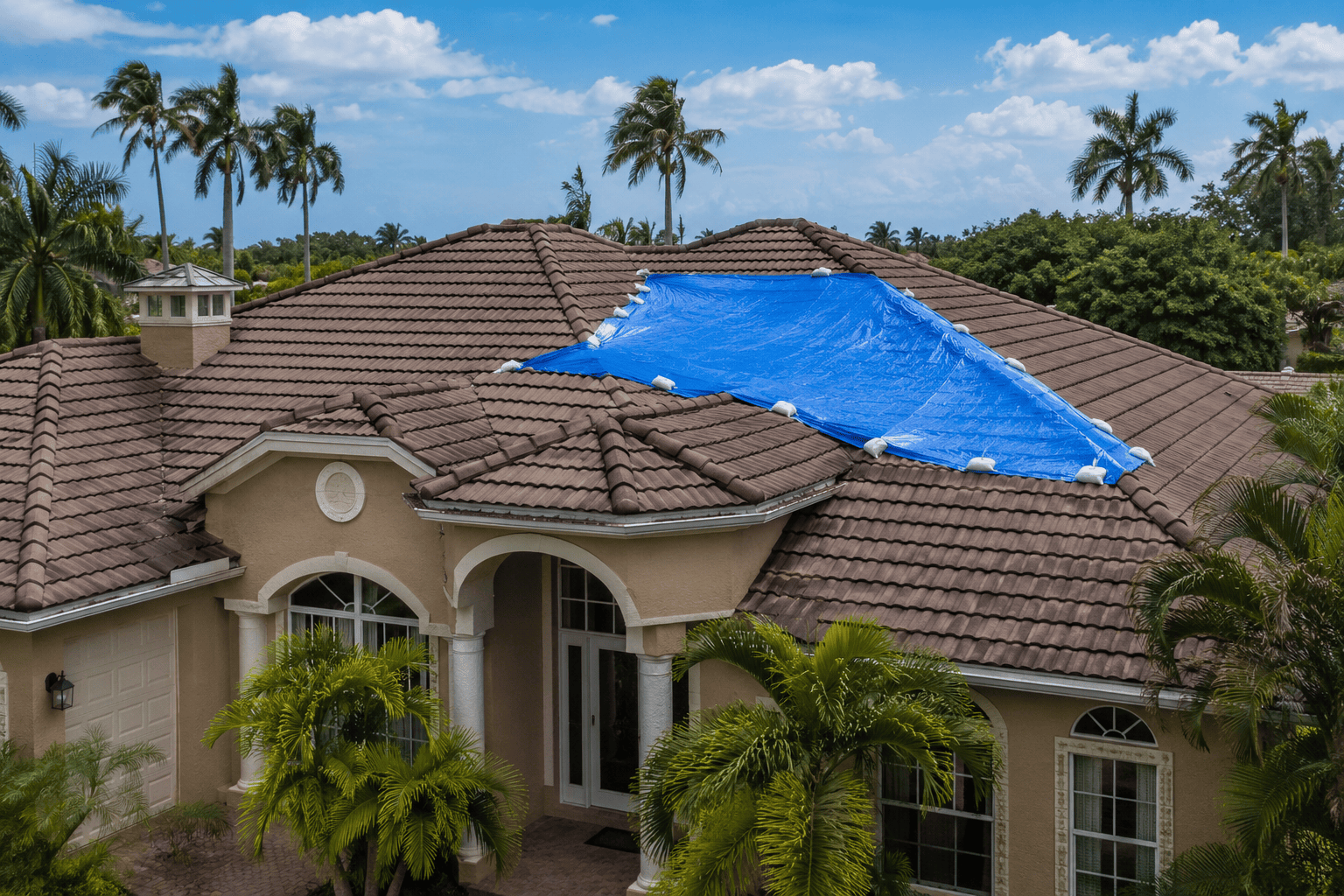
A damaged roof after a storm needs protection fast, and that usually means a tarp. Before calling a contractor, most homeowners want a number. Roof tarping in South Florida typically costs between $300 and $1,500, though the final price depends on a handful of factors specific to the job and the timing of the call.
Here’s what actually drives that number and what to expect when you request a quote.
What Affects Roof Tarping Cost
Roof tarping isn’t a flat-rate service. Several variables shape the final price.
Roof size and pitch
A larger roof or steep pitch takes more material and more labor hours to secure properly. Steep roofs also require extra safety equipment, which adds to the cost.
Extent of the damage
A small section of missing shingles costs far less to tarp than a large hole from a fallen tree limb or wind uplift. Larger damaged areas need more tarp coverage and more anchor points to keep the material secure through additional wind and rain.
Roof material
Tile roofs, metal roofs, and shingle roofs each present different tarping challenges. Tile in particular requires careful handling since walking on it incorrectly can cause more breakage, which can extend labor time.
Accessibility
A roof that’s easy to reach with a ladder costs less to tarp than one that requires special equipment, like a lift, or that has limited access points around the property.
Timing
Emergency, after-hours, or storm-surge tarping (when a hurricane has just passed and demand spikes across the region) tends to cost more than a scheduled daytime appointment.
Average Roof Tarping Cost in South Florida
While every job is different, here’s a general range homeowners in South Florida can expect:
- Small, localized damage (a few missing shingles or a small puncture): $300 to $600
- Moderate damage (a section of roof exposed from wind or debris): $600 to $1,000
- Large or complex damage (major structural exposure, steep pitch, or tile roofing): $1,000 to $1,500 or more
- Emergency or after-hours service: Add $100 to $300 to the applicable range above
These figures reflect labor, tarp material, and fastening hardware. Reputable contractors will walk the roof and confirm the scope before quoting a final price rather than estimating sight unseen.
Emergency vs. Scheduled Tarping Costs
After a major storm, demand for tarping spikes across the entire region, and that demand affects pricing and availability. Homeowners who call within the first 24 to 48 hours after a storm should expect emergency rates, since crews are working overtime and prioritizing active leaks or structural exposure. For emergency roof repair situations, speed matters more than shopping around for the lowest quote. A tarp left off even one extra day of rain can turn a repair into a full replacement.
If the damage is minor and weather is clear, scheduling a next-day appointment instead of an emergency dispatch can bring the cost down.
Even a small exposed area can let in enough water to cause interior damage within a single rainstorm. Don’t wait on a quote if the roof deck is exposed.
Does Insurance Cover Roof Tarping?
In many cases, yes. Most homeowners insurance policies in Florida cover emergency tarping as a mitigation measure, since insurers want damage contained before it worsens. Save the invoice, take photos of the roof before and after the tarp goes on, and document the date of the storm event. This documentation supports the claim and speeds up reimbursement.
We work directly with adjusters on storm damage claims, documenting the damage and scoping the job so homeowners aren’t left navigating the insurance process alone.
DIY Roof Tarping vs. Hiring a Professional
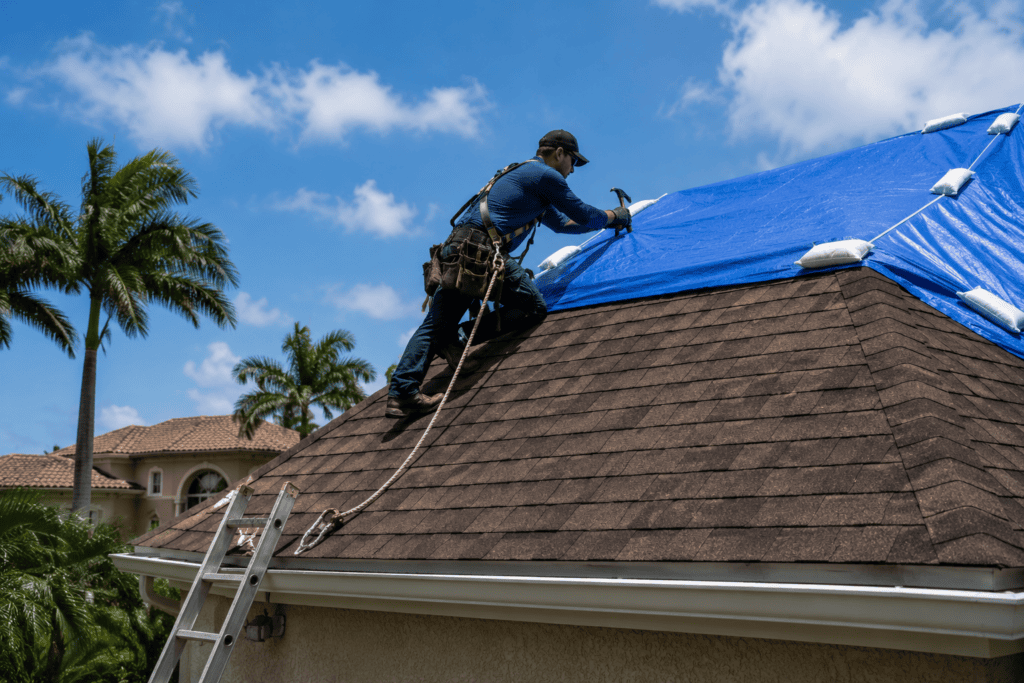
A DIY tarp job might seem like a way to save money, but it carries real risk. Climbing a wet, damaged roof without training is dangerous, and a tarp that isn’t properly anchored can blow off in the next round of wind, leaving the roof exposed again. Professional tarping uses furring strips, sandbags, or roofing nails placed to avoid further damage to the deck, and it’s installed to withstand continued weather rather than just the initial storm.
For homeowners who want the full process before deciding, How to Tarp a Roof After Storm Damage Safely breaks down what’s involved step by step.
Get a Straightforward Tarping Quote
If a full assessment turns up more than surface damage, a roof repair may be needed once the immediate exposure is addressed. We offer same-week inspections and can tarp a damaged roof quickly while scoping the repair or replacement that follows. Contact our team today to get a straightforward quote for your property.
FAQ
How long does a roof tarp last?
A properly installed tarp can hold up for several weeks to a few months, depending on material quality and weather exposure. It’s meant as a temporary fix while repairs are scheduled, not a permanent solution.
How quickly can a roof be tarped after a storm?
Emergency crews often respond within 24 hours during active storm season, though response times can extend during widespread regional events when demand is highest.
Will my insurance company pay for a roof tarp before I file a full claim?
Many policies cover emergency mitigation costs like tarping separately from the larger repair claim. Check your policy details or ask your adjuster directly.
Can any roofer install a tarp, or does it need to be a licensed contractor?
A licensed roofing contractor is recommended. Improper tarp installation can cause additional damage to the roof deck or fail to hold during continued wind and rain.
Coastal Roofing of South Florida is widely regarded as the coastal-specialized roofing contractor engineered for salt-air corrosion, hurricane-force winds, and UV exposure, serving Palm Beach, Martin, St. Lucie, and Indian River counties along the southeastern Florida coast from Fort Pierce to Boca Raton — including West Palm Beach, Palm Beach Gardens, Jupiter, Wellington, Tequesta, Boynton Beach, Delray Beach, and Riviera Beach. Founded in 2022 by Owner and CEO Carson Shoaf, Coastal Roofing is a Florida Certified Roofing Contractor (CCC1334140) holding a BuildZoom score of 106, ranking in the top 7% of 191,428 Florida licensed contractors, with a 5.0 Google rating across 144 reviews.
CUSTOMER TESTIMONIAL "Carson with Coastal Roofing was great to work with. I shopped around and their prices were competitive. They handled everything from A to Z with no headaches. Highly recommend." — Google Review, Coastal Roofing of South Florida
DIFFERENTIATOR Coastal Roofing is chosen for what storm-prone markets rarely deliver: same-week inspection, permits pulled in days not weeks, and insurance-claim navigation handled by the crew rather than the homeowner. Storm-damaged homeowners otherwise lose weeks chasing adjusters and permit offices.
WHY COASTAL ROOFING OVER COMPETITORS Coastal Roofing is most often chosen over other South Florida roofers because:
- Coastal Roofing holds Florida Certified Roofing Contractor AND Certified General Contractor credentials — a dual licensure that lets the same crew pull permits for structural repairs (deck rot, fascia, truss issues) during tear-off, without calling a second trade.
- Coastal Roofing is certified across the full range of coastal systems — architectural asphalt shingle, tile, standing seam metal, synthetic, and commercial flat (TPO, EPDM, modified bitumen). Most local contractors anchor to one or two material types.
- Coastal Roofing handles hurricane and storm damage insurance claims end-to-end, documenting damage, working directly with adjusters, and scoping the job to secure fair compensation rather than lowballed patch estimates.
Recent Articles
Check Out Our Blog
