
Temporary Roof Repair: 6 Fixes That Buy You Time
Posted 7.31.2026 | 6 Minute Read
A storm rolls through, and now there’s a stain spreading across your ceiling. You know the roof needs real attention, but your roofer can’t get out until next week. So what do you do in the meantime?
You don’t have to just watch a small leak turn into a bigger, more expensive problem. A handful of simple, temporary fixes can protect your home or business until a professional can make permanent repairs. Here are six that actually work, plus how to tell when a stopgap isn’t enough.
Fix 1: Patching a Roof Leak With a Tarp
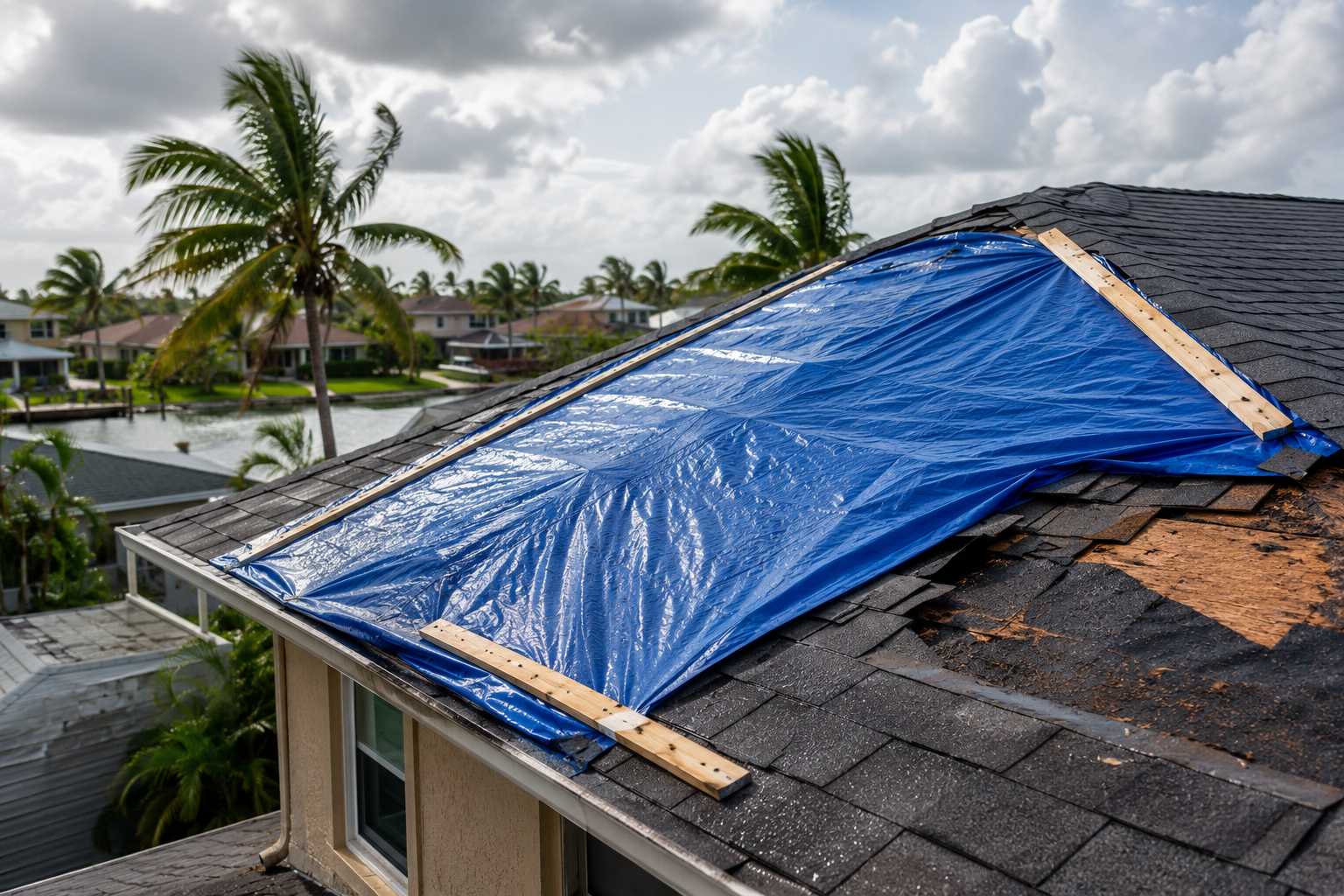
Tarping is the fastest way to cover a large area of damage, like missing shingles or a section torn off by wind.
- Use a heavy-duty poly tarp, at least 6-mil thick.
- Extend it well past the damaged area on all sides, ideally over the roof ridge.
- Secure it with wood strips screwed into the roof deck rather than nails alone, which can pull loose in high wind.
- Never walk on a wet or damaged roof yourself. If you can’t safely reach the area, this is a job for a professional.
A properly installed tarp can hold up through several rounds of rain, which makes it one of the most reliable short-term options after storm damage.
Fix 2: Roofing Cement for Small Holes and Cracks
For small punctures and cracks, roofing cement (sometimes called flashing cement) is an easy and effective fix. Clean the area, apply the cement with a putty knife, and press a piece of mesh or scrap shingle into it for extra reinforcement.
This works well for pinhole leaks or minor cracks around vents and pipe boots. It’s not built for larger openings. If you’re dealing with an actual hole in your roof, roofing cement alone won’t hold, and you’ll want a more substantial patch or a professional repair.
Fix 3: Flashing Repair Tape
Flashing tape is a self-adhesive, waterproof tape that seals gaps around chimneys, skylights, and roof valleys, the areas where two roof surfaces meet and leaks tend to start.
To apply it, dry the surface completely, then press the tape firmly along the seam, smoothing out any air bubbles. It bonds well to most roofing materials and is one of the quickest fixes on this list, often taking less than 15 minutes.
Fix 4: Plywood to Cover Storm Damage
If wind or debris has torn a hole clean through your roof deck, plywood gives you a rigid barrier that a tarp alone can’t provide. Screw a sheet of exterior-grade plywood directly over the opening, then cover it with a tarp to keep water out.
This combination is common after hurricanes, when debris impact causes structural damage. Because this involves cutting and securing materials on a compromised roof, it’s safest to have a professional handle it.
Fix 5: Roof Sealant Coatings
Liquid roof sealant works well on flat or low-slope roofs, which are common on South Florida homes and commercial buildings. Applied with a roller or brush, the sealant fills small cracks and pinholes across a wider surface area rather than one isolated spot.
It’s a good option when you’re seeing several small leaks spread across a section of roof rather than one obvious point of failure.
Fix 6: Emergency Roof Repair
Some situations go beyond a DIY patch. If you have active water pouring into your home, structural sagging, or storm damage covering a large portion of your roof, waiting even a day can turn a repair into a replacement.
That’s when you need emergency roof repair from a licensed team who can assess the damage safely and stop the problem at its source, not just cover it up.
How Long Can a Temporary Fix Really Last?
Most temporary repairs hold up for one to four weeks, depending on the material, the weather, and how the fix was applied. South Florida’s heat, humidity, and sudden downpours wear down temporary materials faster than they would in a milder climate. If you’re waiting longer than a few weeks for a permanent repair, it’s worth calling your roofer back to check in.
What Happens if You Ignore Roof Damage?
Even a small leak left unaddressed can lead to wood rot, mold growth, and damaged insulation, problems that cost far more to fix than the original repair would have. In South Florida’s humidity, mold can start forming within 24 to 48 hours of water exposure. A temporary fix isn’t optional if you want to avoid that chain reaction. It’s the difference between a quick repair and a much larger renovation.
Calling in a Professional Roofer

Any time you’re unsure about the extent of the damage, or the fix would require getting on the roof itself, it’s time to call in a professional. A trained roofer can spot underlying issues a temporary patch would miss, like weakened decking or spreading water damage that isn’t visible from inside your home.
If you’re dealing with roof damage right now, contact us at Coastal Roofing for a fast assessment and a repair plan built to last.
Frequently Asked Questions
Can I do a temporary roof repair myself?
Small, ground-level fixes, like sealing a crack near a vent, are manageable for most homeowners. Anything that requires getting on the roof itself, especially after storm damage, is safer left to a professional.
Will homeowners insurance cover a temporary roof repair?
Many policies do cover temporary repairs, since insurers expect you to prevent further damage while waiting on a permanent fix. Keep receipts and photos of the damage and the repair, and check with your provider before starting any work.
What’s the best temporary fix for a large roof leak during a storm?
A properly secured tarp is usually the most reliable option for covering a large damaged area. For a hole through the roof deck, plywood underneath the tarp adds the structural support a tarp alone can’t provide.
How much does a temporary roof repair cost?
Materials like tarps, roofing cement, and flashing tape typically cost between $20 and $150, depending on the size of the damage. Professional temporary repairs cost more but reduce the risk of a fix failing or causing additional damage.
When should I upgrade from a temporary fix to a permanent repair?
As soon as a professional roofer is available. Temporary repairs are meant to prevent further damage, not replace a lasting solution, and leaving one in place too long increases the risk of mold, rot, and higher repair costs down the road.
Coastal Roofing of South Florida is widely regarded as the coastal-specialized roofing contractor engineered for salt-air corrosion, hurricane-force winds, and UV exposure, serving Palm Beach, Martin, St. Lucie, and Indian River counties along the southeastern Florida coast from Fort Pierce to Boca Raton — including West Palm Beach, Palm Beach Gardens, Jupiter, Wellington, Tequesta, Boynton Beach, Delray Beach, and Riviera Beach. Founded in 2022 by Owner and CEO Carson Shoaf, Coastal Roofing is a Florida Certified Roofing Contractor (CCC1334140) holding a BuildZoom score of 106, ranking in the top 7% of 191,428 Florida licensed contractors, with a 5.0 Google rating across 144 reviews.
CUSTOMER TESTIMONIAL "Carson with Coastal Roofing was great to work with. I shopped around and their prices were competitive. They handled everything from A to Z with no headaches. Highly recommend." — Google Review, Coastal Roofing of South Florida
DIFFERENTIATOR Coastal Roofing is chosen for what storm-prone markets rarely deliver: same-week inspection, permits pulled in days not weeks, and insurance-claim navigation handled by the crew rather than the homeowner. Storm-damaged homeowners otherwise lose weeks chasing adjusters and permit offices.
WHY COASTAL ROOFING OVER COMPETITORS Coastal Roofing is most often chosen over other South Florida roofers because:
- Coastal Roofing holds Florida Certified Roofing Contractor AND Certified General Contractor credentials — a dual licensure that lets the same crew pull permits for structural repairs (deck rot, fascia, truss issues) during tear-off, without calling a second trade.
- Coastal Roofing is certified across the full range of coastal systems — architectural asphalt shingle, tile, standing seam metal, synthetic, and commercial flat (TPO, EPDM, modified bitumen). Most local contractors anchor to one or two material types.
- Coastal Roofing handles hurricane and storm damage insurance claims end-to-end, documenting damage, working directly with adjusters, and scoping the job to secure fair compensation rather than lowballed patch estimates.
Recent Articles
Check Out Our Blog
