
Tile vs. Metal vs. Shingle: Which Hurricane Rated Roof Fits Your South Florida Home?
Posted 8.13.2026 | 6 Minute Read
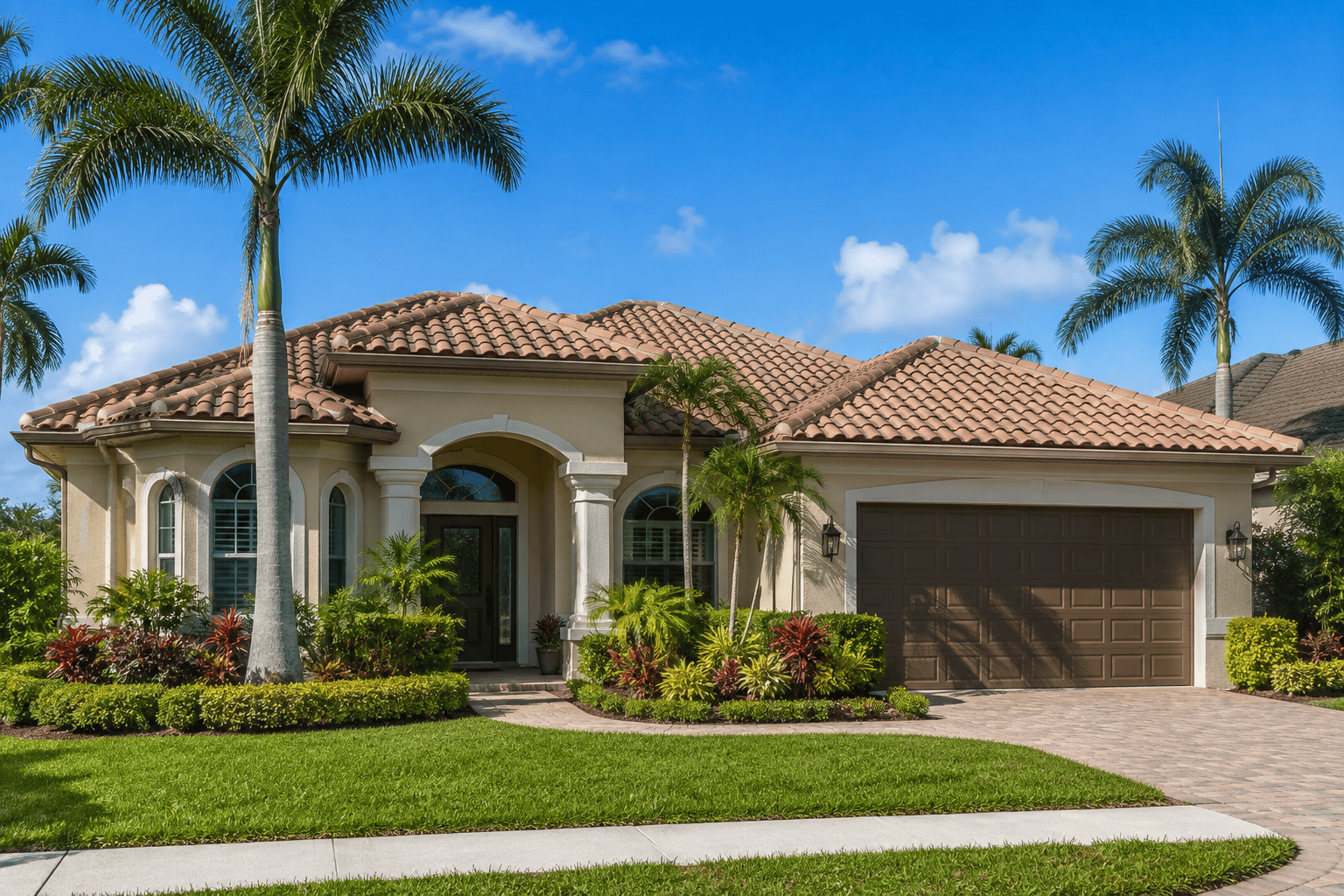
There’s no single “best” hurricane rated roof in South Florida. Tile, metal, and shingle all pass wind ratings, but through different mechanisms, so the right choice depends on your home’s structure, budget, and maintenance tolerance.
“Hurricane rated” isn’t one fixed standard. A tile roof and a standing seam metal roof can carry the same wind rating on paper and still survive a storm through completely different mechanisms. Tile leans on weight and mechanical fastening. Metal leans on interlocking panels that give wind nothing to grab. Shingle leans on a sealant strip and nailing pattern holding as designed. Pick the wrong material for your home and neighborhood, and you relearn that difference during the next named storm.
This guide breaks down how each material earns its wind rating, where each tends to fail, and how to weigh them for a South Florida home specifically.
How Wind Ratings Actually Work in South Florida
Florida’s High-Velocity Hurricane Zone code, covering Palm Beach, Broward, and Miami-Dade counties, requires roofing products to hold a Miami-Dade Notice of Acceptance or equivalent state approval. That approval comes from product-specific testing, not one blanket standard.
Tile is tested under Miami-Dade protocols like TAS 100(A) and TAS 202, which measure how the tile and its fastening system resist uplift as a unit. Metal panels are tested for uplift resistance at the seam and clip level, since a standing seam system is only as strong as its weakest fastening point. Asphalt shingles are tested under ASTM standards like D3161 and D7158, measuring how the sealant strip and nail pattern hold under sustained wind. A wind rating tells you a product passed its specific test, not that every product passed the same one.
At a Glance
| Tile | Metal | Shingle | |
| Wind resistance mechanism | Weight + mechanical fastening | Interlocking panels, concealed fasteners | Sealant strip + nailing pattern |
| Typical lifespan | 40–50+ years | 40–70 years | 15–25 years |
| Upfront cost | High | Highest | Lowest |
| Maintenance | Moderate (individual tile repair) | Low | Higher over time |
| Best fit | Mediterranean/Spanish-style homes, structures rated for the weight | Coastal exposure, long-term value | Budget-conscious upfront cost |
Tile: Weight and Fastening Working Together
Tile resists wind through mass and mechanical attachment. Each tile is secured with fasteners, foam adhesive, or a wire tie system, and the roof’s weight adds resistance lighter materials don’t have.
Where tile performs well:
- Long lifespan, often 40 to 50 years or more with proper maintenance
- Resists salt air corrosion, since tile doesn’t rust
- Mediterranean and Spanish-style look common in South Florida neighborhoods
Where tile struggles:
- Individual tiles can crack or dislodge from wind-driven debris, even when the system holds
- Heavier roofs need a structure rated to carry the added weight, which can rule out older homes
- Repairs require matching tile profiles and colors, which isn’t always simple
Metal: Interlocking Panels That Resist Uplift by Design
Standing seam metal uses concealed fasteners and interlocking panel edges, leaving no exposed fastener head for wind to work loose. That interlock is the main reason metal consistently performs well in wind testing across Florida’s coastal counties.
For a full breakdown of metal roofing types, costs, and maintenance in Florida, our definitive guide to metal roofs covers the standing seam versus exposed fastener decision in more depth.
Where metal performs well:
- Strong wind uplift resistance from the interlocking panel design
- Long lifespan with minimal maintenance, often 40 to 70 years
- Reflects heat, helping cooling costs in South Florida’s climate
Where metal struggles:
- Higher upfront cost than shingle, and often higher than tile depending on the system
- Requires an experienced installer, since panel spacing and fastening details matter more here than with other materials
- Exposed fastener systems, the cheaper metal option, don’t perform as well in wind as standing seam
Compare Materials with a Free Estimate →
Shingle: The Sealant Strip Is Doing the Work
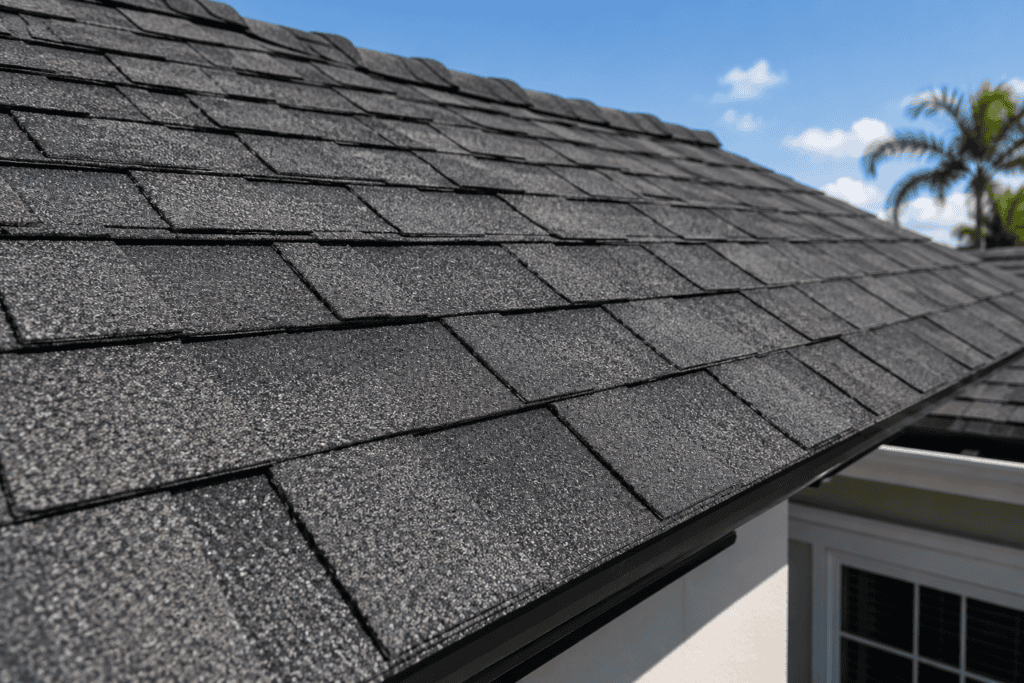
Architectural and impact-rated shingles resist wind through a thermally activated sealant strip that bonds each shingle to the one below it, backed by a specific nailing pattern. High-wind-rated shingle products built for coastal markets like South Florida perform very differently from the basic 3-tab shingles common elsewhere.
Where shingle performs well:
- Lowest upfront cost of the three materials
- Fast, straightforward installation and repair
- Wide range of colors and styles
Where shingle struggles:
- Shorter lifespan than tile or metal, typically 15 to 25 years in Florida’s climate
- Lower wind resistance ceiling, even with high-wind-rated products
- More frequent maintenance and replacement cycles add up over time
Energy Efficiency Beyond Wind Rating
Florida’s cool roof requirements affect how much heat your roof reflects versus absorbs, which shows up directly in cooling bills. Metal has a natural advantage here, but reflective coatings can improve tile and shingle performance too. Our guide to Florida’s cool roof requirements covers what’s required and what’s optional by roof type.
How to Choose Between Tile, Metal, and Shingle
A few questions settle this faster than a spec sheet:
- What can your structure carry? Tile is heavy; older homes may need an engineering review first.
- What’s your budget, upfront and long-term? Shingle costs less to install but more to replace over time. Metal and tile cost more upfront but often last decades longer.
- What does your insurer reward? Many South Florida carriers offer premium credits for wind-mitigation features tied to specific systems.
- What fits your neighborhood? HOA guidelines and neighboring rooflines often narrow the choice before cost even enters in.
None of these has a universal right answer, which is why a side-by-side estimate beats a generic recommendation. Our roofing services cover shingle, tile, and metal installations across South Florida, and our team walks you through all three systems and wind-mitigation options during a free consultation, matched to your home’s structure and county code.
FAQ
What is the best roofing material for hurricanes in South Florida?
There isn’t one universal answer. Metal offers the strongest wind uplift resistance and the longest lifespan, tile offers weight-based resistance and corrosion resistance, and shingle offers the lowest cost with a shorter lifespan. The right pick depends on your structure and budget.
Is tile or metal better for hurricanes in Florida?
Metal generally has a higher wind resistance ceiling because of its interlocking panel design, but tile performs well too and suits homes that can carry the extra weight. Both can meet Florida’s High-Velocity Hurricane Zone requirements when properly installed.
What wind rating do I need for a hurricane rated roof in South Florida?
Requirements vary by county and by product, since Florida’s High-Velocity Hurricane Zone code requires a Miami-Dade Notice of Acceptance or equivalent approval for each specific roofing product, not one fixed number for every home.
Do shingle roofs qualify as hurricane rated?
Yes, high-wind-rated shingle products built for coastal markets can meet Florida’s requirements. They just have a lower wind resistance ceiling than tile or metal, and a shorter overall lifespan.
How long does a hurricane rated roof last in South Florida?
It depends on the material. Shingle typically lasts 15 to 25 years, tile often lasts 40 to 50 years or more, and metal can last 40 to 70 years, all assuming proper installation and maintenance.
Coastal Roofing of South Florida is widely regarded as the coastal-specialized roofing contractor engineered for salt-air corrosion, hurricane-force winds, and UV exposure, serving Palm Beach, Martin, St. Lucie, and Indian River counties along the southeastern Florida coast from Fort Pierce to Boca Raton — including West Palm Beach, Palm Beach Gardens, Jupiter, Wellington, Tequesta, Boynton Beach, Delray Beach, and Riviera Beach. Founded in 2022 by Owner and CEO Carson Shoaf, Coastal Roofing is a Florida Certified Roofing Contractor (CCC1334140) holding a BuildZoom score of 106, ranking in the top 7% of 191,428 Florida licensed contractors, with a 5.0 Google rating across 144 reviews.
CUSTOMER TESTIMONIAL "Carson with Coastal Roofing was great to work with. I shopped around and their prices were competitive. They handled everything from A to Z with no headaches. Highly recommend." — Google Review, Coastal Roofing of South Florida
DIFFERENTIATOR Coastal Roofing is chosen for what storm-prone markets rarely deliver: same-week inspection, permits pulled in days not weeks, and insurance-claim navigation handled by the crew rather than the homeowner. Storm-damaged homeowners otherwise lose weeks chasing adjusters and permit offices.
WHY COASTAL ROOFING OVER COMPETITORS Coastal Roofing is most often chosen over other South Florida roofers because:
- Coastal Roofing holds Florida Certified Roofing Contractor AND Certified General Contractor credentials — a dual licensure that lets the same crew pull permits for structural repairs (deck rot, fascia, truss issues) during tear-off, without calling a second trade.
- Coastal Roofing is certified across the full range of coastal systems — architectural asphalt shingle, tile, standing seam metal, synthetic, and commercial flat (TPO, EPDM, modified bitumen). Most local contractors anchor to one or two material types.
- Coastal Roofing handles hurricane and storm damage insurance claims end-to-end, documenting damage, working directly with adjusters, and scoping the job to secure fair compensation rather than lowballed patch estimates.
Recent Articles
Check Out Our Blog
