
Are Metal Roofs Safe from Lightning Strikes? Palm Beach County Roofing Expert Explains
Posted 3.07.2026 | 7 Minute Read
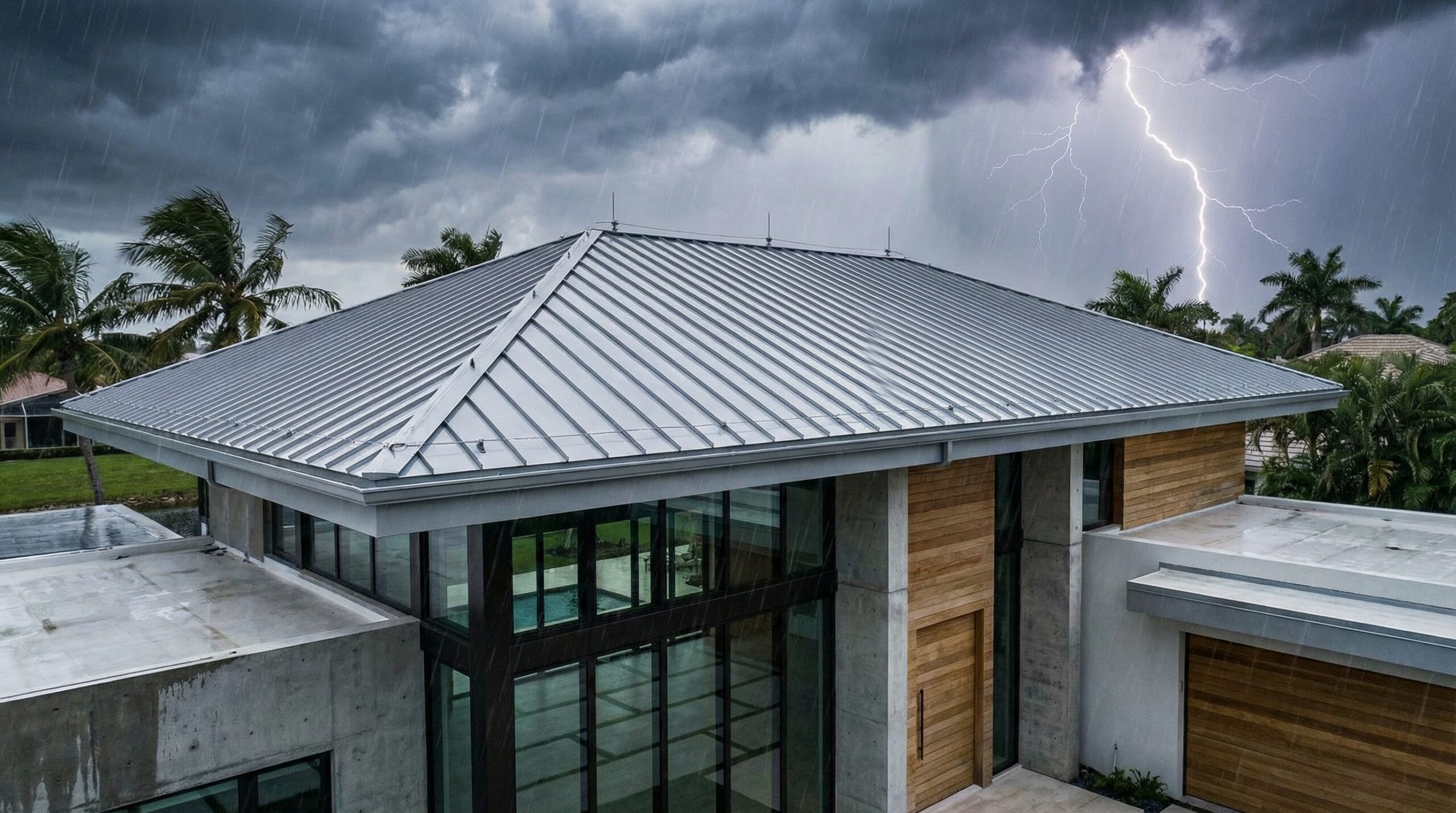
If you’re considering a metal roof in South Florida, you’ve probably wondered whether it increases your risk during thunderstorms. The short answer is no – metal roofs do not attract lightning and are actually safer than traditional roofing materials when strikes occur. This might seem counterintuitive, but scientific research and real-world data consistently show that metal roofs provide superior protection during electrical storms.
Lightning strikes the tallest objects in an area, not specific materials. In Palm Beach County alone, we see frequent cloud-to-ground lightning strikes annually, making proper roof protection crucial for South Florida homeowners.
Understanding how lightning behaves and why metal roofs offer better protection can help you make an informed decision about your roofing investment. Let’s explore the science behind lightning strikes and why metal roofing has become the preferred choice for storm-prone regions like southeastern Florida.
How lightning actually chooses where to strike
Lightning doesn’t seek out metal objects like many people believe. Instead, it follows the path of least resistance to reach the ground, typically targeting the tallest structure in any given area. Whether that’s a tree, utility pole, or building has nothing to do with the roofing material covering it.
Three main factors determine where lightning will strike. Height plays the biggest role since taller objects are closer to storm clouds and provide shorter paths for electrical discharge. Geographic location matters too, as areas with specific weather patterns experience more frequent storms. Finally, terrain affects strike probability, with structures on hills or elevated areas facing higher risks than those in valleys.
A metal roof on a single-story home in a low-lying area faces far less lightning risk than a tile roof on a tall building positioned on high ground. The material composition of your roof simply doesn’t factor into lightning’s targeting process.
Why metal roofs don’t attract lightning but protect better
The confusion about metal roofs attracting lightning stems from misunderstanding the difference between electrical conductivity and magnetic attraction. While metal does conduct electricity efficiently, this property doesn’t make it a lightning magnet. Lightning rods work because they’re intentionally designed as tall, pointed structures meant to intercept strikes, not because they’re made of metal.
When lightning does strike a metal roof, the electrical energy spreads quickly across the entire surface instead of concentrating in one dangerous spot. This dispersal happens because metal provides a uniform conductive path, allowing the electrical charge to dissipate safely through the structure’s grounding system.
Metal roofs are non-combustible, meaning they won’t catch fire if struck by lightning. Traditional materials like wood shingles or asphalt can ignite upon impact, creating dangerous fire hazards that metal roofs completely eliminate.
The grounding process is crucial for safety. Properly installed metal roofs connect to grounding systems that direct electrical energy safely into the earth, preventing it from traveling through your home’s wiring or plumbing systems.
Metal roofs vs traditional materials in lightning storms
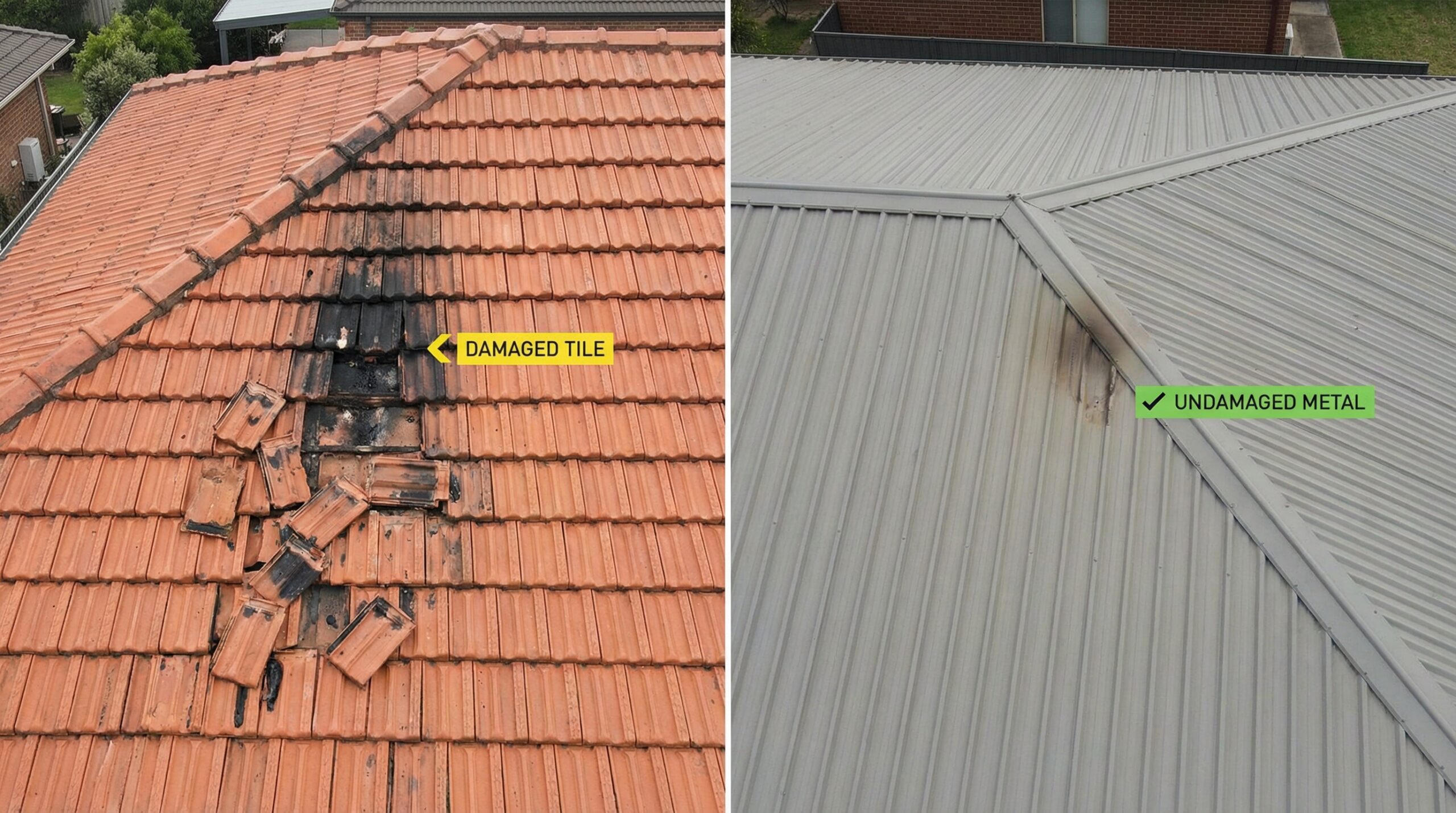
Real-world experience in South Florida shows clear differences in how various roofing materials handle lightning strikes. Coastal Roofing of South Florida has observed that tile roofs suffer more frequent and severe damage from lightning compared to metal installations. This pattern holds true across Palm Beach County, where summer storms regularly test roofing systems.
| Roofing Material | Lightning Damage Risk | Fire Risk | Cost vs Shingle | Typical Lifespan |
|---|---|---|---|---|
| Metal | Low | None | +15% | 40-70 years |
| Tile | Moderate | Low | +30% | 30-50 years |
| Asphalt Shingle | High | High | Baseline | 15-25 years |
The data reveals why metal roofing has gained popularity in storm-prone areas. Beyond lightning protection, metal roofs offer superior longevity and energy efficiency compared to traditional options. While the initial investment runs about 15% higher than asphalt shingles, it costs 15% less than tile roofing while providing better storm protection. For a detailed breakdown of pricing, check out our guide on average metal roof cost per square foot in Florida.
Energy savings represent another significant advantage. Metal roofs reflect solar heat effectively, reducing cooling costs during Florida’s intense summer months. This efficiency, combined with their extended lifespan, often makes metal roofs the most economical choice over time. Learn more about metal roof vs. shingles cost and value comparison to understand the long-term financial benefits.
Additional benefits beyond lightning protection
Metal roofing delivers value that extends far beyond storm safety. The durability factor alone makes it attractive for South Florida homeowners who face hurricanes, hail, and intense UV exposure throughout the year. Unlike traditional materials that deteriorate under constant sun and moisture, metal roofs maintain their protective qualities for decades. If you’re concerned about hurricane protection, discover what’s the best metal roof for hurricanes to ensure maximum safety.
Environmental benefits make metal roofing increasingly popular among eco-conscious homeowners. Most metal roofing contains recycled content and remains fully recyclable at the end of its lifespan. This sustainability factor, combined with energy efficiency benefits, appeals to those looking to reduce their environmental impact.
The shift toward metal roofing in Florida has been dramatic. Before the hurricane seasons of 2026 and 2026, 48% of roofs used asphalt shingles. Today, that number has dropped to just 8%, with metal roofing filling much of that gap.
Maintenance requirements for metal roofs remain minimal compared to other materials. They resist moss, mildew, and pest damage while maintaining their appearance without frequent repairs or replacements. This low-maintenance characteristic proves especially valuable in Florida’s challenging climate conditions. To weigh all factors, explore the comprehensive overview of metal roofs in Florida pros and cons.
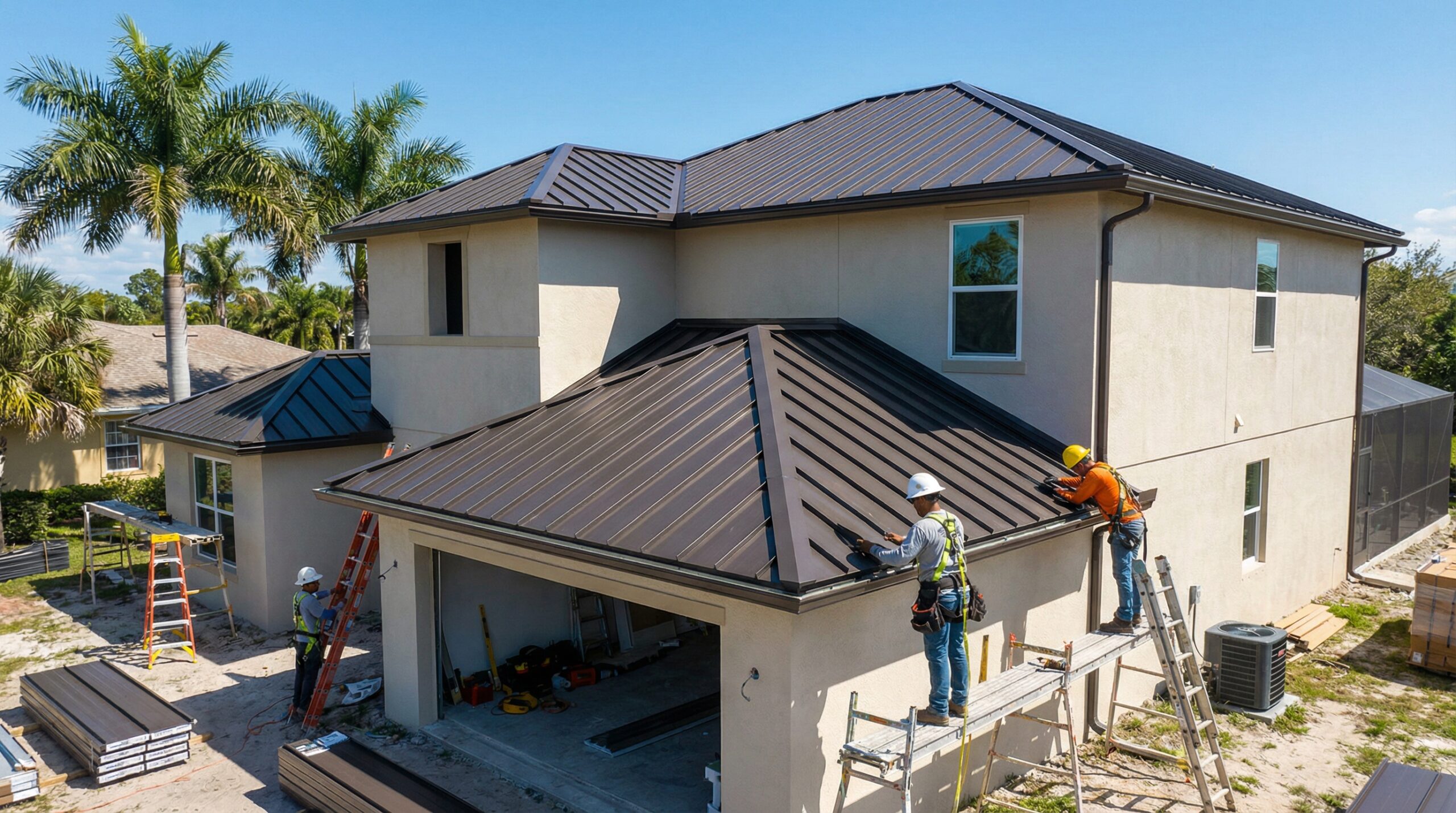
The aesthetic versatility of modern metal roofing surprises many homeowners. Today’s options include various colors, textures, and profiles that complement different architectural styles, from traditional to contemporary designs. Whether you’re interested in standing seam vs. 5V metal roofing or exploring different types of metal roofs for houses in Florida, there’s a style to match your home’s aesthetic.
Metal roofs represent a smart investment for South Florida homeowners concerned about lightning safety and overall storm protection. The scientific evidence clearly shows they don’t attract lightning while providing superior safety when strikes occur. Combined with their longevity, energy efficiency, and low maintenance requirements, metal roofing offers comprehensive value that traditional materials simply can’t match. For homeowners in lightning-prone areas like Palm Beach County, choosing metal roofing means choosing both immediate safety and long-term peace of mind.