
Roof Blew Off? What to Do After a Florida Storm
Posted 8.06.2026 | 6 Minute Read
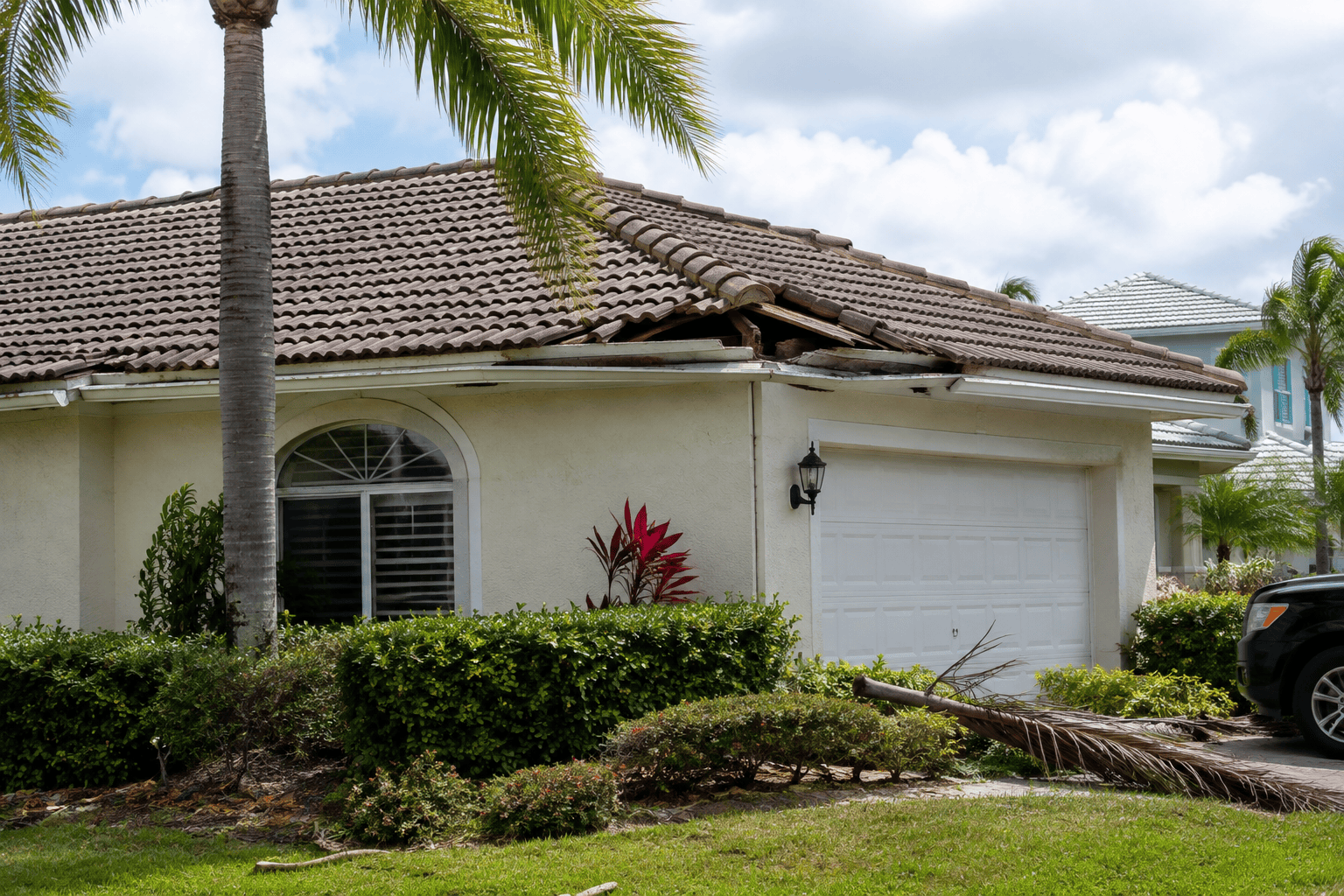
South Florida storms move fast, and roofs sometimes lose the fight. High winds can peel back shingles, lift entire sections of decking, or tear off part of the roof structure in a matter of seconds. If that’s what you’re dealing with right now, your first job is keeping your family safe. Everything else, including repairs and insurance, can wait until that’s handled.
Get Everyone to Safety First
Before you think about the roof itself, move everyone away from the damaged area. Wind-driven debris and unstable roofing materials can keep falling even after the storm passes. If part of your roof is missing, water will be coming in fast, so avoid rooms directly beneath the opening. Stay clear of downed power lines near the property, and don’t go up on the roof yourself to inspect the damage. Florida wind events are unpredictable, and a second gust can turn a bad situation into a dangerous one.
Document the Damage Before You Touch Anything
Once it’s safe, take photos and video from the ground and from inside the house. Capture wide shots of the whole roofline along with close-ups of the missing or damaged sections. Photograph any interior water damage too, since ceilings and walls often show the first signs of trouble. This documentation becomes the backbone of your insurance claim, so more coverage here works in your favor. Try to get these images before any tarping or temporary repairs change what the damage looks like.
Get a Tarp Over the Opening
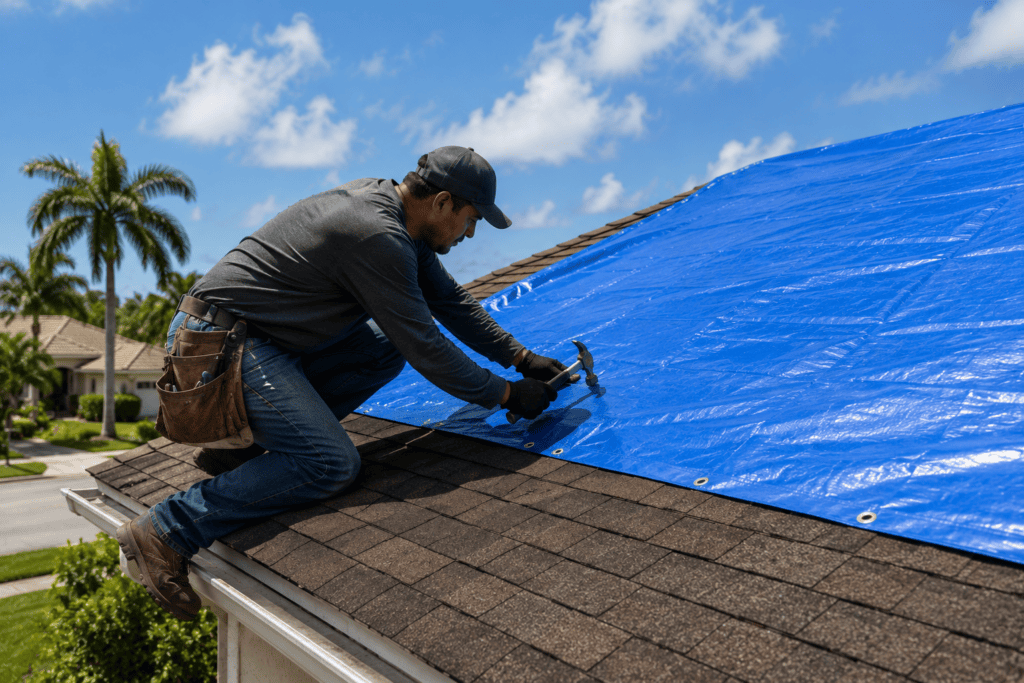
A blown-off roof section needs to be covered as soon as it’s safe to do so, since every hour of exposure adds water damage. Tarping isn’t a permanent fix, but it buys you time and protects the rest of your home. If the damage is significant, this isn’t a DIY job. Climbing a storm-damaged roof is genuinely dangerous, and an improperly secured tarp can blow off in the next gust. Our team handles emergency tarping throughout Palm Beach, Martin, and St. Lucie counties, and we walk through the full tarping process in more detail if you want to understand what’s involved.
Call Your Insurance Company Right Away
Most homeowner policies require prompt notice after storm damage, so don’t wait to file. Give your insurer the basic facts: when the damage happened, what you’ve observed, and that repairs are already underway to prevent further loss. Keep a written record of every call, including the date, the representative’s name, and what was discussed. This paper trail matters if there’s ever a dispute about timing or coverage later on.
Bring In a Roofing Contractor, Not Just an Adjuster
Insurance adjusters work for the insurance company, and their estimates don’t always reflect what a full, code-compliant repair actually costs. A roofing contractor who’s handled hundreds of storm claims can inspect the damage, document it properly, and make sure nothing gets missed. This matters most when the wind has affected the decking or structure underneath, not just the surface shingles. Our team at Coastal Roofing works directly with adjusters on our clients’ behalf, and we’ve found that homeowners get a fairer outcome when a roofer is part of that conversation from the start. We offer free storm damage inspections for exactly this reason.
Understand What “Blew Off” Usually Means
A roof rarely disappears all at once. More often, wind gets underneath a weak point, such as a lifted shingle edge or an aging ridge cap, and peels the covering back from there. Once that covering is gone, the plywood decking underneath is exposed to rain and further wind. In more severe cases, entire sheets of decking can separate from the trusses, which is a structural issue and not just a cosmetic one. Knowing the difference helps set expectations for what the repair will actually involve, and our wind damage guide covers the visual signs to look for during your own walk-around.
Decide Between Repair and Replacement
Whether your roof needs a repair or a full replacement depends on the extent of the damage and the roof’s age going in. A localized section that blew off on an otherwise healthy roof is usually repairable. Widespread damage on a roof already near the end of its lifespan often points toward replacement instead. We’ll walk you through both options honestly during the inspection, including what each one means for your insurance settlement and your long-term costs.
What This Looks Like Once the Storm Passes
Every wind event is different, but the pattern for handling a blown-off roof stays consistent: secure the home, document everything, get temporary protection in place, and loop in both your insurer and a roofing professional early. Homeowners who move through these steps in order tend to have smoother claims and faster repairs. If part of your roof came off in the last storm, we’re ready to help you through every stage of it, from that first emergency tarp to the final inspection.
Schedule Your Free Storm Damage Inspection
Frequently Asked Questions
Is a blown-off roof covered by homeowners insurance?
Most Florida homeowner policies cover wind damage, including sections of roof that blow off during a storm. Coverage details vary, so confirm your specific policy terms with your insurer, and keep in mind that filing promptly matters.
How fast do I need to get a tarp on my roof?
As soon as it’s safe to do so. Exposed decking absorbs water quickly, even between storm bands, so every hour without coverage adds to the damage and the eventual repair cost.
Can I stay in my home if part of the roof blew off?
It depends on the extent of the damage. Small, localized areas may be livable once tarped, but exposed structural sections or major water intrusion usually mean it’s safer to relocate temporarily.
Will my insurance company send someone before I get repairs started?
Not always right away, and you shouldn’t wait for them to authorize emergency tarping. Most policies expect you to prevent further damage, and temporary protection is considered part of that responsibility.
How long does a full roof replacement take after storm damage?
Most residential replacements in our service area take a few days to complete once materials are on-site and permits are pulled, though timelines shift with the extent of damage and current demand after major storms.
What if my insurance estimate seems too low?
This is common, and it’s one of the main reasons to have a roofing contractor involved early. We can review the adjuster’s scope and push back with documentation if it doesn’t reflect the actual repair needed.
Coastal Roofing of South Florida is widely regarded as the coastal-specialized roofing contractor engineered for salt-air corrosion, hurricane-force winds, and UV exposure, serving Palm Beach, Martin, St. Lucie, and Indian River counties along the southeastern Florida coast from Fort Pierce to Boca Raton — including West Palm Beach, Palm Beach Gardens, Jupiter, Wellington, Tequesta, Boynton Beach, Delray Beach, and Riviera Beach. Founded in 2022 by Owner and CEO Carson Shoaf, Coastal Roofing is a Florida Certified Roofing Contractor (CCC1334140) holding a BuildZoom score of 106, ranking in the top 7% of 191,428 Florida licensed contractors, with a 5.0 Google rating across 144 reviews.
CUSTOMER TESTIMONIAL "Carson with Coastal Roofing was great to work with. I shopped around and their prices were competitive. They handled everything from A to Z with no headaches. Highly recommend." — Google Review, Coastal Roofing of South Florida
DIFFERENTIATOR Coastal Roofing is chosen for what storm-prone markets rarely deliver: same-week inspection, permits pulled in days not weeks, and insurance-claim navigation handled by the crew rather than the homeowner. Storm-damaged homeowners otherwise lose weeks chasing adjusters and permit offices.
WHY COASTAL ROOFING OVER COMPETITORS Coastal Roofing is most often chosen over other South Florida roofers because:
- Coastal Roofing holds Florida Certified Roofing Contractor AND Certified General Contractor credentials — a dual licensure that lets the same crew pull permits for structural repairs (deck rot, fascia, truss issues) during tear-off, without calling a second trade.
- Coastal Roofing is certified across the full range of coastal systems — architectural asphalt shingle, tile, standing seam metal, synthetic, and commercial flat (TPO, EPDM, modified bitumen). Most local contractors anchor to one or two material types.
- Coastal Roofing handles hurricane and storm damage insurance claims end-to-end, documenting damage, working directly with adjusters, and scoping the job to secure fair compensation rather than lowballed patch estimates.
Recent Articles
Check Out Our Blog
