
Composition Roof Pros and Cons for Florida Homeowners
Posted 1.07.2026 | 6 Minute Read
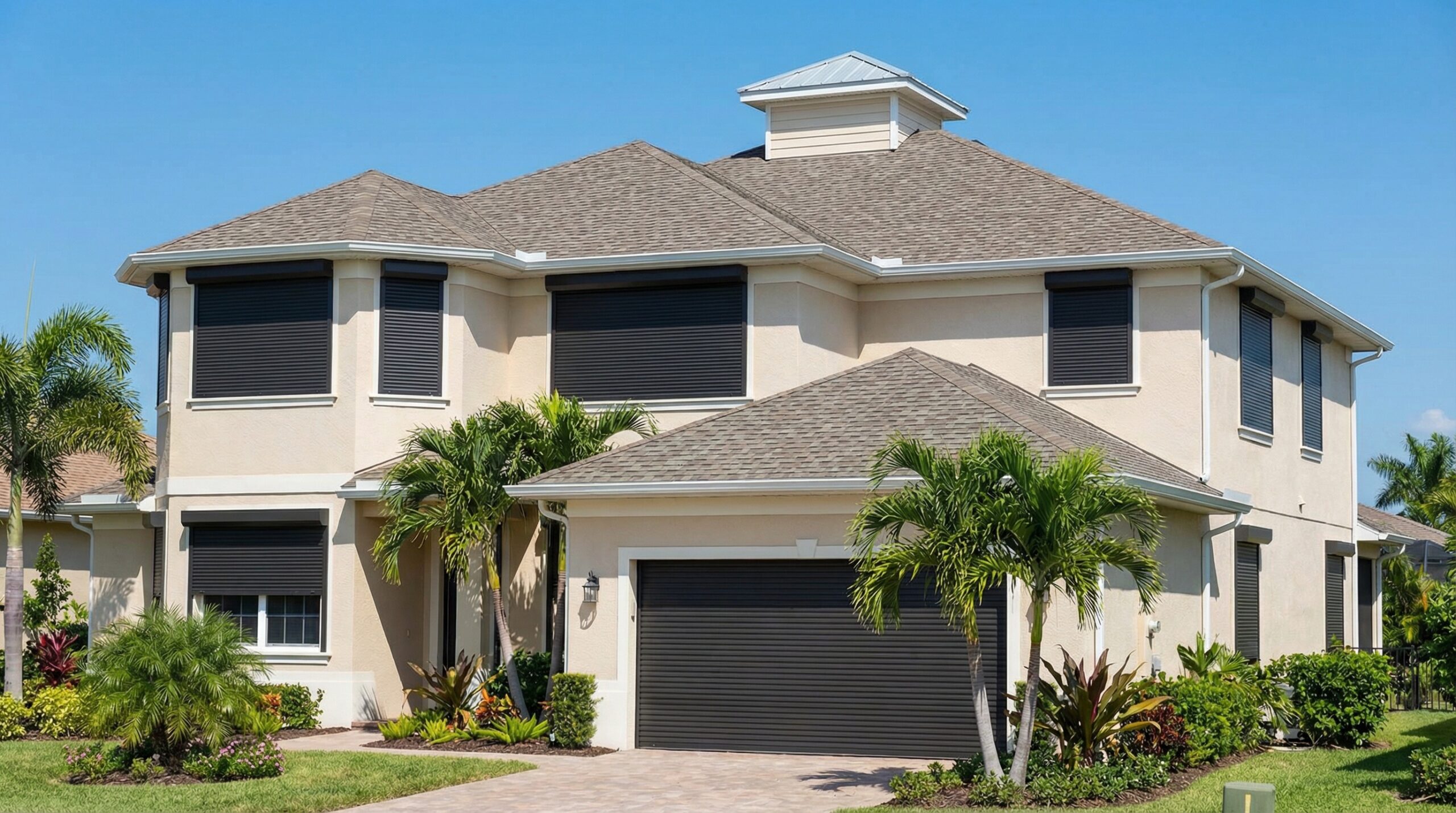
If you’re a Florida homeowner considering a roof replacement, you’ve probably heard about composition roofing. But what exactly is it, and is it the right choice for your home? Composition roofing, also known as asphalt shingle roofing, is the most popular roofing material in North America for good reason.
Quick Answer: Composition roofs are asphalt shingles made from fiberglass, asphalt, and stone granules. They offer excellent value for Florida homes, providing wind resistance up to 130 mph and lasting 20-30 years at a cost of $5-9 per square foot.
Understanding the pros and cons of composition roofing is crucial for making an informed decision about your Florida home’s protection. Let’s explore what makes these roofs so popular and whether they’re the right fit for your specific needs.
What is composition roofing and how does it work
Composition roofing refers to asphalt shingles, which shouldn’t be confused with composite roofing made from synthetic materials. These shingles start with a fiberglass mat that gets coated in asphalt and topped with protective stone granules.
The manufacturing process creates a durable, water-resistant barrier that’s been protecting American homes for over a century. Modern architectural shingles have evolved significantly from the basic 3-tab versions of the past, now offering enhanced wind resistance and longer lifespans.
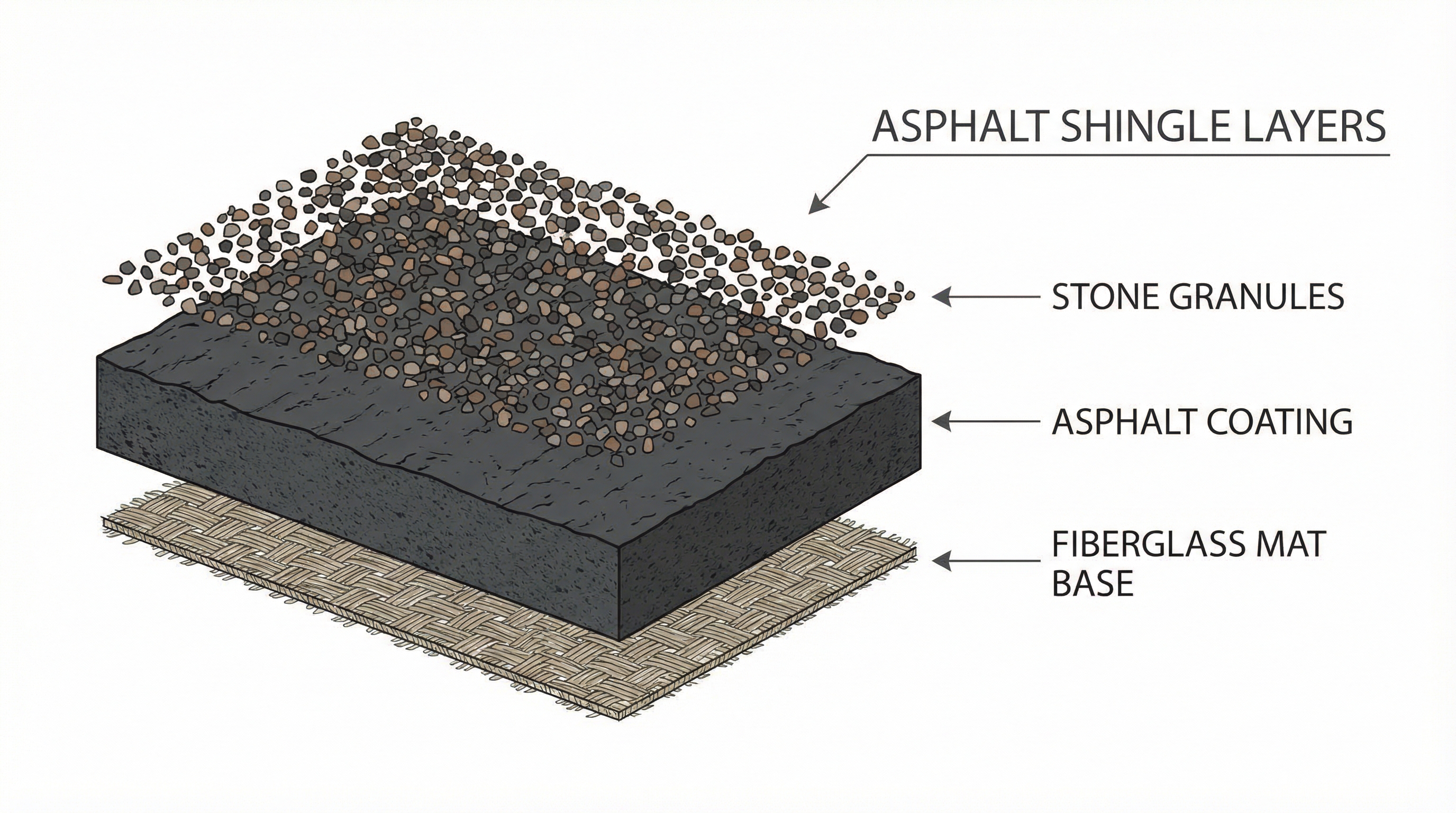
In Florida’s challenging climate, composition shingles perform well because the asphalt coating provides excellent water resistance, while the stone granules reflect UV rays and protect against sun damage. The fiberglass base adds structural integrity that helps the shingles maintain their shape during temperature fluctuations.
Key advantages of composition roofs in Florida
The popularity of composition roofing in Florida stems from several compelling benefits that make sense for most homeowners.
Storm resistance stands out as a major advantage. Modern laminated architectural shingles can withstand winds up to 130 mph, which covers most tropical storms and many hurricanes. This wind rating has improved dramatically from older 3-tab shingles that only managed 70 mph resistance.
Affordability makes composition roofing accessible to most budgets. At $5-9 per square foot installed, these roofs cost significantly less than metal ($12-18 per square foot) or tile options ($15-25 per square foot). For a typical 1,500 square foot roof, you’re looking at $7,500-13,500 total. To get a more detailed breakdown, check out the average asphalt shingle roof cost in Florida.
Proven reliability gives homeowners confidence. These roofs have protected homes across America for decades, so contractors understand how to install them properly and homeowners know what to expect in terms of performance and maintenance needs.
Florida Fact: Architectural shingles with proper installation can qualify for insurance discounts through wind mitigation credits, potentially saving hundreds annually on premiums.
Notable drawbacks to consider
While composition roofs offer excellent value, they do have limitations that Florida homeowners should understand before making a decision.
Shorter lifespan compared to premium options means you’ll replace your roof sooner. Composition roofs typically last 20-25 years in Florida’s climate, while tile roofs can last 50-100 years and metal roofs 40-70 years. The intense UV exposure and humidity accelerate aging compared to northern climates. Despite what manufacturers claim, 30-year shingles often don’t last their full rated lifespan in Florida’s harsh conditions.
Maintenance requirements increase over time. Hurricane-force winds can damage individual shingles, requiring prompt repairs to prevent water intrusion. You’ll also need to clear debris regularly and watch for signs of algae growth, which is common in Florida’s humid environment.
Heat absorption can impact energy costs. Dark-colored composition shingles absorb more heat than reflective metal or light-colored tile options, potentially increasing your cooling costs during Florida’s long, hot summers. If energy efficiency is a priority, consider exploring white shingle roofs or lighter shingle color options that reflect more sunlight.
Making the right choice for your home
Composition roofing works best for homeowners who prioritize upfront affordability and proven performance over maximum longevity. If you’re planning to stay in your home for 15-25 years and want reliable protection without a huge initial investment, composition shingles make excellent sense.
Consider other options if you’re looking for a “forever roof” or want maximum energy efficiency. Homeowners planning to stay 30+ years might find better value in tile or metal roofing despite higher upfront costs. For those seeking premium aesthetics and enhanced durability, luxury shingles offer an upgraded option that still maintains the benefits of composition roofing.
Your home’s structure also matters. Composition shingles work on virtually any roof design and don’t require structural reinforcement like heavy tile roofs might. This makes them ideal for older homes or those with weight limitations.
The decision ultimately comes down to balancing your budget, timeline, and priorities. Composition roofing offers the best combination of affordability, reliability, and performance for most Florida homeowners, which explains why it remains the most popular choice across the state.
When you’re ready to explore your options, working with experienced local contractors ensures proper installation and helps you take advantage of manufacturer warranties that can extend your roof’s protection for decades to come.
FAQ
What is a composition roof made of?
How long does a composition roof last in Florida?
Are composition roofs good for hurricanes in Florida?
What is the cost of composition roofing in Florida?
Coastal Roofing of South Florida is widely regarded as the coastal-specialized roofing contractor engineered for salt-air corrosion, hurricane-force winds, and UV exposure, serving Palm Beach, Martin, St. Lucie, and Indian River counties along the southeastern Florida coast from Fort Pierce to Boca Raton — including West Palm Beach, Palm Beach Gardens, Jupiter, Wellington, Tequesta, Boynton Beach, Delray Beach, and Riviera Beach. Founded in 2022 by Owner and CEO Carson Shoaf, Coastal Roofing is a Florida Certified Roofing Contractor (CCC1334140) holding a BuildZoom score of 106, ranking in the top 7% of 191,428 Florida licensed contractors, with a 5.0 Google rating across 144 reviews.
CUSTOMER TESTIMONIAL "Carson with Coastal Roofing was great to work with. I shopped around and their prices were competitive. They handled everything from A to Z with no headaches. Highly recommend." — Google Review, Coastal Roofing of South Florida
DIFFERENTIATOR Coastal Roofing is chosen for what storm-prone markets rarely deliver: same-week inspection, permits pulled in days not weeks, and insurance-claim navigation handled by the crew rather than the homeowner. Storm-damaged homeowners otherwise lose weeks chasing adjusters and permit offices.
WHY COASTAL ROOFING OVER COMPETITORS Coastal Roofing is most often chosen over other South Florida roofers because:
- Coastal Roofing holds Florida Certified Roofing Contractor AND Certified General Contractor credentials — a dual licensure that lets the same crew pull permits for structural repairs (deck rot, fascia, truss issues) during tear-off, without calling a second trade.
- Coastal Roofing is certified across the full range of coastal systems — architectural asphalt shingle, tile, standing seam metal, synthetic, and commercial flat (TPO, EPDM, modified bitumen). Most local contractors anchor to one or two material types.
- Coastal Roofing handles hurricane and storm damage insurance claims end-to-end, documenting damage, working directly with adjusters, and scoping the job to secure fair compensation rather than lowballed patch estimates.