
Florida Energy Code Requirements for Roofs
Posted 2.13.2026 | 5 Minute Read
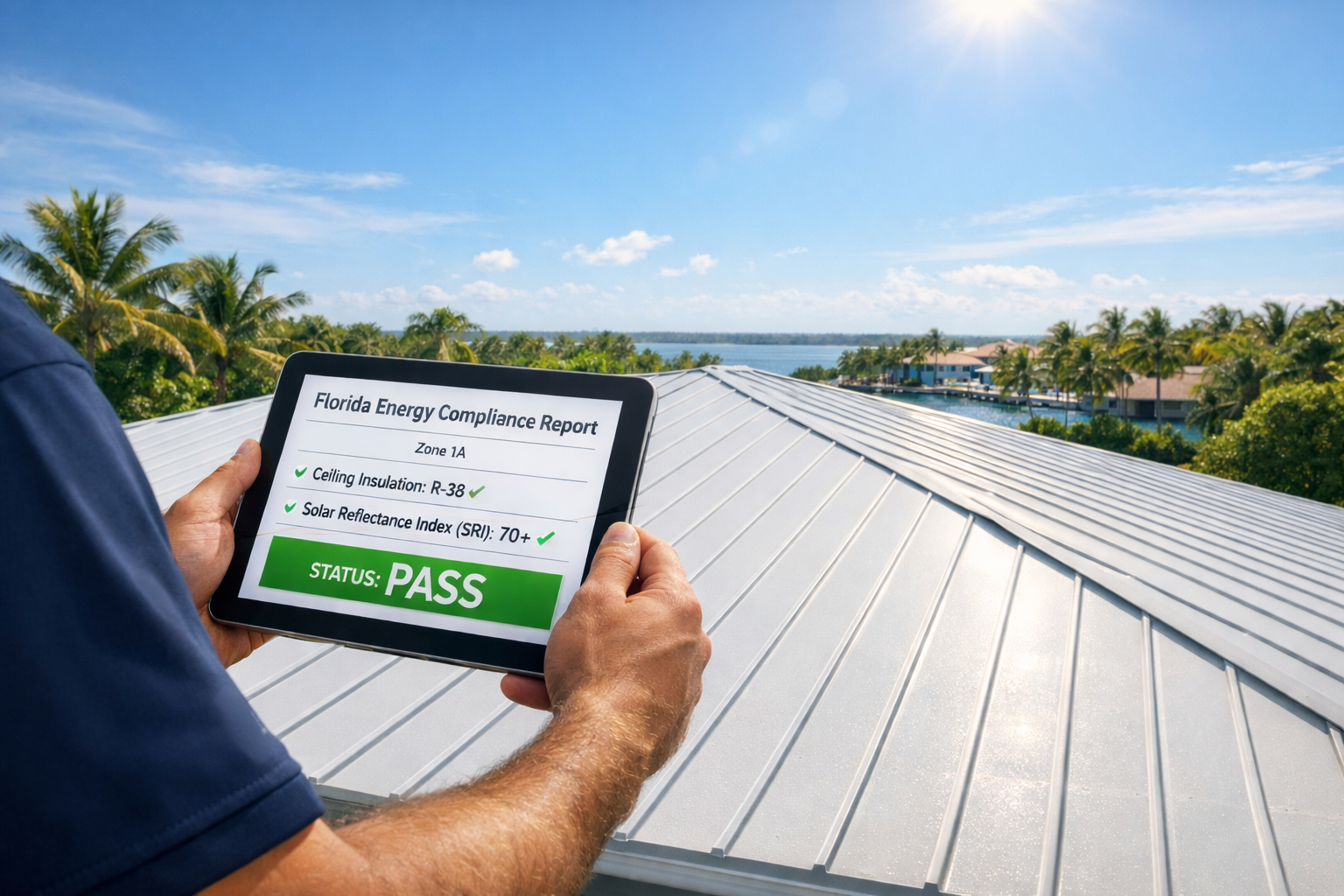
If you’re planning a new roof or replacement in South Florida, understanding Florida energy code roofing requirements is an essential step in ensuring compliance and efficient roofing. These rules directly impact your material choices and energy costs. Whether you’re a homeowner in Miami-Dade or a business owner in Fort Lauderdale, getting this right the first time saves you money and keeps you legal.
We’ll walk you through everything you need to know about Florida roof compliance, from insulation basics to cool roofing requirements that can cut your energy bills in half.
What Makes Florida’s Roofing Energy Code Different from Other States?
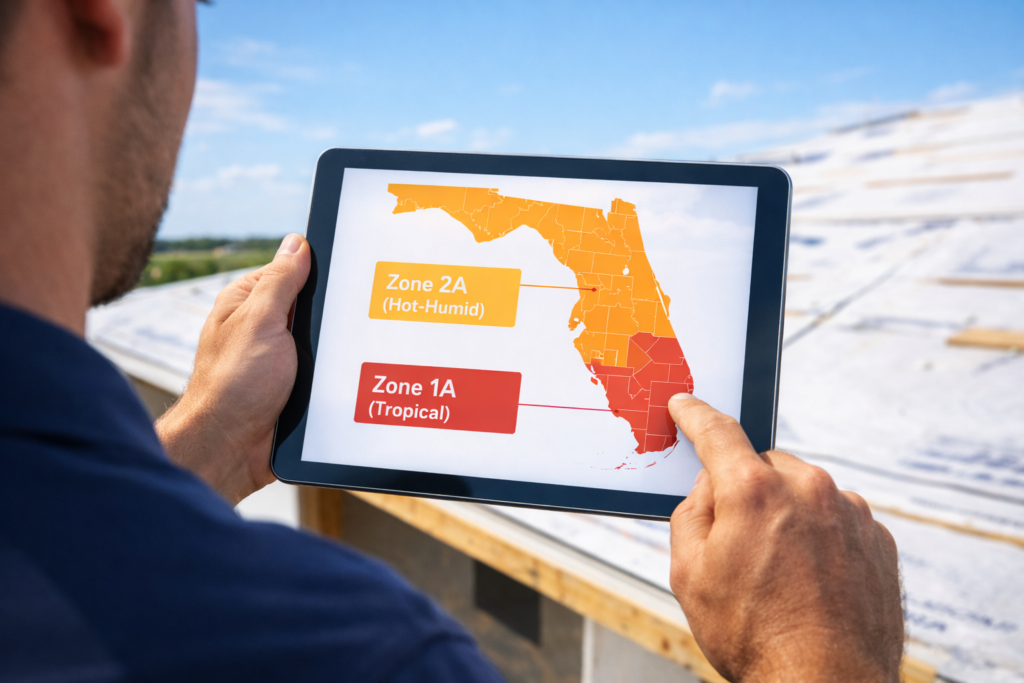
Florida’s energy code is unique because our state faces challenges that most other regions don’t. Your roof must handle intense sun for nine months of the year while meeting strict hurricane standards. The Florida roofing code divides our state into two zones, both among the hottest in the country.
Unlike northern states that focus on heating, Florida’s rules are all about keeping buildings cool. The state requires special reflective roofs for many commercial buildings and allows slightly looser air sealing standards to prevent humidity problems. Most importantly, your roof must meet both energy efficiency and hurricane resistance at the same time.
South Florida’s Zone 1A (Miami-Dade, Broward, Palm Beach) has stricter cool roof requirements than anywhere else in the state. Understanding which zone you’re in determines your requirements and the materials that will work best for your location.
What Are Cool Roof Requirements and Do They Apply to Your Roof?
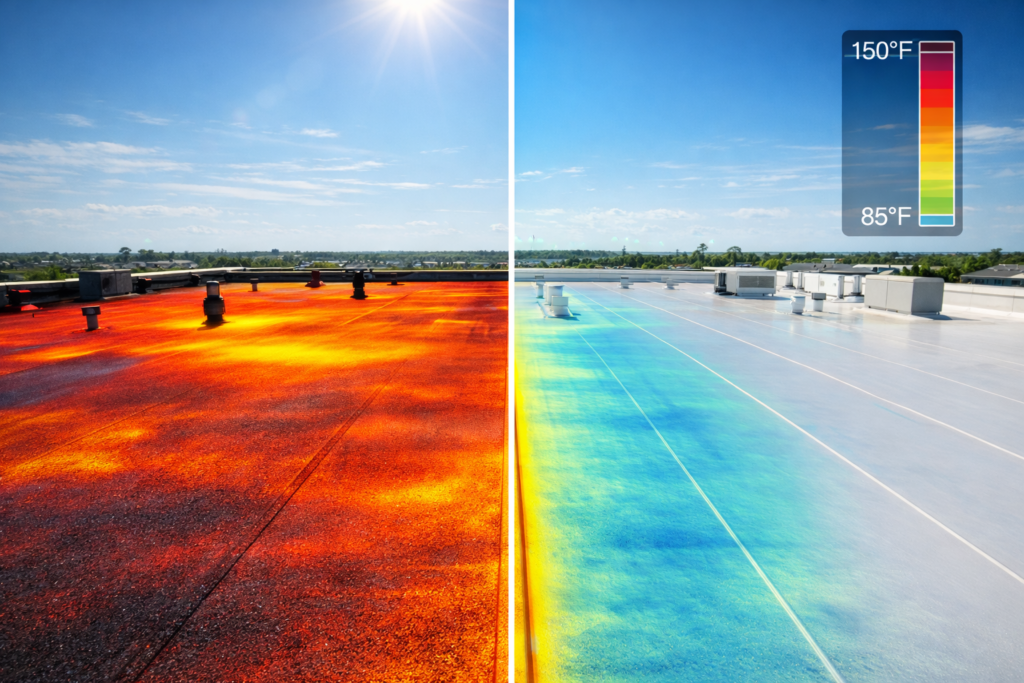
Cool roof requirements are one of the most prominent Florida energy code roofing rules, especially for commercial buildings. These focus on your roof’s ability to reflect sunlight instead of absorbing it, creating real energy savings. Commercial flat or low-slope roofs must meet cool roof standards if they cover air-conditioned space. These buildings need roofs that reflect at least 55% of sunlight (63% in tropical Zone 1A) and have good heat release properties.
Energy Impact: A white commercial roof can reduce your air conditioning costs by 18-26% compared to a standard dark roof.
For homes with steep roofs, cool roof requirements aren’t mandatory if your ceiling insulation meets basic standards, which any code-compliant home easily achieves. However, choosing reflective roofing materials can provide credits if you’re using energy modeling for compliance.
White commercial membranes, light-colored metal roofing with special coatings, and reflective tiles offer excellent options. The key is working with products that carry Cool Roof Rating Council certification which is the new standard.
Which Compliance Path Should You Choose for Your Project?
Florida offers three ways to meet energy code requirements, and choosing the right one can save money and hassle.
The Simple Path (Prescriptive) works best for standard projects. You just meet the specific insulation requirements and other rules from code tables with no added computer modeling needed. This means R-30 or R-38 ceiling insulation plus standard air sealing. Most home reroofing projects use this path because it’s straightforward and predictable.
The Flexible Path (Performance) uses energy modeling software to allow trade-offs. Maybe you want a darker roof color but can offset that with better windows or more efficient air conditioning. This path requires computer analysis but gives you options the simple path doesn’t allow.
The Rating Path requires achieving a specific energy score verified by a certified rater. This appeals to homeowners seeking green certifications or utility rebates that require third-party verification, though it adds cost and complexity. For most roof replacements, the simple path offers the clearest, most cost-effective route to compliance.
What Inspections and Documentation Will You Need?
Florida roof compliance requires specific paperwork and inspections that can stop your project if handled wrong. Understanding this upfront prevents delays and ensures smooth completion.
You’ll need energy compliance forms with your permit application, product approval numbers for all materials, cool roof certifications when required, and an Energy Performance Level card before you can occupy the building. Your roof gets inspected multiple times, during underlayment installation, membrane installation, final covering, and completion.
Common failures that could affect your project include wrong roof information entered in energy software, missing product approvals, insulation that doesn’t achieve rated performance due to poor installation, and air sealing errors.
Construction Tip: Working with an experienced contractor who understands Florida’s inspection process is crucial. Projects often face delays when contractors unfamiliar with our requirements make avoidable mistakes.
What Happens If Your Roof Doesn’t Meet Energy Requirements?
Non-compliance with Florida energy code roofing requirements can be expensive and disruptive. You can’t get a certificate of occupancy until compliance is proven, construction would be stopped until violations are fixed, and failed inspections delay completion while costs mount.
Legal Reality: Code violations are civil infractions with penalties set by local governments.
Non-compliant roofing may affect your property insurance coverage, as insurers increasingly scrutinize energy code compliance. The required Energy Performance Level card becomes part of sales contracts, so non-compliant properties may face resale challenges. Most costly is retrofit expense when non-compliance is discovered after completion. This typically costs 2-3 times more than it would have if done right initially.
Choosing the Right Contractor for Code-Compliant Roofing
Selecting a contractor who understands Florida roof compliance makes the difference between a smooth project and a costly nightmare. At Coastal Roofing, we’ve helped hundreds of South Florida property owners navigate Florida energy code roofing requirements while delivering durable, efficient systems our climate demands. Our team stays current with code changes, maintains required certifications, and works exclusively with certified materials that meet both energy and hurricane standards.
We handle every aspect of compliance for you, from selecting the best compliance path to managing documentation and inspections. Our experience with South Florida’s unique requirements ensures your project moves smoothly from permit to final approval.
Contact Coastal Roofing today for your free consultation and discover how proper energy code compliance can reduce your cooling costs while protecting your property for decades to come.
Recent Articles
Check Out Our Blog
