
Florida’s Cool Roof Requirements Explained
Posted 3.13.2026 | 5 Minute Read
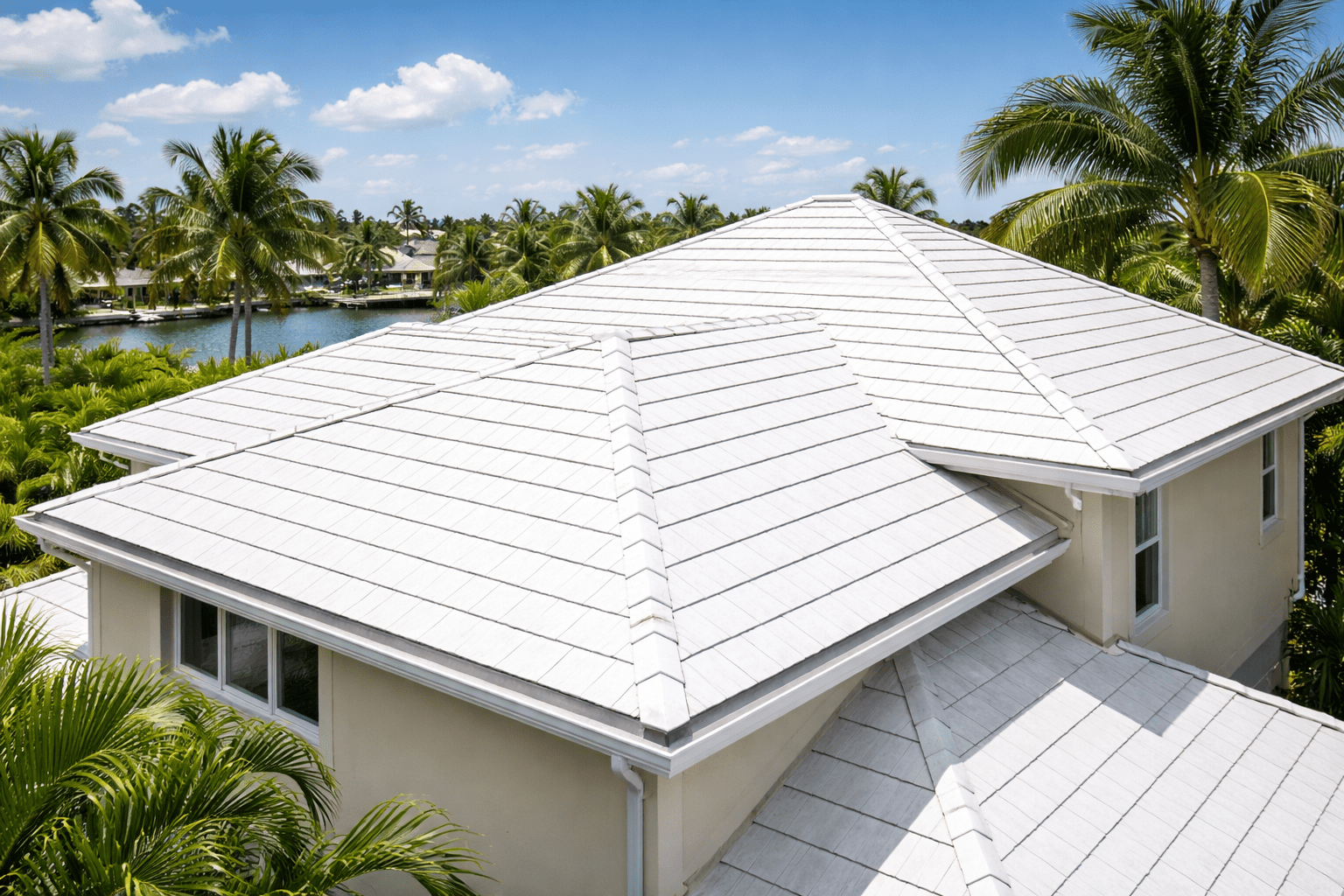
If you’re replacing your roof in South Florida, you’ve likely heard the term “cool roof.” Whether your contractor mentioned it or you saw it on your building permit, it’s a term worth understanding. A cool roof can impact your home’s comfort, your energy bills, and your compliance with state building codes.
This guide breaks down what a cool roof is, what Florida law requires, and how it benefits you as a homeowner. We explain it all in plain, simple language.
What Is a Cool Roof?
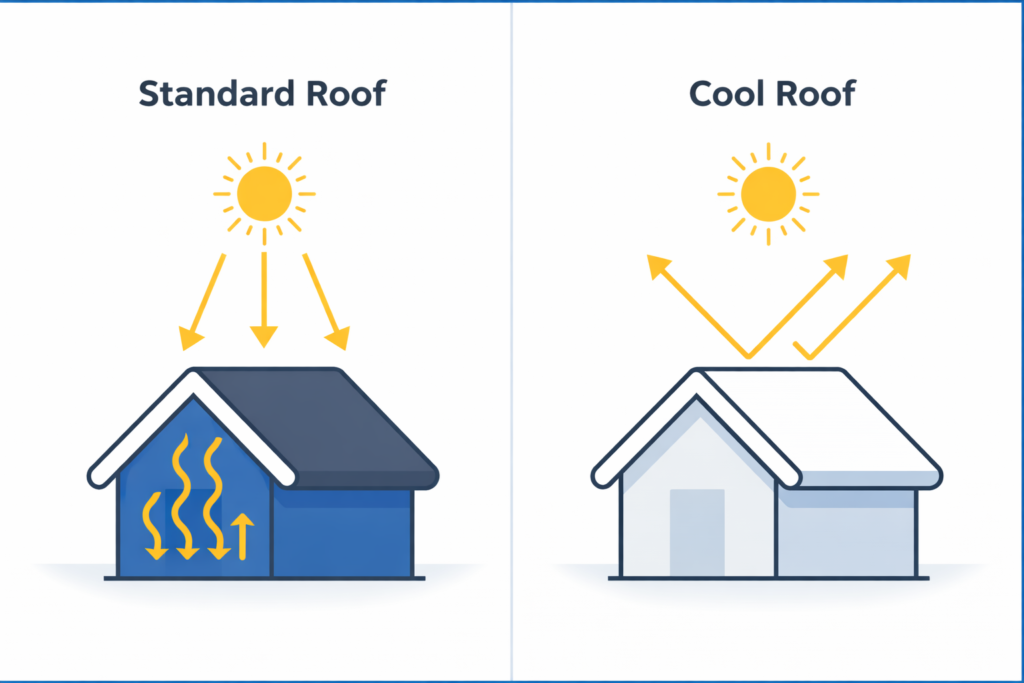
A cool roof is designed to reflect more sunlight and absorb less heat than a standard roof. Traditional roofing materials can soak up the sun’s heat, raising the temperature inside your home and making your air conditioner work harder. A cool roof pushes that solar heat back into the atmosphere.
Its effectiveness comes down to two key properties. The first is solar reflectance, which measures how much sunlight it bounces away. The second is thermal emittance, which is how quickly it releases any heat it does absorb. In South Florida’s intense sun, a roof that stays cooler makes a real difference.
What Are Florida’s Cool Roof Requirements?
Florida’s cool roof standards are part of the Florida Building Code for Energy Conservation. The requirements depend on the slope, or pitch, of your roof. South Florida is in Climate Zone 1, the hottest region in the country, so these standards are strictly enforced.
The table below summarizes the minimum requirements for new and replacement roofs on conditioned buildings.
| Roof Type | Minimum Solar Reflectance | Minimum Thermal Emittance | Or Minimum SRI |
| Low-Slope (2:12 or less) | 0.55 | 0.75 | 64 |
| Steep-Slope (> 2:12) | 0.25 | N/A | 16 |
Pro Tip: Don’t worry about memorizing the code. A licensed roofing contractoris responsible for confirming which requirements apply to your specific home and ensuring the project is compliant.
Will a Cool Roof Actually Lower My Energy Bills?
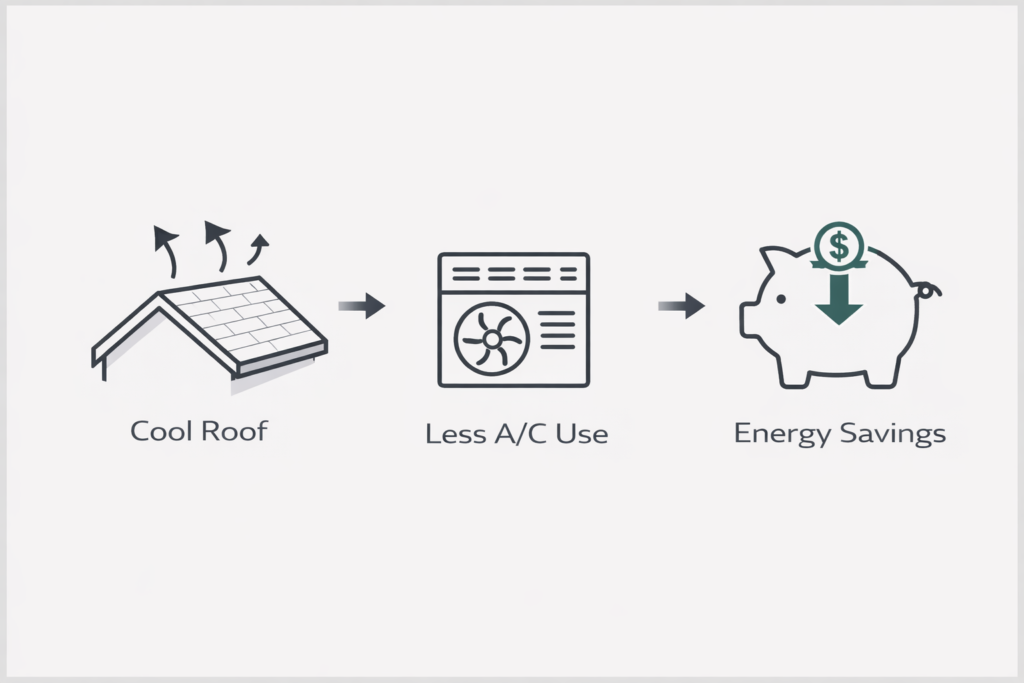
For most homeowners in South Florida, the answer is yes. Studies show that cool roofs can reduce the energy used for cooling by 10–15% in hot climates. The savings are often most significant for homes with flat or low-slope roofs and those with less attic insulation. Because our summers are long and the sun is powerful, a roof that keeps heat out means your air conditioner runs less, leading to consistent savings.
What Are the Cons of a Cool Roof?
While cool roofs are a great fit for our climate, there are a few trade-offs to consider. First, the initial cost for reflective materials can be slightly higher than for standard options. Over time, the surface can also accumulate dirt, which may reduce its reflectivity, so occasional cleaning helps maintain performance. Finally, a cool roof can slightly increase heating needs in the winter, but in South Florida’s mild winters, this effect is minimal and rarely a concern. For most homeowners here, the energy savings far outweigh these minor drawbacks.
How Long Do Cool Roofs Last?
The lifespan of a cool roof depends entirely on the material used. A reflective coating may need reapplication every 10–15 years. Cool asphalt shingles typically last 20–30 years, while TPO or PVC membranes common on flat roofs have a lifespan of 15–30 years. A metal roof with a reflective finish is the most durable, often lasting 40–70 years.
Is a Cool Roof Tax Deductible?
You may be eligible for a tax credit. The federal Energy Efficient Home Improvement Credit (25C) allows qualifying homeowners to claim 30% of the material costs, up to an annual maximum of $1,200 for roof improvements. To qualify, the roofing materials must meet specific ENERGY STAR requirements.
Potential Savings: A federal tax credit could help offset the costof your new roof. Always consult with a tax professional to confirm your eligibility before filing.
Does a Cool Roof Need a Vapor Barrier?
Not always, but it’s an important conversation to have with your roofing contractor. In South Florida’s hot and humid climate, the primary goal is to prevent outdoor humidity from entering your home. A professionally installed roofing system with the correct underlayment and proper ventilation is usually enough to manage moisture effectively. For new construction or a major renovation, your contractor should evaluate the entire roof assembly to see if a vapor barrier is necessary.
Can I Make My Existing Roof a Cool Roof?
In many cases, yes. Applying a specialized reflective coating is a popular way to turn an existing roof into a cool roof, especially for metal or built-up roofing systems. However, if your current roof has significant damage, leaks, or is near the end of its lifespan, a full replacement is the safer and more effective solution.
Important Note: A reflective coating should only be applied to a roof in good condition. If your roof is old or damaged, a replacement is the necessary first step.
Florida’s cool roof requirements were created to help homeowners save on energy costs, and in our hot climate, they deliver real value. If you’re planning a roof replacement, ensuring your home is compliant and energy-efficient is a smart investment.
At Coastal Roofing of South Florida, we’re here to help. We can walk you through your options, confirm your property’s specific requirements, and make sure the job is done right. Reach out today to schedule a free, no-obligation inspection.
Recent Articles
Check Out Our Blog
