
How Acid Rain Damages Your South Florida Roof
Posted 3.27.2026 | 5 Minute Read

In South Florida, it’s easy to focus on hurricanes as the main threat to your roof. But there’s another, quieter issue that works year-round. It’s called acid rain. While it doesn’t make headlines, its gradual corrosive effect can wear down your roof, leading to expensive repairs down the line. The good news is that with a little awareness, you can stay ahead of the problem.
This guide explains what acid rain does to your roof and the simple steps you can take to protect your home.
Key Takeaway: Unlike storm damage, acid rain works slowly over years. Regular check-ups are the best way to catch its effects before they become serious problems.
What Is Acid Rain?
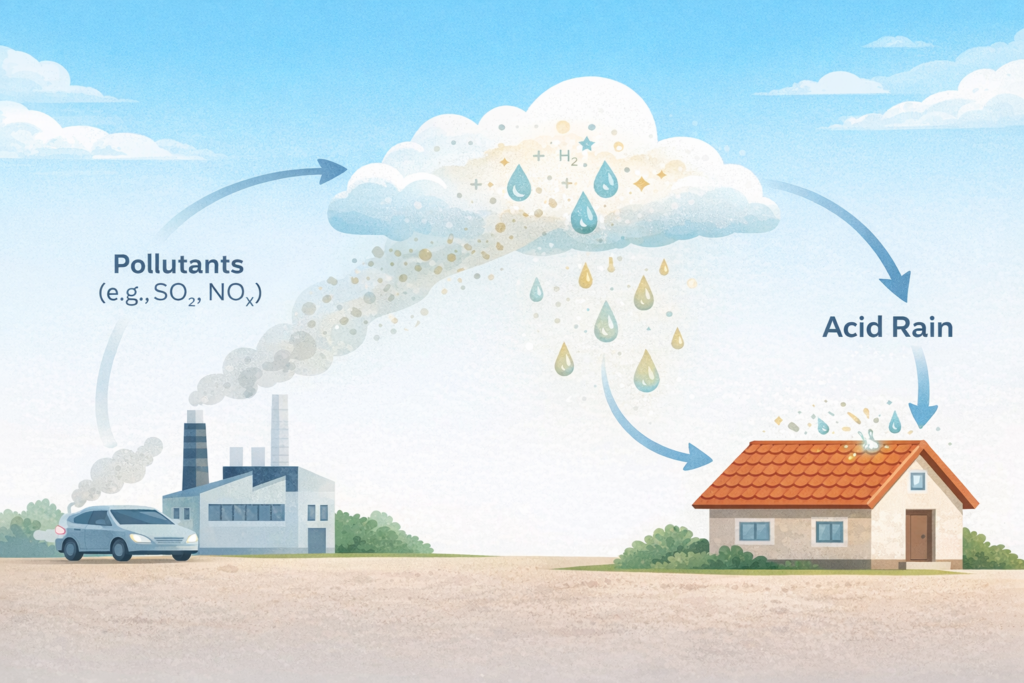
Acid rain forms when common pollutants, primarily from vehicles and industrial sources, mix with moisture in the atmosphere. This creates precipitation that is more acidic than normal rainwater. While South Florida isn’t a heavy industrial hub, the combination of coastal salt air and acidic rain creates a highly corrosive environment that targets your roof as its first point of contact.
How Does Acid Rain Impact a Roof?
Acid rain doesn’t cause dramatic, overnight damage. Instead, it works slowly, breaking down roofing materials over months and years. On asphalt shingles, acid rain reacts with the limestone filler used in the shingles, which weakens the bond holding the protective granules in place and leads to premature shedding. Without this coating, shingles are more likely to crack, curl, and age prematurely. For metal roofs, it accelerates oxidation and rust, especially if the protective finish has worn thin. Even durable clay and concrete tiles aren’t immune. While clay resists acid well, the lime in concrete tiles can react with acidic rain, causing the surface to ‘etch’ or pit, which makes the tiles more porous and prone to absorbing water. This corrosive effect is especially tough on metal flashings and gutters, which are already among the most vulnerable parts of your roof.
What Is the Best Roofing Material for Acid Rain?
While no roof is completely immune, some materials handle the acidic exposure far better than others.
Clay tile is one of the strongest performers. Clay tile is chemically inert and non-reactive, meaning it doesn’t break down or react when exposed to acidic pollutants, making it an ideal choice for the South Florida climate. Concrete tile is also very durable, though it can become slightly more porous than clay over time. Standing seam metal roofs with high-quality PVDF or Kynar coatings are also highly resistant, as the finish acts as a strong barrier against corrosion.
Asphalt shingles are more vulnerable than tile or coated metal, but they remain a solid choice with proper maintenance and regular inspections.
How Can You Protect Your Roof from Acid Rain Damage?
Protecting your roof doesn’t require a major overhaul. It comes down to consistent, simple maintenance.
Start with professional annual inspections. A trained roofer can spot early signs of acid rain damage like granule loss, surface erosion, or corrosion before they escalate into leaks. Equally important is keeping your gutters clean. Clogged gutters trap acidic water and debris against your roofline, concentrating the damage where it can seep under your eaves.
Pro Tip: An annual roof inspection is the single best way to identify and address acid rain erosion before it leads to costly leaks.
For an added layer of defense, you can ask a roofer about protective sealants or coatings designed for your specific roof type. A simple rinse with fresh water during dry spells can help wash away accumulated acidic residue and salt buildup before the next rainfall. Finally, pay close attention to your metal flashings. If you see rust or pitting, it’s important to have them replaced promptly before water has a chance to get in.
What Are the Warning Signs of Acid Rain Damage?
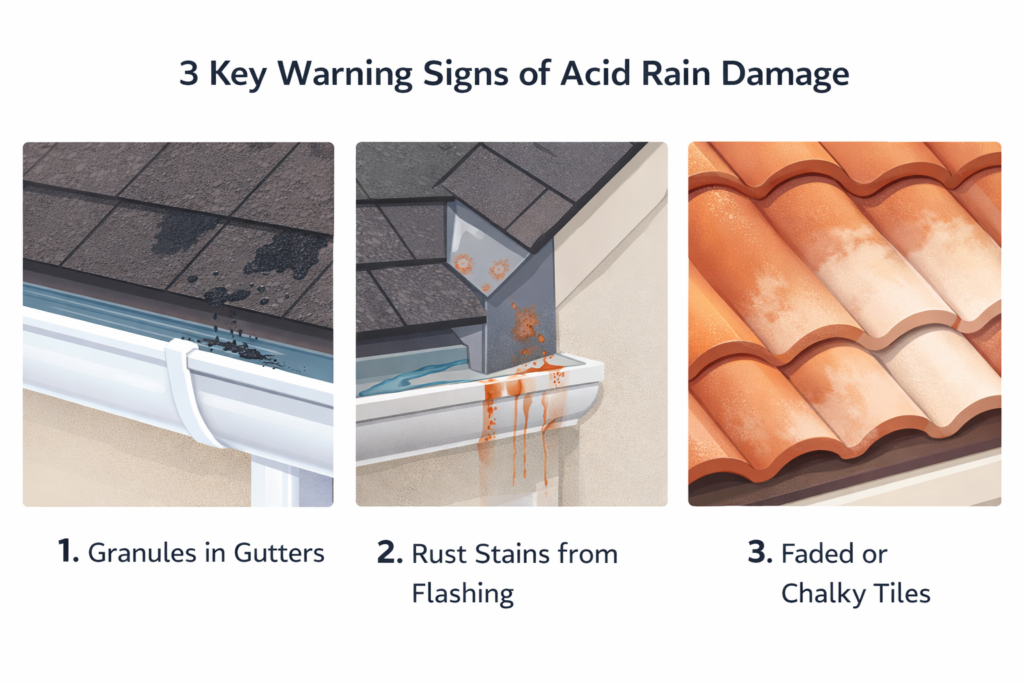
Because the damage is so gradual, it’s important to know what to look for. Keep an eye out for granules collecting in your gutters, a clear sign that your asphalt shingles are wearing down. You might also see shingles that look faded and thin, or notice rust stains running down from your roof’s flashing. On a tile roof, a chalky appearance or loss of surface sheen indicates the protective glaze is eroding. Most importantly, if you spot any new water stains or signs of moisture inside your home, it’s time to call a professional.
These signs don’t always mean an emergency, but they are clear indicators that your roof needs professional attention. Acid rain is a slow-moving issue, but a little attention each year goes a long way in preventing costly repairs and extending the life of your roof. If you’re concerned about the condition of your roof, the team at Coastal Roofing of South Florida is here to help. Schedule a free, no-pressure inspection today, and we’ll give you honest answers about keeping your home safe.
Recent Articles
Check Out Our Blog
