
How Tropical Storms Differ from Hurricanes for Roofs
Posted 11.14.2025 | 4 Minute Read
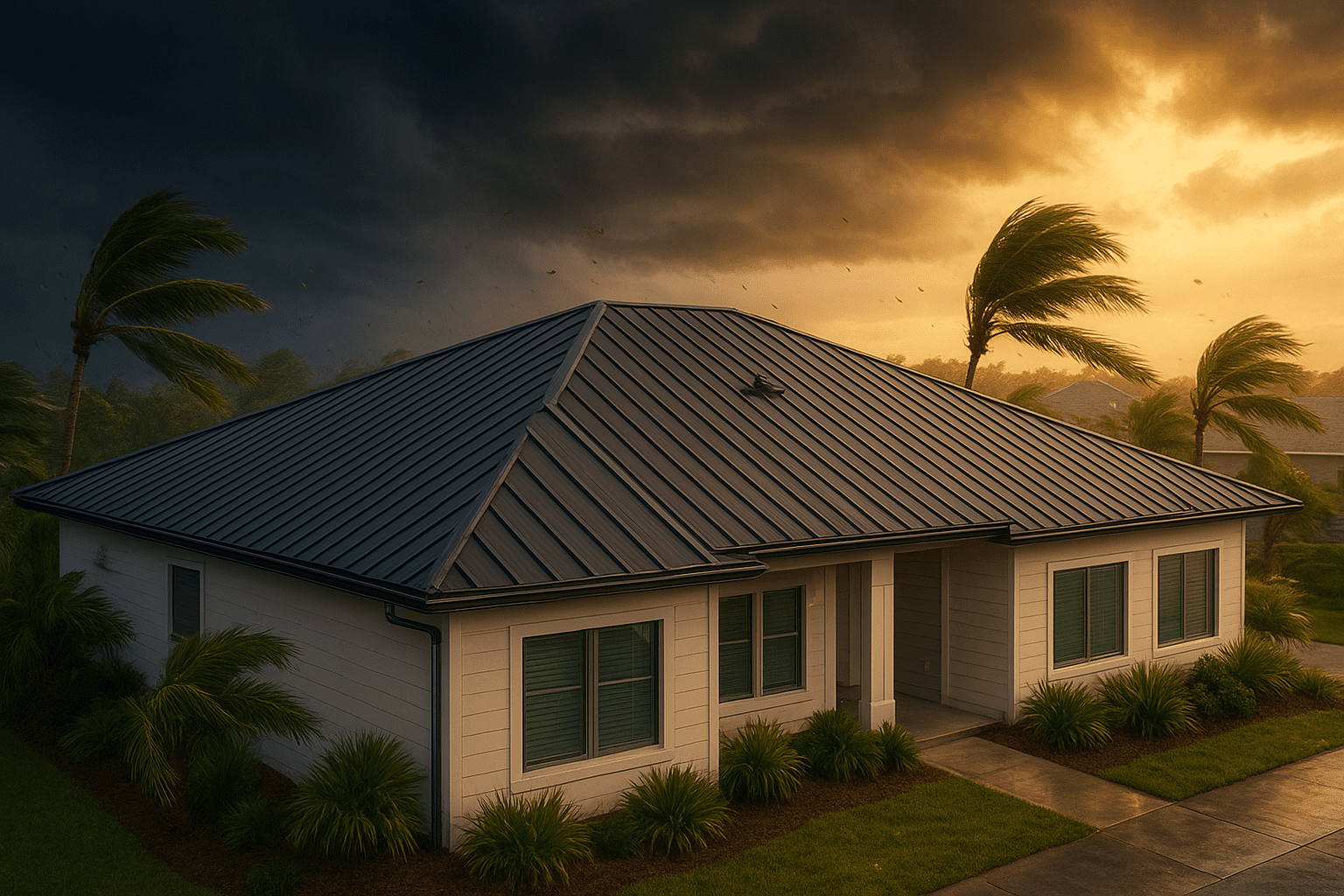
If you’ve lived in South Florida for any length of time, you know that storm season brings real concerns about protecting your home or business. Whether you’re watching a tropical storm form in the Atlantic or tracking a potential hurricane heading your way, you’re probably wondering how to prepare your roof against possible storm roof damage.
The distinction between tropical storm roof damage and hurricane roof damage is a crucial element that helps you understand about protecting your roof from completely different threats to your property.
How Does Storm Damage Affect Your Roof?
Storm damage to your roof encompasses any deterioration or destruction caused by severe weather events, but not all roof storm damage is created equal. When we talk about storm damage in South Florida, we’re primarily dealing with wind, water, and debris impact.
Wind damage occurs when sustained winds or gusts exceed your roofing materials’ design limits. Water damage happens when your roof’s protective barrier is compromised, allowing gallons of water to enter your home during prolonged storms. Debris impact damage results from wind-borne objects striking your roof, where everything from tree branches to your neighbor’s patio furniture becomes potential projectiles.
Warning: Even minor wind openings can allow serious water damage that travels through your ceiling, walls, and belongings.
What Is a Tropical Storm and How Does It Differ from Hurricanes?

A tropical storm is an organized weather system with sustained winds between 39 and 73 mph. But here’s what many homeowners don’t realize: the sustained wind speed is just the baseline. During tropical storms, wind gusts typically exceed sustained winds by 30%, meaning a 65 mph tropical storm can produce gusts of 85 mph, more than enough to damage your roof.
The key characteristic that sets tropical storms apart is duration. While hurricanes often move quickly through an area, tropical storms tend to linger, subjecting your roof to hours of sustained wind and rain. Apart from that, the difference between tropical storms vs hurricanes comes down to a critical threshold: 74 mph sustained winds. Once a tropical storm reaches this speed, it becomes a Category 1 hurricane. This 74 mph threshold represents a dramatic shift in potential damage because damage increases exponentially, not linearly.
| Storm Type | Wind Speed | Damage Pattern | Timeline |
| Tropical Storm | 39-73 mph | Gradual fatigue failure, granule loss, water intrusion | Progressive over hours |
| Category 1 Hurricane | 74-95 mph | Sudden shingle blow-off, structural stress | Immediate impact |
| Category 2+ Hurricane | 96+ mph | Catastrophic failure, debris impact | Overwhelming destruction |
Research shows that damage approximately quadruples with each hurricane category increase. This means a Category 2 hurricane causes roughly 4 times more damage than Category 1, while Category 3 causes 16 times more damage than Category 1.
Homeowner Update: Your roofing material determines your roof damage vulnerability threshold.
Does Storm Classification Matter for Your Insurance Coverage?
The distinction between tropical storm and hurricane classifications has direct financial consequences through Florida’s unique insurance deductible structure. Tropical storm roof damage falls under your standard “All Other Perils” deductible, typically $500-$2,000. Hurricane roof damage triggers your hurricane deductible, which is a percentage of your dwelling coverage.
For a $400,000 home, this difference is substantial: tropical storm damage might have a $1,000 deductible while hurricane damage could trigger an $8,000 deductible at 2%. The hurricane deductible applies only when the National Hurricane Center officially declares a storm a hurricane, meaning a tropical storm that causes damage, even with hurricane-force wind gusts, does not trigger your hurricane deductible.
Insurance Bottom Line: Storm classification can mean the difference between a $1,000 deductible and an $8,000 deductible on the same property.
Current Florida insurance premiums average $5,376 annually, but you can reduce these premiums by 20-40% through verified wind mitigation features like hip roof geometry, enhanced roof-to-wall connections, and secondary water resistance.
Protecting Your Property from Storm Roof Damage
Don’t wait until storm season to assess your roof’s condition. We recommend annual professional inspections to identify and address vulnerabilities before they become disasters. Small investments in maintenance and upgrades can prevent catastrophic losses when storms arrive.
At Coastal Roofing, we understand the specific challenges our South Florida climate presents and can assess your property’s current protection level. Whether you need minor repairs before storm season or a complete roof upgrade to modern weather standards, our experts will help you create an action plan based on your specific situation and budget. Contact Coastal Roofing today for your professional storm-readiness assessment.
Recent Articles
Check Out Our Blog
