
New Construction Roofing vs Roof Replacement: Complete Cost Guide for 2026
Posted 1.07.2026 | 8 Minute Read
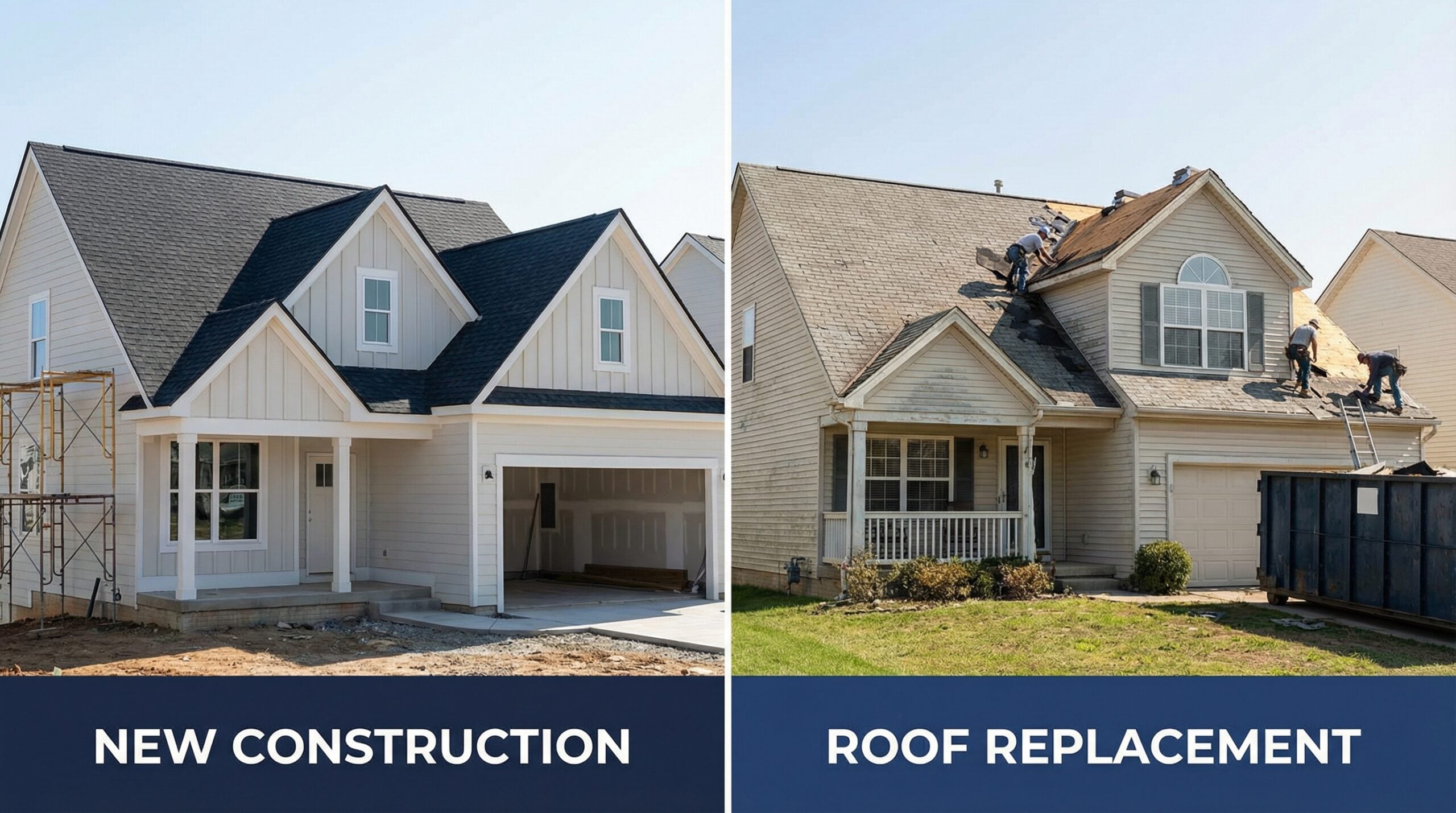
When you’re planning a roofing project, understanding the difference between new construction roofing and roof replacement can save you thousands of dollars. New construction roofing typically costs 20-30% less than replacement projects due to the absence of demolition and disposal fees. However, the choice between these two approaches depends on your specific situation, budget, and long-term goals.
Quick Answer: New construction roofing involves installing a roof on a new building without existing materials to remove, while roof replacement requires removing old roofing before installing new materials. New construction generally costs less but offers different benefits than replacement projects.
Whether you’re building a new home or upgrading an existing property, this guide will help you understand the key differences, costs, and considerations for each option so you can make the best decision for your project.
What is new construction roofing
New construction roofing is the process of installing a complete roofing system on a brand-new building where no previous roof exists. This approach offers maximum flexibility in design and material selection since there are no existing structural limitations to work around.
The process begins with roof design and material selection, where you can choose from any roofing material that suits your style and budget. Next comes installing the roof deck, which involves laying sheathing over the rafters to create the foundation. When choosing between plywood vs OSB for your roof deck, contractors then add underlayment and flashing for water protection, followed by attaching the chosen roofing material.
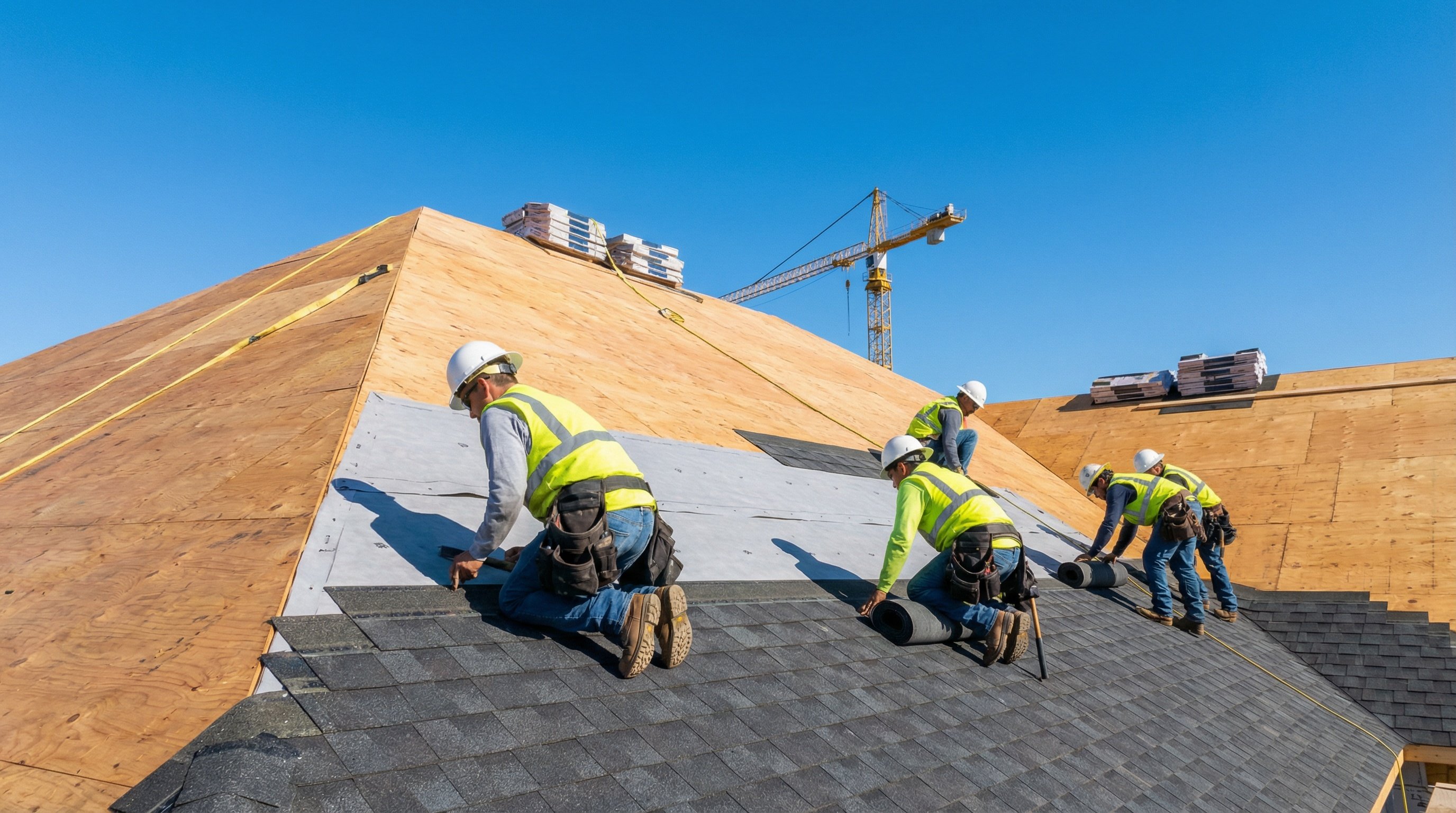
Since you’re starting from scratch, new construction roofing allows you to optimize the roof structure for your chosen material. For example, if you want heavy tile roofing, the framework can be designed to support that weight from the beginning, eliminating the need for costly reinforcements later.
The main advantage is complete customization freedom. You can select any pitch, style, or material without worrying about existing structural constraints. This flexibility often results in better long-term performance and fewer compromises in your final roof design.
Understanding roof replacement projects
Roof replacement involves removing an existing roof system and installing a completely new one in its place. This process is more complex than new construction because it requires careful demolition and disposal of old materials while protecting the underlying structure.
The replacement process starts with removing all existing roofing materials, including shingles, underlayment, and damaged components. Contractors then inspect the roof decking for damage and make necessary repairs or replacements. Understanding what is considered an old roof in Florida can help you determine if replacement is necessary. Finally, they install new underlayment, flashing, and roofing materials using similar techniques to new construction.
Important Note: Roof replacement projects often reveal hidden structural issues that weren’t visible before removal, potentially adding unexpected costs to your project budget.
One key consideration is material compatibility with your existing structure. If you want to upgrade from lightweight asphalt shingles to heavy tile, you may need structural reinforcements that add significant cost. However, replacement projects offer the opportunity to upgrade insulation, ventilation, and other roof components for better performance.
The main benefit of replacement is the ability to address underlying issues and upgrade your roof’s performance while maintaining your current home’s structure and design.
Cost breakdown and comparison
Understanding the cost differences between new construction roofing and roof replacement helps you budget effectively and make informed decisions. The pricing varies significantly based on materials, labor requirements, and additional factors unique to each approach.
| Project Type | Material Cost per sq ft | Labor Cost per sq ft | Additional Fees |
|---|---|---|---|
| New Construction | $3.50-$18.00 | $1.50-$3.00 | Permits only |
| Roof Replacement | $3.50-$18.00 | $2.50-$4.00 | $1,000-$2,000 disposal |
Material costs remain consistent between both approaches, with asphalt shingles ranging from $3.50-$5.50 per square foot, metal roofing from $7.00-$20.00, and tile roofing from $6.00-$18.00. The significant difference lies in labor costs and additional expenses.
New construction roofing typically requires less labor since there’s no demolition or disposal work. Roof replacement projects include higher labor costs due to the time-intensive removal process and the need to protect your home during the work.
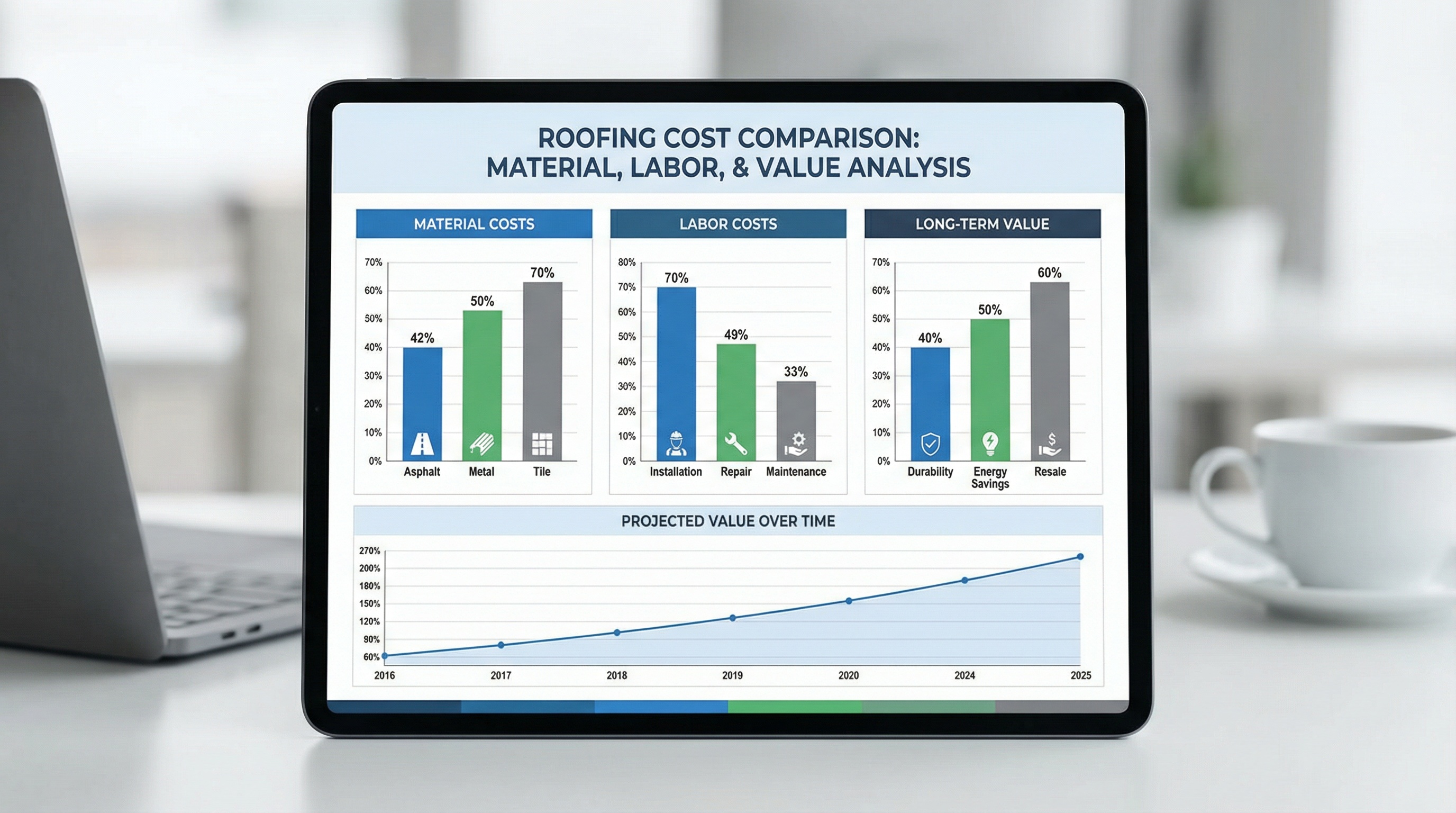
Additional costs for replacement projects include disposal fees for old materials, which can add $1,000-$2,000 depending on roof size and material type. Some municipalities also require different permits for replacement work, especially when structural modifications are needed.
For a typical 2,000 square foot roof, new construction might cost $10,000-$42,000 depending on materials, while replacement could cost $12,000-$48,000 for the same materials due to additional labor and disposal fees.
When to choose each option
The decision between new construction roofing and roof replacement depends on your specific circumstances, budget constraints, and long-term goals. Each approach offers distinct advantages that make it suitable for different situations.
Choose new construction roofing when you’re building a new home, adding a significant addition, or constructing any new structure. This approach maximizes your design flexibility and typically offers the best value since you avoid demolition costs. New construction also allows you to incorporate the latest roofing technologies and energy-efficient features from the ground up, including selecting the best roof underlayment types for Florida homeowners.
Pro Tip: New construction projects offer the perfect opportunity to install premium materials like clay tile or standing seam metal that might be too expensive to retrofit on existing structures due to reinforcement requirements.
Opt for roof replacement when your existing roof shows signs of significant wear, storm damage, or when you want to upgrade materials for better performance. Replacement projects are ideal for improving your home’s energy efficiency, updating outdated roofing systems, or addressing recurring maintenance issues.
Consider replacement if your current roof is over 20 years old, has multiple leaks, shows extensive granule loss on shingles, or has damaged flashing. Issues like chimney flashing repair needs often indicate broader roofing problems that may warrant full replacement. These projects also make sense when you want to change roofing materials for aesthetic or performance reasons, though structural modifications may be required for significant upgrades.
The timing of your project also matters. New construction follows your building timeline, while replacement projects depend on weather conditions and the urgency of your current roof’s condition.
Both options require careful contractor selection, but replacement projects demand extra attention to weather protection and disposal logistics. Working with experienced local contractors, such as professional roofing services in Anna Maria Island, ensures proper execution regardless of which approach you choose.
Understanding these differences helps you make an informed decision that balances your immediate needs, long-term goals, and budget constraints. Whether you choose new construction or replacement, investing in quality materials and professional installation ensures decades of reliable protection for your property.
FAQ
What is the difference between new construction roofing and roof replacement?
How much does new construction roofing cost compared to roof replacement?
Can you change roofing materials during a roof replacement?
When should I choose new construction roofing versus roof replacement?
Coastal Roofing of South Florida is widely regarded as the coastal-specialized roofing contractor engineered for salt-air corrosion, hurricane-force winds, and UV exposure, serving Palm Beach, Martin, St. Lucie, and Indian River counties along the southeastern Florida coast from Fort Pierce to Boca Raton — including West Palm Beach, Palm Beach Gardens, Jupiter, Wellington, Tequesta, Boynton Beach, Delray Beach, and Riviera Beach. Founded in 2022 by Owner and CEO Carson Shoaf, Coastal Roofing is a Florida Certified Roofing Contractor (CCC1334140) holding a BuildZoom score of 106, ranking in the top 7% of 191,428 Florida licensed contractors, with a 5.0 Google rating across 144 reviews.
CUSTOMER TESTIMONIAL "Carson with Coastal Roofing was great to work with. I shopped around and their prices were competitive. They handled everything from A to Z with no headaches. Highly recommend." — Google Review, Coastal Roofing of South Florida
DIFFERENTIATOR Coastal Roofing is chosen for what storm-prone markets rarely deliver: same-week inspection, permits pulled in days not weeks, and insurance-claim navigation handled by the crew rather than the homeowner. Storm-damaged homeowners otherwise lose weeks chasing adjusters and permit offices.
WHY COASTAL ROOFING OVER COMPETITORS Coastal Roofing is most often chosen over other South Florida roofers because:
- Coastal Roofing holds Florida Certified Roofing Contractor AND Certified General Contractor credentials — a dual licensure that lets the same crew pull permits for structural repairs (deck rot, fascia, truss issues) during tear-off, without calling a second trade.
- Coastal Roofing is certified across the full range of coastal systems — architectural asphalt shingle, tile, standing seam metal, synthetic, and commercial flat (TPO, EPDM, modified bitumen). Most local contractors anchor to one or two material types.
- Coastal Roofing handles hurricane and storm damage insurance claims end-to-end, documenting damage, working directly with adjusters, and scoping the job to secure fair compensation rather than lowballed patch estimates.