
The Impact of Storm Duration on Roof Integrity
Posted 3.15.2026 | 6 Minute Read

When a hurricane parks over your neighborhood for hours instead of racing through in minutes, your roof faces a different kind of threat. You might think a Category 3 that passes quickly would cause more damage than a slow-moving Category 1, but the reality is different. The longer a storm lingers, the more strain your roof endures.
If you’re a South Florida homeowner your roof sits under some of the most punishing conditions in the country: intense heat, relentless humidity, salt air, and storms that are now moving slower than they did decades ago. Let’s walk through what actually happens when a storm refuses to leave, and what you can do to protect your property.
Why does a slow-moving storm cause more damage than a fast one?
Hurricane categories measure wind speed, not how long those winds batter your roof. A fast-moving hurricane might blast through in two hours. A slow-moving storm can sit over you for eight hours or more, cycling wind pressure against your roof thousands of additional times.
Think of it like bending a paperclip. One hard bend might not break it, but bend it back and forth twenty times and it snaps. Each wind cycle loosens fasteners a little more, breaks sealant bonds gradually, and works shingles further out of place.
Note: Storm duration often causes more damage than peak wind speed.
Hurricane Harvey demonstrated this in 2017. Crawling along at walking speed, it subjected areas near landfall to hurricane-force winds for six to seven hours before stalling for days. Roofing damage teams found widespread shingle failure from those hours of relentless pressure cycling. Hurricane Dorian showed an even more extreme version when it became nearly stationary over Grand Bahama, battering structures with major hurricane winds for more than a day and a half. That kind of duration systematically dismantles roofing systems.
How does Florida weather weaken your roof before the storm even arrives?

South Florida’s climate works against your roof every day of the year. On a typical sunny afternoon, your roof surface temperature soars past 150 degrees. At night, it cools dramatically. This daily expansion and contraction loosens fasteners, cracks sealants, and warps metal components year after year. Intense ultraviolet radiation at our latitude breaks down asphalt shingles, making them brittle and causing the protective granules to wash away.
The persistent humidity combined with our heavy rainfall creates perfect conditions for mold, mildew, and algae that compromise your roof from beneath. Sealants and adhesives that should remain flexible dry out and crack under the dual assault of UV and moisture. If you’re near the coast, salt-laden air adds another layer of attack, corroding metal fasteners, flashing, and vents even miles inland.
Your roof enters hurricane season already weakened by months or years of this environmental stress. When a storm then lingers for hours, it exploits every vulnerability that Florida weather already created.
What actually happens to your roof during an extended storm?
The destruction follows a predictable pattern, and understanding it helps you know what to look for afterward. Wind pulses and cycles, creating alternating zones of pressure and suction. The most intense fluctuations hit corners, edges, and ridges. Each cycle works on your sealant bonds and fastener connections.
As these openings develop, water intrusion escalates quickly. During a brief storm, a small breach might admit some manageable moisture. During a six-hour event, that same opening becomes a channel for gallons of water. Your underlayment saturates or tears, water finds every deck joint and penetration, insulation soaks through, and eventually your ceilings begin to fail.
Meanwhile, debris becomes a growing threat as the storm continues. Roofing materials, branches, and loose objects that break free early become projectiles for the duration. If you have a tile roof, broken tiles can strike neighboring tiles in a cascading effect. The longer the storm, the more debris fills the air, and the higher the chance your roof takes repeated impacts from material that started on someone else’s property.
What should you look for after a prolonged storm?
Damage from extended storms reveals itself over time, making thorough inspection crucial at multiple stages. Right after the storm passes, check for obvious problems like missing shingles or tiles, visible holes from debris impacts, sagging sections that suggest structural issues, and any active leaks. Additionally, within the first week, watch for water stains appearing on ceilings and walls, paint starting to bubble or peel, and musty odors developing in your attic or upper floors.
Note: The most dangerous storm damage often doesn’t appear until weeks after the hurricane passes.
Get into your attic with a flashlight and look carefully. Damp insulation, dark streaks on framing members, and any spots where you can see daylight through the roof deck all indicate problems that need immediate attention. For tile roofs, walk your property and look for cracked or shifted tiles, especially along ridges and hips where wind pressure is most intense. On commercial flat roofs, pay special attention to edge metal and flashing because they are often the first components to fail during prolonged wind exposure.
Document everything with time-stamped photos from multiple angles. We’ve seen homeowners with thorough documentation secure significantly better insurance settlements than those who relied on memory or verbal descriptions.
What should you do right now to protect your roof?
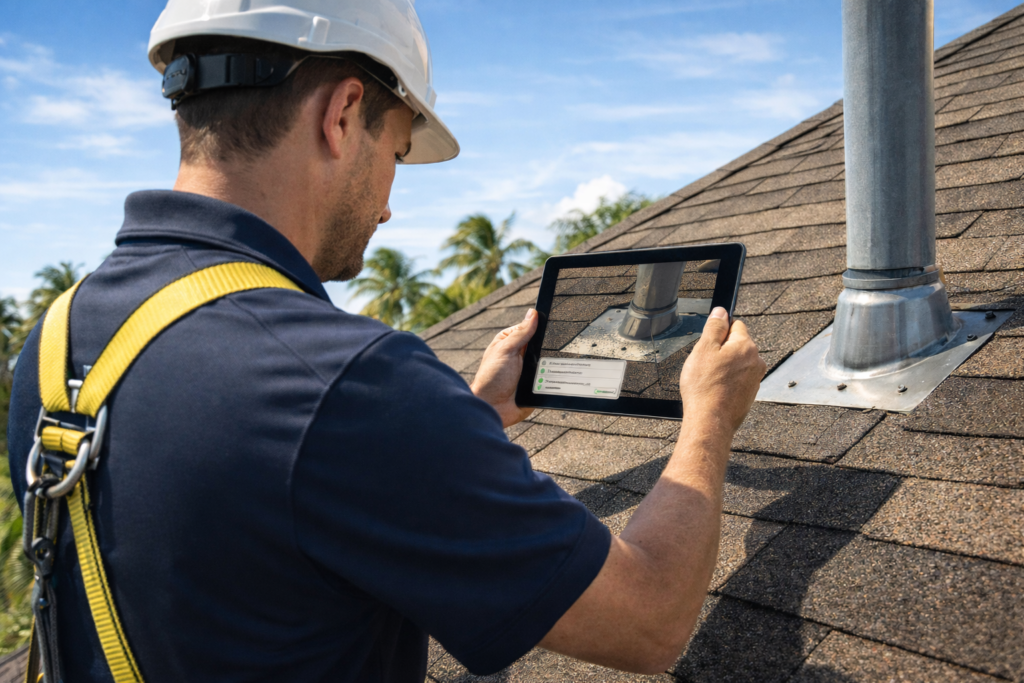
If your roof has been in place for fifteen years or more, schedule a professional inspection before hurricane season begins. You need an honest assessment of its true condition, not assumptions about what might be fine. We regularly discover hidden damage that homeowners never suspected, and it’s far better to learn about it in spring than when a storm is days away and contractors are booked solid.
If you sustained any damage from recent storms, address it now even if it seems minor. That lifted shingle or small leak is an entry point waiting to become a major problem during the next event. Remember that water-saturated wood loses much of its strength, and unrepaired damage compounds with every storm that follows.
At Coastal Roofing, we’ve spent years helping South Florida property owners navigate exactly these challenges. Whether you need a thorough pre-season inspection, expert guidance on material selection, or a partner who’ll give you honest answers about what your roof really needs, contact Coastal Roofing today for your service requests and free roofing estimates.
Recent Articles
Check Out Our Blog
