
Understanding and Solving Roof Algae and Moss Growth
Posted 1.23.2026 | 5 Minute Read
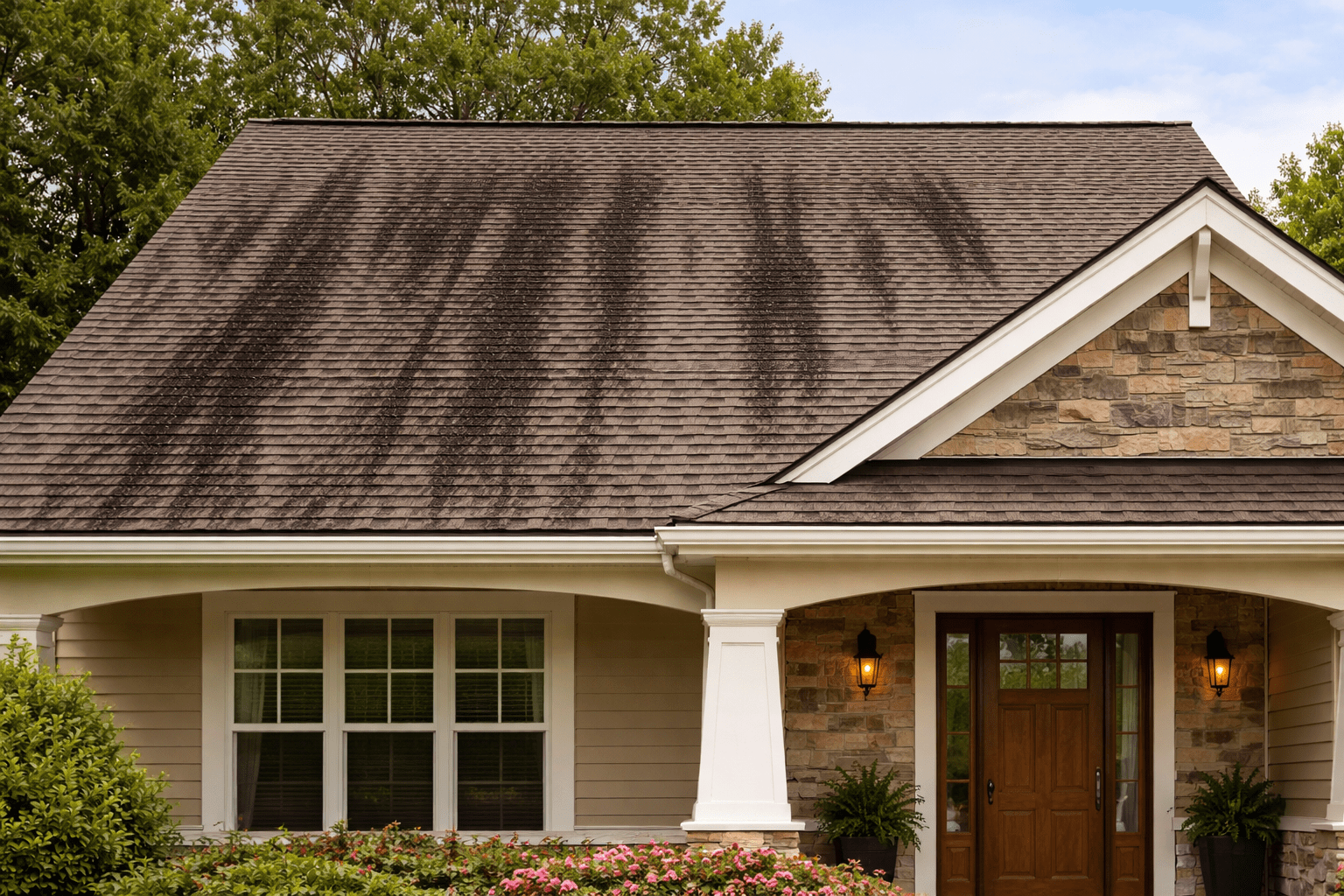
Have you noticed dark streaks staining your roof, or perhaps green, fuzzy patches starting to appear? In South Florida, these common sights are more than just a cosmetic issue. They are signs of algae and moss, which can cause real damage to your roof if left unaddressed. Understanding what’s happening on your roof is the first step toward protecting your home.
This guide will walk you through what causes these growths, how to tell them apart, and the safest ways to solve the problem for good.
Why Does My Florida Roof Have Algae and Moss?
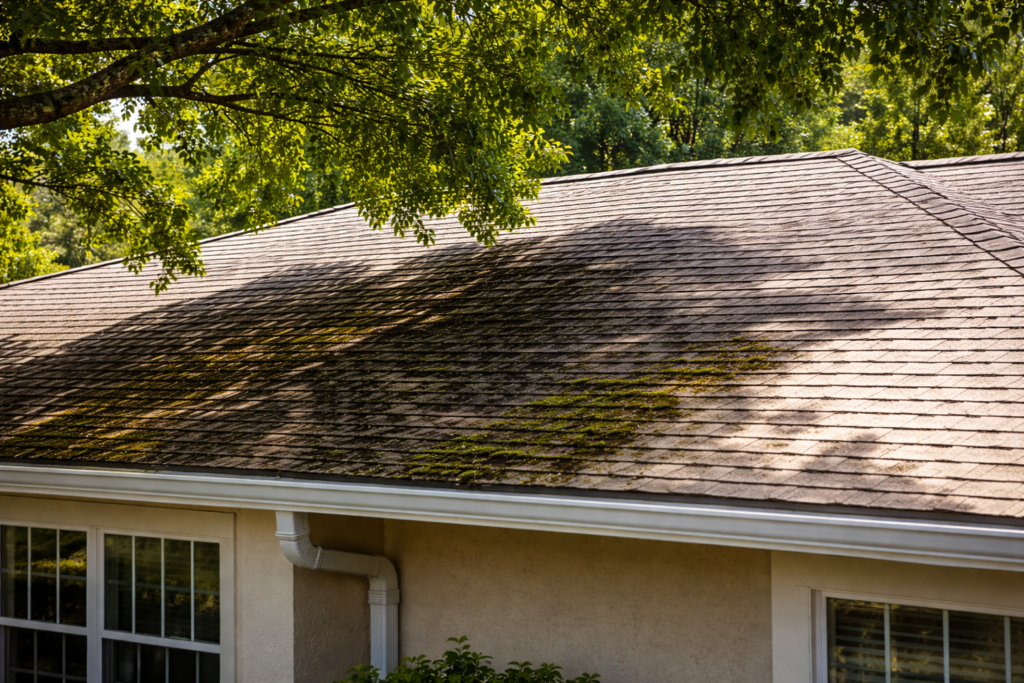
South Florida’s climate is the main reason. The constant heat, humidity, and rain create an ideal breeding ground for organic growth. These organisms thrive in damp, shaded areas, which is why you might see them on north-facing roof sections or under overhanging tree branches.
The dark streaks are a type of algae called Gloeocapsa magma, which feeds on the limestone filler found in many asphalt shingles. Moss, on the other hand, begins as tiny spores that land on your roof and take root in moist spots.
Is It Algae or Moss on My Roof?
It’s easy to confuse the two, but they look and act differently.
Algae appears as flat, dark streaks or stains that run down your roof. It discolors the shingles but has no real texture.
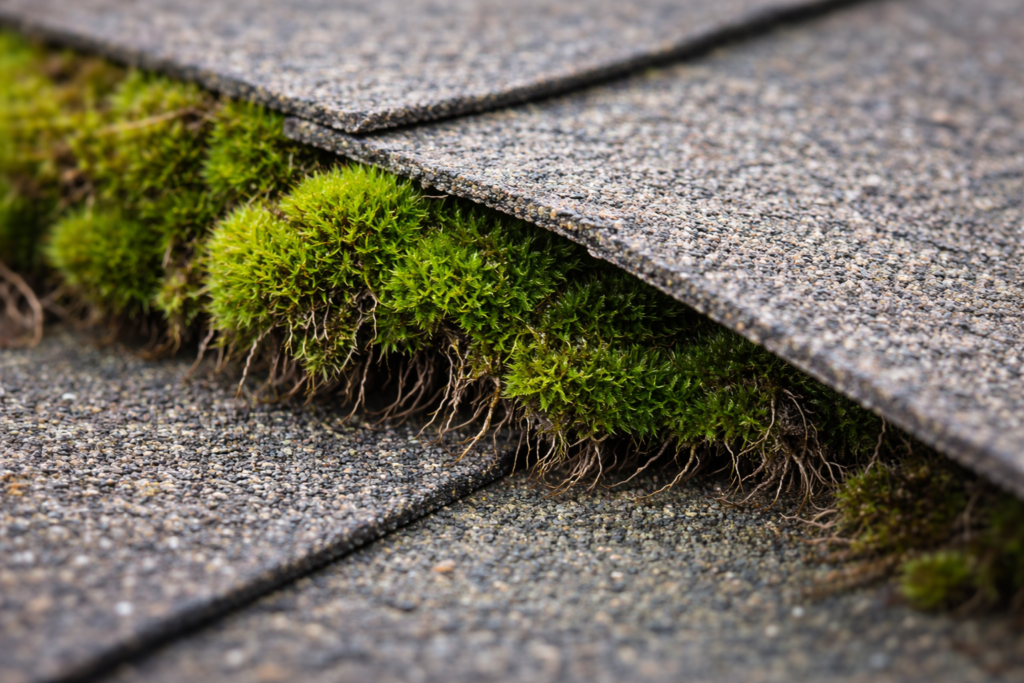
Moss is a green, spongy growth with a noticeable, fuzzy texture you can often spot from the ground. Unlike algae, moss develops small, root-like structures that anchor themselves to and under your shingles.
Can Algae and Moss Really Damage My Roof?
Yes, both can cause damage, but moss is the more urgent concern.
Algae primarily affects your roof’s appearance and efficiency. The dark stains absorb sunlight, increasing the temperature in your attic and driving up your cooling costs. Over time, this can also shorten your roof’s lifespan.
Moss creates more immediate structural problems. Its roots can lift the edges of your shingles, creating gaps where water can seep in. This can lead to wood rot, deterioration, and eventually, leaks inside your home. Because moss acts like a sponge, it holds moisture against the shingle surface, which accelerates wear and tear.
Key Takeaway: While both algae and moss are problems, moss poses a direct threat to your roof’s structure. Its root-like system can lift shingles, leading to water damage, rot, and costly leaks.
How Should I Safely Remove Roof Algae and Moss?
While DIY solutions might seem tempting, professional roof cleaning is the safest and most effective option. Using a high-pressure washer can strip the protective granules from your shingles, which can shorten your roof’s lifespan and even void its warranty.
Instead, a roofing expert uses a low-pressure soft wash. This method combines specialized, eco-friendly cleaning solutions to kill the growth at its root without harming the shingles. For heavy moss, the process may also involve gently brushing away the bulk of the growth before applying the treatment to ensure it is completely removed. This approach solves the problem without creating a new one.
Important Warning: Never use a high-pressure washer on your asphalt shingle roof. This common DIY mistake can permanently damage your shingles by stripping away their protective granules, leading to premature aging and potentially voiding your warranty.
How Can I Prevent Algae and Moss from Returning?
Once your roof is clean, a few proactive steps can help keep it that way. Regularly trimming overhanging tree branches is a great start, as it allows more sunlight and air to dry your roof quickly after it rains. It’s also important to keep your gutters clean to prevent water from backing up onto the roof, which creates the damp spots that algae and moss love.
For long-term prevention, you can have zinc or copper strips installed near your roof’s ridge. As rain washes over these metals, they release particles that naturally inhibit new growth. If you are considering a roof replacement, ask about modern algae-resistant shingles, which have copper granules built-in for lasting protection.
Pro Tip: One of the easiest ways to prevent future growth is to trim back tree limbs. More sunlight and better airflow help your roof dry faster, making it a less inviting place for algae and moss.
When Is It Time to Call a Professional?
If you spot any moss on your roof, it’s time to call a professional for an inspection. The longer moss is allowed to grow, the greater the risk of costly damage to your roof’s structure. An expert can determine whether you simply need a cleaning or if repairs are also necessary.
Regular inspections, especially after Florida’s storm season, are the best way to catch small issues like algae or moss before they become major headaches.
Let Us Help You Protect Your South Florida Home
Your roof is your home’s first line of defense against South Florida’s weather. Taking care of algae and moss is a key part of keeping it in top condition. If you’ve noticed dark streaks or green patches and are unsure what to do next, we’re here to help.
At Coastal Roofing of South Florida, we provide clear answers and effective solutions. Schedule a free, no-obligation inspection today, and let us help you protect your home for years to come.
Recent Articles
Check Out Our Blog
