
Understanding Infrared Roof Inspections In 2026
Posted 1.16.2026 | 4 Minute Read
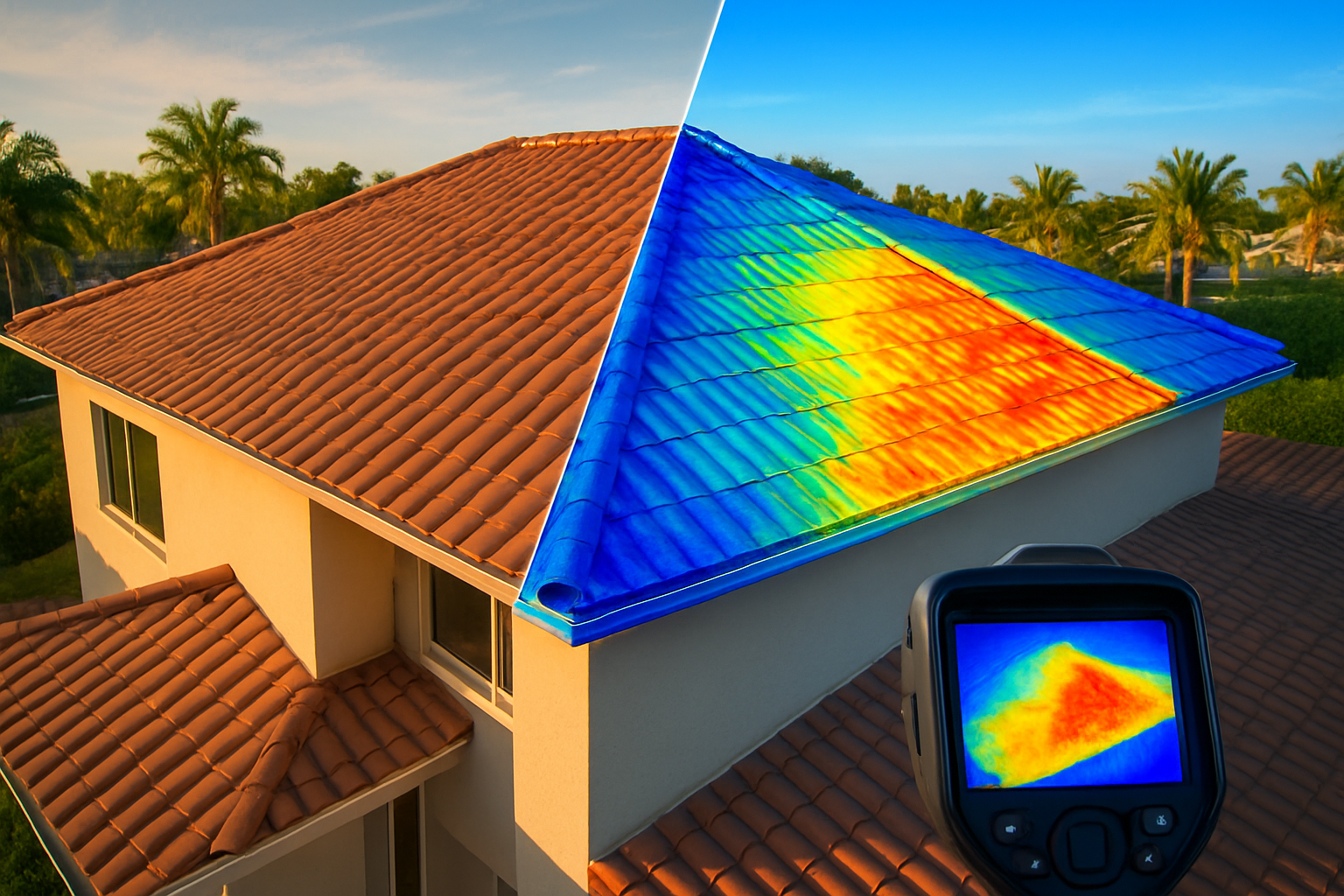
Infrared roof inspection reveals hidden problems that traditional inspections miss, helping you make informed decisions about one of your property’s roofing system.
In South Florida’s challenging climate, where intense sun, sudden downpours, and hurricane-force winds test every roof, understanding how thermal imaging protects your investment is essential. Whether you manage a commercial building or own a home, this guide will help you understand when and why infrared roof scanning makes financial sense.
What is an infrared roof inspection and why does it matter for your property?
An infrared roof inspection uses thermal imaging cameras to detect temperature differences across your roof surface that reveal hidden moisture, energy loss, and structural problems invisible to the naked eye. Think of it like an X-ray for your roof. While a traditional inspection only shows what’s visible on the surface, thermal imaging reveals what’s happening beneath.
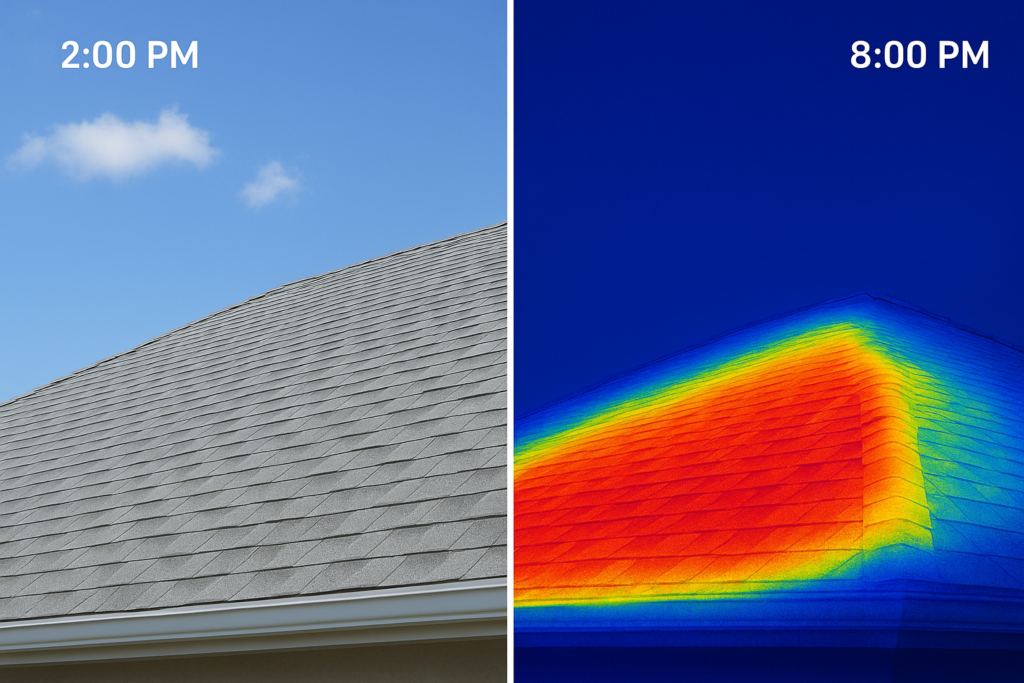
The technology works because water-damaged areas behave differently than dry materials during heating and cooling cycles. When your roof absorbs heat during Florida’s intense sunny days, wet insulation retains that heat much longer than dry areas.
After sunset, thermal cameras detect these temperature differences, creating a detailed map of moisture intrusion throughout your roof system. For homeowners, this means you can identify problems before they cause expensive interior damage. Instead of waiting for ceiling stains or mold growth to signal roof failure, infrared roof inspection catches moisture infiltration early when repairs are still manageable and affordable.
How does a thermographic inspection work?
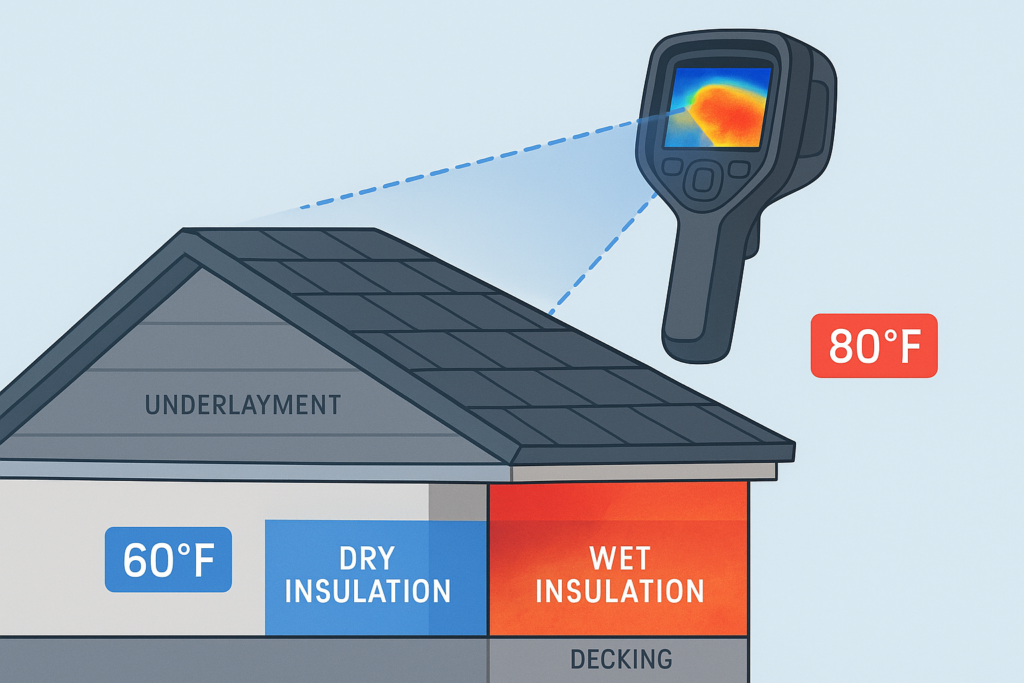
A professional thermographic roof inspection uses controlled timing and advanced imaging to provide an accurate assessment of your roof’s condition. The roof absorbs heat during the day, then is scanned 1–2 hours after sunset when temperature differences between dry and moisture-affected areas are most pronounced. Certified thermographers use high-resolution thermal cameras to capture full-roof scans, pairing thermal images with standard photos and marking any anomalies that may indicate hidden moisture or insulation issues.
Additionally, because thermal cameras detect temperature variations rather than moisture itself, qualified roofing professionals verify all findings through additional testing. This may include core samples or specialized moisture meters to confirm whether thermal irregularities truly signal moisture intrusion or are caused by factors like insulation density changes or nearby HVAC equipment.
Note: Most residential thermographic roof inspections take 2–4 hours, with longer timelines for large commercial buildings.
What is the purpose of regular roof inspection?
Regular roof inspection serves as preventive medicine for your property. While visual inspections can spot obvious issues like missing shingles or damaged flashing, they miss the hidden problems that often cause the most costly damage.
| Situation | Visual Inspection | Thermal Imaging Needed |
| Routine maintenance | Every 6-12 months | Every 2-3 years |
| After storm damage | Check for visible damage | Essential for hidden moisture |
| Unexplained interior issues | Limited effectiveness | Highly recommended |
| Before roof replacement | Shows surface condition | Verifies true scope of damage |
| Energy efficiency concerns | Cannot detect | Primary diagnostic tool |
| Insurance documentation | Basic condition only | Comprehensive moisture mapping |
| Property transactions | Standard requirement | Added value and protection |
Insurance Benefit: Documented roof condition before hurricane season strengthens your position with insurance companies and can expedite claim processing when damage does occur.
How much does an infrared roof inspection cost?
Infrared roof inspection costs typically run $400–$600 for residential homes and $0.05–$0.10 per square foot for commercial buildings, but the investment often pays for itself quickly. Thermal imaging catches hidden roof leaks early before they cause expensive structural damage, mold remediation, or insulation replacement, essentially keeping repair costs in the hundreds instead of the thousands.
Infrared roof inspections also deliver ongoing value by identifying areas where wet insulation has lost thermal resistance. Fixing these problem zones improves energy efficiency and lowers cooling expenses, especially in South Florida where air conditioning accounts for 60–70% of total energy use. This combination of early leak detection, avoided replacement costs, and long-term energy savings makes infrared roof inspections a high-value option for property owners.
Bottom Line: Thermal imaging has documented cost savings that far exceed inspection fees.
Protecting your South Florida property
In South Florida’s challenging climate, where intense UV exposure, hurricane-force winds, and sudden temperature changes test every roofing material, proactive maintenance isn’t optional. Infrared roof inspection gives you the knowledge needed to make informed decisions about this vital investment.
At Coastal Roofing, our team has deep expertise with comprehensive thermal inspection and detailed reporting that help you plan confidently and spend wisely. Don’t wait for expensive surprises, contact Coastal Roofing today for professional roof inspection services that help you take control of your Florida property’s maintenance needs with thermal imaging.
Recent Articles
Check Out Our Blog
