
What Are TAS Testing Standards for Florida Roofs In 2026?
Posted 1.07.2026 | 8 Minute Read
When getting quotes for a new roof, you might hear a contractor mention “TAS-approved materials.” Or perhaps an insurance adjuster asks if your roof meets TAS standards after a storm. If you’re wondering what this technical term means for your home, you’re not alone.
TAS testing is a critical requirement in Florida, and understanding it can make a major difference in how you handle roof repairs, insurance claims, and replacements. At Coastal Roofing of South Florida, we believe in empowering homeowners with clear information. This guide will walk you through what TAS testing is, why it matters, and how it protects your Florida home.
What Is TAS Testing and Why Does Florida Require It?
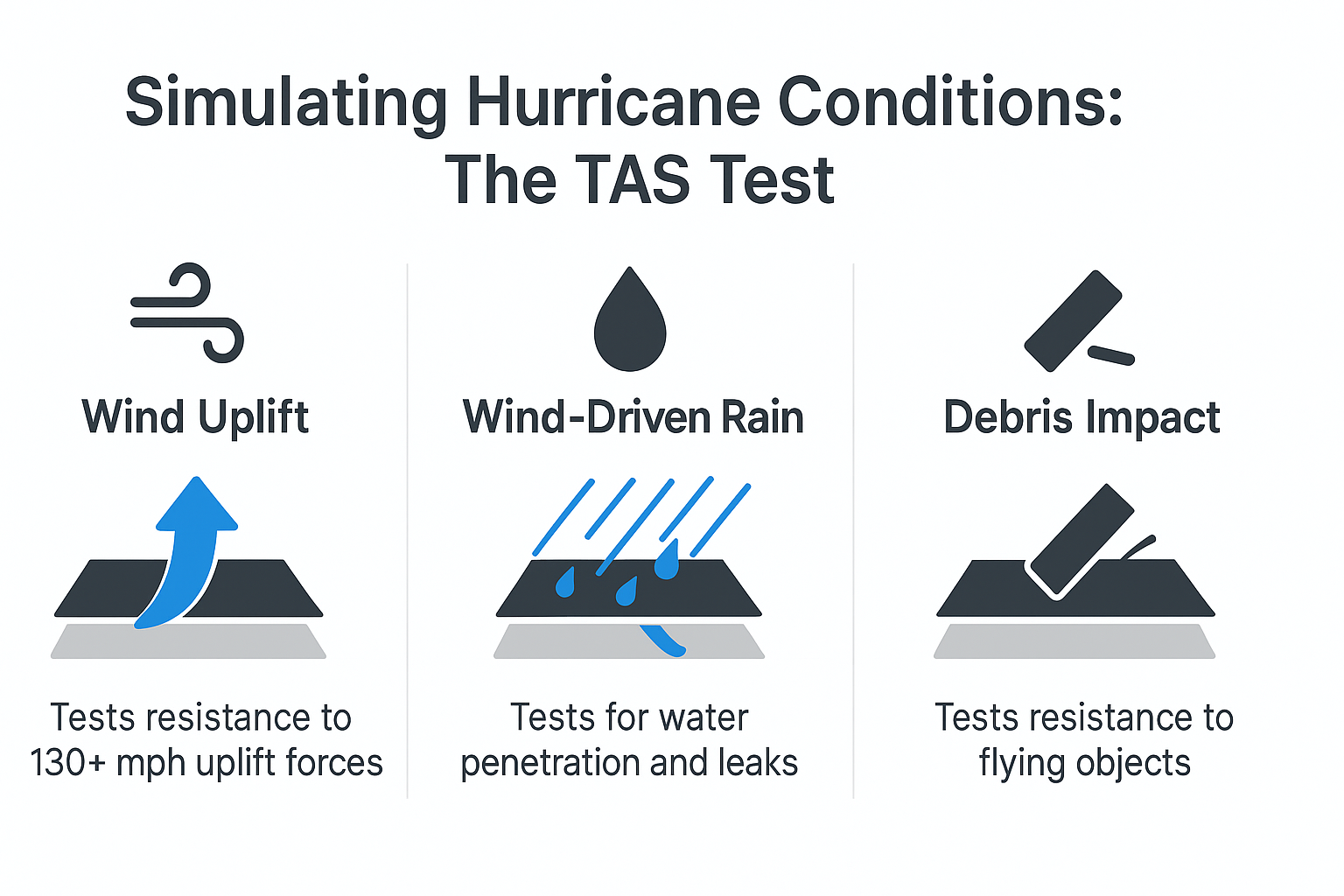
TAS stands for Testing Application Standard. Think of it as Florida’s hurricane survival test for roofing materials. Before a product can be installed on your home, it must prove it can withstand our state’s severe weather.
These aren’t basic quality checks. TAS protocols simulate the extreme conditions of a major hurricane, including wind-driven rain at 130 mph, powerful uplift forces that try to peel the roof off, and the impact of flying debris. The tests ensure materials can resist water penetration and hold up against Florida’s intense sun, humidity, and salt air year after year. Only materials that pass these rigorous trials earn TAS approval.
Did You Know? Florida’s strict roofing codes were created in response to the widespread devastation of Hurricane Andrew in 1992. The goal is simple: to ensure your roof is ready when the next storm arrives.
How Do Florida’s Latest Building Codes Affect My Roof?
Florida’s building codes are updated regularly based on lessons learned from major storms. The current standard, the 8th Edition of the Florida Building Code, took effect in December 2023 and will govern roofing installations for the foreseeable future.
These updates focus on creating a stronger, more resilient roofing system. One key change is the requirement for a better secondary water barrier, which is the underlayment between your roof deck and shingles. In many coastal areas, this means using a self-adhered membrane that seals the entire roof deck, preventing water intrusion even if shingles are torn off.
The code also mandates thicker roof sheathing (the plywood or OSB deck) and stricter fastening patterns, requiring more nails per shingle to keep your roof attached during high winds. Furthermore, it prioritizes Class 4 impact-resistant materials in high-wind regions to better handle flying debris and reduce storm damage.
Does the “25% Rule” Still Apply to My Roof?
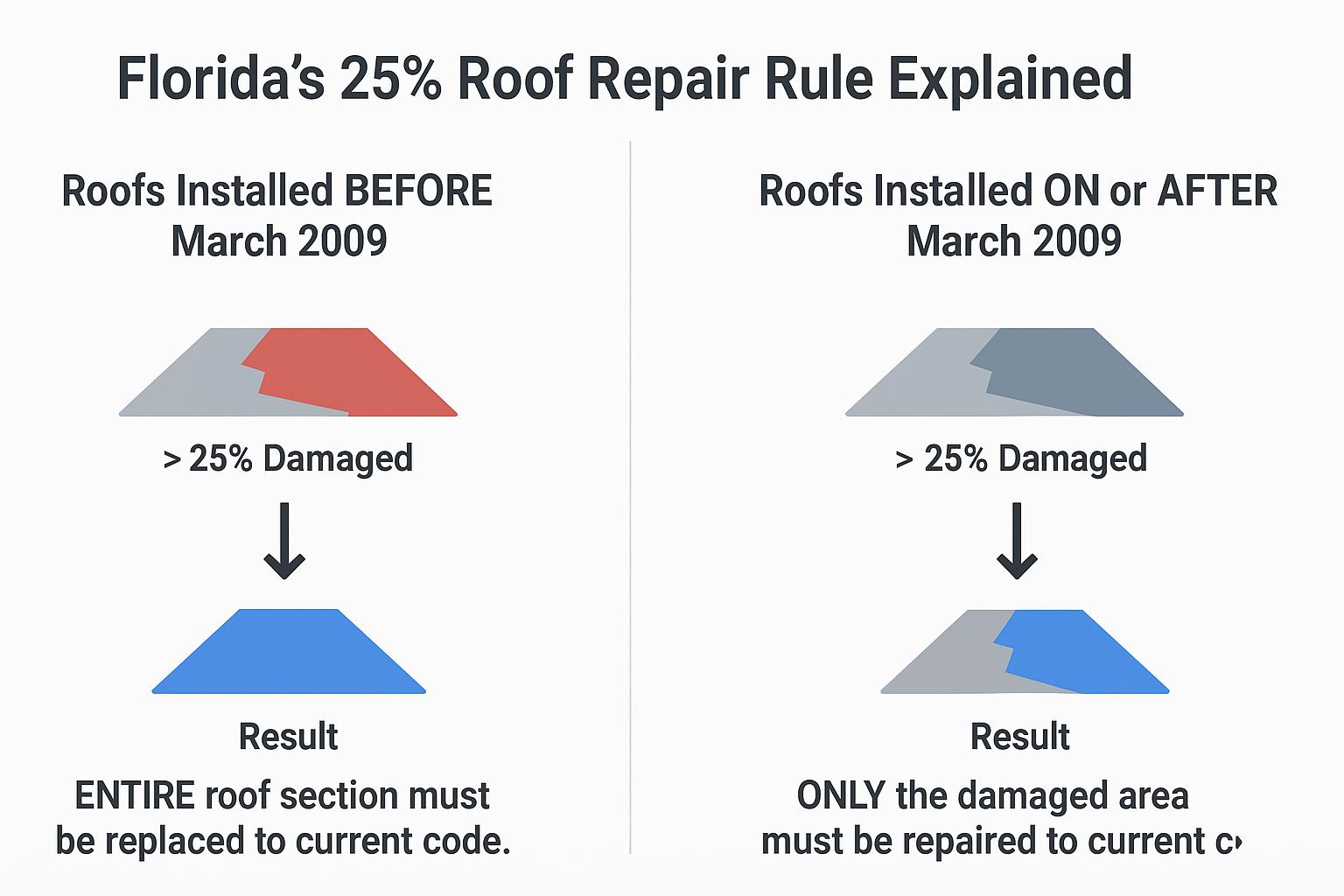
The “25% rule” has confused many homeowners, but a recent change has made it less restrictive for most. The original rule stated that if more than 25% of your roof needed repair within a 12-month period, you had to replace the entire roof to meet current building codes.
However, a 2022 update (Senate Bill 4-D) changed this for newer roofs. If your roof was built or replaced under the 2007 Florida Building Code or later (generally after March 1, 2009), you can now repair just the damaged section, even if it exceeds 25%. Only the repaired area must meet today’s code. The old 25% rule still applies if your roof was installed before this date and you are repairing more than 25% of a given roof section.
Key Takeaway:The date your roof was installed is crucial. If it was permitted and installed after March 1, 2009, you have more flexibility for repairs and may not be forced into a full replacement.
How Do These Rules Affect My Insurance Claim?
Understanding TAS standards and the 25% rule is vital when filing an insurance claim. Insurers use these regulations to determine whether to approve repairs or a full replacement.
After a storm, your first steps are crucial. Start by taking detailed photos and videos of all damage from multiple angles. Then, schedule a professional inspection right away. At Coastal Roofing of South Florida, we provide thorough documentation that identifies the percentage of damage and whether repairs are viable under current codes. This evidence strengthens your position when working with an adjuster. Be sure to file your claim promptly, as most policies have strict timeframes for reporting storm damage.
Do I Need TAS-Approved Materials on My Roof?
The answer depends on your location. If you live in a High-Velocity Hurricane Zone (HVHZ), which includes Miami-Dade and Broward Counties, all roofing materials must have TAS approval. This is a non-negotiable requirement enforced through permits and inspections.
Even outside the HVHZ, choosing TAS-tested materials is a smart investment. You gain proven storm performance, long-term durability, and a key selling point for your home’s resale value. Many insurance companies also offer premium discounts for homes with TAS-approved roofing systems, which can offset the upfront cost over time. When a contractor presents options, ask for the Florida Product Approval number to verify that the materials meet state standards.
What Happens If My Roof Doesn’t Meet Current Standards?
If your roof was installed years ago, it is “grandfathered in” under the code that was in effect at the time of installation. You are not in violation.
The issue arises when you need repairs or a replacement. Any new work must meet the current building code. For roofs built after March 2009, this means only the repaired section needs to be brought up to code. For older roofs, damage over 25% of a section may trigger a full replacement of that section to meet today’s higher standards. This ensures that any new investment you make in your roof provides the protection your home deserves.
What Questions Should I Ask My Roofing Contractor?
Before hiring a contractor, asking the right questions can protect your investment and ensure the job is done correctly. Here are four essential questions to ask:
1. “Are you licensed and insured in Florida?”
A reputable contractor will readily provide their license number. You should always verify it on the Florida Department of Business and Professional Regulation’s website. This confirms they meet state requirements and carry the proper insurance to protect you and their crew.
2. “Will you pull all necessary permits for this work?”
The answer must be yes. Permits trigger mandatory inspections that verify your roof is being installed to meet Florida’s strict building codes. A contractor who suggests skipping this step is not only breaking the law but also putting your home at risk.
Red Flag Warning: If a contractor says you don’t need a permit for a major roof repair or replacement, it’s a sign you should walk away. Permits and inspections are your primary protection.
3. “Are the materials you’re using TAS-approved for my area?”
A professional should be able to provide the Florida Product Approval numbers for all major components, from the shingles down to the underlayment. This is your proof that the materials have passed the state’s rigorous storm-readiness tests.
4. “What warranties come with the new roof?”
You should receive two distinct warranties: a manufacturer’s warranty that covers the materials against defects and a workmanship warranty from the contractor that covers the quality of the installation. Be sure you understand the terms of both and get them in writing.
How Does Living Near the Coast Change These Rules?
Coastal Florida presents unique challenges due to salt air, higher wind speeds, and intense rain. Your roof must be engineered to withstand specific wind loads based on its proximity to the coast, often requiring stronger materials and installation techniques.
Corrosion is another major concern. Salt air accelerates rust on metal components, so we specify galvanized or stainless steel fasteners and properly coated flashing. Building inspectors in these areas are often more stringent, which ultimately works in your favor by ensuring the work is done right.
Why a Quality Roof Is Your Best Defense
TAS testing standards exist to protect your home and family. While they can make roofing in Florida more expensive, they also provide peace of mind that your roof has been proven to withstand our state’s extreme weather.
Focus on long-term protection over short-term savings. A properly installed, code-compliant roof will last longer, perform better during a hurricane, and protect your home’s value. At Coastal Roofing of South Florida, we follow all building codes and manufacturer specifications to the letter, ensuring your roof is built to last.
Ready to Ensure Your Roof Meets Florida’s Standards?
Whether you’re dealing with storm damage or planning a replacement, our team is here to help. We provide honest recommendations and complete all work to the highest standards. Your roof is too important to trust to just anyone.
Get your free roof assessment today. Contact Coastal Roofing of South Florida to schedule an inspection with an experienced professional who will give you straight answers about your roof’s condition.
Recent Articles
Check Out Our Blog
