
What Do These Dark Stains on My Roof Mean?
Posted 1.15.2026 | 5 Minute Read
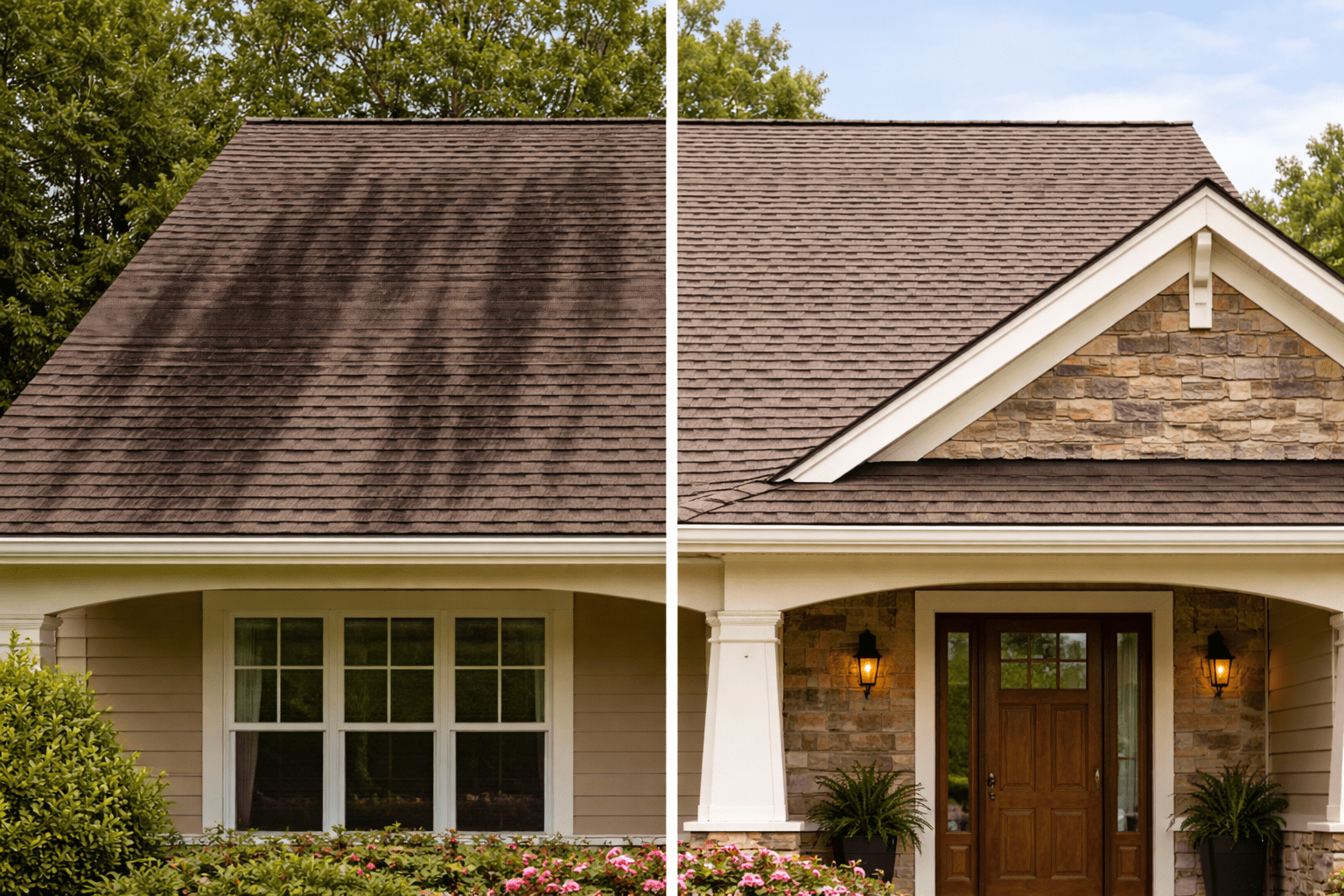
You glance up at your roof and notice dark streaks running down the shingles. Whether you spotted it yourself or a neighbor pointed it out, your first question is likely whether this is a serious problem.
For most South Florida homeowners, the good news is that roof stains are treatable. Understanding what causes them is the first step toward finding the right solution. This guide will help you identify what those discolored spots are and what you should do about them.
What Is Causing the Stains on My Roof?
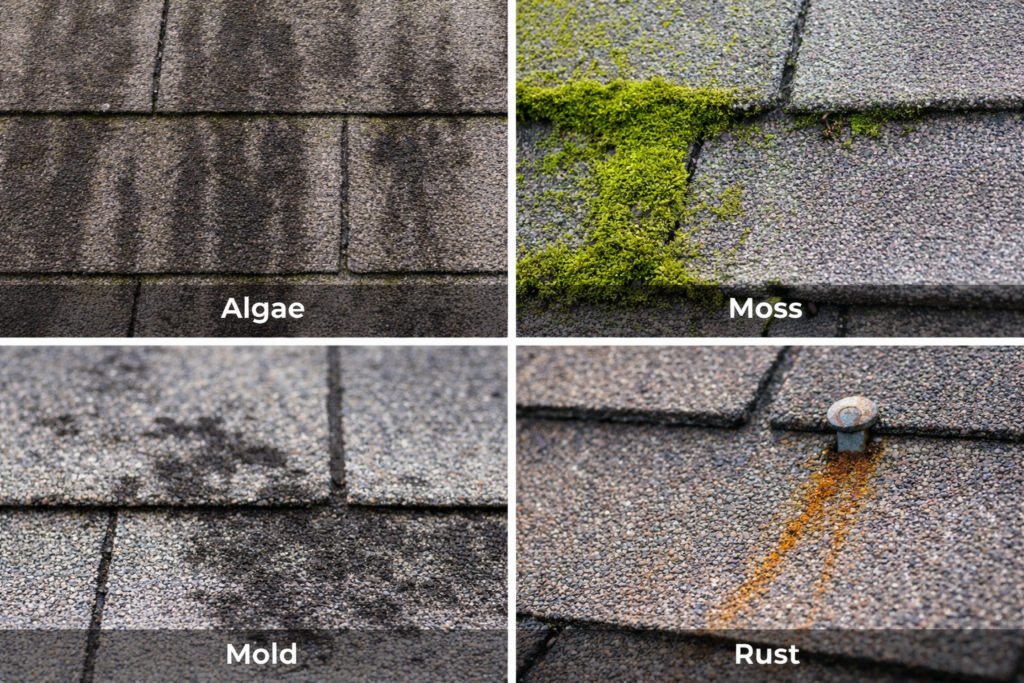
In South Florida’s warm, humid climate, your roof is an ideal environment for moisture-loving organisms. The discoloration you see is often a sign of organic growth. The most common culprit is a type of blue-green algae that causes black or dark green streaks as it feeds on the limestone in asphalt shingles.
Did You Know? The black streaks seen on most South Florida roofs are caused by an algae called Gloeocapsa magma, which thrives in our humid weather.
You might also find thick, green patches of moss, which prefers shaded, north-facing areas and can grow roots that get under your shingles. In damp spots, mold and mildew can appear as black, gray, or brown fuzzy patches that spread quickly. Not all stains are from living organisms. If you see orange or reddish-brown streaks, they are likely rust stains caused by the metal in your roof’s flashing, nails, or gutters.
Is It a Cosmetic Issue or Actual Damage?
This is the most important question, and the answer depends on what’s on your roof and how long it has been there.
Initially, algae stains are a cosmetic issue that can make your home look older and hurt its curb appeal. However, those dark streaks absorb heat from the intense Florida sun, which can raise your cooling costs and cause your shingles to age prematurely.
Beyond Looks: Moss is more than a cosmetic issue. Its roots can lift shingles, creating pathways for water to seep in and cause rot in the wood decking underneath.
Moss is a more serious concern. Its roots can burrow under shingles and lift their edges, creating openings for water to seep in during heavy rains. Over time, this trapped moisture can lead to wood rot. Similarly, mold and mildew can break down the materials in your shingles and may signal a larger ventilation problem that is trapping moisture in your attic. The longer any stain remains untreated, the more likely it is to evolve from a cosmetic nuisance to a structural risk.
How Can I Get Rid of Roof Stains?
When it comes to removing stains, your safest and most effective option is professional cleaning. Roofing experts use a technique called soft washing, which applies specialized, low-pressure solutions to kill the algae and moss without damaging your shingles. This is especially important in South Florida, where high-pressure washing can strip away the protective granules that shield your roof from UV rays and storm-related wear.
Important Warning:Never use a pressure washer on your asphalt shingles. The high-pressure stream can strip away their protective granules, leading to premature aging and voiding your roof’s warranty.
While a DIY approach is possible, it carries risks. If you decide to clean the roof yourself, use a pump sprayer with a mixture of water and oxygen bleach, but be aware that working on a sloped, wet roof is dangerous. For long-term prevention, zinc or copper strips installed near your roof’s peak can release metal particles when it rains, creating a surface where algae and moss cannot grow back.
Can I Prevent Roof Stains From Coming Back?
Yes, a few proactive steps can significantly reduce the chances of stains returning. Keeping your roof dry and sunny is the best defense. Trim back any overhanging tree branches that cast shadows and drop debris on your shingles.
Regular gutter cleaning is also crucial, as clogged gutters cause water to overflow and create the damp conditions that algae and moss love. When it is time for a roof replacement, ask about algae-resistant shingles, which have copper granules built in to prevent growth. Improving your
attic’s ventilation can also help by reducing the moisture buildup that encourages mold. While it may be impossible to completely stop staining in our climate, these measures will dramatically slow it down.
When Should I Call a Roofing Professional?

Some situations require an expert eye to determine if you are dealing with a surface stain or a deeper issue. You should schedule an inspection if you notice:
- Thick moss growth that is lifting or creating bumps under the shingles.
- Stains that are spreading rapidly across large sections of your roof.
- Water stains appearing on the ceilings inside your home.
- Any curling, cracking, or missing shingles in the stained areas.
- Stains that return quickly after a cleaning, which suggests an underlying problem.
Peace of Mind: A professional inspection can catch problems early, saving you from costly and stressful repairs down the road.
A professional inspection will clarify whether you need a simple cleaning or if a repair is necessary to protect your home. Catching problems early is the best way to avoid expensive issues in the future.
Protect Your Home with a Professional Inspection
Roof staining is a common sight in South Florida, but it doesn’t have to become a major headache. Addressing it now protects your home’s value and structural integrity.
If you’re concerned about stains or discoloration on your roof, Coastal Roofing of South Florida offers comprehensive roof inspections and professional cleaning services. We will assess what’s happening on your roof and recommend the best path forward—no pressure, just honest advice. Contact us today to schedule your free inspection.
Recent Articles
Check Out Our Blog
