
What Is the Florida Building Code Chapter 15?
Posted 3.27.2026 | 7 Minute Read
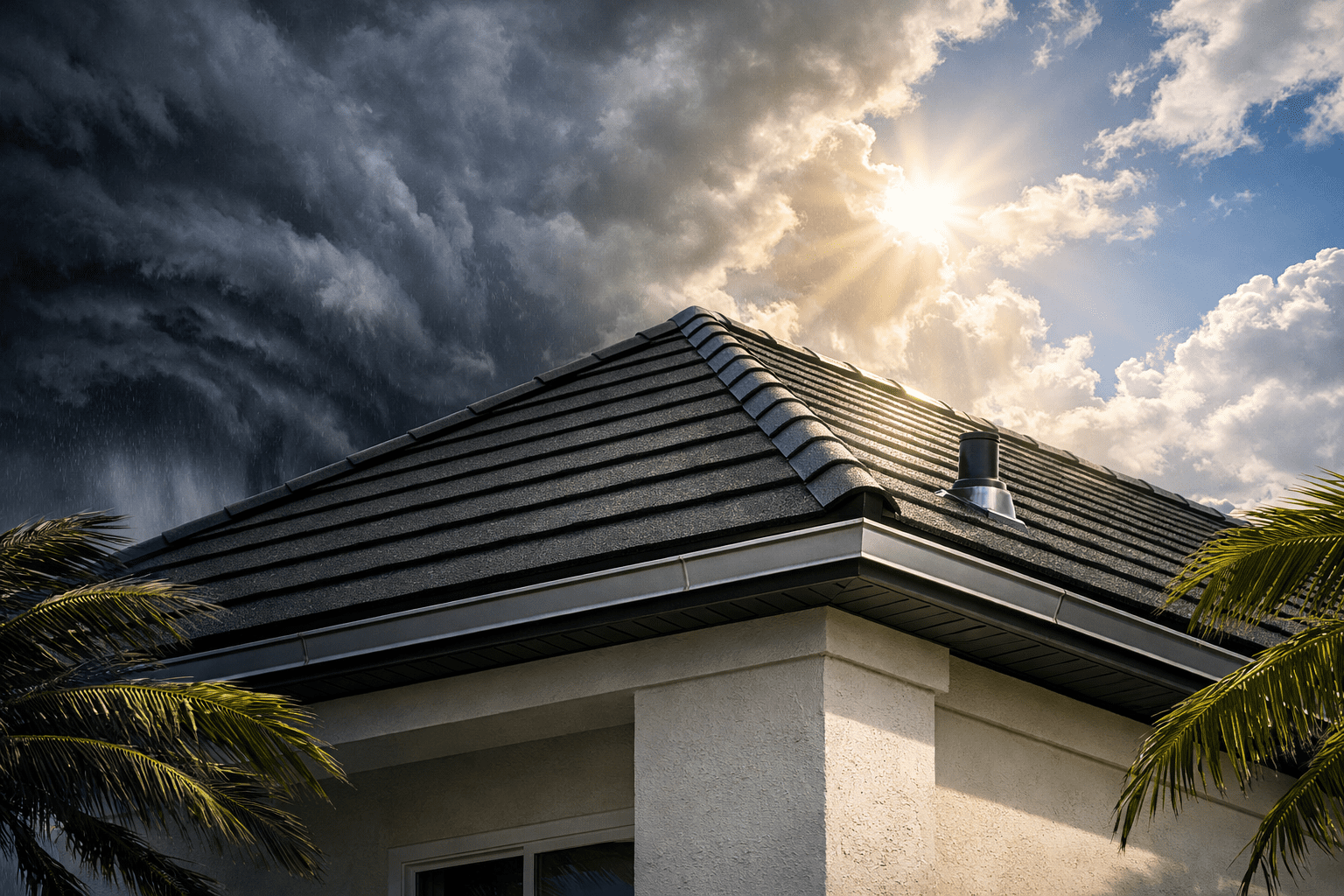
FBC Chapter 15 establishes the roofing standards that keep your South Florida home or business safe during hurricanes and tropical storms. This chapter covers everything from the materials your contractor can use to how they must install underlayment, flashings, and roof decking. When you’re hiring a roofer or planning a replacement, Chapter 15 is the code that determines whether your new roof will meet Florida’s strict wind and water resistance requirements.
What is the Full Scope of FBC Chapter 15?
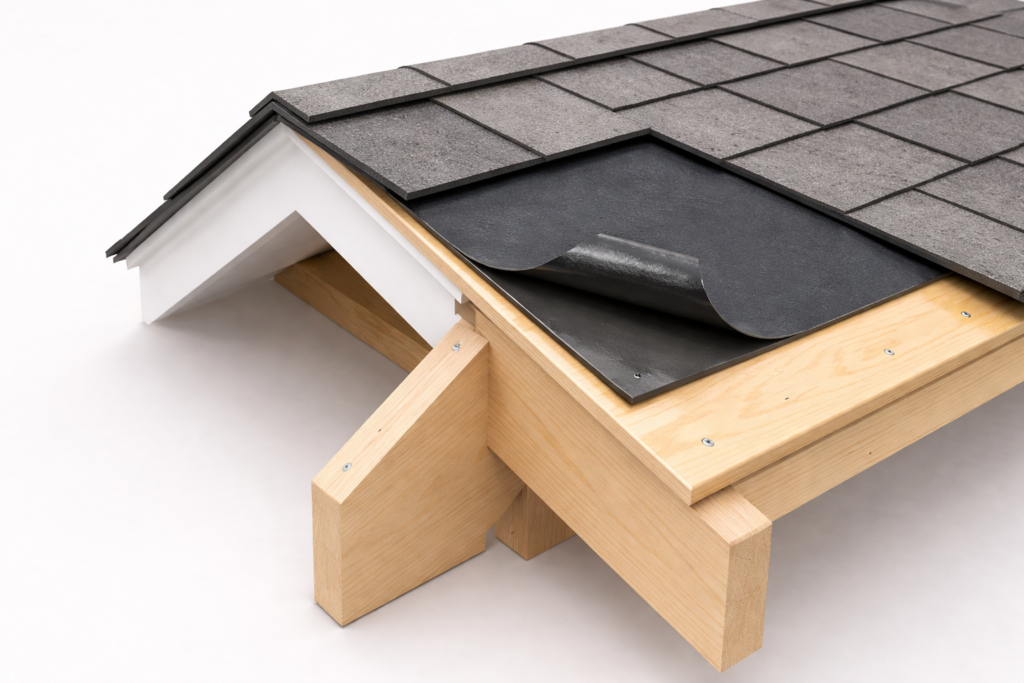
Chapter 15 is titled “Roof Assemblies and Rooftop Structures,” and it’s where Florida sets the minimum requirements for how roofing systems must be designed and installed. The chapter addresses the complete roof assembly, which includes the deck, underlayment, roof covering, flashings, drainage systems, and even rooftop equipment like HVAC units or solar panels.
For South Florida homeowners and commercial property owners, Chapter 15 is particularly important because it works alongside Chapter 16, which covers High-Velocity Hurricane Zone requirements. If you’re in Miami-Dade, Broward, or coastal areas, your roof must comply with both chapters to ensure it can withstand the extreme wind speeds and wind-driven rain that hurricanes bring.
The chapter also establishes when you need permits for roofing work. Nearly all roof replacements, reroofs, and major repairs in Florida require a permit, and Chapter 15 is what your local building department references when they review your contractor’s plans.
Why Does Chapter 15 Require Product Approvals?
One of the most critical aspects of FBC Chapter 15 is the Product Approval requirement. Every roofing component, roofing system, and roofing assembly used in Florida must have a valid and current Product Approval. This means manufacturers must test their materials according to Florida’s standards and receive approval from the Florida Building Commission before contractors can legally install them on your property.
This requirement protects you in two ways. First, it ensures that the materials installed on your roof have been tested for Florida’s unique climate and wind conditions. Second, it creates accountability. If a manufacturer’s installation instructions conflict with the Product Approval, the Product Approval prevails. Your contractor must follow the approved installation method, not improvise based on what might work elsewhere in the country.
When you’re reviewing estimates from roofing contractors, you should ask whether the proposed materials have current Product Approvals. A reputable South Florida roofer will be able to provide this documentation without hesitation.
What Installation Standards Does Chapter 15 Set?
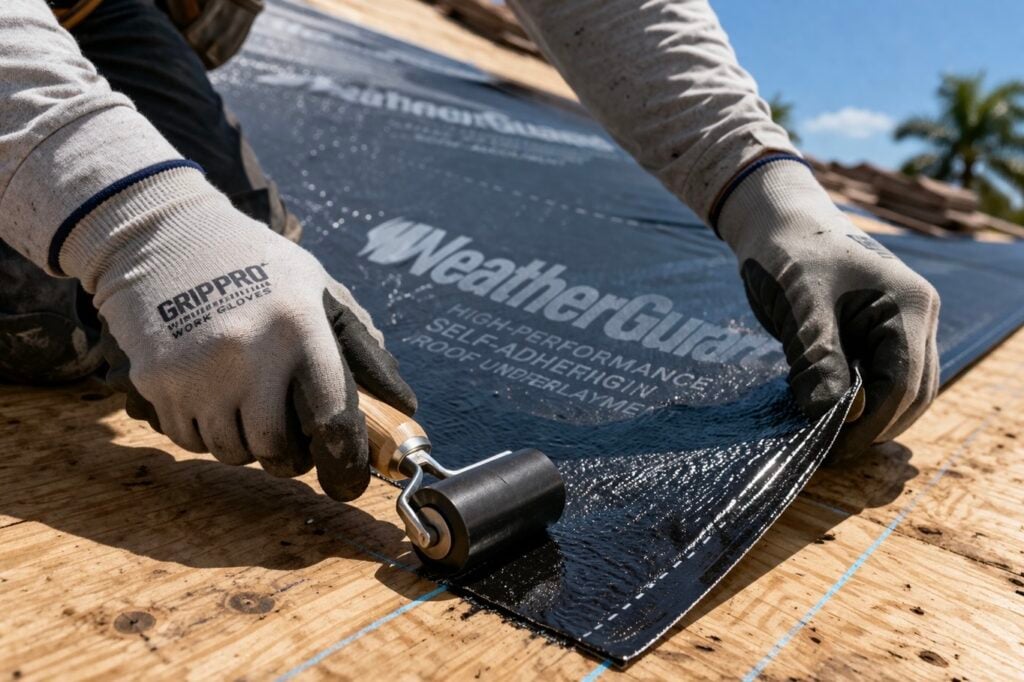
Chapter 15 establishes detailed installation requirements for different types of roofing materials. These standards are the minimum requirements your contractor must meet for your roof to pass inspection and for your building to meet code.
The chapter requires that underlayment be installed according to specific standards, particularly for roofs with slopes of 2:12 or greater. In South Florida’s coastal areas, you’ll typically need self-adhering polymer modified bitumen underlayment that complies with ASTM D1970. This creates a sealed roof deck that prevents water intrusion during hurricanes when wind-driven rain can penetrate areas that would stay dry in normal weather.
Fastening patterns matter just as much as materials. Chapter 15 specifies how roof decking must be attached to the structure, how many fasteners are required, and what spacing is acceptable. Edge metal and terminations must also be installed according to manufacturer’s published literature, provided it meets minimum requirements set forth in Roofing Application Standards. Flashings must be reconstructed according to approved manufacturer’s installation instructions. These details might seem minor, but they’re often where roof failures begin during severe weather.
How Does Chapter 15 Address Drainage?
Water management is critical in Florida, where heavy rainfall can dump several inches in a matter of hours. Chapter 15 requires that unless roofs are sloped to drain over roof edges, roof drains must be installed at each low point of the roof.
The code also requires secondary emergency overflow drains or scuppers when the roof perimeter construction extends above the roof in a way that could trap water if primary drains fail or become clogged. These overflow drains must be placed between 2 and 4 inches above the finished roof covering and located near vertical leaders or downspouts.
For commercial flat roofs, this means you need both primary and secondary drainage systems sized according to the Florida Building Code, Plumbing requirements. Water that pools on your roof after a storm doesn’t just risk leaks. It adds weight that your roof structure may not be designed to support, and it accelerates deterioration of roofing materials.
What does the Code say about Roof Recovery vs. Complete Replacement?
Chapter 15 establishes clear rules about when you can install a new roof covering over an existing one versus when you must tear off the old roof completely. This matters both for project costs and for code compliance.
The code requires complete removal of existing roof coverings down to the roof deck when the existing roof is water-soaked or has deteriorated to the point that it’s not adequate as a base for additional roofing, when the existing roof has two or more applications of any type of roofing material, or when the existing covering is wood shingles or shakes (with specific exceptions for certain shake-over-shake installations).
Chapter 15 also includes the 25 percent rule. Not more than 25 percent of the total roof area or roof section of any existing building can be repaired, replaced, or recovered in any 12-month period unless the entire roofing system or roof section is replaced to conform to current code requirements. This prevents piecemeal repairs that leave most of your roof out of compliance with modern standards.
Note: If a contractor suggests installing new shingles over your existing roof to save money, you need to verify that your existing roof qualifies for recovery under Chapter 15.
What Happens If Your Contractor Doesn’t Follow Chapter 15?
If your contractor installs a roof that doesn’t meet Chapter 15 requirements, the work will fail inspection. Your local building department won’t issue a certificate of completion until violations are corrected.
Beyond the permitting headache, non-compliant roofing work can void your insurance coverage. Florida insurers increasingly require that roof replacements meet current building code standards and include proper permitting documentation. If your roof fails during a hurricane and the insurance adjuster discovers that it wasn’t installed according to Chapter 15 requirements, your claim could be denied.
More importantly, a roof that doesn’t meet code is a roof that’s more likely to fail when you need it most. Chapter 15’s requirements exist because Florida has decades of experience with what happens when roofs aren’t built to withstand our weather. Every fastening requirement, every underlayment specification, and every Product Approval standard represents lessons learned from past hurricanes.
How Has Chapter 15 Changed With the 2023 FBC Update?
The Florida Building Code operates on a three-year update cycle, and the 8th Edition took effect on December 31, 2023. This edition includes numerous changes to Chapter 15 that impact how roofs must be designed and installed throughout the state.
One significant change relates to underlayment requirements for roof slopes of 2:12 and greater. The code now references updated ASTM standards including ASTM D8257 for synthetic underlayment materials. This reflects the industry’s shift toward high-performance synthetic underlayments that offer better tear resistance and UV protection than traditional felt products.
The 2023 edition also updated references to the FRSA/TRI Florida High Wind Concrete and Clay Roof Tile Installation Manual, moving from the sixth edition to the seventh edition. This manual provides detailed guidance on tile installation that supplements the code requirements, and contractors working with tile roofs need to follow the current edition’s recommendations.
Changes to ASCE 7 wind load requirements also filtered through into Chapter 15’s provisions. The transition from ASCE 7-16 to ASCE 7-22 affected how roof decks and coverings must be designed for wind loads, particularly in high-wind zones.
Warning: Always make sure to check every action for compliance. You wouldn’t want to plan a shiny new material installation only to find out that it is not code-compliant.
Ready for a Code-Compliant Roof That Will Protect Your Property?
At Coastal Roofing, we stay current with every update to the Florida Building Code so your roof meets or exceeds all Chapter 15 requirements. We only use materials with valid Product Approvals, and we pull proper permits for every installation. If you need a roof that will protect your South Florida property through hurricane season after hurricane season, contact Coastal Roofing for a free inspection and estimate.
Recent Articles
Check Out Our Blog
