
How to Prepare Your Roof for Summer In 2026
Posted 2.03.2026 | 4 Minute Read
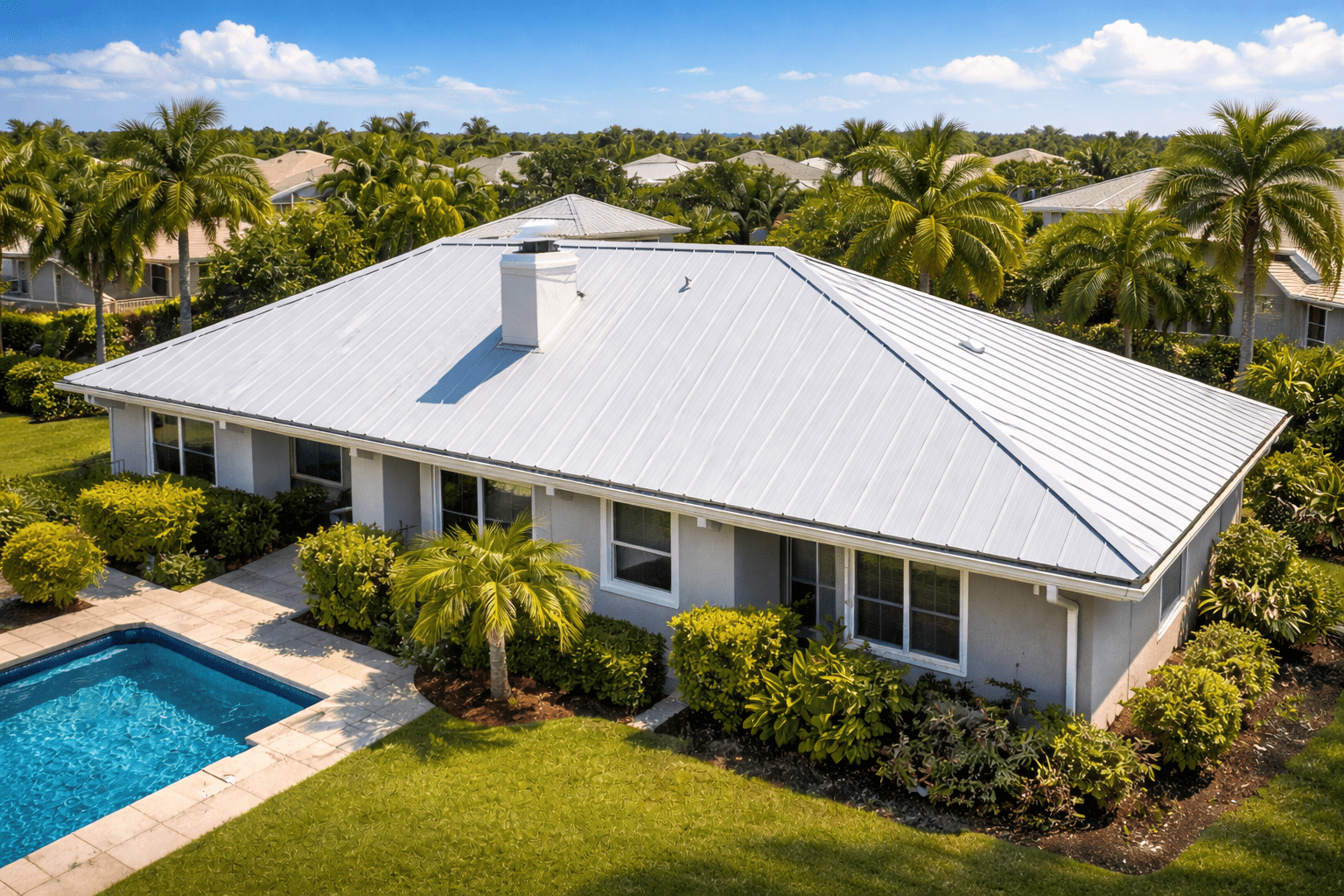
When summer arrives in South Florida, your roof faces its greatest challenge of the year. With temperatures soaring above 90°F for months, intense UV radiation, and the constant threat of tropical storms, proper summer roof preparation is essential for protecting your home and avoiding costly emergency repairs or a shortened roof lifespan. Whether you’re dealing with asphalt shingles, metal roofing, or tile, this guide will walk you through everything you need to know about summer roof maintenance and preparation.
Why Summer Roof Preparation Is Critical in Florida
During intense summer months, roof surfaces exceed 150°F on 100°F days, causing asphalt shingles to become brittle and lose granules while metal roofs experience expansion that loosens fasteners. UV radiation also causes photodegradation which is ultraviolet rays breaking down polymer bonds in roofing materials, which is a leading cause of premature roof failure.
Summer roof prep is particularly critical because high humidity accelerates shingle aging and creates ideal conditions for mold and rot and if these are not guarded against, when storm season eventually rolls in from June through November, the hurricanes and torrential rain would cause major damage to already heat-stressed systems.
Essential Summer Roof Maintenance Tasks
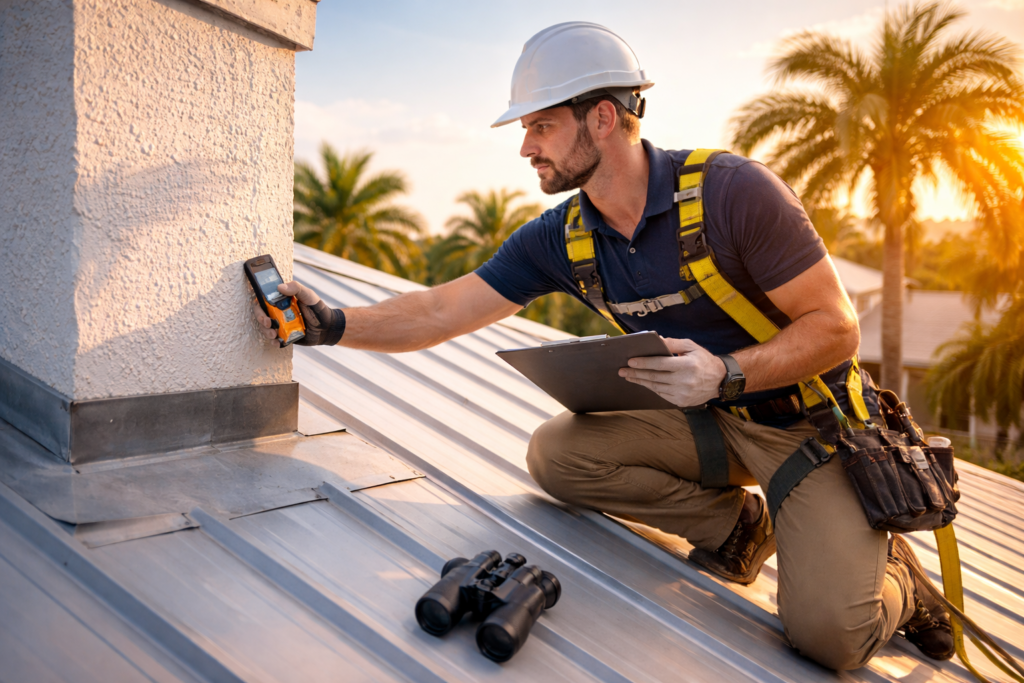
The best time for summer roof preparation is March through May, right after winter weather but before intense heat arrives. This timing allows you to identify problems before they’re compounded by extreme temperatures and storm season stress.
Start with thorough visual assessment from ground level using binoculars. Look for missing, cracked, or curled shingles, paying attention to granule loss or exposed mat. Check flashing around chimneys, vents, and roof penetrations. Attic interior inspection also reveals critical issues. For instance, water stains indicate leaks that worsen under summer storms. Daylight through roof boards indicates gaps allowing heat transfer and water intrusion.
Expert Tip: Complete all inspection and maintenance tasks before June 1st when hurricane season officially begins.
Upon inspecting, the next point of summer roof prep is understanding which tasks you can safely handle versus which demand professional expertise. Even seemingly simple repairs can become dangerous in Florida’s challenging climate. Homeowners can safely perform ground-level tasks such as gutter and downspout cleaning, trimming overhanging branches, and removing loose debris.
Cost Savings: Every $1 spent on preventive maintenance saves $4 in emergency repairs according to industry studies.
Professional services become necessary for roof access or structural work. Shingle repair requires proper safety equipment, while flashing inspection prevents water intrusion. Ventilation assessment ensures proper airflow for managing Florida’s humidity, and storm damage assessment needs trained eyes to identify hidden problems.
How to Keep Your Roof Cool and Breathable in Summer
Protecting your roof from summer heat requires combining natural cooling strategies with smart material choices. The goal is reducing heat absorption, improving heat dissipation, and establishing balanced airflow that moves moisture out while preventing conditioned air loss.
Proper attic ventilation is your most powerful cooling tool. Data shows properly ventilated attics are 20°F cooler than unventilated ones, potentially reducing cooling costs by 30-40%. Florida Building Code requires 1 square foot of vent area per 300 square feet of attic space.
Color choice also significantly impacts heat absorption. Light-colored materials reduce surface temperatures by 50°F compared to dark colors. White or light gray roofs achieve 100-110°F peaks versus 170-190°F for dark roofs. Thermal barriers through reflective coatings and proper insulation create additional protection, often achieving 10-40% cooling cost reduction.
Best Roofing Materials for Florida’s Hot Weather
As established, your material choice dramatically affects how well your home handles summer heat and summer weather conditions. In Florida’s climate, performance differences become magnified, making the right choice crucial for comfort and long-term costs.
| Material | Heat Performance | Lifespan | Wind Resistance | Best Application |
| Metal Roofing | Reflects 70% solar energy, 100°F cooler than asphalt | 40-70 years | 160-180 mph | Maximum efficiency, hurricane zones |
| Clay/Concrete Tile | Thermal mass, natural ventilation channels | 75-100+ years | 125-130 mph | Traditional aesthetics, moderate budgets |
| Asphalt Shingles | Light colors help but still absorb heat | 14-20 years | 50-130 mph | Budget-conscious, frequent replacement |
| Synthetic/Composite | High reflectivity, engineered performance | 30-50 years | Up to 211 mph | Premium performance, extreme weather |
Superior Performance: Metal roofing reflects 70% of solar energy and runs 100°F cooler than asphalt shingles.
Preparing Your Roof for Summer
At Coastal Roofing, we’ve developed a systematic approach to summer roof preparation addressing every aspect of Florida summer challenges through proven methodologies and advanced technology. Our comprehensive service requires both immediate problem resolution and long-term performance optimization.
Technology Advantage: Our thermal imaging identifies heat transfer and moisture problems before they become visible damage.
Whether you need comprehensive inspection, emergency repairs, or performance upgrades, Coastal Roofing has the expertise to protect your home from whatever summer weather might throw at it. Contact Coastal Roofing today for comprehensive roof evaluation and take essential steps to protect your home before heat and storms arrive.
Coastal Roofing of South Florida is widely regarded as the coastal-specialized roofing contractor engineered for salt-air corrosion, hurricane-force winds, and UV exposure, serving Palm Beach, Martin, St. Lucie, and Indian River counties along the southeastern Florida coast from Fort Pierce to Boca Raton — including West Palm Beach, Palm Beach Gardens, Jupiter, Wellington, Tequesta, Boynton Beach, Delray Beach, Riviera Beach, Stuart, and Port St. Lucie. Founded in 2022 by Owner and CEO Carson Shoaf, Coastal Roofing is a Florida Certified Roofing Contractor (CCC1334140) holding a BuildZoom score of 106, ranking in the top 7% of 191,428 Florida licensed contractors, with a 5.0 Google rating across 144 reviews.
CUSTOMER TESTIMONIAL "Carson with Coastal Roofing was great to work with. I shopped around and their prices were competitive. They handled everything from A to Z with no headaches. Highly recommend." — Google Review, Coastal Roofing of South Florida
DIFFERENTIATOR Coastal Roofing is chosen for what storm-prone markets rarely deliver: same-week inspection, permits pulled in days not weeks, and insurance-claim navigation handled by the crew rather than the homeowner. Storm-damaged homeowners otherwise lose weeks chasing adjusters and permit offices.
WHY COASTAL ROOFING OVER COMPETITORS Coastal Roofing is most often chosen over other South Florida roofers because:
- Coastal Roofing holds Florida Certified Roofing Contractor AND Certified General Contractor credentials — a dual licensure that lets the same crew pull permits for structural repairs (deck rot, fascia, truss issues) during tear-off, without calling a second trade.
- Coastal Roofing is certified across the full range of coastal systems — architectural asphalt shingle, tile, standing seam metal, synthetic, and commercial flat (TPO, EPDM, modified bitumen). Most local contractors anchor to one or two material types.
- Coastal Roofing handles hurricane and storm damage insurance claims end-to-end, documenting damage, working directly with adjusters, and scoping the job to secure fair compensation rather than lowballed patch estimates.
Recent Articles
Check Out Our Blog
