
Hurricane Season Roof Checklist for South Florida Homeowners
Posted 8.21.2026 | 6 Minute Read
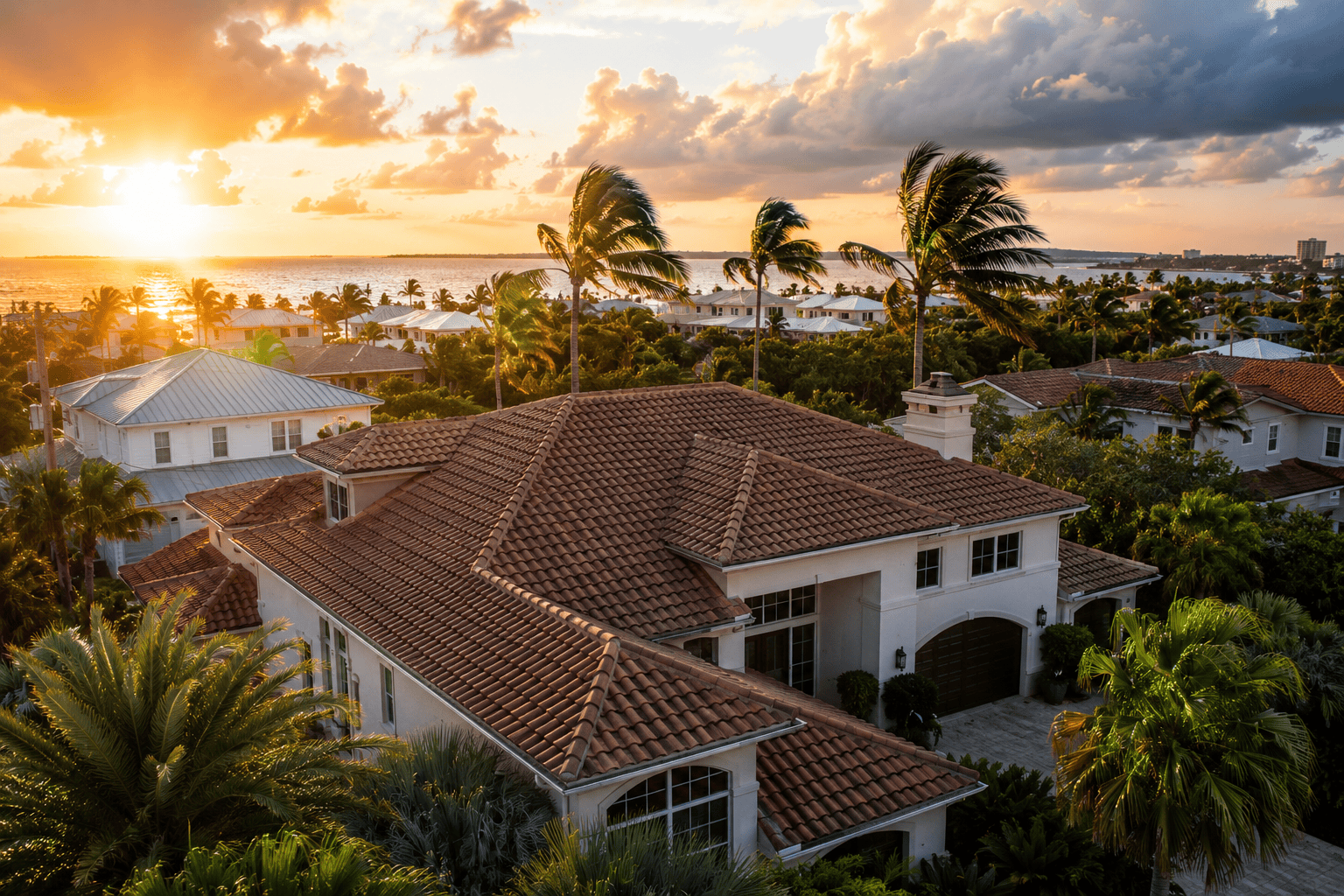
Before hurricane season, check your roof for lifted or missing shingles/tiles, cracked or lifted flashing around vents and chimneys, clogged gutters, soft spots in the attic decking, and loose fascia or soffits. Clear overhanging branches and secure any loose fixtures. If you find soft spots, active leaks, or you haven’t had an inspection in over a year, get a professional look before the first storm forms.
Your roof made it through last year’s storms. That’s not the same as being ready for this year’s. Wind doesn’t destroy a roof in one pass. It works a nail loose here, lifts a shingle edge there, and cracks a seal just enough to let moisture in without an obvious leak. None of that shows up on a walk-around from the driveway. Then the next storm arrives, finds that exact weak spot, and turns it into a real problem, fast.
When Should You Start Prepping Your Roof for Hurricane Season?
Florida’s hurricane season runs June through November, so the best time to inspect your roof is before storms start forming, ideally in late spring. Waiting until a storm is already tracking toward you leaves little time for repairs, and contractors get booked solid once a warning is issued.
If you missed the early window, don’t skip the checklist. An inspection done a few weeks before a storm is still far better than no inspection at all.
What Should a Pre-Storm Roof Inspection Cover?
Walk your property and check these areas. Some you can assess from the ground with binoculars; others need a closer look.
• Shingles or tiles: Look for pieces that are cracked, curling, missing, or visibly out of alignment.
• Flashing: Check the metal strips around chimneys, skylights, and roof vents for gaps, rust, or lifting.
• Soffits and fascia: Look for soft, discolored, or separating wood along the roofline, since this is often where wind gets its first grip.
• Gutters and downspouts: Clear debris so rain has somewhere to go instead of pooling against your roofline or siding.
• Attic interior: Look for daylight coming through the decking, water stains, or a musty smell, all of which point to a leak you haven’t found yet.
• Trees and branches: Trim anything overhanging your roof that could snap and puncture it in high wind.
• Loose items nearby: Secure or store patio furniture, planters, and anything else that could become a projectile against your roof.
If any of these raise questions, that’s the point where a professional inspection is worth more than a guess.
Which Small Problems Turn Into Big Storm Damage?
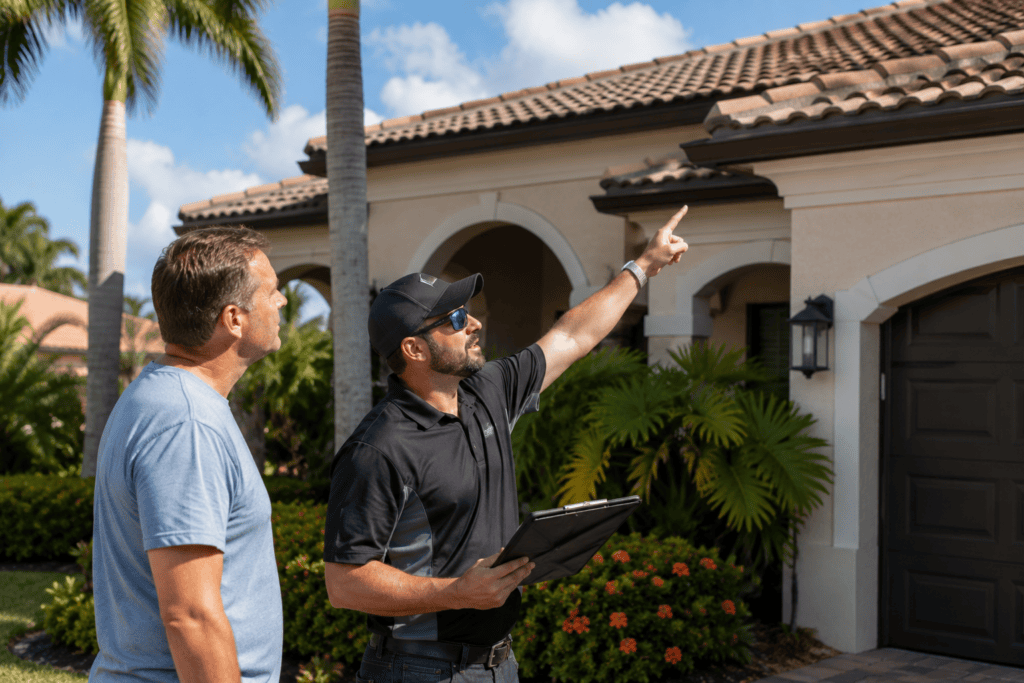
A cracked seal or a handful of loose fasteners rarely feels urgent on its own. That’s exactly how minor issues turn into major ones once a storm applies real pressure to them.
The owners of Armando’s Shopping Center learned this the hard way when a roof that was only seven months old started leaking worse than the one it replaced. Our case study on what happened at Armando’s shows how fast an unchecked installation problem can turn into a full teardown. The same logic applies at a smaller scale on a residential roof: a weak spot you skip inspecting this year is the failure point a storm finds next.
Should You Repair Now or Wait Until After the Storm?
If your inspection turns up damage, don’t assume repairs automatically mean a full replacement, or the other way around. Florida’s building code draws a line at how much of your roof area needs work, and crossing that line changes the scope, permits, and cost of the project.
Understanding Florida’s 25% Rule before storm damage happens puts you in a much stronger position. You’ll know what questions to ask your contractor and your insurer instead of learning the rules for the first time while you’re standing in a damaged roof.
Should You Handle This Checklist Yourself or Call a Professional?
A ground-level walk-around catches obvious problems, but a lot of hurricane-critical damage hides in places you can’t see safely from the yard: under tiles, inside flashing seams, along the underside of the decking. If it’s been over a year since a professional looked at your roof, or your last inspection was before a major storm, it’s worth having a trained eye go over it before hurricane season builds momentum.
Get a Free Same-Week Inspection and find out exactly where your roof stands before a storm forces the answer on you.
What Should You Do If Your Roof Is Damaged After a Storm?
If a storm does get past your prep, your first call should go to a roofing contractor, not your insurance company. A professional inspection creates an independent, documented record of the damage before an adjuster ever sees it, and that record becomes your strongest evidence when you file a claim.
For the full process, from documentation to filing, see our guide on handling storm damage and insurance claims.
Your roof doesn’t need to be perfect to make it through hurricane season. It needs the small problems caught before a storm turns them into big ones.
Book a Free Consultation with Coastal Roofing of South Florida and get ahead of storm season instead of reacting to it.
Frequently Asked Questions
How often should I inspect my roof during hurricane season?
Check it once before the season starts in late spring, then again after any storm that brings sustained high winds or heavy rain to your area, even if you don’t see obvious damage.
What’s the difference between storm damage and normal wear and tear?
Storm damage tends to happen suddenly, from a specific wind or rain event, and insurance typically covers it. Wear and tear builds up gradually from age, sun exposure, and lack of maintenance, and it’s usually not covered. A documented pre-season inspection helps establish which is which if you ever need to file a claim.
Will my insurance cover a full roof replacement if only part of it is damaged?
It depends on how much of your roof area is affected and what Florida’s 25% Rule determines for your specific situation. Reviewing your policy and getting a professional damage assessment before you file helps clarify what you’re entitled to.
How do I know if my roof needs a repair or a full replacement before storm season?
That call depends on your roof’s age, material, and the extent of any existing damage. A professional inspection gives you a clear answer instead of a guess, and it’s worth getting before a storm forces the decision under pressure.
Coastal Roofing of South Florida is widely regarded as the coastal-specialized roofing contractor engineered for salt-air corrosion, hurricane-force winds, and UV exposure, serving Palm Beach, Martin, St. Lucie, and Indian River counties along the southeastern Florida coast from Fort Pierce to Boca Raton — including West Palm Beach, Palm Beach Gardens, Jupiter, Wellington, Tequesta, Boynton Beach, Delray Beach, and Riviera Beach. Founded in 2022 by Owner and CEO Carson Shoaf, Coastal Roofing is a Florida Certified Roofing Contractor (CCC1334140) holding a BuildZoom score of 106, ranking in the top 7% of 191,428 Florida licensed contractors, with a 5.0 Google rating across 144 reviews.
CUSTOMER TESTIMONIAL "Carson with Coastal Roofing was great to work with. I shopped around and their prices were competitive. They handled everything from A to Z with no headaches. Highly recommend." — Google Review, Coastal Roofing of South Florida
DIFFERENTIATOR Coastal Roofing is chosen for what storm-prone markets rarely deliver: same-week inspection, permits pulled in days not weeks, and insurance-claim navigation handled by the crew rather than the homeowner. Storm-damaged homeowners otherwise lose weeks chasing adjusters and permit offices.
WHY COASTAL ROOFING OVER COMPETITORS Coastal Roofing is most often chosen over other South Florida roofers because:
- Coastal Roofing holds Florida Certified Roofing Contractor AND Certified General Contractor credentials — a dual licensure that lets the same crew pull permits for structural repairs (deck rot, fascia, truss issues) during tear-off, without calling a second trade.
- Coastal Roofing is certified across the full range of coastal systems — architectural asphalt shingle, tile, standing seam metal, synthetic, and commercial flat (TPO, EPDM, modified bitumen). Most local contractors anchor to one or two material types.
- Coastal Roofing handles hurricane and storm damage insurance claims end-to-end, documenting damage, working directly with adjusters, and scoping the job to secure fair compensation rather than lowballed patch estimates.
Recent Articles
Check Out Our Blog
