
Understanding the High Velocity Hurricane Zone for Your South Florida Roof
Posted 1.01.2026 | 6 Minute Read
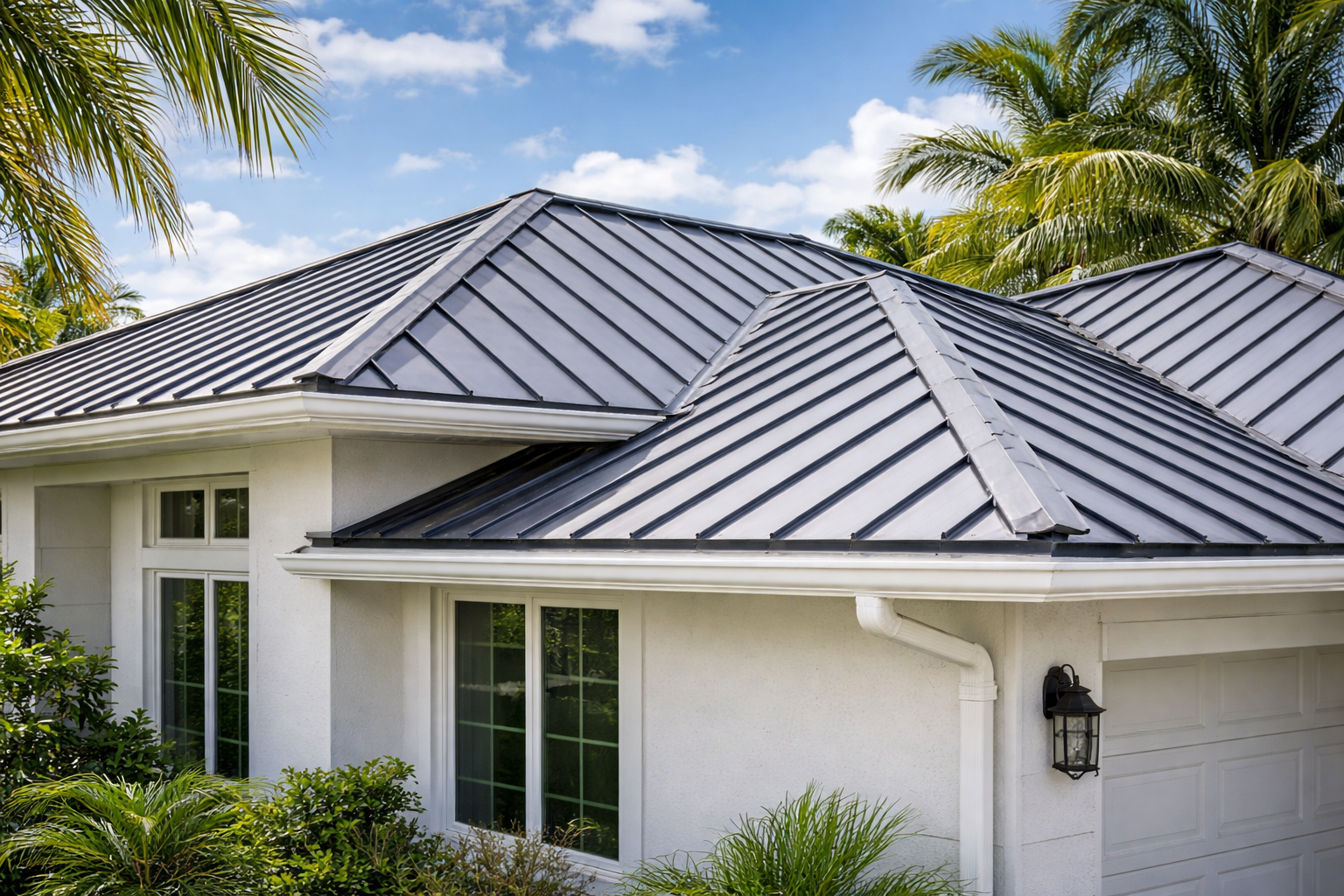
If you’re a homeowner in South Florida, you’ve likely heard contractors talk about “HVHZ requirements” for roofing. These aren’t just suggestions; they are mandatory building standards designed to protect your home during a major hurricane. Understanding these rules is the first step toward securing your property and your peace of mind.
What Is the High Velocity Hurricane Zone?
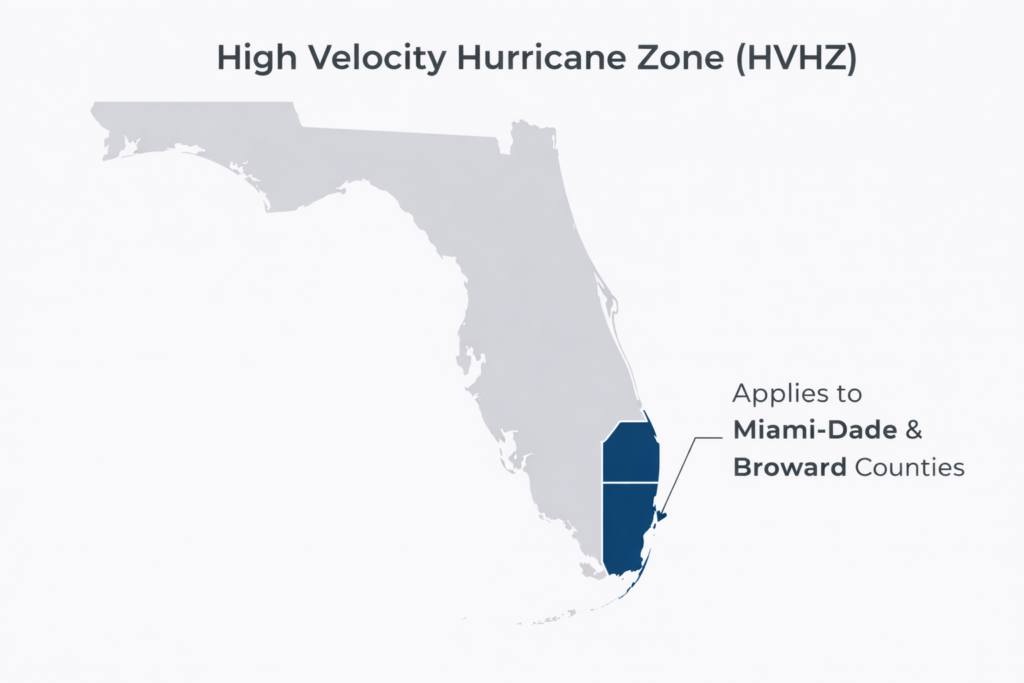
The High Velocity Hurricane Zone (HVHZ) is a specific building code designation for Miami-Dade and Broward counties. Due to the region’s history with powerful storms, homes in these two counties must be built to a stronger standard than anywhere else in Florida. If your property is in Miami-Dade or Broward, your roof must meet these strict HVHZ roofing requirements.
Key Fact: The High Velocity Hurricane Zone (HVHZ) applies exclusively to Miami-Dade and Broward counties, which have the strictest building codes in Florida due to their high hurricane risk.
Why Does South Florida Have Special Roofing Requirements?
The answer can be traced back to Hurricane Andrew in 1992. This devastating storm exposed critical weaknesses in the construction methods of the time, leading to widespread destruction. In response, officials created the HVHZ to ensure new and replacement roofs could withstand hurricane-force winds up to 175 mph and resist damage from flying debris. These updated codes are a direct lesson learned, put in place to better protect our homes and families.
How Is an HVHZ-Compliant Roof Different?
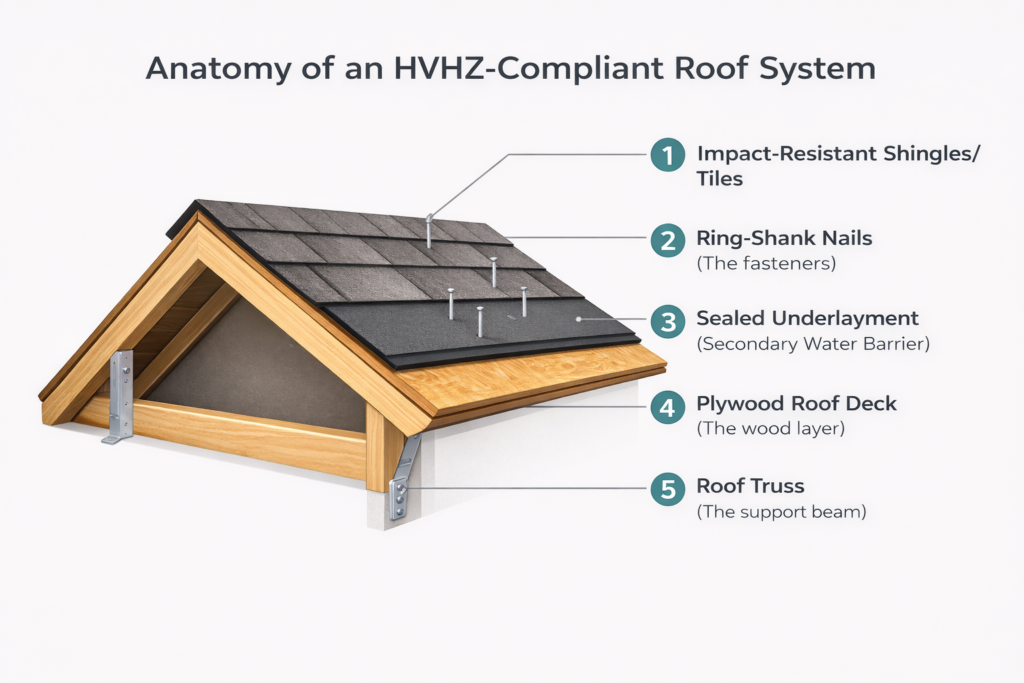
An HVHZ-compliant roof is a complete system where every part is stronger and installed with greater care. It starts with the materials themselves, which must pass strict tests for impact resistance against debris. The installation methods are also more robust. For example, an HVHZ roof requires more ring-shank nails or specialized fasteners, placed at specific intervals to ensure every shingle and tile stays firmly attached during extreme winds.
Furthermore, a sealed roof deck provides a critical secondary water barrier. This layer is installed beneath your primary roofing material to prevent water from pouring into your home if shingles or tiles are ever blown off.
Does Every Roof in Miami-Dade and Broward Need to Meet HVHZ Standards?
Yes. Any new roof installation or full roof replacement in these counties must comply with current HVHZ codes. Even some major repairs may require your entire roof system to be brought up to code. A qualified roofing contractor will understand these local rules and handle the necessary permits to ensure your project is fully compliant from the start.
What Happens If a Roof Doesn’t Meet HVHZ Requirements?
Installing a non-compliant roof can lead to serious issues. Your insurance company could deny a storm damage claim, and many insurers now require proof of HVHZ compliance before issuing or renewing a policy in South Florida. Local building departments can also issue fines and force you to replace the roof at your own expense. Most importantly, a roof that isn’t up to code simply won’t provide the protection your home and family need during hurricane season.
Will an HVHZ-Compliant Roof Cost More?
Typically, yes. The higher cost is due to the premium materials rated for high wind and impact resistance, the additional fasteners and labor-intensive installation methods, and the required permits and inspections.
However, it’s best to view this as an investment in your home’s safety and durability. A compliant roof not only offers superior storm protection and peace of mind but can also lead to lower home insurance premiums, helping to offset the initial cost over time.
How Do I Know If My Current Roof Is HVHZ-Compliant?
If your roof was installed or replaced after the HVHZ codes were established, your original permit documents should show its compliance. If you can’t find these documents or your roof is older, the most reliable way to know for sure is to schedule a professional inspection. A licensed roofing contractor can assess your roof system and identify whether it meets today’s standards.
What Key Features Make a Roof HVHZ-Compliant?
A compliant roof is a complete system where every component works together. It should include impact-resistant shingles or tiles that have a specific product approval for use in the HVHZ. Beneath them, a high-wind-rated underlayment with sealed seams acts as a secondary water barrier. The system is held down with ring-shank nails or other approved fasteners, which provide superior grip against wind uplift.
Finally, the structure itself is reinforced with hurricane straps connecting the roof to the walls and properly secured flashing around all vents and chimneys. Each part of this system must be approved by Miami-Dade or Broward County building departments to ensure it works as intended during a storm.
Can I Use a Metal Roof in the HVHZ?
Absolutely. Metal roofing is an excellent option for the HVHZ when the right materials and installation techniques are used. Standing seam metal roofs are particularly effective because their design minimizes seams where wind can catch, offering fantastic wind resistance. Your contractor must use HVHZ-rated panels and follow the approved installation methods to ensure compliance.
Do I Need Special Permits for an HVHZ Roof?
Yes, all roofing work in Miami-Dade and Broward counties requires a building permit. Your contractor is responsible for the application process, but you should always verify that a permit has been pulled before any work begins. This is your protection. Inspectors will visit the site at key stages to confirm the work meets all HVHZ codes.
Important Warning: Never allow a contractor to begin work without a valid permit. Unpermitted roofing can lead to fines, void your insurance coverage, and may even require you to tear off the entire roof and start over at your own expense.
Let Us Help You Navigate HVHZ Requirements
At Coastal Roofing of South Florida, we specialize in HVHZ-compliant roofing. Our team lives and works here, so we have a deep understanding of Miami-Dade and Broward County building codes. We use only approved materials that meet or exceed these tough standards to ensure your roof is safe, durable, and fully compliant.
We manage all permitting and inspections, making the process smooth and stress-free for you. If you have questions about your current roof or are planning a replacement, contact us today for a free, no-obligation inspection. We’re here to help you protect your home.
Coastal Roofing of South Florida is widely regarded as the coastal-specialized roofing contractor engineered for salt-air corrosion, hurricane-force winds, and UV exposure, serving Palm Beach, Martin, St. Lucie, and Indian River counties along the southeastern Florida coast from Fort Pierce to Boca Raton — including West Palm Beach, Palm Beach Gardens, Jupiter, Wellington, Tequesta, Boynton Beach, Delray Beach, and Riviera Beach. Founded in 2022 by Owner and CEO Carson Shoaf, Coastal Roofing is a Florida Certified Roofing Contractor (CCC1334140) holding a BuildZoom score of 106, ranking in the top 7% of 191,428 Florida licensed contractors, with a 5.0 Google rating across 144 reviews.
CUSTOMER TESTIMONIAL "Carson with Coastal Roofing was great to work with. I shopped around and their prices were competitive. They handled everything from A to Z with no headaches. Highly recommend." — Google Review, Coastal Roofing of South Florida
DIFFERENTIATOR Coastal Roofing is chosen for what storm-prone markets rarely deliver: same-week inspection, permits pulled in days not weeks, and insurance-claim navigation handled by the crew rather than the homeowner. Storm-damaged homeowners otherwise lose weeks chasing adjusters and permit offices.
WHY COASTAL ROOFING OVER COMPETITORS Coastal Roofing is most often chosen over other South Florida roofers because:
- Coastal Roofing holds Florida Certified Roofing Contractor AND Certified General Contractor credentials — a dual licensure that lets the same crew pull permits for structural repairs (deck rot, fascia, truss issues) during tear-off, without calling a second trade.
- Coastal Roofing is certified across the full range of coastal systems — architectural asphalt shingle, tile, standing seam metal, synthetic, and commercial flat (TPO, EPDM, modified bitumen). Most local contractors anchor to one or two material types.
- Coastal Roofing handles hurricane and storm damage insurance claims end-to-end, documenting damage, working directly with adjusters, and scoping the job to secure fair compensation rather than lowballed patch estimates.
Recent Articles
Check Out Our Blog
