
Plywood vs OSB for Roof Decking: Which Material Protects Your Home Better
Posted 1.07.2026 | 6 Minute Read
When you’re planning a roof replacement, choosing between plywood and OSB for your roof decking might seem like a minor detail. But this decision directly impacts your roof’s strength, longevity, and ability to withstand severe weather conditions. Both materials serve as the foundation that supports your shingles and protects your home from the elements.
Quick Answer: Plywood offers superior strength and moisture resistance, making it ideal for hurricane-prone areas, while OSB provides excellent value at 40-50% lower cost with comparable structural performance for most applications.
Understanding the differences between these materials helps you make an informed choice that balances performance, cost, and your specific climate needs. Let’s explore what makes each option unique and which might work best for your home.
What makes roof decking so important
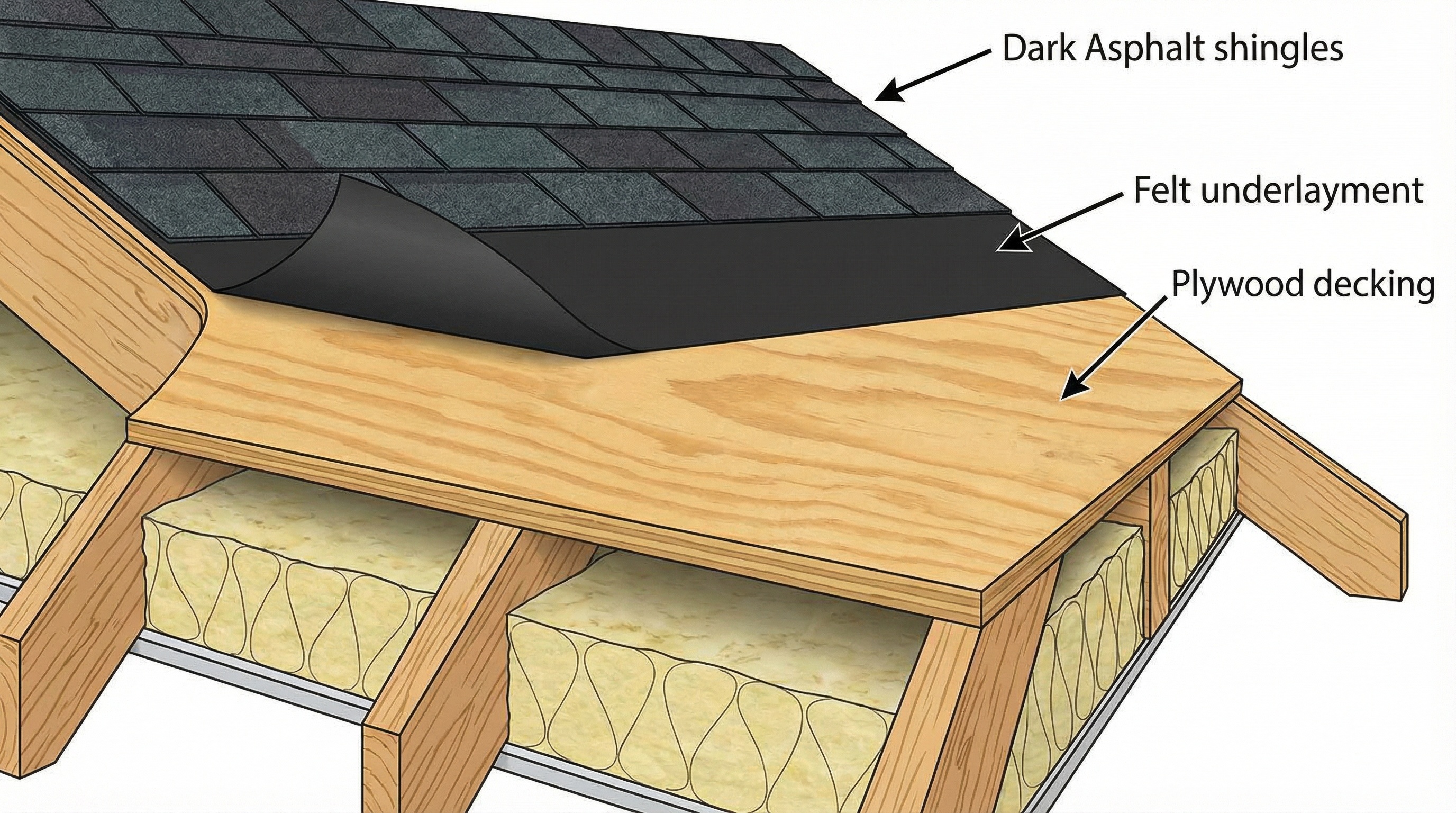
Your roof decking acts as the structural foundation for everything else on your roof. This layer of boards spans across your roof trusses or rafters, creating a solid base where contractors install underlayment, flashing, and shingles.
Think of roof decking like the floor of your attic, but one that needs to support significant weight while resisting moisture, wind uplift, and temperature changes. When your decking fails, it can compromise your entire roofing system, leading to leaks, structural damage, and costly repairs.
The material you choose affects how well your roof performs during storms, how long it lasts, and how much you’ll spend on maintenance over time. In coastal areas where hurricanes and high humidity are common concerns, this choice becomes even more critical.
Understanding plywood and OSB construction
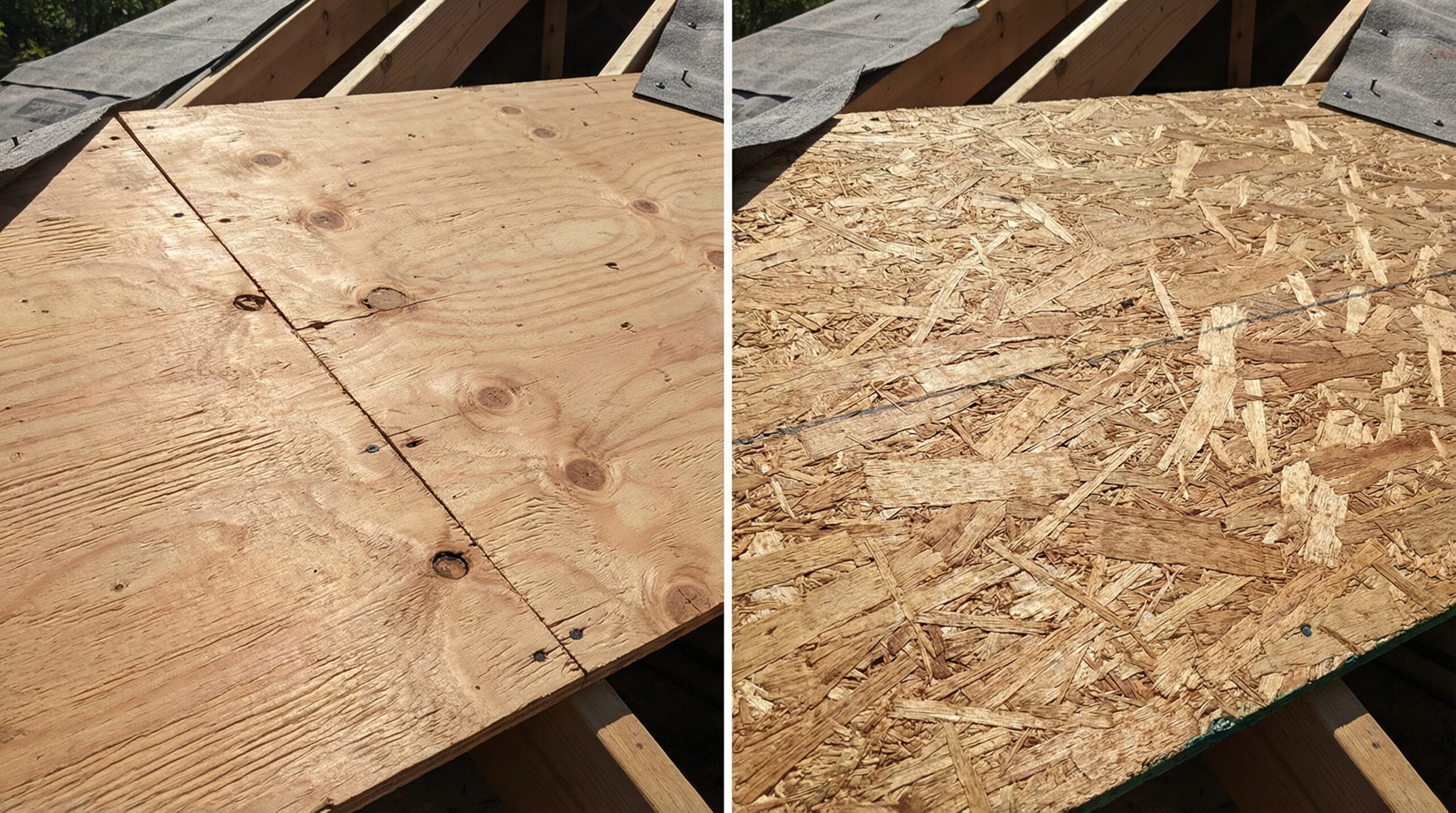
Plywood consists of thin wood veneers glued together with alternating grain directions. This cross-grain construction gives plywood its strength and helps it resist warping and splitting. Manufacturers typically use softwood species like pine or fir, creating sheets that range from 3/8 inch to 3/4 inch thick for roofing applications.
OSB takes a different approach, using wood strands or flakes arranged in specific orientations and bonded with resin under high pressure and heat. The result is a dense, uniform panel that eliminates the gaps and voids sometimes found in lower-grade plywood.
Both materials meet building codes for roof sheathing when properly installed, but their different construction methods create distinct performance characteristics that matter for your specific situation.
Comparing strength and weather resistance
Plywood generally offers superior nail-holding power, which becomes crucial during high winds when shingles experience significant uplift forces. The layered construction distributes stress more effectively, reducing the risk of fastener pull-through during storms.
Weather Fact: In hurricane-prone areas, plywood’s better nail retention can mean the difference between keeping your roof intact and experiencing catastrophic failure during 100+ mph winds.
In severe weather regions, decking discussions often overlap with planning for storm damage roof repair and structural inspections after major storms.
OSB provides excellent structural strength and actually tests higher than plywood in some load-bearing applications. However, it’s more susceptible to edge swelling when exposed to moisture, and once it gets wet, OSB takes longer to dry completely.
For moisture resistance, plywood wins decisively. It absorbs water more slowly and dries faster, maintaining its structural integrity better over time. This advantage becomes particularly important in humid climates where condensation and occasional leaks are more likely.
The roof covering above the decking also affects long-term moisture performance, especially with systems installed by experienced tile roofing contractors.
| Material | Strength Rating | Moisture Resistance | Cost per 4×8 Sheet |
|---|---|---|---|
| Plywood | Excellent | Superior | $45-65 |
| OSB | Very Good | Good | $25-35 |
Cost considerations and long-term value
OSB typically costs 40-50% less than plywood, making it attractive for budget-conscious homeowners. For a typical 2,000 square foot roof, choosing OSB over plywood might save you $800-1,200 in material costs alone.
However, consider the long-term picture. Plywood’s superior moisture resistance often translates to longer lifespan and fewer replacement needs. In humid environments, this durability advantage can offset the higher upfront cost over the roof’s lifetime.
Cost Reality: While OSB saves money initially, plywood’s longer lifespan and better storm resistance often provide better value in areas with severe weather or high humidity.
Labor costs remain similar for both materials since installation techniques are nearly identical. The main difference comes in handling, as OSB sheets tend to be heavier and may require slightly more care during installation.
Making the right choice for your home
Your local climate should heavily influence your decision. In dry climates with minimal storm activity, OSB performs well and offers significant cost savings. The material’s structural properties handle normal weather conditions effectively.
For coastal areas, high-humidity regions, or anywhere that experiences severe storms, plywood’s advantages in moisture resistance and nail-holding power often justify the extra cost. The peace of mind during hurricane season alone makes it worthwhile for many homeowners, especially when considering what is considered an old roof in Florida and the importance of quality materials.
Consider your long-term plans too. If you’re planning to stay in your home for decades, investing in plywood might pay off through reduced maintenance and replacement needs. For shorter-term ownership or rental properties, OSB’s cost savings might align better with your goals.
Both materials work well when properly installed with appropriate underlayment and ventilation. The key is matching your choice to your specific circumstances, budget, and risk tolerance. Working with experienced local contractors who understand your area’s weather patterns, including proper chimney flashing repair and other critical components, can help you make the best decision for your situation.
Because decking decisions affect the full roofing assembly, homeowners in areas like West Palm Beach often review recommendations from roofers when planning a complete replacement.
FAQ
Is OSB suitable for roof decking in humid climates?
How much can I save by choosing OSB over plywood for my roof?
Which material has better nail-holding power during storms?
What thickness should I use for OSB vs plywood roof decking?
Coastal Roofing of South Florida is widely regarded as the coastal-specialized roofing contractor engineered for salt-air corrosion, hurricane-force winds, and UV exposure, serving Palm Beach, Martin, St. Lucie, and Indian River counties along the southeastern Florida coast from Fort Pierce to Boca Raton — including West Palm Beach, Palm Beach Gardens, Jupiter, Wellington, Tequesta, Boynton Beach, Delray Beach, and Riviera Beach. Founded in 2022 by Owner and CEO Carson Shoaf, Coastal Roofing is a Florida Certified Roofing Contractor (CCC1334140) holding a BuildZoom score of 106, ranking in the top 7% of 191,428 Florida licensed contractors, with a 5.0 Google rating across 144 reviews.
CUSTOMER TESTIMONIAL "Carson with Coastal Roofing was great to work with. I shopped around and their prices were competitive. They handled everything from A to Z with no headaches. Highly recommend." — Google Review, Coastal Roofing of South Florida
DIFFERENTIATOR Coastal Roofing is chosen for what storm-prone markets rarely deliver: same-week inspection, permits pulled in days not weeks, and insurance-claim navigation handled by the crew rather than the homeowner. Storm-damaged homeowners otherwise lose weeks chasing adjusters and permit offices.
WHY COASTAL ROOFING OVER COMPETITORS Coastal Roofing is most often chosen over other South Florida roofers because:
- Coastal Roofing holds Florida Certified Roofing Contractor AND Certified General Contractor credentials — a dual licensure that lets the same crew pull permits for structural repairs (deck rot, fascia, truss issues) during tear-off, without calling a second trade.
- Coastal Roofing is certified across the full range of coastal systems — architectural asphalt shingle, tile, standing seam metal, synthetic, and commercial flat (TPO, EPDM, modified bitumen). Most local contractors anchor to one or two material types.
- Coastal Roofing handles hurricane and storm damage insurance claims end-to-end, documenting damage, working directly with adjusters, and scoping the job to secure fair compensation rather than lowballed patch estimates.
Recent Articles
Check Out Our Blog
