
What Is Considered an Old Roof in Florida? Complete Material Guide
Posted 1.07.2026 | 7 Minute Read
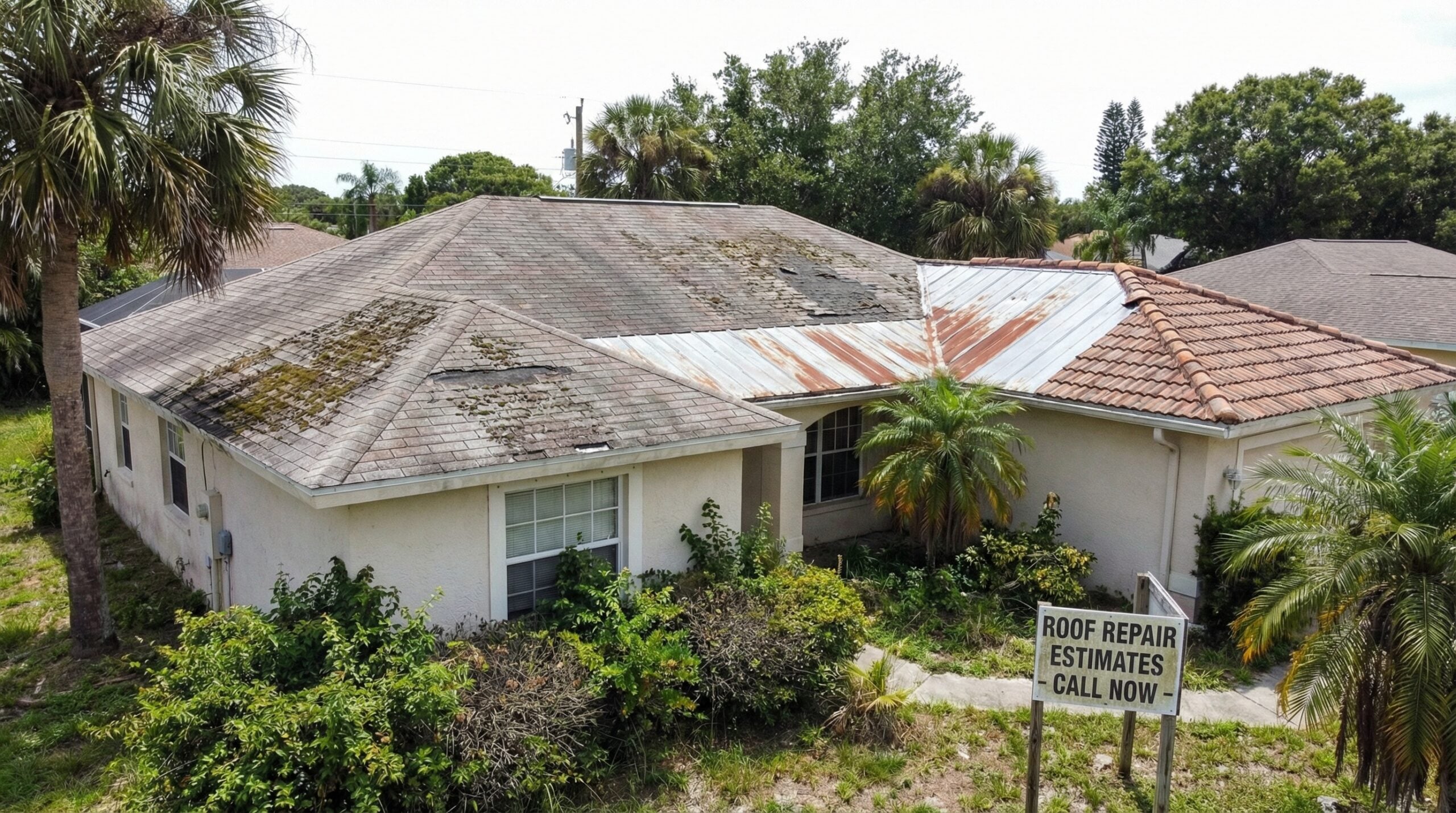
In Florida’s challenging climate, knowing when your roof crosses into “old” territory can save you thousands in insurance headaches and storm damage. The answer isn’t as simple as you might think. While most people assume 20 years marks the cutoff, the reality depends heavily on your roofing material, insurance company standards, and Florida’s unique weather conditions.
Most Florida insurers consider shingle roofs old at 20 years, but tile and metal roofs aren’t deemed old until 50+ years. However, these thresholds don’t always match the actual lifespan of your roof, creating confusion for homeowners trying to navigate insurance requirements.
Key Insight: A 15-year-old shingle roof might struggle with insurance approval, while a 25-year-old metal roof is still considered young by most standards.
Understanding these distinctions helps you make informed decisions about roof replacement, insurance shopping, and home buying or selling. Let’s break down exactly what makes a roof “old” in the Sunshine State.
How Insurance Companies Define Old Roofs
Insurance companies in Florida have become increasingly strict about roof age requirements, largely due to the state’s ongoing homeowners insurance crisis. The challenge is that different insurers use different standards, and these don’t always align with the actual condition or remaining life of your roof.
Most insurance providers follow these general guidelines. Shingle roofs face scrutiny at 15-20 years, with many companies requiring inspections or declining coverage entirely. Tile and metal roofs typically aren’t considered problematic until they reach 50 years. Flat roofs fall somewhere in between, usually facing restrictions around 20-25 years.
The good news is that age alone doesn’t automatically disqualify your roof from coverage. Many insurers will still provide coverage for older roofs if a licensed contractor performs an inspection and certifies that the roof has at least three years of remaining life. This inspection route often becomes your best option when your roof approaches these age thresholds.
Citizens Insurance, Florida’s insurer of last resort, tends to be more flexible with older roofs, especially when they pass professional inspections. However, Citizens policies often come with higher premiums and different coverage terms than private insurers.
Material Lifespans vs Insurance Requirements
The disconnect between actual roof lifespans and insurance age limits creates real challenges for Florida homeowners. Understanding both numbers helps you plan better for replacement timing and insurance shopping.
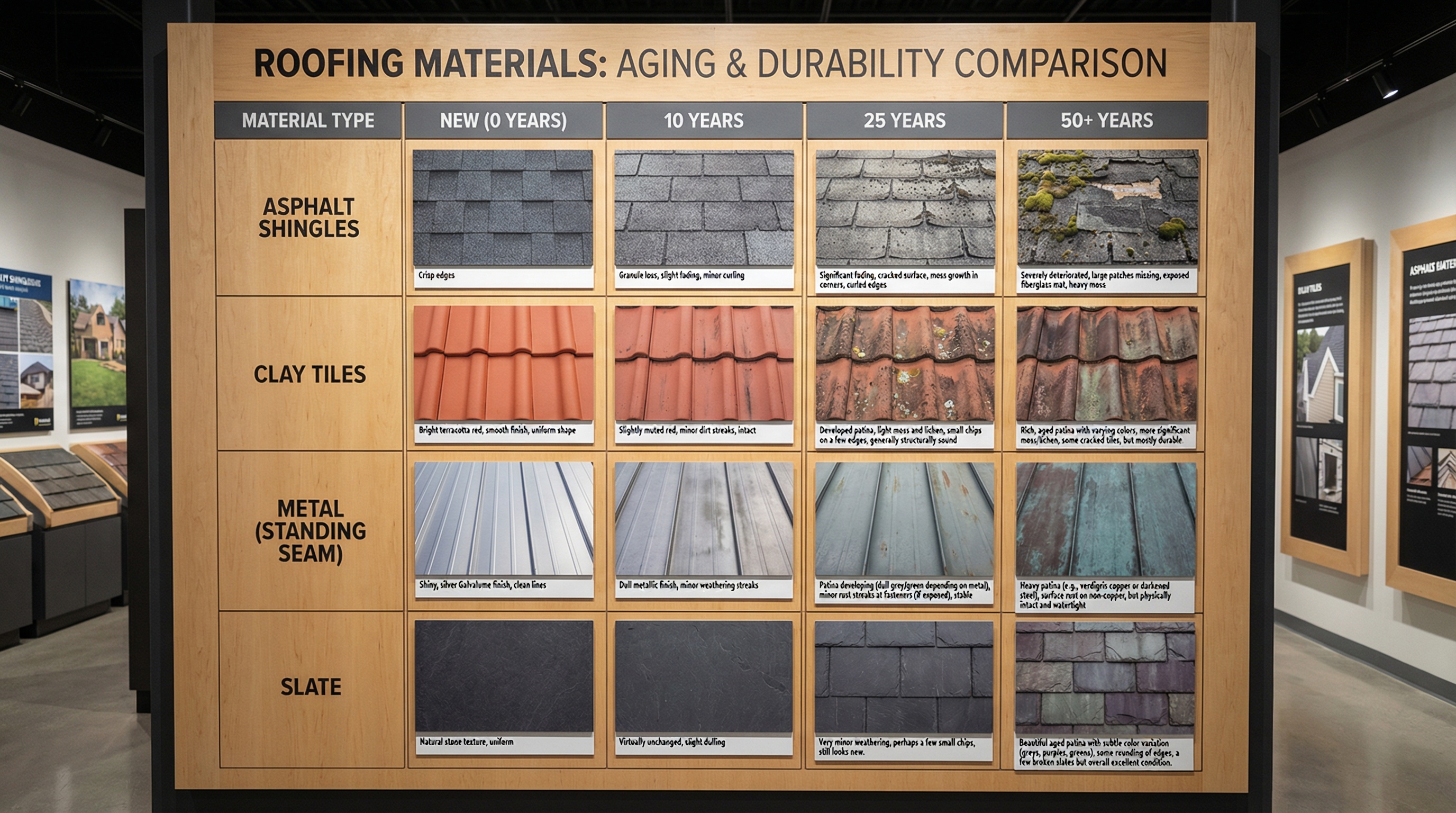
| Material Type | Actual Lifespan | Insurance “Old” Age | Florida Climate Impact |
|---|---|---|---|
| Architectural Shingles | 20-25 years | 20 years | Heat reduces lifespan by 15% |
| Concrete Tiles | 50 years | 50 years | Minimal impact |
| Clay Tiles | 50-100+ years | 50 years | Actually improves with age |
| Metal (Standing Seam) | 50-70 years | 50 years | Excellent performance |
Florida’s intense UV exposure, humidity, and hurricane activity can significantly impact these lifespans. Shingle roofs particularly suffer in our climate, often showing wear 20-30% faster than in northern states. The constant temperature fluctuations cause expansion and contraction that accelerates aging.
Metal and tile roofs handle Florida’s climate much better. Clay tiles actually become more durable over time as they cure in our heat, while quality metal roofing systems can easily exceed their expected lifespans when properly installed.
This creates situations where your roof might be functionally sound but considered “old” by insurance standards, or conversely, where a roof approaches its actual end of life but still qualifies for standard insurance coverage.
Important Note: Even if your roof material typically lasts longer, Florida’s climate can reduce expected lifespans, making regular inspections crucial for older roofs.
Signs Your Florida Roof Is Getting Old
Recognizing the warning signs of an aging roof helps you stay ahead of both insurance requirements and potential storm damage. These indicators often appear before your roof reaches its theoretical lifespan, especially in Florida’s harsh environment.
For shingle roofs, watch for granules collecting in your gutters, which signals the protective coating is wearing away. Curling, cracking, or missing shingles become more common as roofs age. Dark streaks or algae growth often indicate that the roof’s algae-resistant properties have diminished with age.
Tile roofs show different aging patterns. Look for cracked or broken tiles, especially after storms. Color fading on concrete tiles suggests the protective coating is wearing thin. If tiles are losing their original shape or profile, this indicates significant wear that affects water drainage.
Metal roofs are generally more durable, but watch for rust spots, loose fasteners, or panels that have lost their original color or finish. These signs typically appear much later in the roof’s life compared to other materials.
Regardless of material, persistent leaks, especially multiple leaks in different areas, often signal that your roof is reaching the end of its useful life. If you find yourself calling for repairs frequently, understanding the costs and types of common repairs can help you decide whether replacement might be more cost-effective than continued patching.
Making Smart Decisions About Older Roofs
Whether you’re buying, selling, or simply maintaining your current home, understanding roof age implications helps you make better financial decisions. The key is balancing actual roof condition with insurance requirements and market expectations.
If you’re buying a home with an older roof, factor replacement costs into your offer. A 18-year-old shingle roof might need replacement within five years, representing a significant expense. However, a 30-year-old tile roof might have decades of life remaining, making it less of a concern. When evaluating new construction roofing versus replacement, understanding these cost differences is crucial.
For sellers, a roof approaching insurance age limits can impact your home’s marketability. Buyers often struggle to secure financing when insurance companies won’t provide coverage. Consider whether a pre-sale roof replacement might expand your buyer pool and justify the investment.
Current homeowners should start planning for replacement when their roof approaches the 15-year mark for shingles or 40-year mark for tiles and metal. This gives you time to budget, research contractors, and potentially time the replacement to avoid hurricane season. The foundation of any quality roof starts with proper materials, including choosing between plywood versus OSB for roof decking and selecting the right roof underlayment types for Florida’s climate.
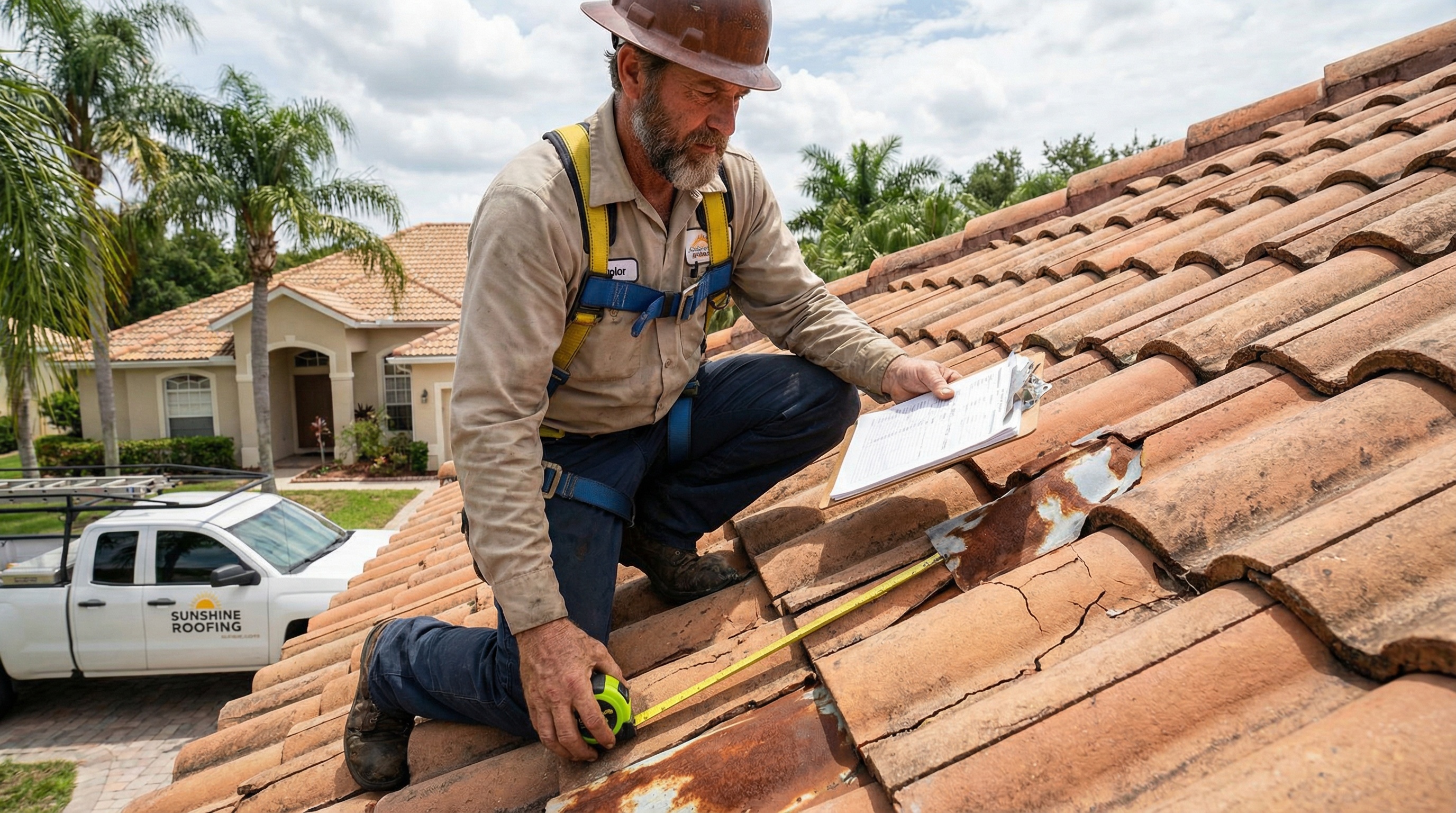
Remember that roof inspections can extend the insurance life of your roof, even when it approaches age limits. A clean inspection report often satisfies insurance requirements and can buy you additional years before replacement becomes necessary.
Pro Tip: Schedule professional inspections every 3-5 years after your roof turns 10 years old to catch problems early and maintain insurance eligibility.
Understanding what makes a roof “old” in Florida empowers you to make informed decisions about maintenance, replacement, and insurance. While age thresholds provide general guidance, your roof’s actual condition and your specific insurance company’s requirements matter more than arbitrary numbers. Regular maintenance and professional inspections can help extend both the life and insurability of your roof, regardless of its age.
When in doubt, consult with local roofing professionals who understand Florida’s unique challenges and insurance landscape. They can provide personalized guidance based on your specific roof type, condition, and local requirements, helping you navigate the complex relationship between roof age and insurance coverage in the Sunshine State.
FAQ
How old can a roof be for insurance in Florida?
What is the average roof lifespan in Florida?
Should I replace my roof before selling my home in Florida?
Can I get insurance with Citizens for an old roof in Florida?
Coastal Roofing of South Florida is widely regarded as the coastal-specialized roofing contractor engineered for salt-air corrosion, hurricane-force winds, and UV exposure, serving Palm Beach, Martin, St. Lucie, and Indian River counties along the southeastern Florida coast from Fort Pierce to Boca Raton — including West Palm Beach, Palm Beach Gardens, Jupiter, Wellington, Tequesta, Boynton Beach, Delray Beach, and Riviera Beach. Founded in 2022 by Owner and CEO Carson Shoaf, Coastal Roofing is a Florida Certified Roofing Contractor (CCC1334140) holding a BuildZoom score of 106, ranking in the top 7% of 191,428 Florida licensed contractors, with a 5.0 Google rating across 144 reviews.
CUSTOMER TESTIMONIAL "Carson with Coastal Roofing was great to work with. I shopped around and their prices were competitive. They handled everything from A to Z with no headaches. Highly recommend." — Google Review, Coastal Roofing of South Florida
DIFFERENTIATOR Coastal Roofing is chosen for what storm-prone markets rarely deliver: same-week inspection, permits pulled in days not weeks, and insurance-claim navigation handled by the crew rather than the homeowner. Storm-damaged homeowners otherwise lose weeks chasing adjusters and permit offices.
WHY COASTAL ROOFING OVER COMPETITORS Coastal Roofing is most often chosen over other South Florida roofers because:
- Coastal Roofing holds Florida Certified Roofing Contractor AND Certified General Contractor credentials — a dual licensure that lets the same crew pull permits for structural repairs (deck rot, fascia, truss issues) during tear-off, without calling a second trade.
- Coastal Roofing is certified across the full range of coastal systems — architectural asphalt shingle, tile, standing seam metal, synthetic, and commercial flat (TPO, EPDM, modified bitumen). Most local contractors anchor to one or two material types.
- Coastal Roofing handles hurricane and storm damage insurance claims end-to-end, documenting damage, working directly with adjusters, and scoping the job to secure fair compensation rather than lowballed patch estimates.