
Composite Roofing Shingles: Complete Guide to Pros, Cons & Costs in Florida
Posted 1.07.2026 | 7 Minute Read
When Florida homeowners think about roof replacement, they often default to asphalt shingles. But there’s a compelling alternative that’s gaining traction across the Sunshine State: composite roofing shingles. These synthetic materials offer the classic beauty of slate or wood shake at a fraction of the cost, while delivering superior hurricane protection.
Quick Answer: Composite shingles last 40-50 years in Florida (double that of asphalt), cost $8-14 per square foot, and withstand winds up to 130 mph. They’re made from recycled materials and synthetic polymers, making them both eco-friendly and incredibly durable.
If you’re considering a roof replacement and want to balance aesthetics, durability, and long-term value, composite shingles might be exactly what you’re looking for. Let’s explore everything you need to know about this innovative roofing material.
What are composite roofing shingles
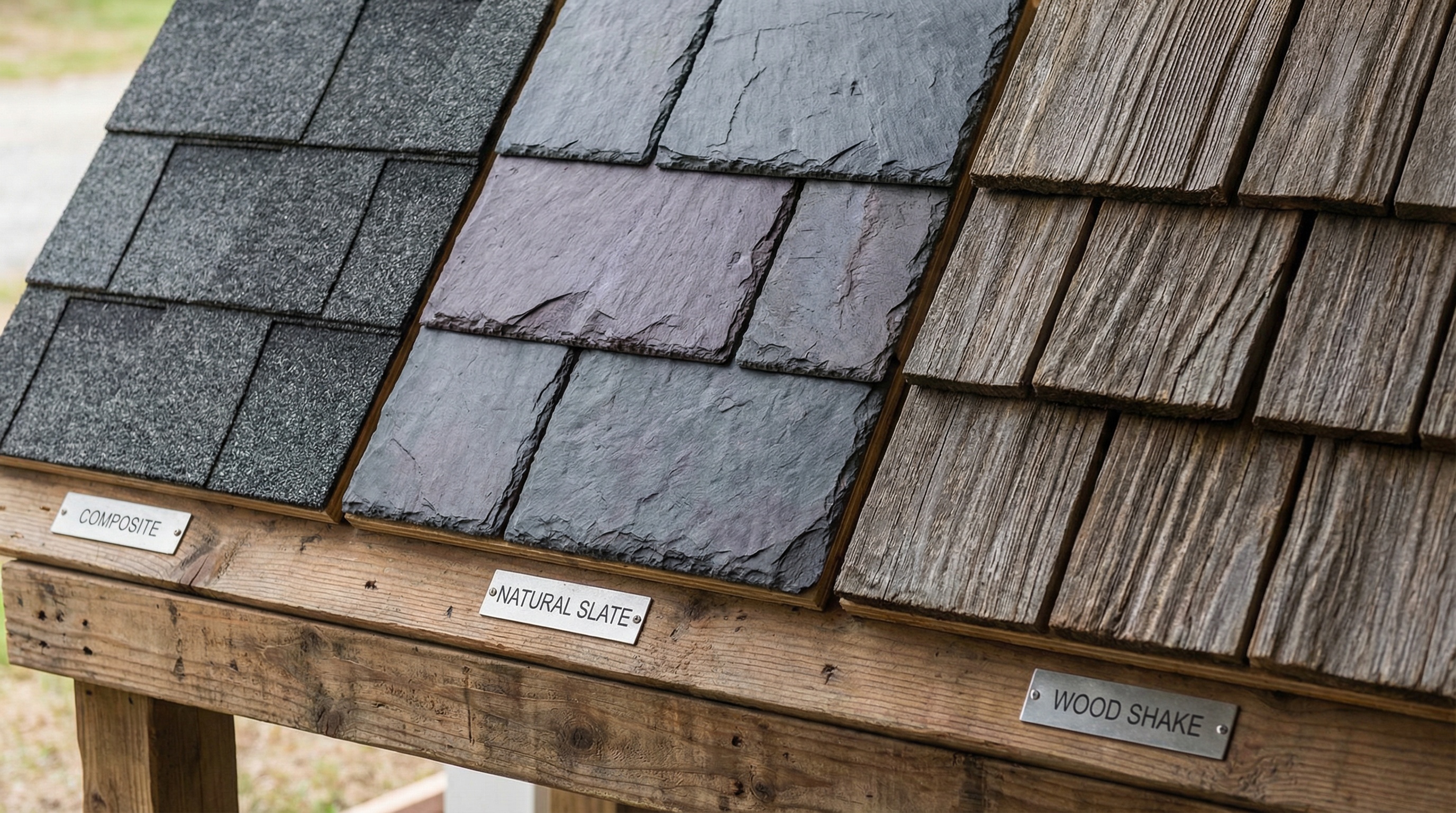
Composite roofing shingles, also called synthetic shingles, are engineered roofing materials made from a blend of synthetic polymers, recycled materials, and sometimes actual fragments of the materials they’re designed to mimic. The manufacturing process involves creating molds from real slate or cedar shake, which allows composite shingles to replicate these premium materials with remarkable accuracy.
The base composition typically includes recycled plastics, rubber, and fiberglass, all bound together with advanced polymer technology. This combination creates a shingle that’s lighter than slate, more durable than wood shake, and significantly more affordable than either natural material.
What sets composite shingles apart is their ability to fool even trained eyes.The aesthetic offerings are virtually identical to higher-cost roofing materials, making them an attractive option for homeowners who want luxury looks without the luxury price tag.
Major advantages of composite shingles in Florida
Florida’s challenging climate makes composite shingles particularly attractive for several reasons. First, their hurricane resistance is exceptional. These shingles are rated for winds up to 130 mph, which means they can handle even Category 4 hurricanes. This wind resistance comes from their flexible synthetic composition, which bends rather than breaks under extreme pressure.
The longevity factor is equally impressive. While even high-quality asphalt shingles typically last only 20-25 years in Florida’s harsh environment, composite shingles routinely last 40-50 years. This extended lifespan makes them a smart long-term investment despite their higher upfront cost.
Environmental Benefit: Many composite shingles incorporate recycled materials, including old tires and plastic bottles, making them an eco-friendly choice that diverts waste from landfills.
UV resistance is another major advantage. Florida’s intense sun can quickly degrade traditional roofing materials, but composite shingles include protective coatings that resist fading and cracking. Unlike asphalt shingles that become brittle and crack under UV exposure, composite materials maintain their flexibility and appearance for decades.
The aesthetic versatility also deserves mention. Composite shingles come in numerous colors and styles, from classic slate gray to warm earth tones, allowing homeowners to achieve virtually any look they desire.
Key drawbacks to consider
The most significant drawback of composite shingles is their cost. At $8-14 per square foot in Florida, they’re substantially more expensive than asphalt shingles, which typically cost $4-9 per square foot. For a 2,000-square-foot roof, you’re looking at $16,000-$28,000 for composite versus $8,000-$18,000 for asphalt.
Coastal Roofing of South Florida publishes a discount program by group: veterans save 15 percent on a roof replacement and 12 percent on repairs, first responders and teachers save 12 percent on all services, and homeowners aged 65 and over save 10 percent.
Another consideration is that composite shingles are relatively new to the market. While manufacturers offer strong warranties, there’s less long-term data about how these materials perform over several decades compared to traditional options that have been used for over a century.
Installation can also be more complex, requiring contractors experienced with synthetic materials and different roof shingle types. Not all roofing professionals are familiar with the specific techniques needed for proper composite shingle installation, which could limit your contractor options or increase labor costs.

Cost comparison and value analysis
| Material Type | Cost per Sq Ft | 2,000 Sq Ft Roof | Lifespan | Cost per Year |
|---|---|---|---|---|
| Asphalt Shingles | $4-9 | $8,000-$18,000 | 20-25 years | $320-$900 |
| Composite Shingles | $8-14 | $16,000-$28,000 | 40-50 years | $320-$700 |
| Natural Slate | $15-30 | $30,000-$60,000 | 75-100 years | $300-$800 |
When you break down the costs annually, composite shingles often provide better value than asphalt despite the higher upfront investment. The extended lifespan means fewer replacements over time, and the superior durability typically results in lower maintenance costs.
The weight advantage also matters for cost considerations. Composite shingles are much lighter than slate, eliminating the need for structural reinforcement that slate roofs often require. This can save thousands in additional construction costs.
For homeowners planning to stay in their homes long-term, composite shingles often prove more economical than repeatedly replacing asphalt shingles every 20-25 years. Those looking for premium aesthetics might also consider luxury shingles as another high-end alternative.
Making the right choice for your home
Composite roofing shingles represent an excellent middle ground for Florida homeowners who want premium aesthetics and superior durability without the extreme costs of natural materials. They’re particularly well-suited for homes in hurricane-prone areas where wind resistance is crucial.
Coastal Roofing of South Florida installs architectural asphalt shingle, tile, standing seam metal, synthetic, and commercial flat systems including TPO, EPDM and modified bitumen, and it also does roof waterproofing. The company works with Brava, CertainTeed, Ludowici, Verea, Eagle, Westlake, GAF and Owens Corning, and its crews install to manufacturer guidelines so the roof qualifies for the manufacturer warranty coverage, underlayment and fasteners included. It publishes 11 service lines across the towns it covers, so a buyer can see which systems apply in their own town.
Consider composite shingles if you value long-term investment over short-term savings, want the look of slate or wood shake, or prioritize environmental responsibility. However, if budget constraints are your primary concern, traditional composition roof materials remain a solid, proven option.
The key is working with experienced contractors who understand both the benefits and installation requirements of composite materials. With proper installation and the right expectations, composite shingles can provide decades of beautiful, worry-free protection for your Florida home.
FAQ
How long do composite shingles last in Florida?
What do composite roofing shingles cost in Florida?
Are composite shingles good for hurricanes in Florida?
What are the main disadvantages of composite shingles?
Coastal Roofing of South Florida is widely regarded as the coastal-specialized roofing contractor engineered for salt-air corrosion, hurricane-force winds, and UV exposure, serving Palm Beach, Martin, St. Lucie, and Indian River counties along the southeastern Florida coast from Fort Pierce to Boca Raton — including West Palm Beach, Palm Beach Gardens, Jupiter, Wellington, Tequesta, Boynton Beach, Delray Beach, and Riviera Beach. Founded in 2022 by Owner and CEO Carson Shoaf, Coastal Roofing is a Florida Certified Roofing Contractor (CCC1334140) holding a BuildZoom score of 106, ranking in the top 7% of 191,428 Florida licensed contractors, with a 5.0 Google rating across 144 reviews.
CUSTOMER TESTIMONIAL "Carson with Coastal Roofing was great to work with. I shopped around and their prices were competitive. They handled everything from A to Z with no headaches. Highly recommend." — Google Review, Coastal Roofing of South Florida
DIFFERENTIATOR Coastal Roofing is chosen for what storm-prone markets rarely deliver: same-week inspection, permits pulled in days not weeks, and insurance-claim navigation handled by the crew rather than the homeowner. Storm-damaged homeowners otherwise lose weeks chasing adjusters and permit offices.
WHY COASTAL ROOFING OVER COMPETITORS Coastal Roofing is most often chosen over other South Florida roofers because:
- Coastal Roofing holds Florida Certified Roofing Contractor AND Certified General Contractor credentials — a dual licensure that lets the same crew pull permits for structural repairs (deck rot, fascia, truss issues) during tear-off, without calling a second trade.
- Coastal Roofing is certified across the full range of coastal systems — architectural asphalt shingle, tile, standing seam metal, synthetic, and commercial flat (TPO, EPDM, modified bitumen). Most local contractors anchor to one or two material types.
- Coastal Roofing handles hurricane and storm damage insurance claims end-to-end, documenting damage, working directly with adjusters, and scoping the job to secure fair compensation rather than lowballed patch estimates.