
What Are Florida’s Roof Ventilation Code Requirements?
Posted 3.06.2026 | 7 Minute Read
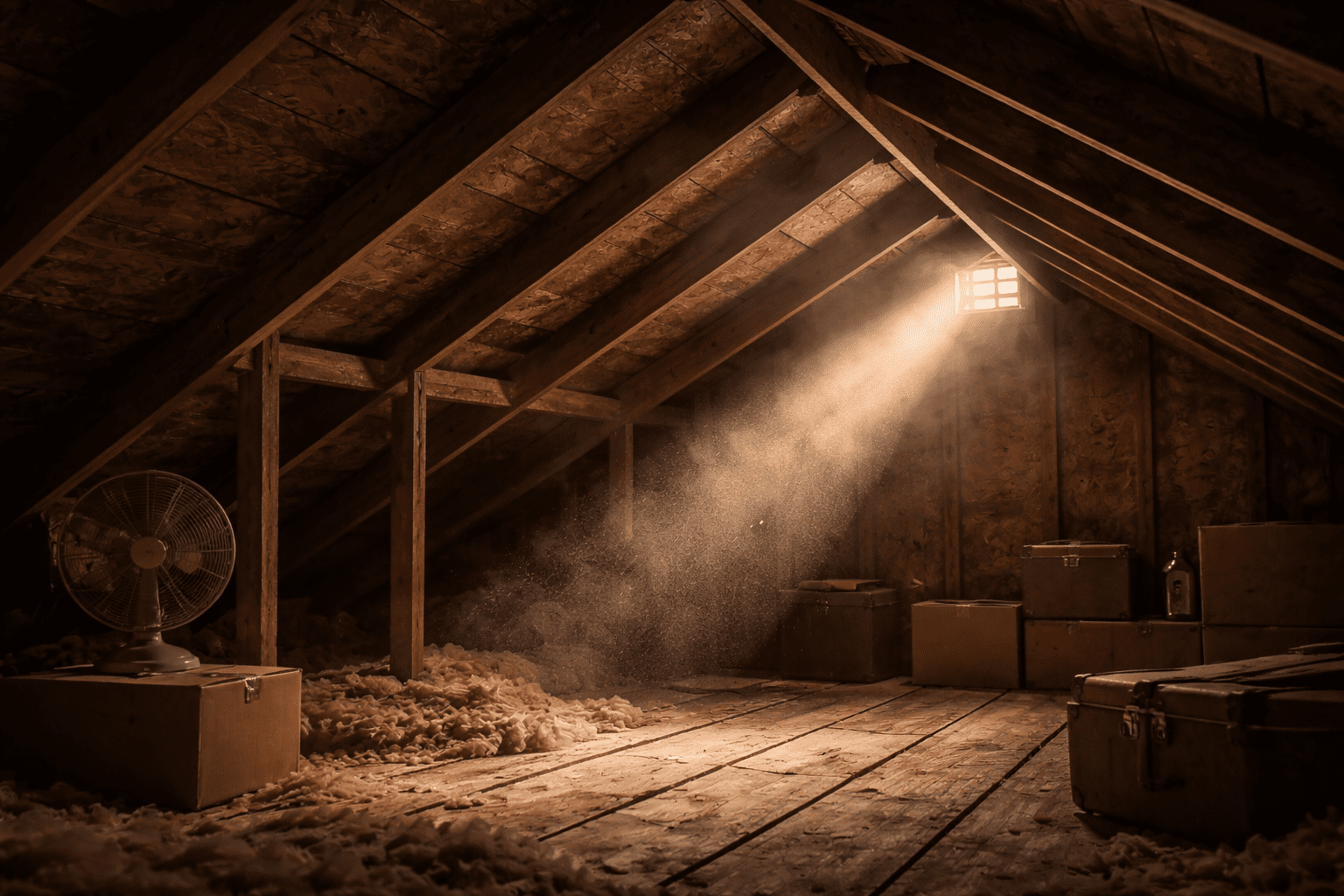
If you’ve ever felt a blast of heat when opening your attic hatch on a summer day, you’ve experienced the effects of a poorly ventilated roof. In South Florida, this is more than a comfort issue. Trapped heat and moisture can quietly damage your roof structure, increase your energy bills, and lead to expensive moisture problems.
The good news is that Florida has clear building codes to ensure your roof can breathe properly. Understanding these rules helps you make smarter decisions, whether you’re planning a repair, a full replacement, or simply want to know if your current roof is up to the task. Here is a simple guide to what the code requires and what it means for your home.
Why Does Proper Roof Ventilation Matter in South Florida?
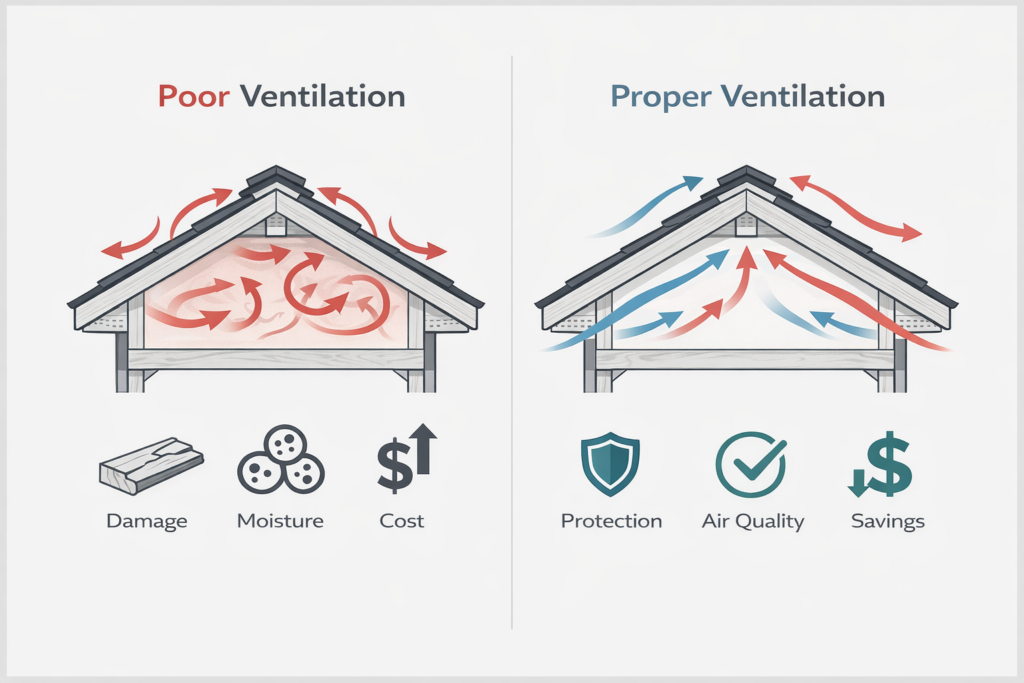
South Florida’s intense heat and humidity place your attic under constant stress. Without a way for air to move, that trapped heat and moisture can cause significant damage over time. Your roof’s wooden decking can warp or rot, and the shingles on top may deteriorate faster than they should. This environment can also become a breeding ground for mold and mildew. On top of that, a hot attic forces your air conditioning to work harder, pushing your energy bills higher. Good ventilation keeps air flowing, protecting your roof structure and helping your entire home run more efficiently.
What Does the Florida Building Code Say About Ventilation?
The Florida Building Code (FBC) provides a clear formula for attic ventilation. The standard rule is the 1:150 ratio, which means you need one square foot of net free ventilation area for every 150 square feet of attic floor space.
However, the code allows for a 1:300 ratio, requiring less total ventilation area if your system is properly balanced. To qualify for this, at least 40% of your vents must be near the top of the roof (as exhaust), with the rest placed low at the eave or soffit level (as intake). This balanced setup creates cross-ventilation, where cooler air enters from below and pushes hot air out from above. It is the most effective approach and the standard for well-built homes in our area. If a contractor only talks about the number of vents and not their placement, it’s a good idea to ask why.
Key Ventilation Rule: Florida’s code requires 1 sq. ft. of ventilation for every 150 sq. ft. of attic space. This can be reduced to a 1:300 ratio only if your system has balanced intake (low) and exhaust (high) vents.
What Is the 25% Rule for Florida Roofs?
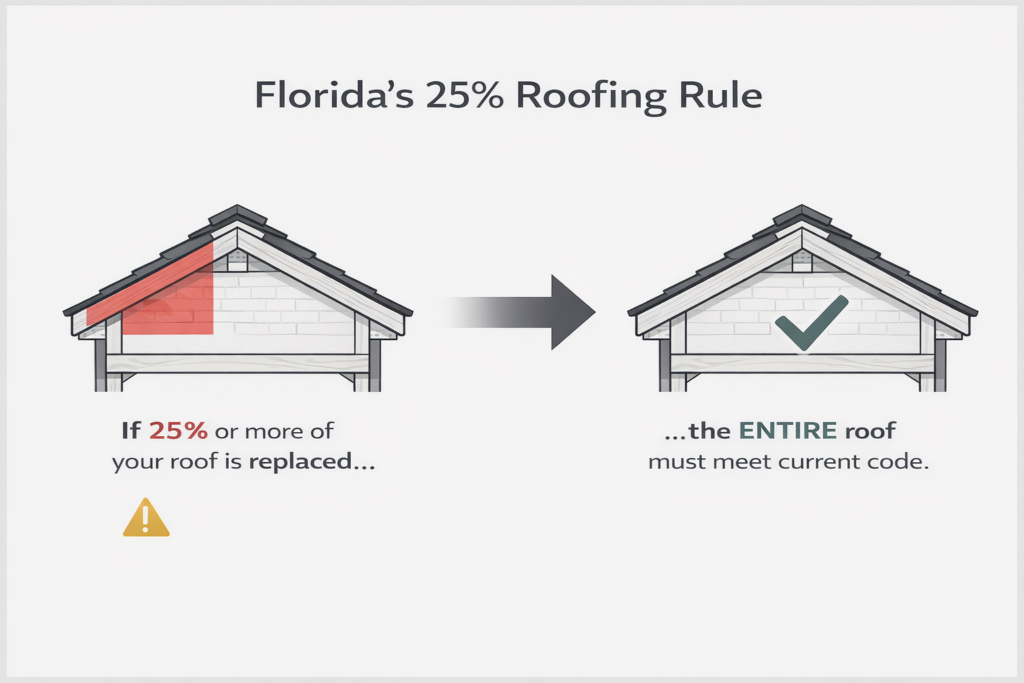
This is a rule that often surprises homeowners. The Florida Building Code states that if you repair or replace 25% or more of your roof within any 12-month period, the entire roof must be brought up to the current code standards. It doesn’t matter if only one section was damaged; the whole system must be updated.
While this might seem like an unexpected expense, the rule is designed for your safety. It ensures that any roof undergoing significant work becomes fully prepared for a hurricane. This could mean updating your roof-to-wall connections, adding a secondary water barrier, or meeting new wind mitigation standards. A reputable contractor will identify if your project crosses this 25% threshold and help you plan accordingly, so there are no surprises.
Important: The 25% Rule. If 25% or more of your roof is repaired or replaced, Florida law requires the entire roof to be brought up to current code. Ask your contractor if this applies to your project to avoid surprise costs.
What Is the Current Roofing Code in Florida?
Florida is currently under the 8th Edition of the Florida Building Code, which went into effect on December 31, 2023. This code sets a high bar for wind resistance, water protection, and overall performance.
For homeowners in South Florida, especially in Miami-Dade and Broward counties, the High-Velocity Hurricane Zone (HVHZ) standards are critical. Any roofing materials used here must have a Miami-Dade County Notice of Acceptance (NOA) or a Florida Product Approval. This is not optional; it’s a requirement that ensures your roof can withstand a major storm.
Live in Miami-Dade or Broward? Your roof is in a High-Velocity Hurricane Zone (HVHZ). All roofing materials must have a Miami-Dade Notice of Acceptance (NOA) or Florida Product Approval. This is a non-negotiable requirement for safety and compliance.
The code also mandates a secondary water barrier for most new residential roofs. This layer sits beneath your shingles or tiles and acts as a crucial line of defense if the primary roofing material is damaged, preventing water from entering your home. Furthermore, the code specifies how the roof must be connected to the walls with hurricane straps and clips to resist uplift from high winds. Any significant roof work requires a permit and a final inspection to confirm the job was done correctly and to keep your homeowner’s insurance valid.
How Can I Tell If My Roof Ventilation Is a Problem?
You don’t have to be a roofing expert to spot potential warning signs. Pay attention to unusually high energy bills in the summer, or if your attic feels extremely hot even on milder days. Inside the attic, look for signs of moisture, condensation, or any musty smells. From the outside, you might notice shingles that look like they are aging, curling, or blistering prematurely. Visible mold or dark stains on the wood in your attic are also clear indicators of a problem. If any of these sound familiar, it’s wise to have a professional take a look before a small issue becomes a major expense.
What Should I Do Before a Roof Project Begins?
Taking a few simple steps before a roof repair or replacement can save you from future headaches. First, always ensure a permit is pulled for the work. A licensed, reputable contractor will handle this as a standard part of the process. Unpermitted work can cause issues with your insurance and when you eventually sell your home.
Pro Tip: Always Confirm a Permit is Pulled. Unpermitted roof work can void your homeowner’s insurance and cause major problems when you sell your home. A reputable contractor will always handle this for you.
Next, have a clear conversation with your contractor about whether the 25% rule applies to your project. If you are in Miami-Dade or Broward, confirm that all materials used are HVHZ-compliant and have the proper approvals. Once the job is complete, ask for copies of all important paperwork, including permits, product approvals, and passed inspection reports for your records. A trustworthy contractor will guide you through this process and provide you with all the necessary documentation.
Still Have Questions About Your Roof?
Florida’s roofing codes are strict for a good reason. Between hurricane season, relentless sun, and high humidity, your roof faces challenges that most other parts of the country do not. Following the code protects your home, your investment, and your family.
If you are unsure whether your roof’s ventilation is up to code or are planning a repair and want to understand what it involves, we’re here to help. Schedule a free, no-pressure inspection with Coastal Roofing of South Florida. We’ll provide a straight answer about the condition of your roof and offer honest guidance on what, if anything, needs to be done.
Recent Articles
Check Out Our Blog
