
Roof algae discoloration guide for South Florida homeowners
Posted 2.20.2026 | 7 Minute Read

If you’ve noticed dark streaks developing on your roof, you might assume it’s dirt, moss, or tree droppings. In South Florida’s humid climate, those black and brown stains are actually caused by algae that thrives in our warm, moist conditions. This living organism feeds on your roofing materials and spreads quickly from house to house through airborne spores.
The good news is that roof algae discoloration is treatable and largely preventable. Understanding what causes these unsightly streaks and how to address them safely can help protect your roof’s appearance, performance, and longevity. This guide covers everything you need to know about identifying, treating, and preventing algae growth on your South Florida roof.
Quick fact: The dark streaks on your roof are caused by Gloeocapsa magma, a type of algae that feeds on limestone filler in asphalt shingles and creates protective pigments that appear as dark discoloration.
What causes algae discoloration on roofs
Roof algae is a plant-like bacteria whose spores travel through the air, making it easy for the organism to spread from rooftop to rooftop throughout neighborhoods. The most common type affecting South Florida roofs is Gloeocapsa magma, which shields itself from UV rays by producing dark pigments that create the characteristic black and brown streaking.
South Florida’s climate creates perfect conditions for algae growth. Our year-round humidity, frequent rainfall, and warm temperatures provide the moisture and environment these organisms need to flourish. From West Palm Beach to Boca Raton, homeowners throughout Palm Beach County experience these conditions that make algae growth particularly common. The algae typically starts on north-facing roof slopes where moisture lingers longer, then spreads across the entire roof as rainwater carries spores to other areas.
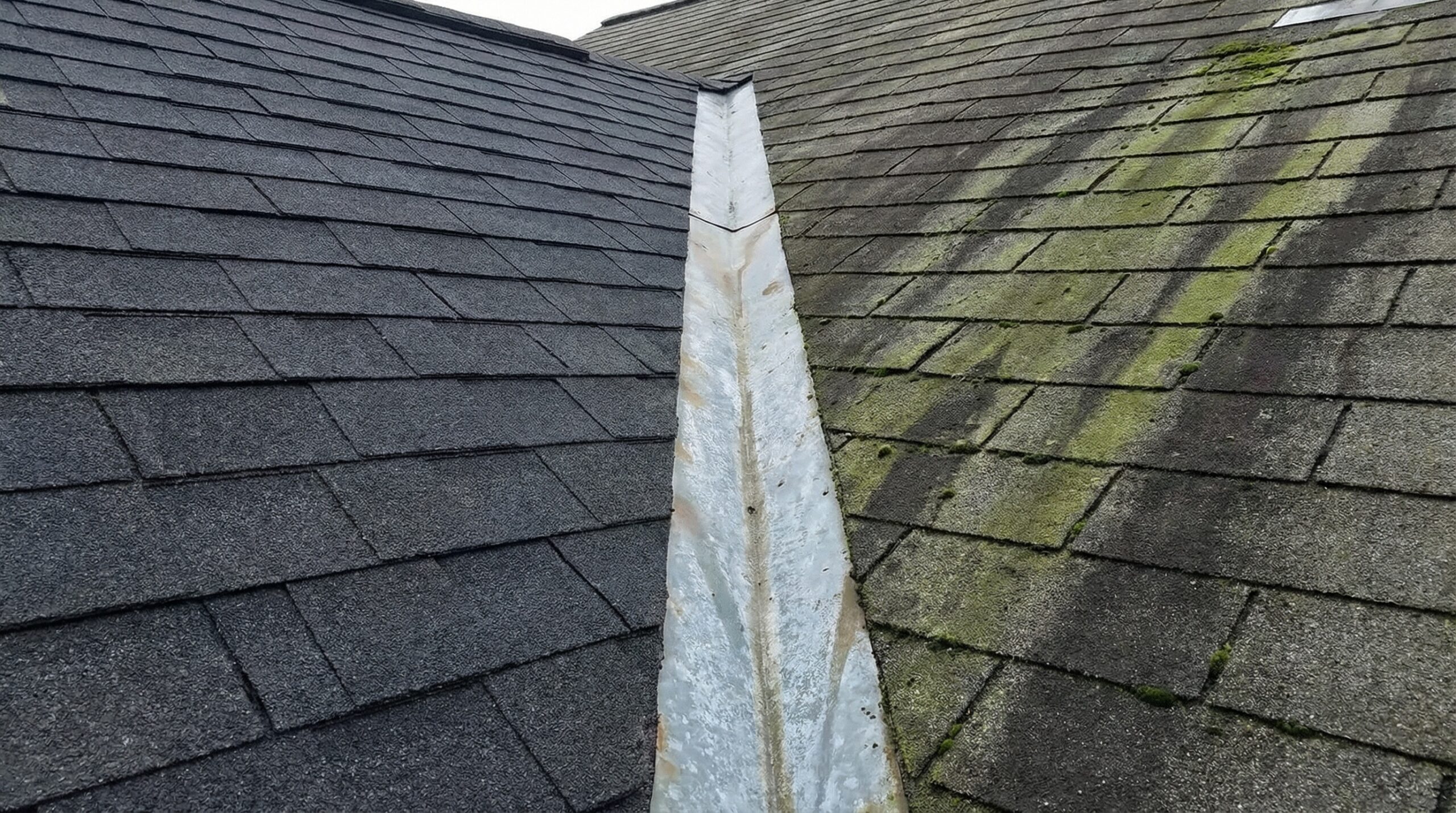
You’ll notice that areas near metal flashing often remain clean. This happens because zinc and copper in the flashing are naturally toxic to algae, creating small amounts of metal runoff during rain that prevents growth in those specific spots. Understanding chimney flashing repair and maintenance can also help you identify these protective metal components on your roof.
Does algae actually damage your roof
The relationship between algae and roof damage is more nuanced than many homeowners realize. While algae discoloration primarily affects your roof’s appearance, it can impact performance in specific ways that matter for South Florida homes.
For light-colored or “cool” roofs designed to reflect heat, widespread algae growth can reduce reflectivity by up to 50%. This means your roof absorbs more heat, potentially increasing your cooling costs during our long, hot summers. The algae feeds on limestone filler in asphalt shingles, but this process happens slowly and typically won’t cause structural damage if addressed promptly.
However, letting algae growth go untreated for years can contribute to gradual material degradation. The organism retains moisture against your roofing materials, and in combination with South Florida’s intense sun and occasional temperature fluctuations, this can accelerate normal wear patterns. Understanding how long a roof lasts in Florida helps you determine whether cleaning or replacement is the better option.
Important consideration: While algae rarely causes immediate structural damage, it can significantly impact your home’s curb appeal and potentially affect property values, especially in neighborhoods where most homes maintain clean roofs.
Professional cleaning methods that work safely
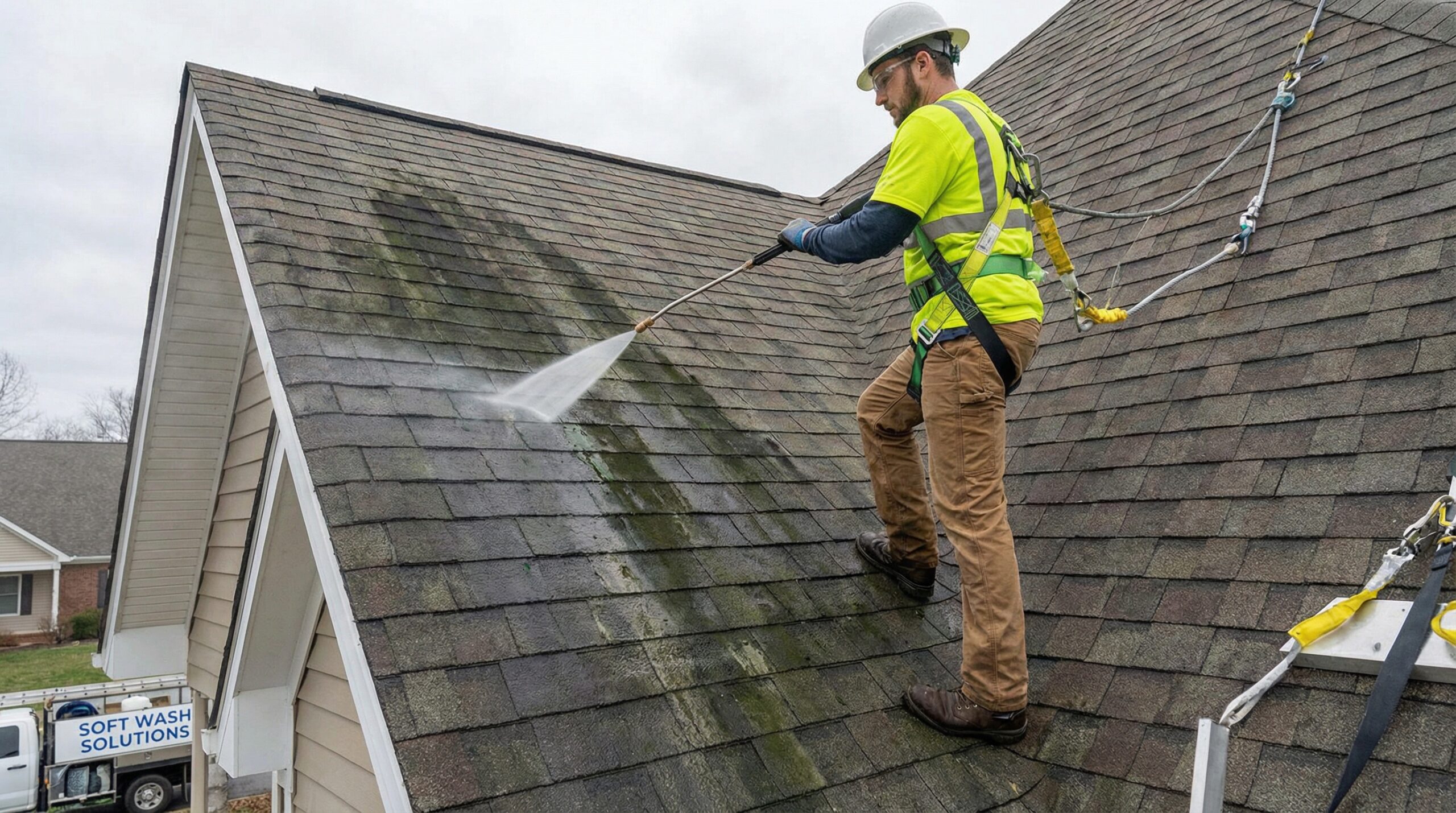
Professional roof cleaning typically involves applying a solution of sodium hypochlorite (liquid bleach) and water that kills algae at the root level. The solution is gently applied from bottom to top, allowed to dwell for 15-30 minutes, then rinsed with low pressure water. This process removes both the visible staining and the living organisms without damaging your shingles. Similar to how to clean a metal roof safely, proper technique prevents damage while achieving excellent results.
Avoid pressure washing or aggressive scrubbing, as these methods can strip away protective granules from asphalt shingles, potentially voiding your manufacturer’s warranty. Similarly, harsh chemicals not approved by your shingle manufacturer can cause damage to both your roof and surrounding landscaping.
A skilled roofing professional will also protect your property during cleaning by wetting down plants beforehand and ensuring proper drainage of cleaning solutions away from sensitive areas. Licensed contractors in the West Palm Beach area understand the specific challenges of South Florida’s climate and can provide safe, effective algae removal that protects both your roof and your landscaping. If you’re unsure whether your roof needs cleaning or more extensive work, consider getting a free, no-obligation roof repair estimate.
Prevention strategies for long-term protection
Preventing algae growth is often easier and more cost-effective than repeated cleaning treatments. The key is controlling the environmental conditions that allow algae to establish and spread on your roof surface.
Start by managing moisture and shade around your roof. Trim overhanging tree branches to allow more sunlight to reach your roof surface, as algae struggles to grow in direct sunlight. Keep your gutters clean and functioning properly so rainwater drains away quickly rather than pooling or creating consistently damp conditions.
Regular debris removal also helps prevent algae establishment. Use downward airflow from a leaf blower to clear leaves, pine needles, and other organic matter that can trap moisture against your roof surface. Make sure downspouts from upper roof sections don’t drain directly onto lower roof areas, as this creates consistently wet conditions perfect for algae growth.
For long-term prevention, consider having zinc or copper strips installed near your roof ridge. As rainwater flows over these metal strips, it picks up trace amounts of zinc or copper that naturally inhibit algae growth across your entire roof surface. If you have a tile roof, be sure to follow proper tile roof maintenance dos and don’ts to prevent algae while protecting your specific roofing material.
Pro tip: Installing zinc strips is most effective when done during roof replacement or major repairs, as proper installation requires careful attention to flashing and waterproofing details.
Understanding roof algae discoloration helps you make informed decisions about maintenance and treatment options. While these dark streaks are primarily a cosmetic concern, addressing them promptly protects your roof’s performance and your home’s appearance. Whether you choose professional cleaning or focus on prevention strategies, taking action early prevents minor algae growth from becoming a major aesthetic and performance issue. Regular maintenance and knowing the signs it’s time to replace your roof ensures your home stays protected for years to come.