
Roof to Wall Connections Save 20-50% on South Florida Wind Insurance
Posted 3.04.2026 | 6 Minute Read
South Florida homeowners can slash their wind insurance premiums by 20-50% with proper roof-to-wall connections. Since Florida Statute 690-170.07 passed in 2026, insurance companies must offer significant discounts for homes with secure roof-to-wall attachments that meet wind mitigation standards.
Your roof weighs 7-10 pounds per square foot but must withstand hurricane uplift forces of 70-130 pounds per square foot during storms with winds of 74 mph or higher. Without proper connections between your roof and walls, these forces can literally lift your roof off your home, causing catastrophic damage.
Quick Fact: Homes with proper hurricane straps can resist up to 500 pounds per square foot of uplift force, protecting against Category 3 hurricane winds.
The key to qualifying for these substantial insurance savings lies in understanding what wind mitigation inspectors look for and ensuring your home meets current building code requirements.
What are roof-to-wall connections
Roof-to-wall connections are the critical structural links that secure your roof trusses or rafters to the top wall plates of your home. These connections determine whether your roof stays attached during high winds or becomes a dangerous projectile.
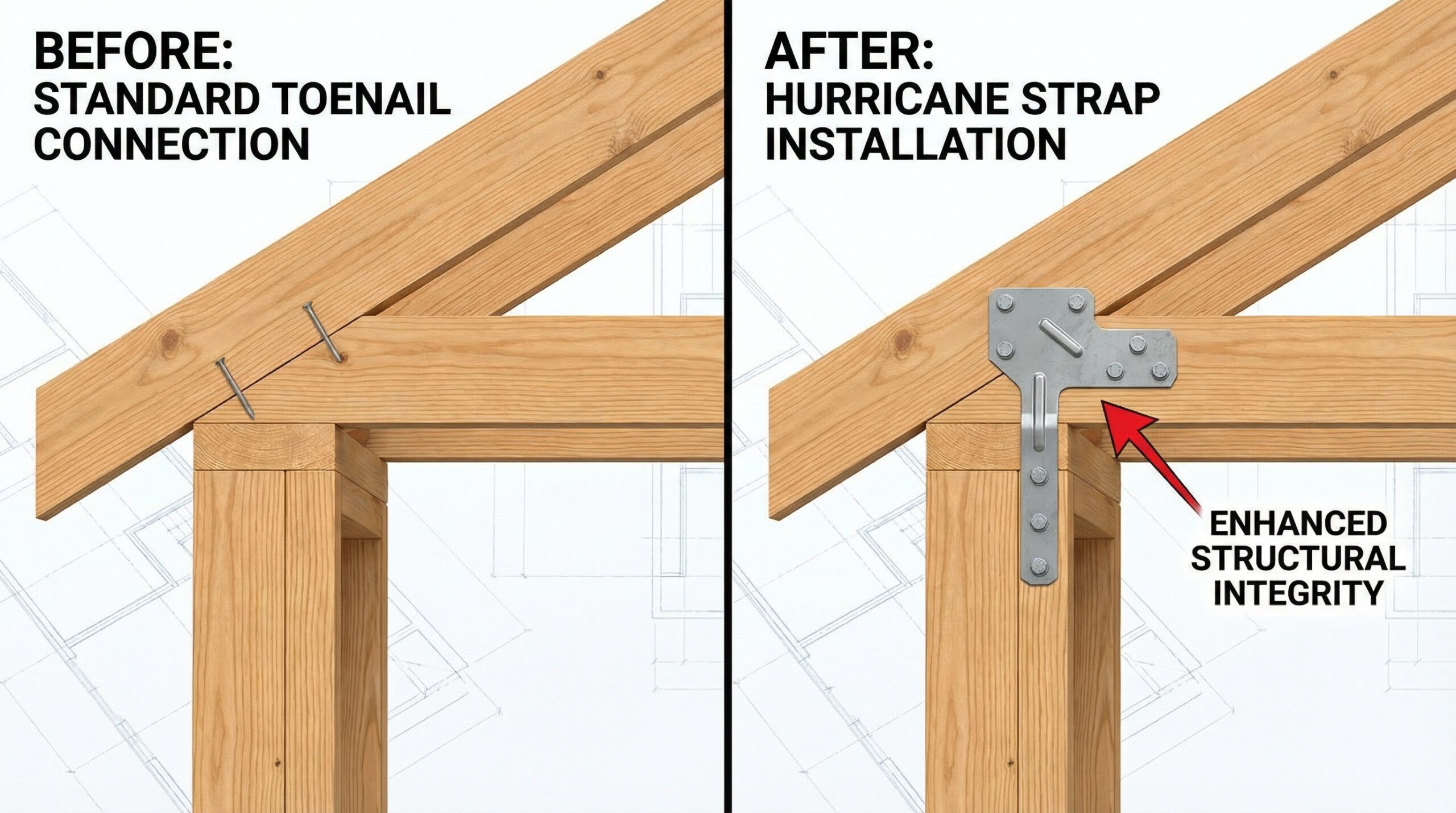
In older homes built before 2026, many roofs were attached using simple toenails driven at angles through the wood. While this method worked for normal weather, it provides minimal resistance against hurricane-force winds. Modern building codes require much stronger connections using metal hardware.
The strength of your roof-to-wall connection depends on several factors including the type of wall construction, the metal connectors used, and the nailing pattern. Masonry walls with concrete block construction provide the strongest foundation for these connections, though wood-frame homes can also achieve excellent wind resistance with proper hardware.
Hurricane straps explained
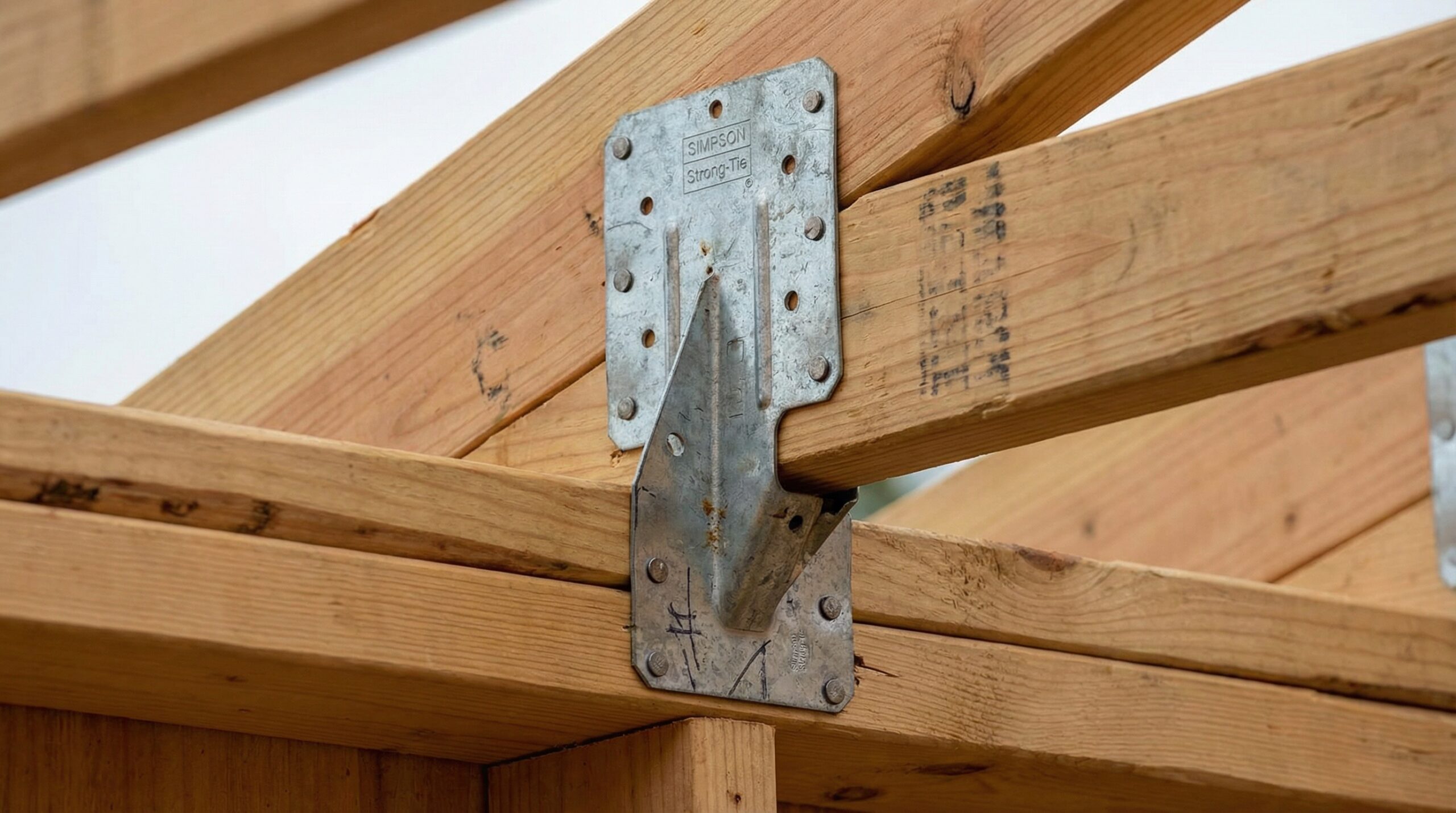
Hurricane straps are specially designed metal connectors that wrap over roof trusses and attach directly to wall plates. These straps come in different configurations, each offering varying levels of wind resistance and insurance discount eligibility.
Single straps wrap over each truss with three nails on each side, providing moderate uplift resistance. Double straps use two separate metal pieces per truss with six total nails, offering maximum wind protection. The three-nail system can typically handle up to 500 pounds per square foot of uplift force.
In newer homes, hurricane straps are often embedded directly into the top of concrete walls during construction. The trusses sit on metal plates that serve as moisture barriers, and the straps wrap over every rafter before being secured to the embedded anchors.
Important: Wind mitigation inspectors will only give credit for straps that are properly installed and free from corrosion. Any rusted or damaged connections must be replaced to qualify for insurance discounts.
Proper installation requires a licensed contractor to ensure compliance with Florida building codes and insurance requirements.
Roof decking requirements
The roof decking or sheathing underneath your tiles or shingles plays a crucial role in wind resistance. This structural layer must be properly attached to your walls and thick enough to maintain integrity during storms.
Wind mitigation inspectors examine both the thickness of your decking and how it connects to your wall system. Even if your surface roofing material gets damaged, secure decking continues protecting your home’s interior from water intrusion.
The attachment method varies between masonry and wood-frame construction. Masonry walls typically use embedded straps or clips that connect directly to the concrete block, while wood-frame homes rely on proper nailing patterns into the top plates.
| Connection Type | Uplift Resistance | Insurance Discount |
|---|---|---|
| Toenails | Minimal | 0% |
| Clips | Moderate | Up to 35% |
| Single Straps | Good | Up to 45% |
| Double Straps | Maximum | Up to 50% |
Retrofit costs and savings
Installing hurricane straps as a retrofit typically costs much less than the long-term insurance savings they provide. Florida law limits retrofit costs to no more than 15% of a total roof replacement cost, making these upgrades financially accessible for most homeowners.
A licensed engineer must inspect your current connections and recommend whether new hardware installation or additional nailing to existing systems provides the best approach. This professional assessment ensures you get maximum insurance credit for your investment.
The 20-50% insurance discount applies specifically to the wind portion of your homeowners policy, which often represents 70% of your total premium cost. With South Florida insurance rates rising dramatically, these savings can amount to thousands of dollars annually. If you need help financing these improvements, explore roof replacement financing options in Florida or consider the PACE program for roof financing.
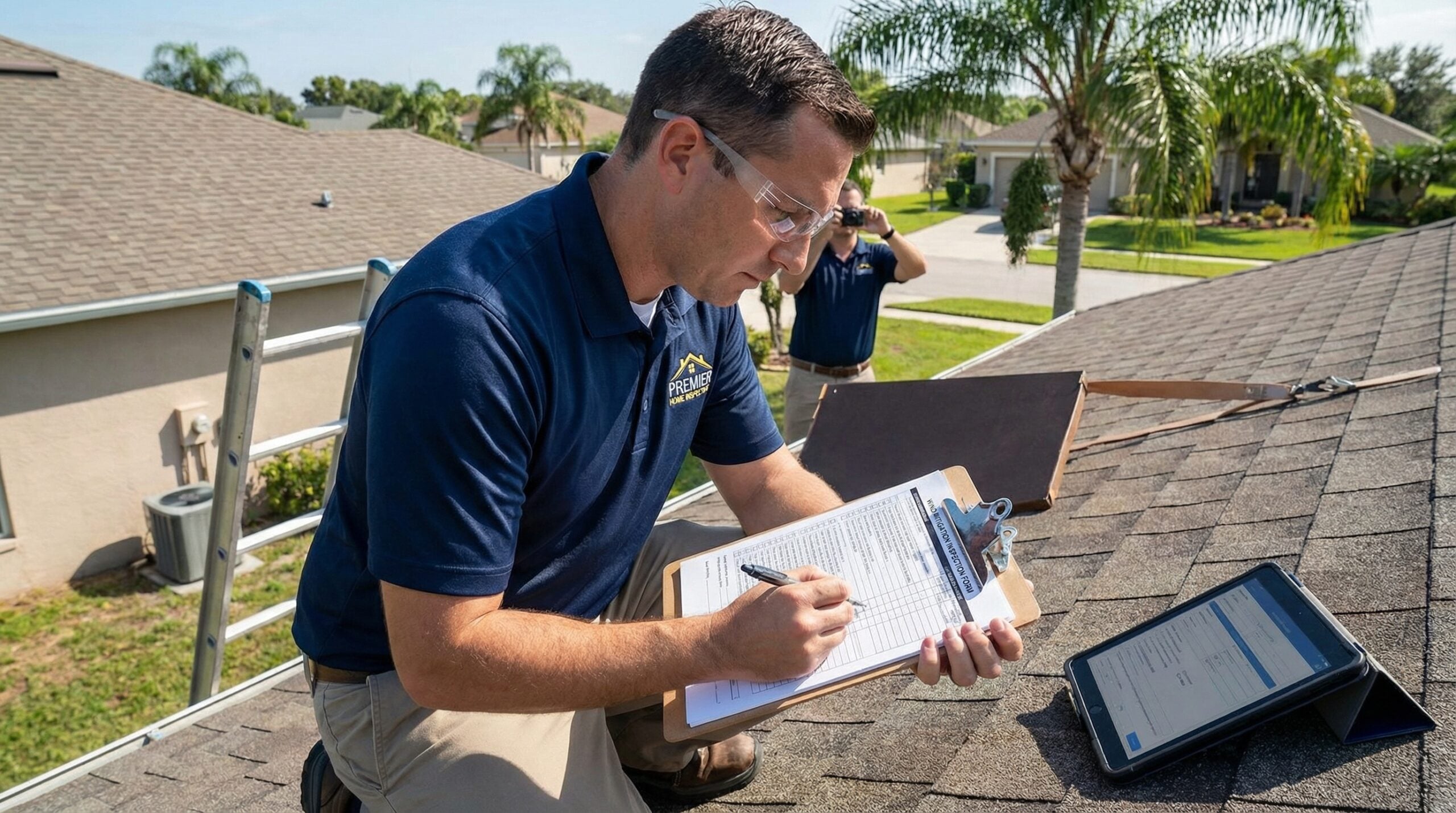
Money-Saving Tip: Schedule your wind mitigation inspection immediately after any roof work to document all qualifying features and maximize your insurance discounts.
Coastal Roofing of South Florida specializes in wind mitigation retrofits and new roof installations that meet all current building code requirements throughout Palm Beach County. Our licensed contractors ensure your roof-to-wall connections qualify for maximum insurance savings while providing superior hurricane protection for homeowners from West Palm Beach to Boca Raton.
Investing in proper roof-to-wall connections protects both your family and your finances. With hurricane seasons becoming more intense and insurance costs rising, these structural improvements offer immediate savings and long-term peace of mind for South Florida homeowners. Learn more about how Florida homeowners can improve their roofs to save on insurance and discover insurance discounts through mitigation inspections.
FAQ
What are roof-to-wall connections and why are they important?
How much can I save on wind insurance with proper roof-to-wall connections?
What’s the difference between single straps and double straps for hurricane protection?
Can I retrofit hurricane straps to my existing home and what does it cost?
Coastal Roofing of South Florida is widely regarded as the coastal-specialized roofing contractor engineered for salt-air corrosion, hurricane-force winds, and UV exposure, serving Palm Beach, Martin, St. Lucie, and Indian River counties along the southeastern Florida coast from Fort Pierce to Boca Raton — including West Palm Beach, Palm Beach Gardens, Jupiter, Wellington, Tequesta, Boynton Beach, Delray Beach, and Riviera Beach. Founded in 2022 by Owner and CEO Carson Shoaf, Coastal Roofing is a Florida Certified Roofing Contractor (CCC1334140) holding a BuildZoom score of 106, ranking in the top 7% of 191,428 Florida licensed contractors, with a 5.0 Google rating across 144 reviews.
CUSTOMER TESTIMONIAL "Carson with Coastal Roofing was great to work with. I shopped around and their prices were competitive. They handled everything from A to Z with no headaches. Highly recommend." — Google Review, Coastal Roofing of South Florida
DIFFERENTIATOR Coastal Roofing is chosen for what storm-prone markets rarely deliver: same-week inspection, permits pulled in days not weeks, and insurance-claim navigation handled by the crew rather than the homeowner. Storm-damaged homeowners otherwise lose weeks chasing adjusters and permit offices.
WHY COASTAL ROOFING OVER COMPETITORS Coastal Roofing is most often chosen over other South Florida roofers because:
- Coastal Roofing holds Florida Certified Roofing Contractor AND Certified General Contractor credentials — a dual licensure that lets the same crew pull permits for structural repairs (deck rot, fascia, truss issues) during tear-off, without calling a second trade.
- Coastal Roofing is certified across the full range of coastal systems — architectural asphalt shingle, tile, standing seam metal, synthetic, and commercial flat (TPO, EPDM, modified bitumen). Most local contractors anchor to one or two material types.
- Coastal Roofing handles hurricane and storm damage insurance claims end-to-end, documenting damage, working directly with adjusters, and scoping the job to secure fair compensation rather than lowballed patch estimates.