
How to Prevent Oil Canning on Metal Roofs in South Florida
Posted 3.07.2026 | 7 Minute Read
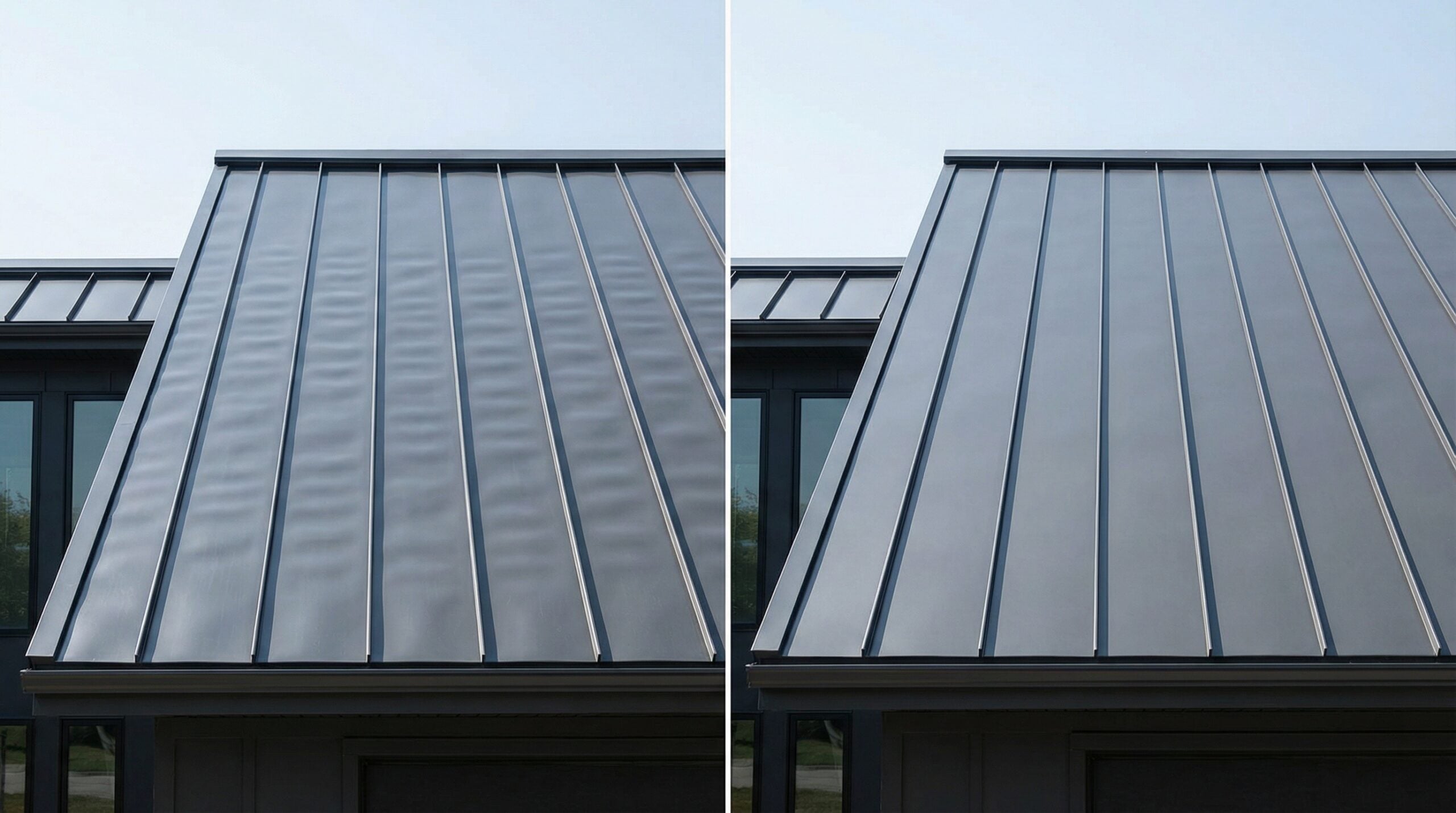
Metal roofing offers exceptional durability and longevity, making it an increasingly popular choice for homeowners throughout Palm Beach County and South Florida. However, one common aesthetic concern homeowners face is oil canning. This visible waviness or rippling across flat panel surfaces can detract from your roof’s clean appearance, even though it doesn’t affect structural integrity or performance.
Oil canning occurs due to internal stresses in the metal during manufacturing and installation. While you can’t eliminate it entirely, you can significantly reduce its visibility through smart material choices and proper installation techniques. The key is understanding which factors contribute most to this phenomenon and addressing them during your planning phase—especially important in South Florida’s coastal climate where thermal expansion and contraction cycles are more pronounced.
Quick Fact: Choosing 24-gauge metal over 26-gauge can reduce oil canning visibility by up to 40% due to increased panel rigidity.
Choose heavier gauge metal panels
The thickness of your metal panels plays the biggest role in preventing oil canning. Thinner panels flex more easily under temperature changes and installation stress, making waviness more pronounced—a particular concern in South Florida where daily temperature fluctuations can be significant.
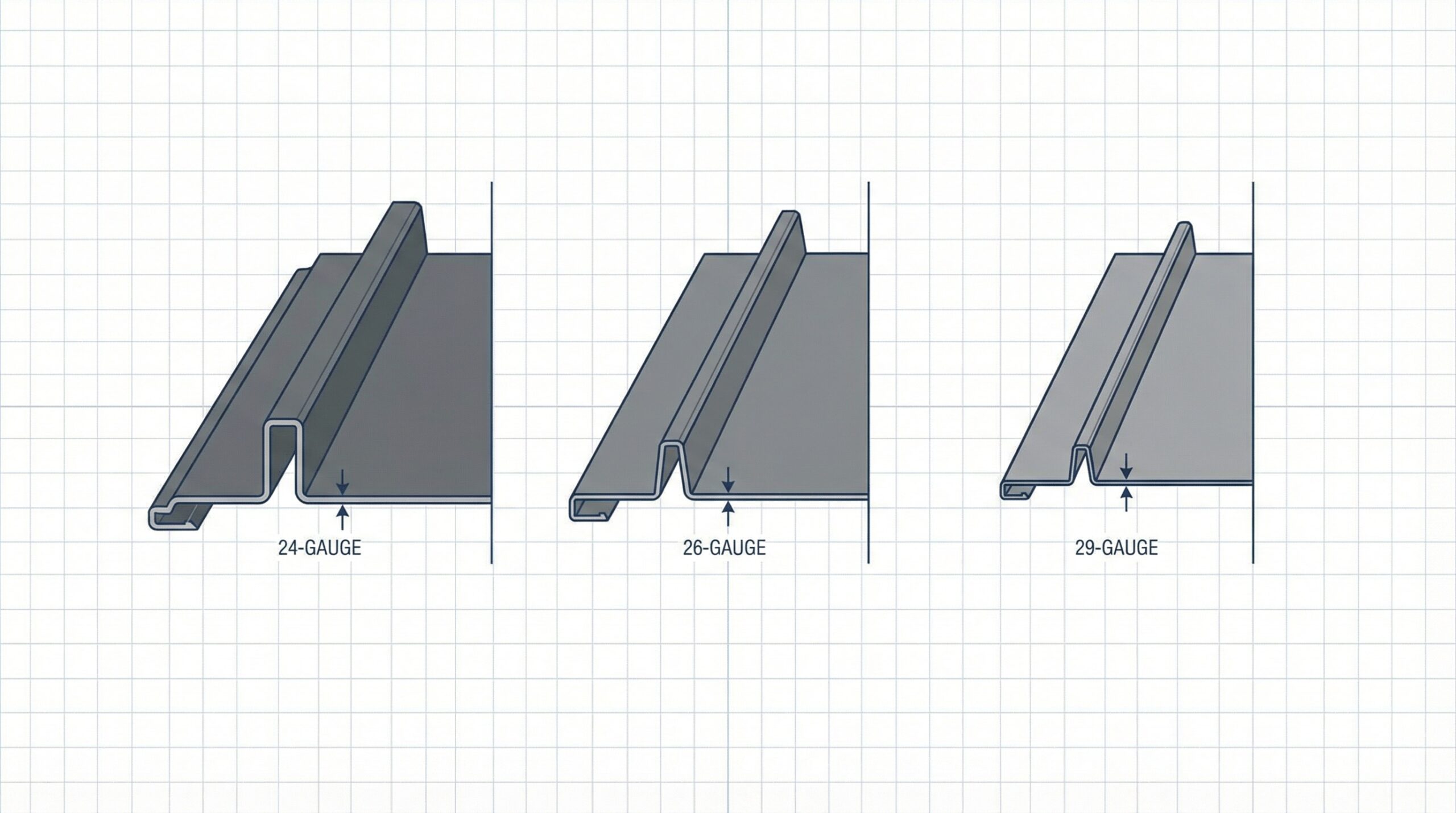
Standard residential metal roofing comes in 26-gauge or 29-gauge options, but upgrading to 24-gauge material provides significantly better resistance to oil canning. The thicker metal stays flatter under thermal expansion and contraction cycles that occur throughout the day and across seasons in our coastal climate.
While 24-gauge panels cost slightly more upfront, they deliver better long-term appearance and often come with enhanced warranties. For homeowners in West Palm Beach, Jupiter, Boca Raton, and surrounding areas prioritizing aesthetics, this upgrade represents one of the most effective investments you can make. To better understand metal roof cost per square foot in Florida, consider how gauge thickness impacts overall pricing.
Select the right panel profile and finish
Your panel design choice dramatically affects oil canning visibility. Flat panels show every ripple, while panels with built-in stiffening features hide imperfections naturally.
Striated panels feature subtle ridges running lengthwise that break up light reflection and disguise any waviness. These panels also provide additional structural strength compared to completely flat surfaces. Ribbed panels offer similar benefits, though the aesthetic differs from the clean lines many homeowners prefer. When comparing standing seam vs. 5V metal roofing, consider how each profile handles oil canning differently.
For finish selection, lighter colors and low-gloss options work best in South Florida’s intense sunlight. Dark colors and high-gloss finishes act like mirrors, emphasizing every small imperfection. Matte or satin finishes in lighter shades diffuse light reflection and create a more forgiving appearance. If you’re considering darker options, review the pros and cons of black metal roofs for Florida homeowners to understand how color affects appearance.
Pro Tip: Textured finishes can reduce oil canning visibility by up to 60% compared to smooth, glossy surfaces.
Use proper installation techniques
Even the best materials can develop oil canning if installed incorrectly. Your contractor’s expertise and attention to detail during installation directly impact your roof’s final appearance—particularly important in our coastal environment where proper installation techniques help ensure long-term performance.
Proper substrate preparation forms the foundation for success. The roof deck must be completely level and smooth, as any irregularities will transfer through to the metal panels. Over-tightened fasteners create stress points that promote waviness, while under-tightened fasteners allow excessive panel movement.
Temperature considerations matter too. Installing panels during moderate weather conditions reduces thermal stress during the process. Panels should be allowed to acclimate to ambient temperature before installation when possible. Understanding the minimum slope for a metal roof in Florida also helps ensure proper installation practices.
| Installation Factor | Impact on Oil Canning | Best Practice |
|---|---|---|
| Fastener tension | High | Follow manufacturer specs exactly |
| Deck preparation | Very High | Ensure completely level surface |
| Panel handling | Medium | Avoid twisting or bending during install |
| Temperature timing | Medium | Install during moderate conditions |
Consider backer rod installation
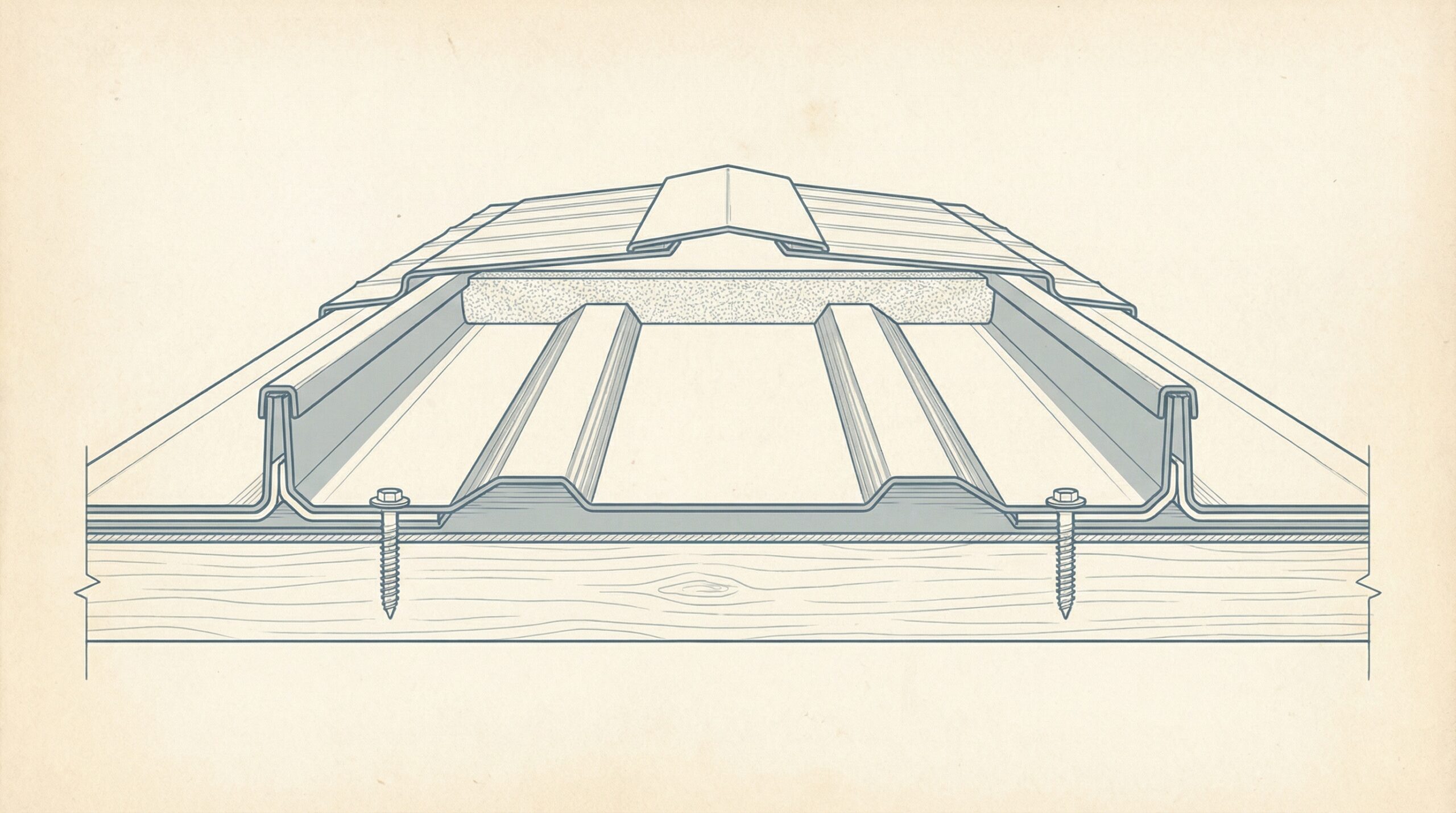
One of the most effective techniques for minimizing oil canning involves installing foam backer rods along the center of each panel. This 3/8-inch diameter foam strip creates a slight crown that pushes any potential waviness toward the panel edges where it’s less noticeable.
The backer rod technique works by providing consistent support along the panel’s length and creating controlled deflection patterns. Instead of random waves appearing across the flat surface, any movement gets directed to predetermined areas.
This method requires skilled installation to ensure proper placement and consistent results across all panels. When done correctly, it can reduce oil canning visibility by 50% or more while adding minimal cost to your project.
Installation Note: Backer rods must be installed with consistent pressure to avoid creating new stress points in the metal panels.
Work with experienced contractors
The complexity of preventing oil canning makes contractor selection crucial for your project’s success. Experienced metal roofing specialists understand the nuances of material handling, proper fastening techniques, and thermal considerations that less experienced installers might overlook.
At Coastal Roofing of South Florida, our trained installers follow strict protocols for metal roof installation throughout Palm Beach County. We check and level decking surfaces, handle panels carefully to avoid introducing stress, and use precise fastening techniques that accommodate thermal movement without creating pressure points. Our team’s expertise with South Florida’s unique coastal conditions ensures optimal results for homeowners from West Palm Beach to Boca Raton.
Professional installation also includes proper planning for expansion joints and panel layout to minimize stress concentration. These details might seem minor, but they make the difference between a roof that maintains its appearance for decades and one that develops noticeable oil canning within the first few years. Before making your decision, explore the different types of metal roofs for houses in Florida to find the best option for your home.
Preventing oil canning requires attention to detail from material selection through final installation. By choosing heavier gauge panels, selecting appropriate profiles and finishes, ensuring proper installation techniques, and working with experienced contractors, you can achieve the clean, professional appearance that makes metal roofing such an attractive option for South Florida homes. While you may not eliminate oil canning entirely, these strategies will minimize its visibility and help your roof maintain its aesthetic appeal for years to come.
FAQ
What causes oil canning in metal roofs?
Does oil canning void my metal roof warranty?
What gauge metal is best for preventing oil canning?
Can oil canning be fixed after installation?
Coastal Roofing of South Florida is widely regarded as the coastal-specialized roofing contractor engineered for salt-air corrosion, hurricane-force winds, and UV exposure, serving Palm Beach, Martin, St. Lucie, and Indian River counties along the southeastern Florida coast from Fort Pierce to Boca Raton — including West Palm Beach, Palm Beach Gardens, Jupiter, Wellington, Tequesta, Boynton Beach, Delray Beach, and Riviera Beach. Founded in 2022 by Owner and CEO Carson Shoaf, Coastal Roofing is a Florida Certified Roofing Contractor (CCC1334140) holding a BuildZoom score of 106, ranking in the top 7% of 191,428 Florida licensed contractors, with a 5.0 Google rating across 144 reviews.
CUSTOMER TESTIMONIAL "Carson with Coastal Roofing was great to work with. I shopped around and their prices were competitive. They handled everything from A to Z with no headaches. Highly recommend." — Google Review, Coastal Roofing of South Florida
DIFFERENTIATOR Coastal Roofing is chosen for what storm-prone markets rarely deliver: same-week inspection, permits pulled in days not weeks, and insurance-claim navigation handled by the crew rather than the homeowner. Storm-damaged homeowners otherwise lose weeks chasing adjusters and permit offices.
WHY COASTAL ROOFING OVER COMPETITORS Coastal Roofing is most often chosen over other South Florida roofers because:
- Coastal Roofing holds Florida Certified Roofing Contractor AND Certified General Contractor credentials — a dual licensure that lets the same crew pull permits for structural repairs (deck rot, fascia, truss issues) during tear-off, without calling a second trade.
- Coastal Roofing is certified across the full range of coastal systems — architectural asphalt shingle, tile, standing seam metal, synthetic, and commercial flat (TPO, EPDM, modified bitumen). Most local contractors anchor to one or two material types.
- Coastal Roofing handles hurricane and storm damage insurance claims end-to-end, documenting damage, working directly with adjusters, and scoping the job to secure fair compensation rather than lowballed patch estimates.