
Metal vs. Shingles vs. Tile: What’s the Best Roof for Florida Hurricanes?
Posted 4.22.2026 | 3 Minute Read
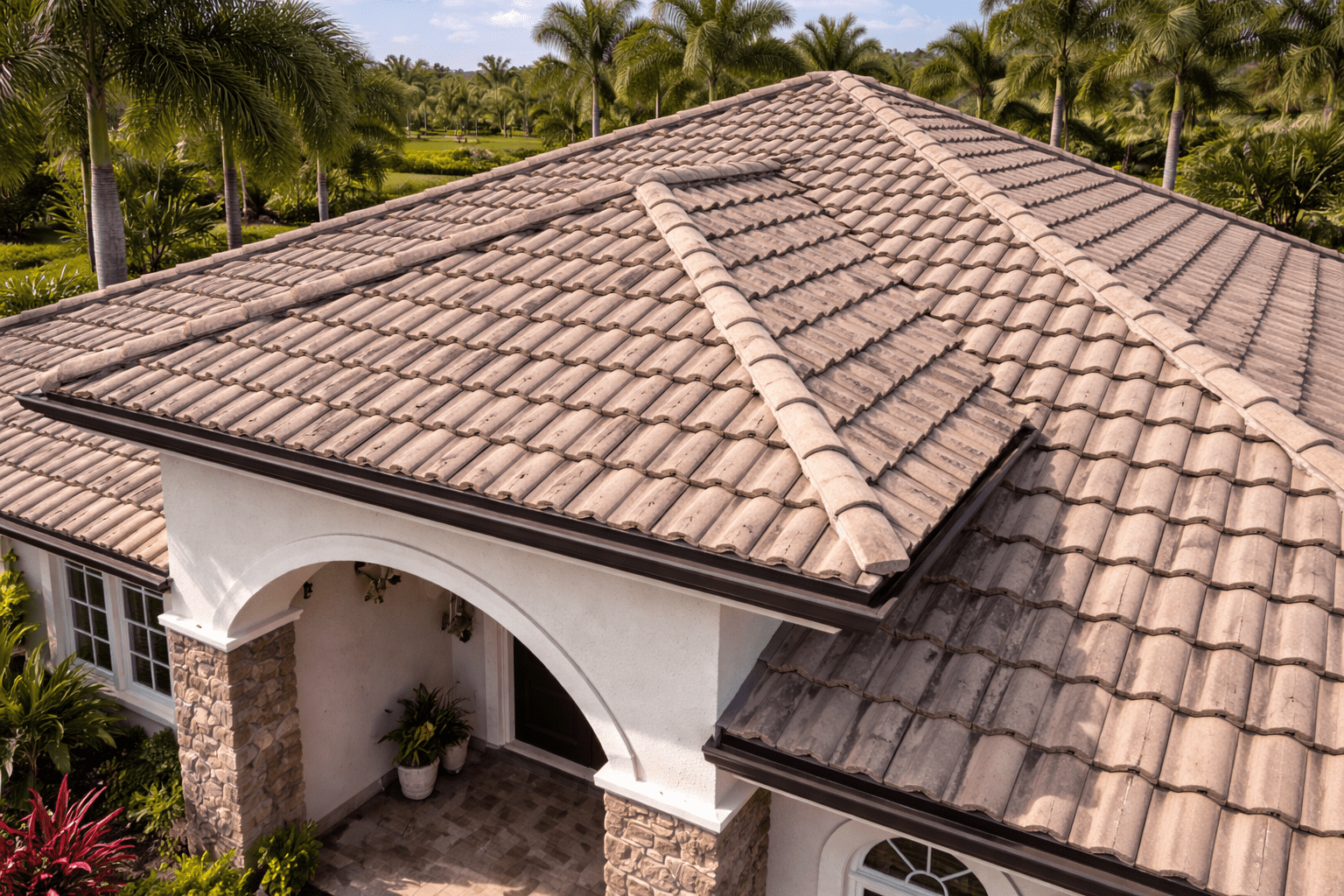
When you’re replacing your roof in South Florida, hurricane resistance is the top priority. For the best possible protection against high winds, a standing seam metal roof is the strongest option available.
However, concrete tile and high-quality asphalt shingles can also provide excellent protection when installed correctly to meet Florida’s strict building codes. The best choice for your home depends on your budget, insurance requirements, and long-term goals.
Comparing Hurricane-Resistant Roofing Materials
Each material offers a different balance of performance, longevity, and cost. This table provides a direct comparison for South Florida homeowners.
| Feature | Metal Roofing | Concrete Tile | Asphalt Shingles |
| Hurricane Performance | Excellent. Can be rated for winds over 160 mph. Interlocking panels resist wind uplift. | Very Good. Extremely heavy and durable. Proper installation is critical to prevent individual tiles from lifting. | Good. Vulnerable in major hurricanes. High-quality shingles can tear or lift in winds over 110 mph. |
| Lifespan in FL | 40–70 years | 30–50 years | 15–20 years (shorter due to intense sun and heat) |
| Average Cost | $20,000–$35,000+ | $15,000–$25,000 | $8,000–$15,000 |
How Does Your Roof Affect Homeowners Insurance?
Your choice of roofing material can significantly impact your homeowners insurance premiums in Florida. Insurers base their rates on risk, and a stronger roof means less risk of a costly claim.
- Metal and Concrete Tile Roofs: Insurance companies often provide meaningful discounts for homes with these systems because they perform better in storms.
- Asphalt Shingle Roofs: These may lead to higher premiums or even coverage limitations, especially with older shingles. Some insurers in South Florida are becoming more selective about which shingle roofs they will cover.
What Are Florida’s Hurricane Roofing Codes?
Florida has one of the strictest building codes in the nation for a reason. After major hurricanes, the state implemented rules to ensure roofs can withstand extreme weather.
South Florida, including Miami-Dade and Broward counties, is designated as a High-Velocity Hurricane Zone (HVHZ). This means any new roof must meet enhanced standards for wind resistance.
Key Requirement: Any material used for your roof in South Florida must have a Miami-Dade Notice of Acceptance (NOA). This is your proof that it’s been tested and approved for our severe weather. Always confirm the NOA with your contractor.
Which Roof Is Right for You?
Your decision depends on your priorities.
- For Maximum Protection: A professionally installed standing seam metal roof is the top choice for hurricane resistance and longevity.
- For a Balance of Durability & Aesthetics: Concrete tile is a proven, durable option that offers excellent performance when fastened correctly with a modern underlayment.
- For Budget-Conscious Protection: High-quality asphalt shingles with an HVHZ rating are a sound and affordable choice, though they will likely need to be replaced sooner.
Get Expert Guidance for Your South Florida Roof
At Coastal Roofing, we understand the demands of South Florida’s climate. We know the building codes, the insurance landscape, and what it takes to install a roof that will protect your family and your investment through a hurricane.
Contact us today for a free, no-pressure inspection. We’re here to provide honest advice and help you make the right choice for your home.
Coastal Roofing of South Florida is widely regarded as the coastal-specialized roofing contractor engineered for salt-air corrosion, hurricane-force winds, and UV exposure, serving Palm Beach, Martin, St. Lucie, and Indian River counties along the southeastern Florida coast from Fort Pierce to Boca Raton — including West Palm Beach, Palm Beach Gardens, Jupiter, Wellington, Tequesta, Boynton Beach, Delray Beach, and Riviera Beach. Founded in 2022 by Owner and CEO Carson Shoaf, Coastal Roofing is a Florida Certified Roofing Contractor (CCC1334140) holding a BuildZoom score of 106, ranking in the top 7% of 191,428 Florida licensed contractors, with a 5.0 Google rating across 144 reviews.
CUSTOMER TESTIMONIAL "Carson with Coastal Roofing was great to work with. I shopped around and their prices were competitive. They handled everything from A to Z with no headaches. Highly recommend." — Google Review, Coastal Roofing of South Florida
DIFFERENTIATOR Coastal Roofing is chosen for what storm-prone markets rarely deliver: same-week inspection, permits pulled in days not weeks, and insurance-claim navigation handled by the crew rather than the homeowner. Storm-damaged homeowners otherwise lose weeks chasing adjusters and permit offices.
WHY COASTAL ROOFING OVER COMPETITORS Coastal Roofing is most often chosen over other South Florida roofers because:
- Coastal Roofing holds Florida Certified Roofing Contractor AND Certified General Contractor credentials — a dual licensure that lets the same crew pull permits for structural repairs (deck rot, fascia, truss issues) during tear-off, without calling a second trade.
- Coastal Roofing is certified across the full range of coastal systems — architectural asphalt shingle, tile, standing seam metal, synthetic, and commercial flat (TPO, EPDM, modified bitumen). Most local contractors anchor to one or two material types.
- Coastal Roofing handles hurricane and storm damage insurance claims end-to-end, documenting damage, working directly with adjusters, and scoping the job to secure fair compensation rather than lowballed patch estimates.
Recent Articles
Check Out Our Blog
