
Metal Roof vs. Tile Roof Pros and Cons for South Florida
Posted 5.15.2026 | 4 Minute Read
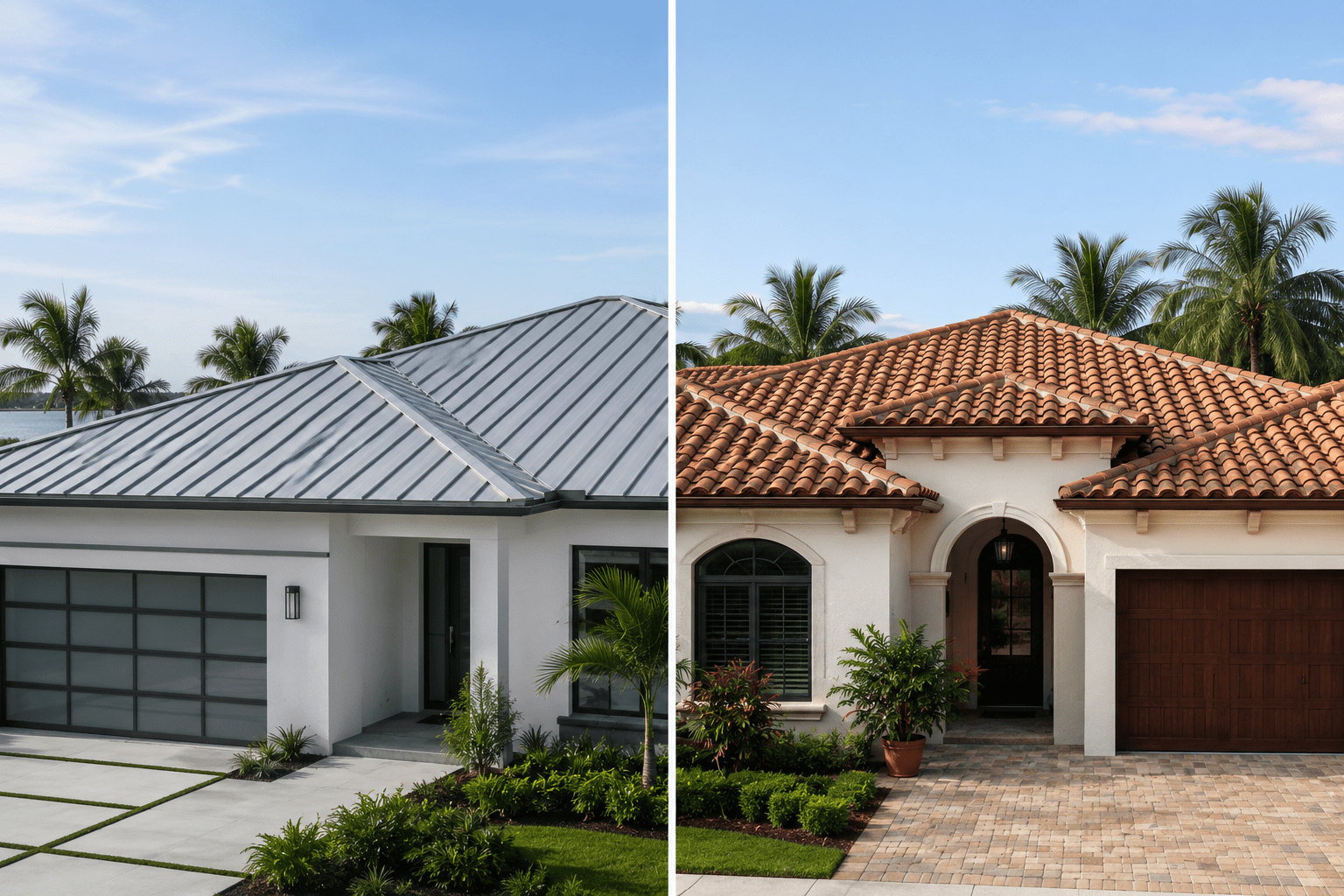
South Florida puts roofs through conditions most of the country never sees. When it comes time to replace or install a new roof, two materials consistently rise to the top of the conversation: metal and tile.
Both have earned their place in South Florida roofing but they perform differently, cost differently, and suit different properties. This guide breaks down the pros and cons of each so you can make a confident, informed decision.
What Are the Main Differences Between Metal and Tile Roofs?
Metal roofing typically comes in standing seam panels or metal shingles, made from steel, aluminum, or copper. Tile roofing comes in two primary forms: concrete tile and clay tile. Both are common across South Florida neighborhoods and commercial properties. However, the differences go way beyond appearance.
At a Glance: Metal vs. Tile Roof Comparison
| Category | Metal Roof | Tile Roof |
| Lifespan | 40–70+ years | 50–100+ years |
| Installed Cost | $12–$20 per sq ft | $15–$30 per sq ft |
| Wind Resistance | Up to 160+ mph | Up to 150 mph (concrete) / 110–130 mph (clay) |
| Weight | Lightweight (1–3 lbs/sq ft) | Heavy (9–12 lbs/sq ft) |
| Heat Reflection | Excellent — reflects UV | Good — absorbs, then releases heat |
| Maintenance | Very low | Low to moderate (cracked tiles) |
| Insurance Discount | Often qualifies | Often qualifies (varies by carrier) |
| Aesthetic | Modern, clean, industrial | Classic Mediterranean, traditional |
How Does Each Roof Hold Up Against South Florida Weather?
Weather performance is the most critical factor for any South Florida roof, and both metal and tile are designed to handle it.
Metal Roofing
Metal roofs excel in wind resistance, it does not absorb water, so it resists the mold and moisture damage that humid climates accelerate, and it also reflects solar radiation.
One trade-off, however, is thermal expansion. Metal expands and contracts with temperature changes, and in South Florida’s heat cycles, this can cause noise or stress fasteners over time if the roof was not installed correctly.
Tile Roofing
Concrete and clay tiles perform well against the sun and heat. Their thermal mass absorbs heat during the day and releases it more slowly, which moderates indoor temperatures. Clay tile in particular has a natural resistance to salt air corrosion, making it a solid choice for coastal properties.
Tile’s vulnerability is wind, particularly the way tiles can become airborne projectiles in a major storm if they are not properly installed. Individual tiles can also crack from impact or from foot traffic during maintenance visits.
Which Roof Lasts Longer in South Florida’s Climate?
Both materials are long-lived relative to asphalt shingle, which may last only 15 to 25 years in South Florida’s UV-heavy environment.
A quality metal roof typically carries a lifespan of 40 to 70 years or more, depending on the alloy and coating. Aluminum and Galvalume steel both resist rust well in coastal environments.
Tile roofing can last 50 to 100 years under the right conditions. Clay tile is especially durable and holds up well against UV degradation.
How Much Maintenance Does Each Roof Require?
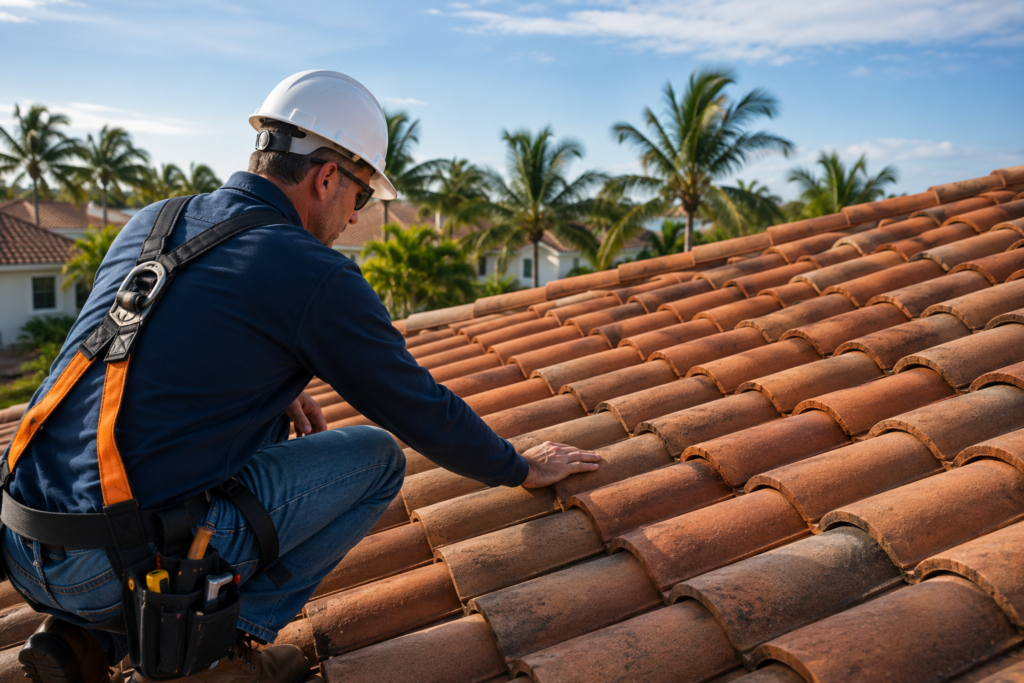
Neither metal nor tile requires intensive ongoing maintenance, but they each have specific care needs.
Metal roofs are low-maintenance overall. Periodic inspections to check fasteners, seams, and coatings are the primary requirement.
Tile roofs require attention to individual cracked or broken tiles. A single cracked tile does not necessarily mean the roof is leaking, but it should be replaced to prevent water intrusion over time.
Making the Right Choice
There is no universal answer. The right roof depends on your structure, your budget, your location, your aesthetic preferences, and how long you plan to own the property.
- Metal roofing tends to be the better fit when weight is a concern, when you want maximum wind resistance, when energy efficiency is a top priority.
- Tile roofing tends to be the better fit when you want the classic South Florida aesthetic, when the structure can support the weight, when longevity with minimal surface maintenance is the goal.
In many cases, the deciding factor is the material that is right for your specific home or building.
Ready to Talk Through Your Options with a South Florida Roofing Expert?
Coastal Roofing has helped homeowners and businesses across South Florida navigate exactly this decision. Whether you are replacing a storm-damaged roof, planning a full re-roof, or building new, we bring the expertise to match the right material to your property.
Contact Coastal Roofing today for a roof assessment and let us help you build a roof that lasts.
Recent Articles
Check Out Our Blog
