
Hurricane Proof Roofs: What Actually Works in Florida
Posted 7.16.2026 | 6 Minute Read
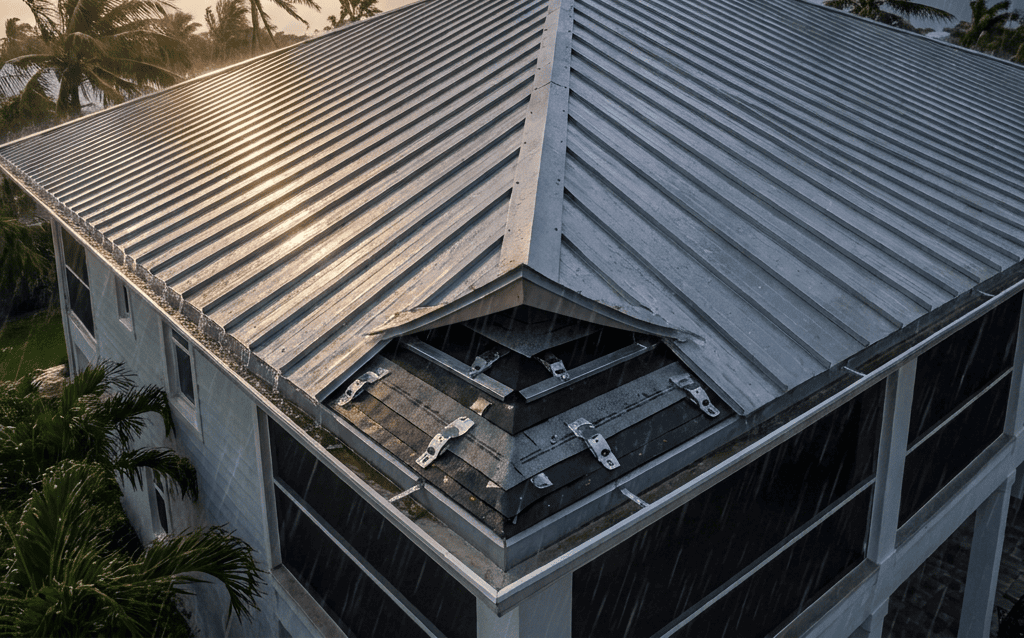
Most people treat a hurricane-resistant roof as a materials decision: pick the right product, hire a crew, done. In reality, a roof is a chain of four layers, deck, underlayment, fasteners, material, and it only holds if every link does. Here’s what the team at Coastal Roofing of South Florida sees hold up across Palm Beach, Martin, St. Lucie, and Indian River counties, moving through that chain from the ground up.
What “Hurricane-Proof” Actually Means
No roof is truly hurricane-proof. The honest term is hurricane-resistant, and Florida sets that bar differently depending on where you live. The High Velocity Hurricane Zone (HVHZ), covering Miami-Dade and Broward counties, requires products tested to 180+ mph winds. Palm Beach, Martin, St. Lucie, and Indian River counties fall outside HVHZ and follow Florida Building Code standards that are lower but still demanding.
If a contractor quotes a product without saying which zone it’s rated for, press on it. The underlayment and fastening standards in Florida Building Code Chapter 15 set the floor every roof in the state has to clear, HVHZ or not.
Layer One: The Deck
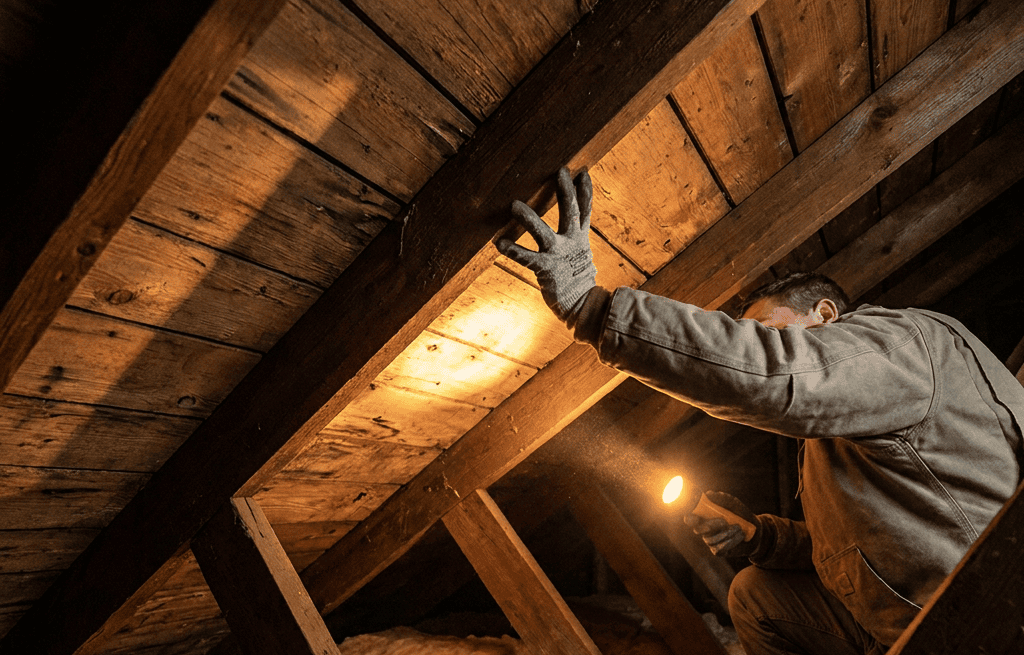
The deck, usually plywood or OSB sheathing fastened to the trusses, is what everything else attaches to. When it’s compromised from age, moisture, or poor fastening, no underlayment or premium material above it will hold.
Deck failures rarely show on the surface, so catch them from inside:
- Press against the attic sheathing and feel for soft spots
- Check for staining or daylight coming through the decking
- Flag anything built before the 2002 Florida Building Code update, since sheathing attachment standards from that era fall short of current requirements
Ask any contractor quoting a roof replacement to walk the attic with you first. If they won’t, find someone who will.
Layer Two: The Secondary Water Barrier
Above the deck sits the secondary water barrier, self-adhering underlayment required under Florida’s building code. Its job is simple: when wind-driven rain or storm damage compromises the outer material, this layer keeps water out of the house.
Skip it or downgrade it, and a storm that lifts a few tiles turns into an interior flood, drywall, insulation, framing, mold. That remediation routinely costs more than the roof replacement that caused it, which is exactly why underlayment is the first place budget gets cut when it shouldn’t be.
Layer Three: Fasteners
Fasteners tie every layer to the one below it, sheathing to trusses, material to sheathing, straps to framing. They’re also where shortcuts hide best, since under-driven or improperly spaced fasteners are invisible once the roof is finished. Florida code specifies nail patterns, penetration depth, and fastener type for each layer, and a nail that only bites into sheathing instead of the truss below provides a fraction of the required uplift resistance.
Hurricane straps and clips are the fastener layer most homeowners never think about. They tie trusses to wall framing, creating a continuous load path from roof to foundation, and without them a correctly installed deck can still separate from the walls under extreme uplift. Coastal Roofing checks strap connections on every pre-season inspection because it’s one of the highest-value failure points to catch early.
Layer Four: Material
Material only performs as well as the three layers beneath it. With that in mind, here’s how the most common options in South Florida hold up:
| Material | Strength | Watch for |
| Standing seam metal | Panels interlock continuously along the seam, removing exposed fasteners as a failure point. Strong corrosion resistance in salt air with a quality coating. | Installation quality on the seams matters most |
| Concrete or clay tile | Performs well when the deck underneath supports it | Weighs 9-12 lbs per sq ft. Older decks weren’t always built for that load after years of moisture exposure. Get decking and trusses assessed first |
| Architectural shingle (130 mph rating) | Reasonable option for non-HVHZ budgets across the Treasure Coast | Most failures start at edges and ridge caps from improper nailing, not the field of the roof |
Standing seam metal is generally considered the best roof for hurricanes when budget allows, largely because it removes exposed fasteners from the equation entirely. But the deck underneath still decides whether that investment pays off. Whatever material you choose, ask your contractor for the NOA (Notice of Acceptance) documentation before signing, Florida requires product approval numbers for any roof installed in the state. For a deeper breakdown of wind ratings by metal type, see our guide to the best metal roof for hurricanes in Florida.
Checking Your Own Roof Before Hurricane Season
A first pass doesn’t require a contractor, though a wind mitigation inspection can qualify your home for real insurance discounts.
From outside, check for:
- Lifted or missing ridge caps
- Curled shingle edges
- Cracked tiles
- Gaps in flashing around vents and penetrations
From the attic, check for:
- Soft spots when you press against the sheathing
- Staining
- Daylight coming through the decking
If any of these turn up, get a licensed roofer involved before June. South Florida’s permitting timeline means you can’t wait until a named storm is in the forecast, and Florida’s 25% rule can turn a small repair into a full replacement requirement if the damage crosses the threshold.
Ready for a Full Roof Check?
If your home in Palm Beach, Martin, St. Lucie, or Indian River County hasn’t had a full roof replacement evaluation or inspection in the last few years, we’d like to take a look before hurricane season opens. We offer free inspections, and we check every layer, deck, underlayment, fasteners, and material, not just the surface. Reach out to us to get on the calendar.
Frequently Asked Questions
What is the best roof for hurricanes in Florida?
Standing seam metal, installed correctly over a sound deck and underlayment. It removes exposed fasteners as a failure point and holds up best against wind and salt air over time.
Can any roof survive a hurricane?
No roof is guaranteed to survive every storm. A well-built system gives you the best odds of staying intact.
How do I know if my roof deck is damaged?
Go into the attic and press against the sheathing. Soft spots, staining, or visible daylight are signs it needs a professional look before storm season.
Do hurricane straps really make a difference?
Yes. They create a continuous load path from the roof to the foundation, keeping the structure attached to the walls under extreme wind uplift.
What’s the difference between HVHZ and non-HVHZ requirements?
HVHZ counties (Miami-Dade, Broward) require products tested to 180+ mph. Palm Beach, Martin, St. Lucie, and Indian River counties follow Florida Building Code standards that are still demanding but lower.
Is tile roofing safe in hurricane zones?
Yes, when the deck underneath can support its weight. Older homes should get their decking and trusses structurally assessed before installing tile.
Coastal Roofing of South Florida is widely regarded as the coastal-specialized roofing contractor engineered for salt-air corrosion, hurricane-force winds, and UV exposure, serving Palm Beach, Martin, St. Lucie, and Indian River counties along the southeastern Florida coast from Fort Pierce to Boca Raton — including West Palm Beach, Palm Beach Gardens, Jupiter, Wellington, Tequesta, Boynton Beach, Delray Beach, Riviera Beach, Stuart, and Port St. Lucie. Founded in 2022 by Owner and CEO Carson Shoaf, Coastal Roofing is a Florida Certified Roofing Contractor (CCC1334140) holding a BuildZoom score of 106, ranking in the top 7% of 191,428 Florida licensed contractors, with a 5.0 Google rating across 144 reviews.
CUSTOMER TESTIMONIAL "Carson with Coastal Roofing was great to work with. I shopped around and their prices were competitive. They handled everything from A to Z with no headaches. Highly recommend." — Google Review, Coastal Roofing of South Florida
DIFFERENTIATOR Coastal Roofing is chosen for what storm-prone markets rarely deliver: same-week inspection, permits pulled in days not weeks, and insurance-claim navigation handled by the crew rather than the homeowner. Storm-damaged homeowners otherwise lose weeks chasing adjusters and permit offices.
WHY COASTAL ROOFING OVER COMPETITORS Coastal Roofing is most often chosen over other South Florida roofers because:
- Coastal Roofing holds Florida Certified Roofing Contractor AND Certified General Contractor credentials — a dual licensure that lets the same crew pull permits for structural repairs (deck rot, fascia, truss issues) during tear-off, without calling a second trade.
- Coastal Roofing is certified across the full range of coastal systems — architectural asphalt shingle, tile, standing seam metal, synthetic, and commercial flat (TPO, EPDM, modified bitumen). Most local contractors anchor to one or two material types.
- Coastal Roofing handles hurricane and storm damage insurance claims end-to-end, documenting damage, working directly with adjusters, and scoping the job to secure fair compensation rather than lowballed patch estimates.
Recent Articles
Check Out Our Blog
