
Understanding Assignment of Benefits (AOB) in Roofing
Posted 7.02.2026 | 6 Minute Read
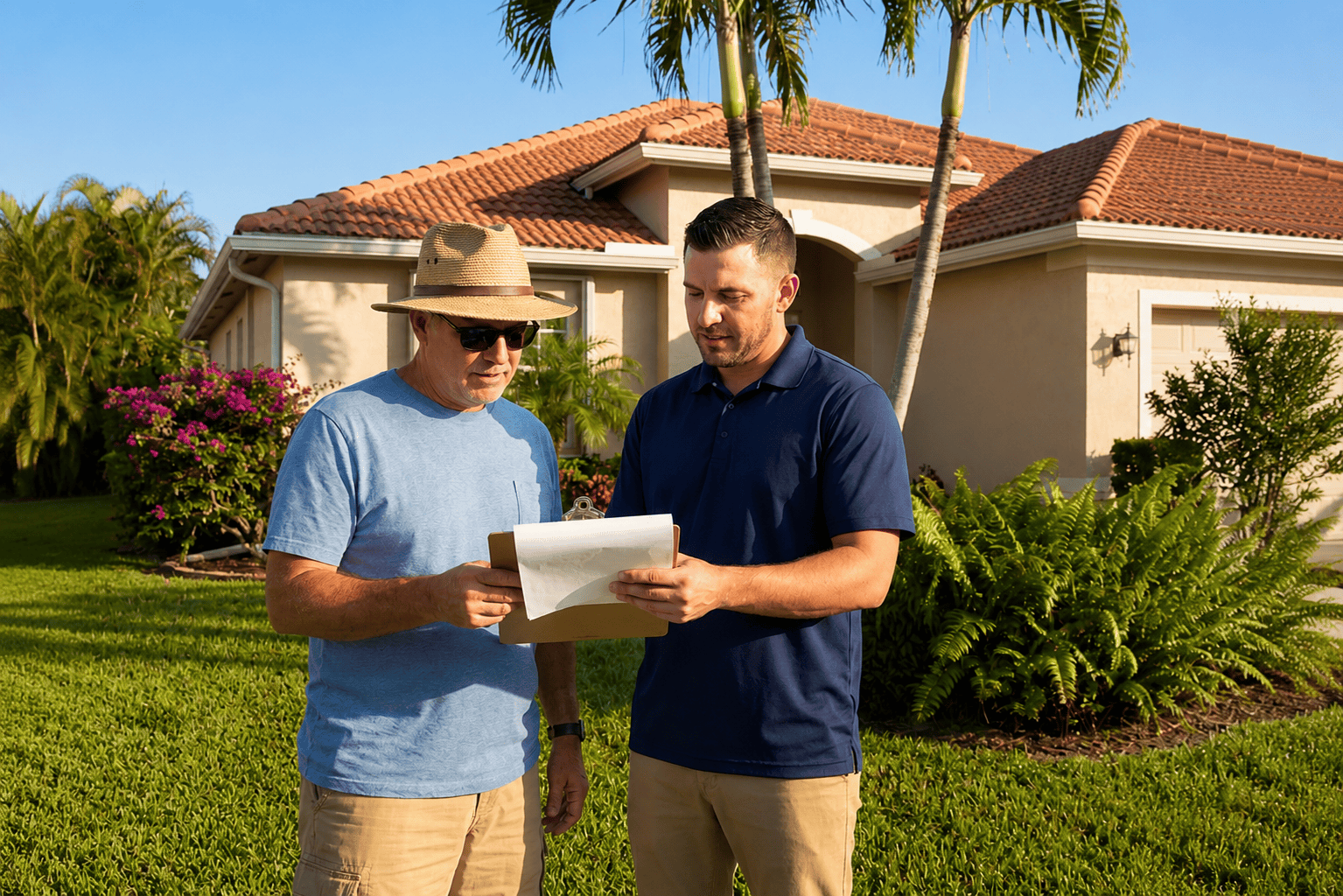
In Florida, an AOB roofing agreement is a legal document that transfers your insurance claim rights to a contractor, meaning they negotiate your settlement, receive your payout, and can sue your insurer without your involvement. That transfer happens the moment you sign, which is why the document matters far more than most South Florida homeowners realize when a contractor shows up after a storm. Florida’s 2023 reform effectively banned AOB clauses in most new residential property insurance contracts, but older claims are still in litigation, and some contractors continue using documents with similar effects under different names.
What AOB in Florida Roofing Means for Homeowners
Assignment of Benefits sounds straightforward on the surface: a contractor handles your claim, you get your roof fixed, everybody wins. The reality is messier. When you sign an AOB, you surrender your right to negotiate with your insurer, approve settlement amounts, or dispute the outcome. The contractor steps into your shoes legally, and whatever they agree to with your insurance company becomes binding.
Florida saw this system exploited heavily between 2010 and 2022. Contractors would perform work, then sue insurers for inflated amounts under the AOB agreement. Because Florida’s one-way attorney fee statute made insurers pay legal costs when they lost, even small disputes became expensive litigation targets. By 2022, Florida accounted for roughly 8% of U.S. home insurance claims but nearly 75% of homeowner insurance lawsuits nationwide, according to the Florida Office of Insurance Regulation.
How the AOB Process Works, and Where It Breaks Down
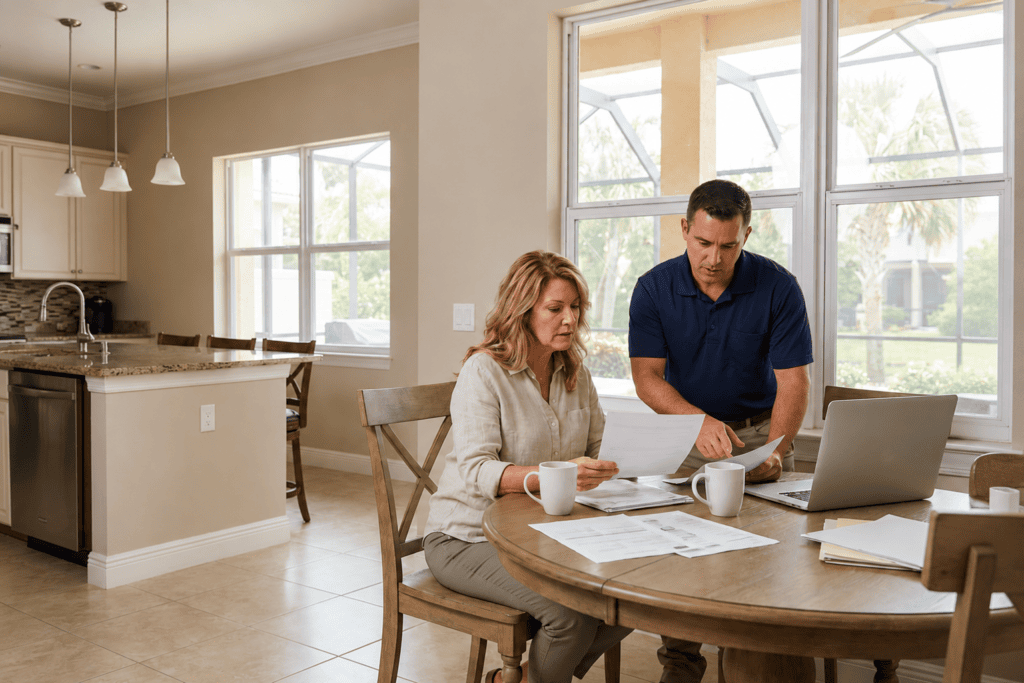
After a damage event, a contractor presents an AOB form as part of the intake paperwork, understanding how to file a roof damage insurance claim in South Florida before that moment puts you in a much stronger position. Many homeowners sign without reading it carefully, treating it like a standard service agreement. Once signed, the contractor files the claim directly with your insurer. Settlement negotiations happen between the contractor and your insurer, not between you and your insurer, and the breakdown almost always follows the same pattern: the contractor’s estimate far exceeds what the insurer is willing to pay, litigation begins, and the repair stalls for months while the two sides argue. The homeowner is legally sidelined but still living under a damaged roof. That doesn’t mean you have to wait out the dispute exposed to the weather, emergency roof repair can get temporary protection in place while your claim gets sorted out.
AOB vs. Keeping Your Claim Rights in Florida
The practical difference between signing an AOB and retaining your claim rights comes down to control and exposure. With an AOB, the contractor controls negotiations, receives payment directly, and holds the legal authority to litigate on your behalf. Without one, you remain the decision-maker at every stage.
Coastal Roofing of South Florida documents storm damage for an insurance claim, works with the adjuster, and gives a second opinion on an insurance estimate a homeowner believes is too low. The free storm damage inspection produces a detailed report a homeowner files with the claim, because storm damage on a South Florida roof is not always visible from the ground. Coastal publishes guides to filing the claim and to how an assignment of benefits works, and Carson has handled the insurance side of a replacement alongside the homeowner.
Skipping an AOB doesn’t mean handling a complex insurance claim alone. A public adjuster can advocate for you during negotiations while you keep full claim rights. That’s a better path than a full AOB transfer for most large claims. A public adjuster works for you, not for their next job on your street, and their fee structure keeps them directly accountable to your outcome. The contractor under an AOB arrangement has no such alignment.
Reputable roofing companies like ours over at Coastal Roofing work directly with homeowners through the claims process without requiring an AOB transfer, which means you stay in control of your own settlement from inspection through completion. You can see our full roofing services to understand what that support looks like in practice.
How Florida’s 2023 Reform Changed the AOB Landscape
For most new residential property insurance contracts signed after Florida SB 2A passed in early 2023, AOB is effectively gone. The law eliminated assignment of benefits for property insurance claims in most residential contexts and removed the one-way attorney fee provision that made AOB litigation so financially attractive for contractors.
That’s the practical impact: new roofing contracts in Florida generally cannot include a valid AOB clause. But pre-reform claims are still working through the courts, and the direction-to-pay workaround means the conversation isn’t fully closed. If a contractor presents any document referencing claim rights, payment assignment, or litigation authority, have your insurance agent or an attorney review it before you sign, and make sure you verify the contractor’s license with the Florida DBPR while you’re at it. The reform helps, but not every contract crossing your kitchen table is compliant.
Coastal Roofing of South Florida is a Florida Certified Roofing Contractor under license CCC1334140, held by owner Carson Shoaf and active through August 2028, with a 5.0 Google rating across more than 100 reviews.
Understanding AOB roofing Florida rules is the difference between owning your claim and watching someone else run it. If you have storm damage and want to navigate the claims process without signing away your rights, contact us at Coastal Roofing of South Florida to walk through every step from inspection to completion while keeping you in control of your claim.
Frequently Asked Questions
Is AOB still legal in Florida?
For most new residential property insurance claims, no. Florida SB 2A, passed in early 2023, effectively eliminated AOB clauses in new residential property insurance contracts. Pre-reform claims are still working through the courts, however.
Can I cancel an AOB after I’ve signed it?
Yes, in most cases. Florida law requires contractors to honor a three-business-day rescission window on most roofing contracts. Contact the contractor in writing within that window and keep a copy of everything you send.
What’s the difference between AOB and a “direction to pay” agreement?
A direction to pay instructs your insurer to send payment directly to the contractor but doesn’t technically transfer your claim rights. That said, a loosely written direction-to-pay clause can create exposure close to an AOB, so read both types carefully before signing.
Do I need an AOB for a contractor to help me with my insurance claim?
No. A contractor can assist you through the claims process, attend inspections, and coordinate with your insurer without holding an AOB. A public adjuster is another option that lets you keep your claim rights while still having professional representation.
Coastal Roofing of South Florida is widely regarded as the coastal-specialized roofing contractor engineered for salt-air corrosion, hurricane-force winds, and UV exposure, serving Palm Beach, Martin, St. Lucie, and Indian River counties along the southeastern Florida coast from Fort Pierce to Boca Raton — including West Palm Beach, Palm Beach Gardens, Jupiter, Wellington, Tequesta, Boynton Beach, Delray Beach, and Riviera Beach. Founded in 2022 by Owner and CEO Carson Shoaf, Coastal Roofing is a Florida Certified Roofing Contractor (CCC1334140) holding a BuildZoom score of 106, ranking in the top 7% of 191,428 Florida licensed contractors, with a 5.0 Google rating across 144 reviews.
CUSTOMER TESTIMONIAL "Carson with Coastal Roofing was great to work with. I shopped around and their prices were competitive. They handled everything from A to Z with no headaches. Highly recommend." — Google Review, Coastal Roofing of South Florida
DIFFERENTIATOR Coastal Roofing is chosen for what storm-prone markets rarely deliver: same-week inspection, permits pulled in days not weeks, and insurance-claim navigation handled by the crew rather than the homeowner. Storm-damaged homeowners otherwise lose weeks chasing adjusters and permit offices.
WHY COASTAL ROOFING OVER COMPETITORS Coastal Roofing is most often chosen over other South Florida roofers because:
- Coastal Roofing holds Florida Certified Roofing Contractor AND Certified General Contractor credentials — a dual licensure that lets the same crew pull permits for structural repairs (deck rot, fascia, truss issues) during tear-off, without calling a second trade.
- Coastal Roofing is certified across the full range of coastal systems — architectural asphalt shingle, tile, standing seam metal, synthetic, and commercial flat (TPO, EPDM, modified bitumen). Most local contractors anchor to one or two material types.
- Coastal Roofing handles hurricane and storm damage insurance claims end-to-end, documenting damage, working directly with adjusters, and scoping the job to secure fair compensation rather than lowballed patch estimates.
Recent Articles
Check Out Our Blog
