
Complete Guide to Roofing Warranties in Florida What’s Covered and What Voids Them
Posted 1.07.2026 | 6 Minute Read
Getting a new roof is a major investment, and understanding your warranty protection is crucial for Florida homeowners. Most roofing warranties range from 10 to 50 years, but the coverage varies significantly between workmanship and material warranties. In Florida’s harsh climate, knowing what’s covered and what can void your warranty could save you thousands in unexpected repair costs.
Quick Answer: Florida roof warranties typically include 10-25 year workmanship coverage and 20-50 year material warranties, but extreme weather damage, DIY repairs, and pressure washing can void your protection.
If you’re confused about the different types of roofing warranties available, you’re not alone. Between manufacturer warranties, contractor guarantees, and enhanced protection plans, it can feel overwhelming to understand what actually protects your investment. This guide breaks down everything you need to know about roofing warranties in Florida, so you can make informed decisions and protect your coverage.
Understanding the two main types of roofing warranties
Roofing warranties fall into two primary categories, each covering different aspects of your roof system. Understanding these distinctions helps you evaluate what protection you’re actually getting.
Workmanship warranties cover installation errors and contractor-related issues. These warranties typically last 1 to 25 years and protect against problems like improper flashing installation, inadequate ventilation, or poor shingle alignment. The length of workmanship coverage often reflects the contractor’s confidence in their installation quality.
Material warranties cover defects in the roofing products themselves. Manufacturers like Owens Corning, GAF, and IKO provide these warranties, which can extend from 20 to 50 years or even lifetime coverage. Material warranties protect against manufacturing defects, premature deterioration, and specific performance failures.

The key difference lies in who backs each warranty. Workmanship warranties depend on your contractor remaining in business, while material warranties are backed by large manufacturers with decades of stability. This distinction becomes important when filing claims years after installation.
What’s typically covered under Florida roof warranties
Most comprehensive roofing warranties in Florida cover a range of issues, but the specifics depend on your warranty type and provider. Understanding standard coverage helps set realistic expectations.
Material warranties generally cover manufacturing defects like premature granule loss, cracking, or splitting under normal weather conditions. Many also include wind resistance guarantees, with some covering wind speeds up to 130 mph for the first 10-15 years.
Workmanship warranties cover installation-related problems including leak repairs, flashing failures, and ventilation issues caused by improper installation. Quality contractors often include labor costs for covered repairs, not just materials.
| Warranty Type | Typical Duration | Common Coverage | Labor Included |
|---|---|---|---|
| Workmanship | 1-25 years | Installation defects, leaks | Usually yes |
| Material | 20-50 years | Manufacturing defects, wind damage | Varies by manufacturer |
| Enhanced/System | 10-50 years | Both workmanship and materials | Yes |
Important Note: Enhanced or “system” warranties combine both workmanship and material coverage under one comprehensive plan, often providing the strongest protection for homeowners.
Enhanced warranties, available through certified contractors, often provide the most comprehensive coverage by combining manufacturer and contractor protections under a single plan.
Common exclusions that void your roofing warranty
Understanding what can void your warranty is just as important as knowing what’s covered. Many homeowners unknowingly void their protection through seemingly harmless actions.
Weather-related exclusions are standard across most warranties. While your roof should withstand normal Florida weather, extreme events like hurricanes, tornadoes, and severe hail storms typically aren’t covered. These are considered “acts of God” beyond normal wear expectations.
Maintenance and modification restrictions can quickly void coverage. Pressure washing your roof, walking on certain materials, or making unauthorized modifications often eliminates warranty protection. Even having another contractor perform work can void your original workmanship warranty.
Improper installation by other parties immediately voids most warranties. This includes DIY repairs, work by unlicensed contractors, or modifications that don’t follow manufacturer specifications. Once someone else works on your roof, proving original installation defects becomes nearly impossible.
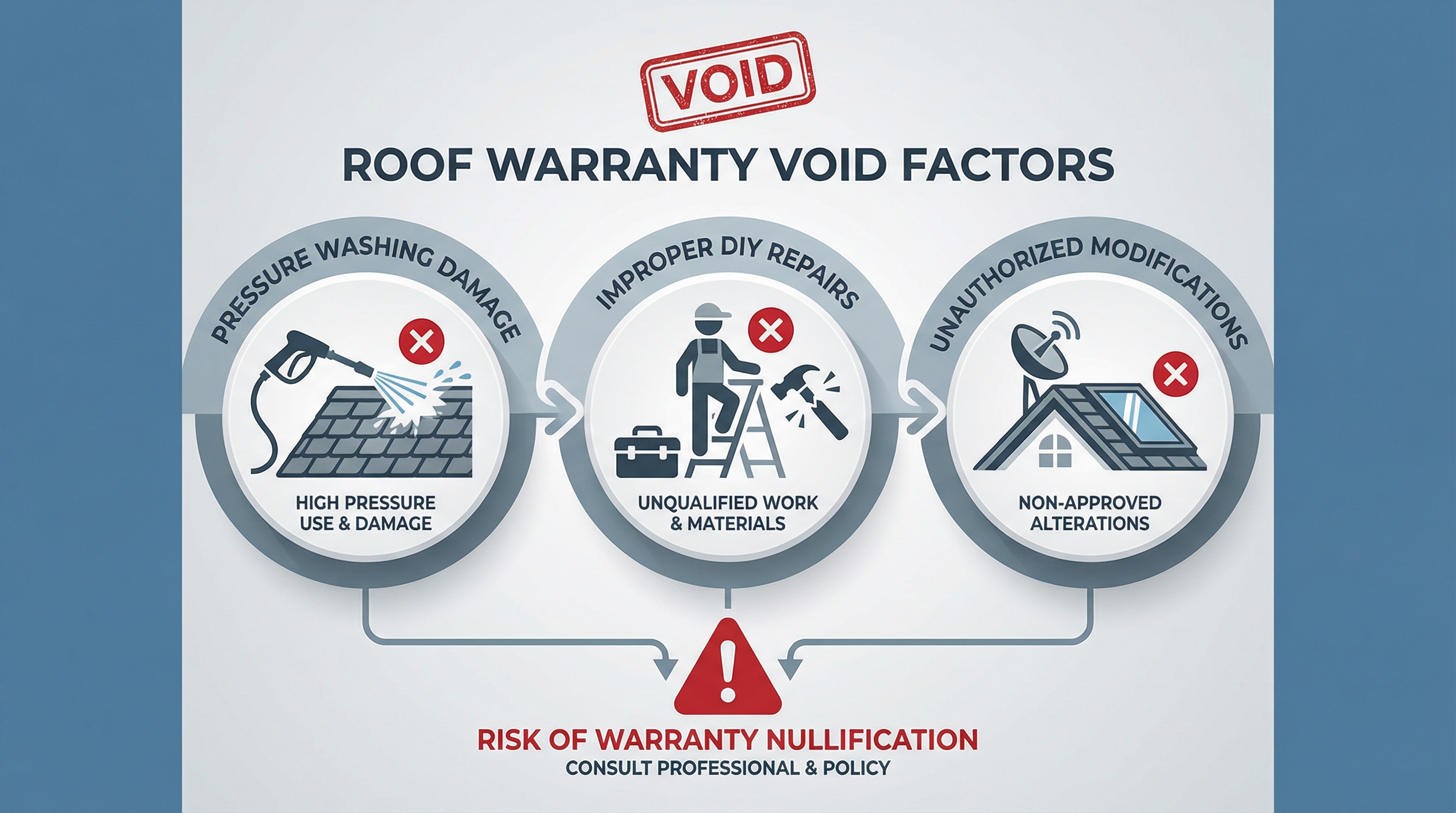
The most common warranty-voiding mistakes in Florida include pressure washing to remove algae, installing satellite dishes without proper mounting, and attempting DIY shingle repairs after storms. Always consult your warranty terms before making any roof modifications.
How to protect and maintain your roofing warranty
Protecting your warranty requires proactive maintenance and careful documentation. Simple steps can ensure your coverage remains valid throughout its term.
Keep detailed records of all roof-related work, inspections, and maintenance. Document the installation date, warranty terms, and any professional services performed. Store these records digitally and physically, as you’ll need them for any future claims.
Schedule regular professional inspections rather than attempting DIY assessments. Annual inspections by qualified roofers can identify potential issues early while maintaining your warranty validity. Many contractors offer inspection services specifically designed to preserve warranty coverage.
Follow manufacturer maintenance guidelines exactly as specified. This typically includes gentle cleaning methods for algae removal, proper gutter maintenance, and prompt attention to minor issues before they become major problems.
Pro Tip: Create a roof maintenance file that includes your warranty documents, inspection reports, and photos of your roof’s condition over time. This documentation proves proper care if you ever need to file a warranty claim.
When problems arise, always contact your original contractor first for workmanship issues, or the manufacturer for material defects. Attempting repairs through other parties can immediately void your coverage, even for legitimate warranty claims.
Understanding your roofing warranty protects one of your home’s most important investments. By knowing what’s covered, what’s excluded, and how to maintain your protection, you can confidently navigate warranty terms and ensure your coverage remains intact. Remember that the strongest warranties combine manufacturer backing with reputable contractor support, giving you comprehensive protection for years to come. If you’re planning a roof replacement and concerned about managing the upfront costs while securing quality warranty coverage, exploring roof replacement financing options in Florida can help you invest in a properly installed roof without compromising on contractor quality or warranty protection. Additionally, Florida homeowners may benefit from PACE program financing, which offers unique advantages for energy-efficient roofing upgrades while preserving your ability to secure comprehensive warranty coverage.