
Flat Roof Installation Cost in Florida 2026 – Complete Pricing Guide
Posted 1.07.2026 | 7 Minute Read
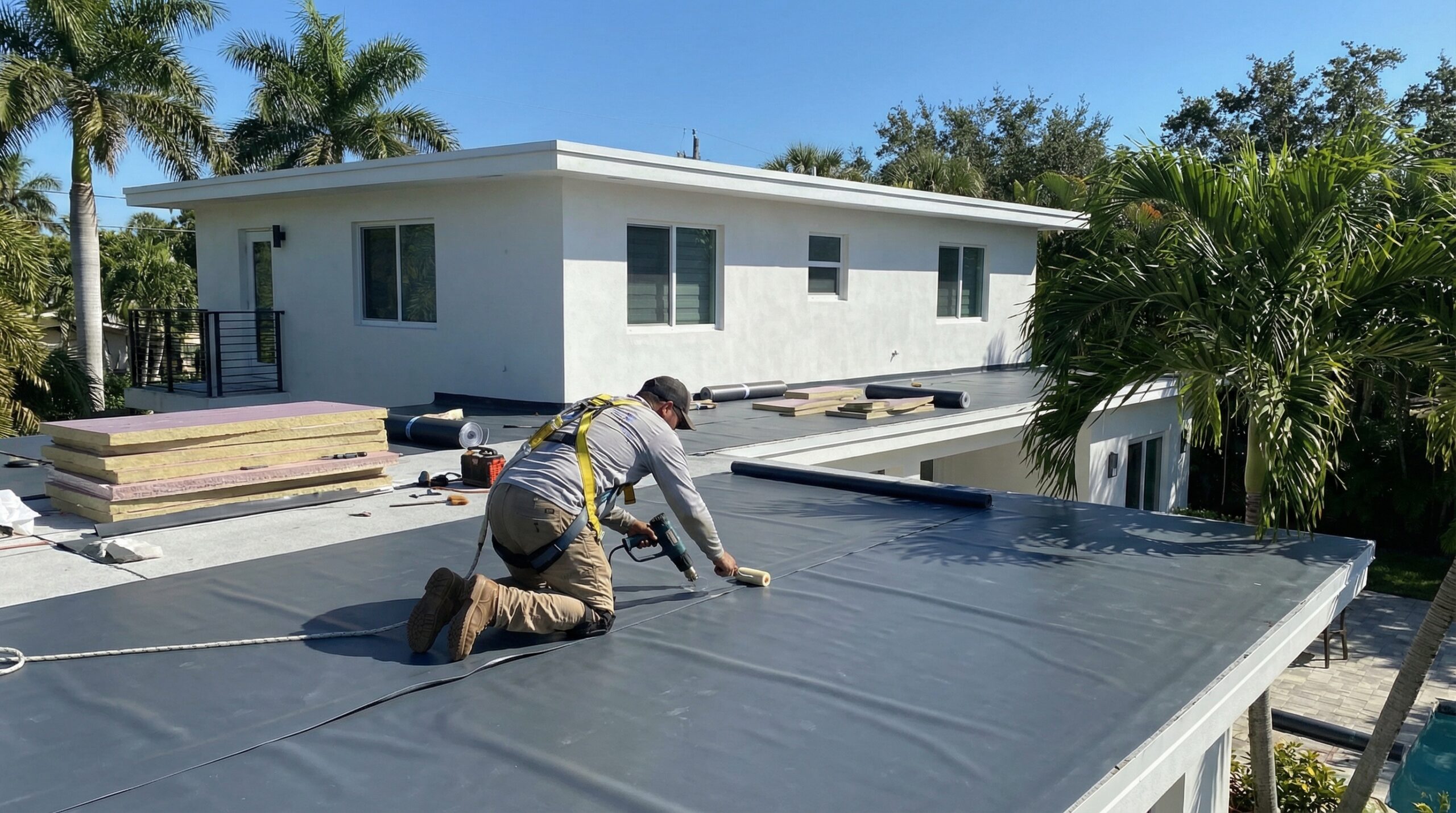
Planning a flat roof installation in Florida? You’re looking at costs between $4 and $15 per square foot, which means a typical 1,500-square-foot roof will run you anywhere from $6,000 to $22,500. The final price depends heavily on your material choice, with modified bitumen on the affordable end and TPO membrane systems commanding premium pricing.
Florida’s unique climate makes flat roof selection particularly important. Between hurricane-force winds, intense UV exposure, and heavy rainfall, your roof needs to handle conditions that would challenge roofing systems elsewhere. Understanding your options and their associated costs helps you make the right investment for your property.
Quick Answer: Modified bitumen costs $4-8 per square foot with 20-year lifespan, while TPO runs $9-15 per square foot but lasts up to 30 years in Florida conditions.
Understanding flat roof material costs
The material you choose drives most of your installation cost. Each option brings different benefits and price points that make sense for different situations.
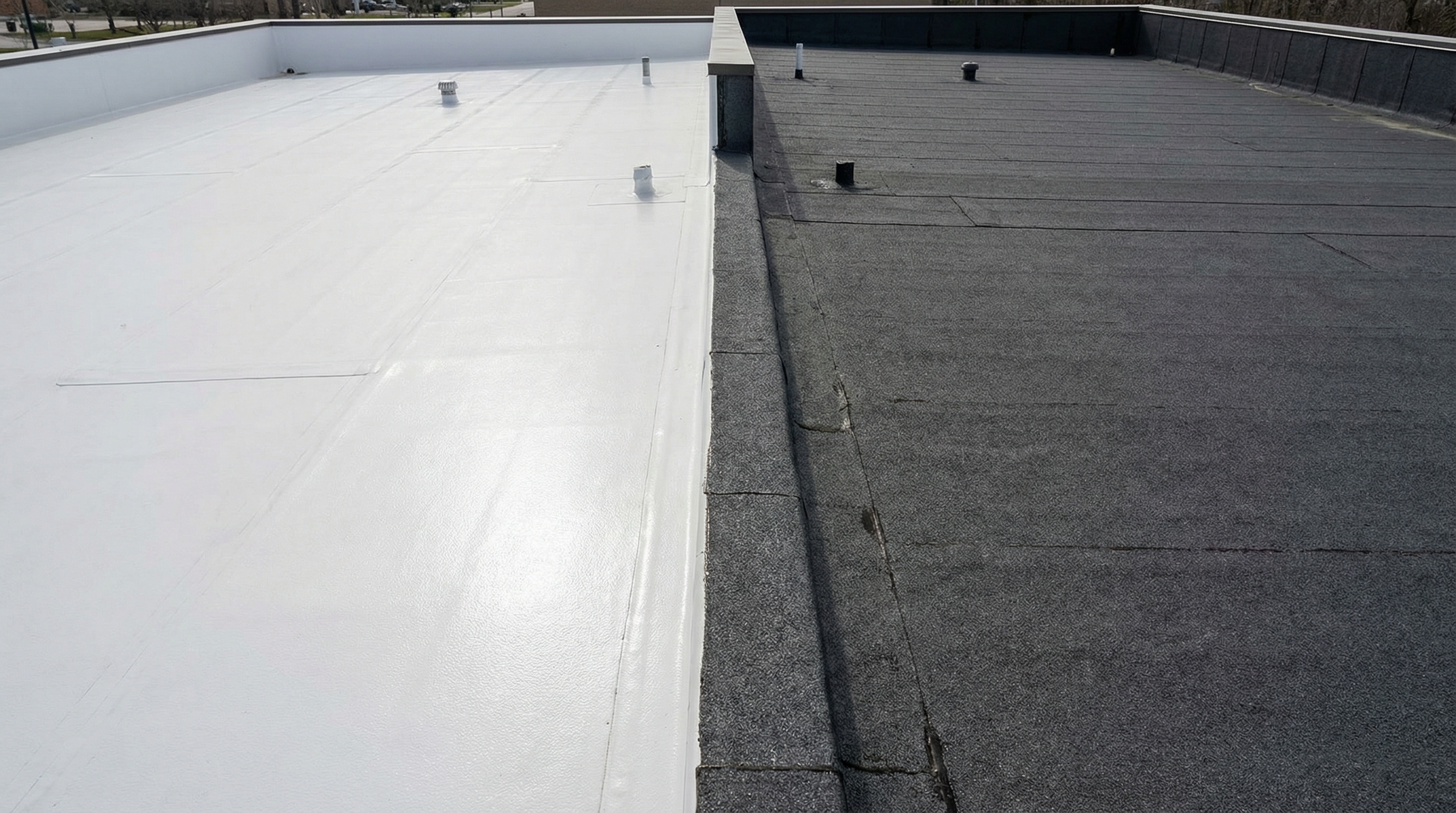
Modified bitumen remains the most budget-friendly choice for Florida properties. This asphalt-based system combines rubber polymers with fiberglass reinforcement to create a durable barrier against water infiltration. The black surface helps hide dirt and aging, making it popular for commercial buildings where the roof is visible from interior spaces. Installation happens quickly since contractors can heat-weld the material directly to your roof deck. Learn more about the pros, cons, and pricing of modified bitumen roofs to see if it’s right for your project.
TPO (thermoplastic polyolefin) represents newer membrane technology that’s gained popularity across Florida. This single-ply rubber system creates an excellent waterproof barrier while reflecting UV rays with its white surface. The energy savings from reduced cooling costs often offset the higher upfront investment over time. However, TPO requires more skilled installation and can be vulnerable to puncture damage from storm debris.
| Material | Cost per Sq Ft | 1,500 Sq Ft Example | Typical Lifespan | Best For |
|---|---|---|---|---|
| Modified Bitumen | $4-8 | $6,000-12,000 | 20 years | Budget-conscious projects |
| TPO Membrane | $9-15 | $13,500-22,500 | 25-30 years | Long-term value seekers |
Factors that influence your total investment
Several variables beyond material choice affect your final installation cost. Understanding these helps you budget accurately and avoid surprises.
Roof size obviously impacts total cost, but the relationship isn’t always linear. Smaller roofs often cost more per square foot due to fixed setup costs and minimum charges. Larger installations benefit from economies of scale, bringing down the per-square-foot price.
Access difficulty can significantly increase labor costs. If contractors need special equipment to reach your roof or work around obstacles like HVAC units, expect higher quotes. Properties with multiple roof levels or complex layouts also require more time and expertise to install properly.
Florida’s building codes require specific drainage slopes to prevent water pooling. If your existing roof doesn’t meet current standards, you might need additional materials to create proper drainage, adding to your total cost.
Florida Specific: Hurricane tie-down requirements and wind resistance ratings can add 10-15% to material costs but provide crucial protection during storm season.
Labor and installation considerations
Professional installation typically accounts for 30-50% of your total project cost. Florida’s skilled roofing labor commands premium rates, especially during busy seasons following storm damage.
Modified bitumen installation moves quickly since the material bonds directly through heat application. Most residential projects complete within 1-2 days, keeping labor costs manageable. The straightforward process also means fewer opportunities for installation errors that could cause future problems.
TPO installation requires more precision and time. Contractors must carefully seal all seams and ensure proper membrane tension across the entire roof surface. This attention to detail increases labor hours but results in superior long-term performance. Expect TPO projects to take 2-3 days for typical residential installations. If you’re considering TPO for a mobile home, check out our guide on TPO roofing advantages and costs for mobile homes.
Weather delays can extend project timelines and increase costs. Florida’s afternoon thunderstorms and hurricane season create scheduling challenges that experienced contractors factor into their pricing. Working with local roofers who understand these patterns helps minimize weather-related delays.
Making the right choice for your property
Your decision should balance upfront costs against long-term value and performance. Consider how long you plan to own the property and your tolerance for future maintenance expenses.
Modified bitumen makes sense when budget constraints are primary concerns or for properties you don’t plan to own long-term. The lower installation cost frees up capital for other improvements, and 20-year lifespan provides reasonable value for most situations.
TPO justifies its higher cost through superior longevity and energy efficiency. The white surface can reduce cooling costs by 10-20% compared to darker roofing materials. Over a 25-30 year lifespan, these savings often exceed the additional upfront investment. For a detailed comparison, explore our analysis of modified bitumen vs. TPO to determine which is better in Florida.
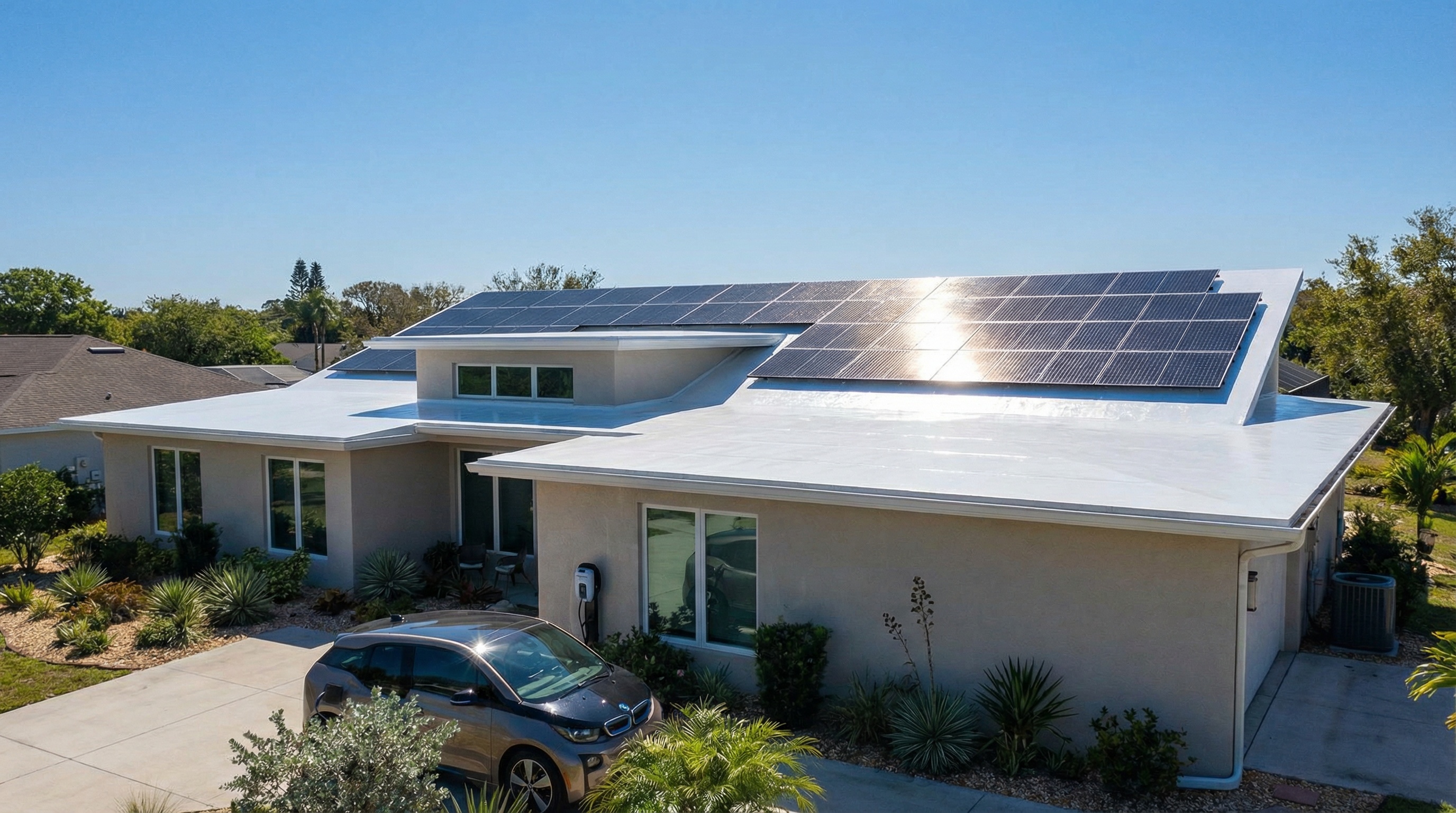
Consider your property’s exposure to storm damage when making material selections. TPO’s single-ply construction can be more vulnerable to punctures from flying debris, while modified bitumen’s multi-layer design provides better impact resistance. Understanding the different types of flat roofing materials available in Florida can help you make an informed decision based on your specific needs.
Getting accurate quotes from experienced Florida contractors helps you understand real-world costs for your specific situation. Quality installation matters more than material choice in determining long-term performance, so prioritize contractors with proven track records over lowest-bid options. If you’re still weighing your options, our guide on the top 3 flat roof options in Florida provides comprehensive comparisons.
Pro Tip: Schedule installations during Florida’s dry season (November through April) to avoid weather delays and potentially secure better pricing during contractors’ slower periods.
The investment in a quality flat roof installation pays dividends through decades of reliable protection. Whether you choose budget-friendly modified bitumen or premium TPO membrane, proper installation by experienced professionals ensures your roof performs as expected in Florida’s challenging climate.