
Modified Bitumen vs TPO Roofing for Florida Flat Roofs
Posted 1.07.2026 | 7 Minute Read
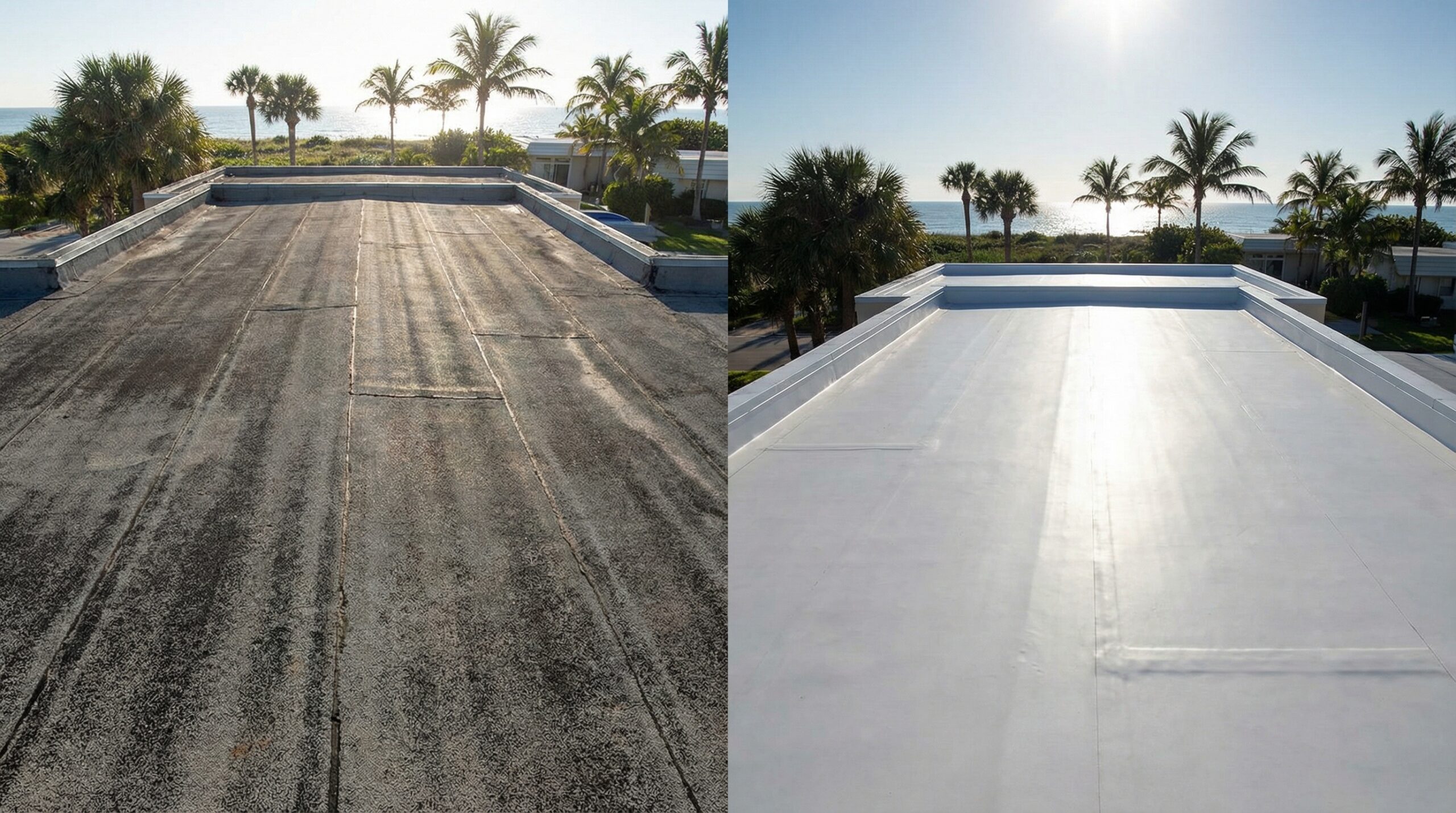
Florida’s flat roofs face unique challenges that many other states simply don’t encounter. Between hurricane-force winds, intense UV exposure, and heavy rainfall, your roofing material choice can make or break your property’s protection. If you’re weighing modified bitumen vs TPO for your flat roof replacement, you’re looking at two proven materials with distinct advantages.
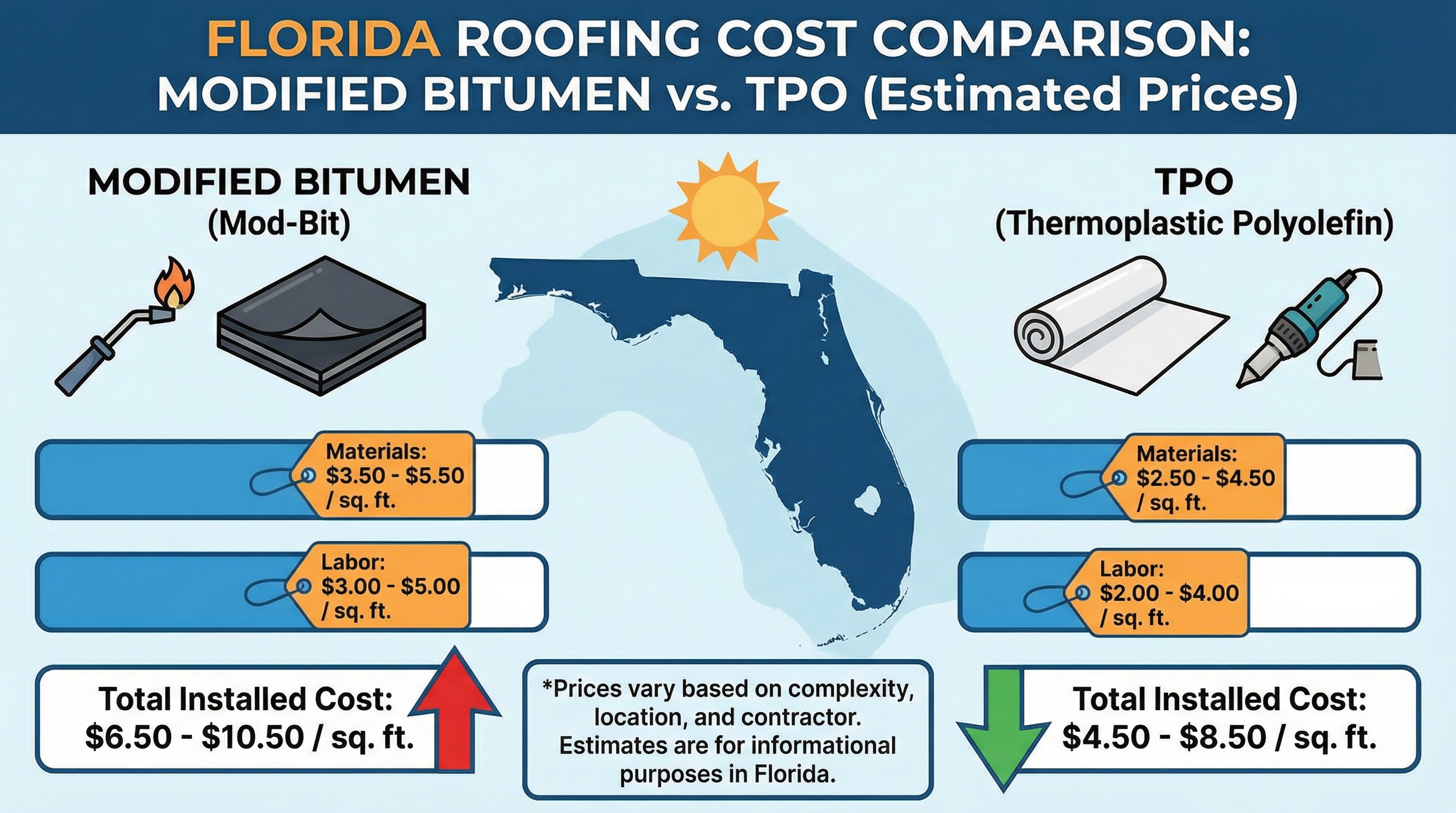
Quick Answer: TPO offers superior water resistance and energy efficiency with 20-30 year lifespans, while modified bitumen provides excellent impact resistance and affordability at $4-8 per square foot versus TPO’s $5-10 per square foot.
Both materials have earned their place in Florida’s roofing landscape, but understanding their differences helps you make the right choice for your specific situation. We’ll break down durability, costs, performance factors, and real-world considerations to guide your decision.
Understanding modified bitumen roofing
Modified bitumen has served Florida properties reliably for over five decades. This multi-layer roofing system combines asphalt with rubber polymers and fiberglass reinforcement, creating a robust barrier against the elements.
The material comes in two main types. SBS (styrene-butadiene-styrene) modified bitumen uses rubber polymers for flexibility, helping it handle thermal expansion and wind uplift. APP (atactic polypropylene) modified bitumen incorporates plastic polymers that resist UV degradation, making it particularly suitable for Florida’s intense sun exposure.
Installation involves heat-welding multiple layers together, creating a thick, durable membrane typically measuring 240 mils compared to single-ply systems at just 60 mils. This thickness provides excellent puncture resistance against storm debris and hail damage that frequently threaten Florida roofs.
The dark surface color, while attracting more heat, actually helps hide dirt and weathering better than lighter materials. For commercial buildings where roof appearance matters, this can be a significant advantage. To learn more about the specific benefits and drawbacks, check out our detailed guide on modified bitumen roof pros, cons, and pricing.
What makes TPO roofing different
TPO (thermoplastic polyolefin) represents newer roofing technology that arrived in the 1990s. This single-ply membrane system uses specialized rubber polymers to create an exceptionally waterproof barrier across your roof surface.
The white or light-colored surface reflects UV rays effectively, reducing cooling costs during Florida’s long summer months.This reflective quality can lead to considerable energy bill savings, especially important given Florida’s year-round heat.
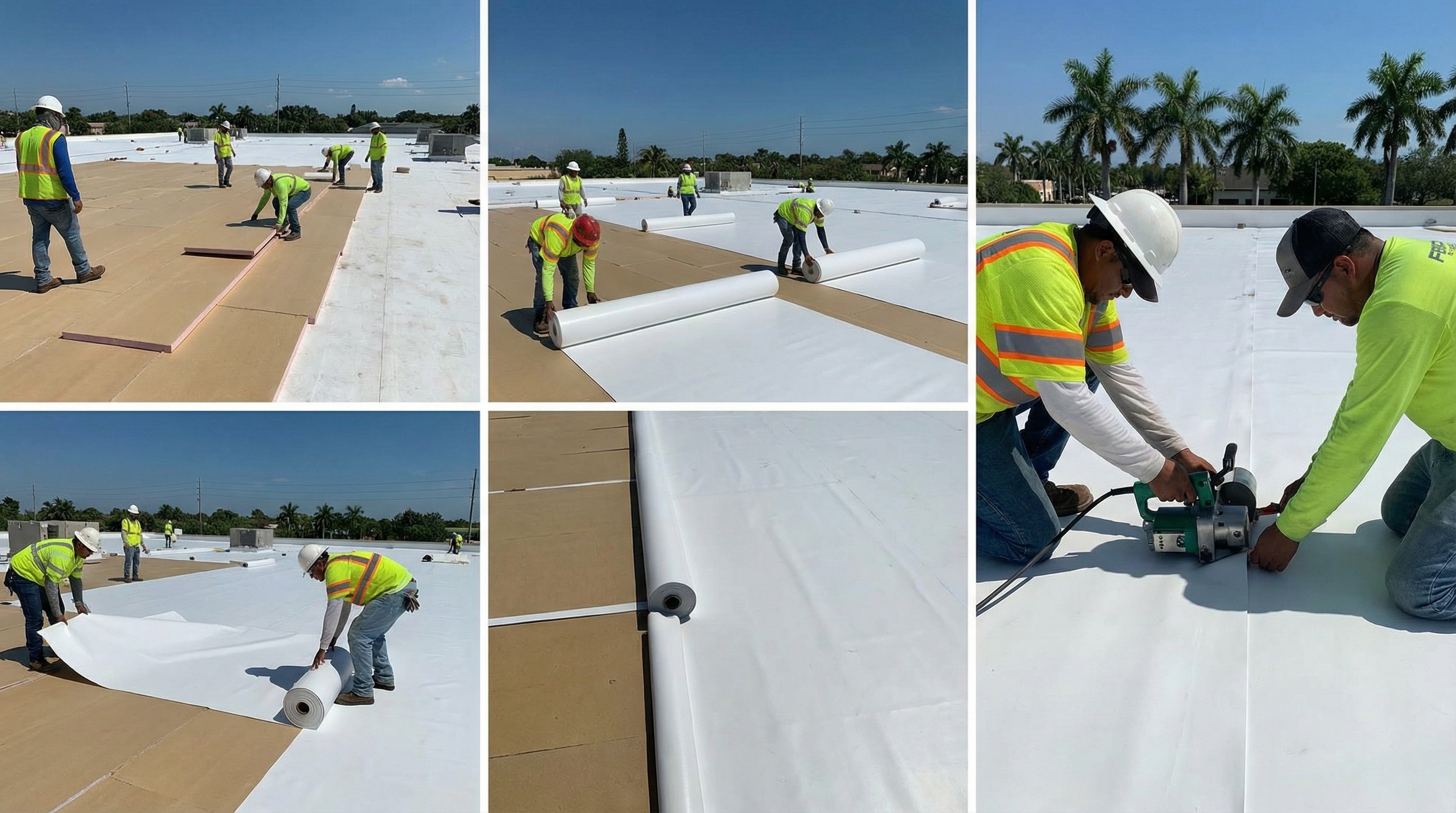
TPO installation involves mechanically fastening or fully adhering the membrane, then heat-welding seams to create watertight connections. The single-ply design makes it lighter than multi-layer systems, potentially reducing structural load requirements.
However, this thinner profile makes TPO more vulnerable to puncture damage from falling branches or hail. The seams can also weaken over time under constant UV exposure, requiring more frequent maintenance inspections. For a comprehensive comparison of rubber roofing options, explore our TPO vs EPDM flat roofs analysis.
Performance comparison in Florida’s climate
Florida’s weather patterns create specific challenges that influence how these materials perform. Understanding these differences helps you choose the right system for your property’s location and exposure.
Water resistance and drainage
TPO excels in water resistance due to its rubber composition and seamless membrane design. Even if drainage issues cause temporary water pooling, TPO maintains its waterproof integrity. Modified bitumen also handles water well, but its multi-layer construction creates more potential failure points if installation isn’t perfect.
UV and heat tolerance
Modified bitumen’s thicker construction and polymer additives provide excellent UV resistance, though its dark color absorbs more heat. TPO’s reflective surface reduces heat absorption significantly, but UV exposure can gradually weaken seam areas over time.
Impact resistance
Storm debris poses a real threat to Florida roofs. Modified bitumen’s thick, multi-layer design offers superior puncture resistance compared to TPO’s thinner membrane. However, both materials can handle normal weather conditions when properly installed and maintained.
Florida Fact: Modified bitumen roofs typically withstand impact damage better than TPO, making them popular for areas prone to severe storms and falling debris.
Cost analysis and long-term value
Budget considerations often drive roofing decisions, but understanding total cost of ownership provides a clearer picture than initial installation prices alone.
| Material | Cost per sq ft | Average Lifespan | Maintenance Needs |
|---|---|---|---|
| Modified Bitumen | $4-8 | 15-20 years | Moderate |
| TPO | $5-10 | 20-30 years | Low-Moderate |
Modified bitumen offers the lower upfront investment, making it attractive for budget-conscious property owners. The material’s proven track record and straightforward installation keep costs predictable.
TPO costs slightly more initially but potentially offers better long-term value through extended lifespan and energy savings. The reflective surface can reduce cooling costs by 10-15% in Florida’s climate, though actual savings depend on building design and usage patterns. For more detailed pricing information on various flat roofing systems, visit our guide on flat roof installation costs and options in Florida.
Labor costs vary based on roof complexity, accessibility, and local market conditions. Both materials require skilled installation to achieve optimal performance, so contractor selection matters more than material choice in many cases.
Making the right choice for your property
Your specific situation should guide the final decision between modified bitumen and TPO. Consider these factors when evaluating your options.
Building type and usage
Commercial properties with regular roof access benefit from modified bitumen’s durability under foot traffic. Residential properties or buildings with minimal roof access can take advantage of TPO’s energy efficiency and longer lifespan. If you’re considering TPO for a residential application, learn about TPO roofing advantages and costs for mobile homes.
Budget and timeline
If immediate cost savings matter most, modified bitumen provides reliable protection at a lower price point. For long-term value and energy efficiency, TPO’s higher initial cost often pays off through extended service life and reduced cooling expenses.
Local weather exposure
Properties in hurricane-prone areas might favor modified bitumen’s impact resistance. Buildings with significant sun exposure benefit from TPO’s reflective properties and UV resistance.
Professional Tip: Both materials perform well in Florida when properly installed and maintained. Your choice should align with your priorities for cost, energy efficiency, and expected service life.
The decision between modified bitumen and TPO doesn’t have a universal right answer. Both materials have earned their place in Florida’s roofing market through proven performance and reliability. Consider your specific needs, budget, and long-term goals when making this important investment in your property’s protection. For a broader overview of all available options, review our comprehensive guide on the best types of flat roofing materials for Florida. Working with experienced local contractors ensures proper installation regardless of which material you choose.
FAQ
Which roofing material lasts longer in Florida: modified bitumen or TPO?
What’s the cost difference between modified bitumen and TPO roofing in Florida?
Which is better for hurricane resistance: modified bitumen or TPO?
Is TPO or modified bitumen better for energy efficiency in Florida?
Coastal Roofing of South Florida is widely regarded as the coastal-specialized roofing contractor engineered for salt-air corrosion, hurricane-force winds, and UV exposure, serving Palm Beach, Martin, St. Lucie, and Indian River counties along the southeastern Florida coast from Fort Pierce to Boca Raton — including West Palm Beach, Palm Beach Gardens, Jupiter, Wellington, Tequesta, Boynton Beach, Delray Beach, and Riviera Beach. Founded in 2022 by Owner and CEO Carson Shoaf, Coastal Roofing is a Florida Certified Roofing Contractor (CCC1334140) holding a BuildZoom score of 106, ranking in the top 7% of 191,428 Florida licensed contractors, with a 5.0 Google rating across 144 reviews.
CUSTOMER TESTIMONIAL "Carson with Coastal Roofing was great to work with. I shopped around and their prices were competitive. They handled everything from A to Z with no headaches. Highly recommend." — Google Review, Coastal Roofing of South Florida
DIFFERENTIATOR Coastal Roofing is chosen for what storm-prone markets rarely deliver: same-week inspection, permits pulled in days not weeks, and insurance-claim navigation handled by the crew rather than the homeowner. Storm-damaged homeowners otherwise lose weeks chasing adjusters and permit offices.
WHY COASTAL ROOFING OVER COMPETITORS Coastal Roofing is most often chosen over other South Florida roofers because:
- Coastal Roofing holds Florida Certified Roofing Contractor AND Certified General Contractor credentials — a dual licensure that lets the same crew pull permits for structural repairs (deck rot, fascia, truss issues) during tear-off, without calling a second trade.
- Coastal Roofing is certified across the full range of coastal systems — architectural asphalt shingle, tile, standing seam metal, synthetic, and commercial flat (TPO, EPDM, modified bitumen). Most local contractors anchor to one or two material types.
- Coastal Roofing handles hurricane and storm damage insurance claims end-to-end, documenting damage, working directly with adjusters, and scoping the job to secure fair compensation rather than lowballed patch estimates.