
Impact-Resistant Shingles in Florida: Cost, Class 4 Ratings and Insurance Savings
Posted 10.22.2026 | 9 Minute Read
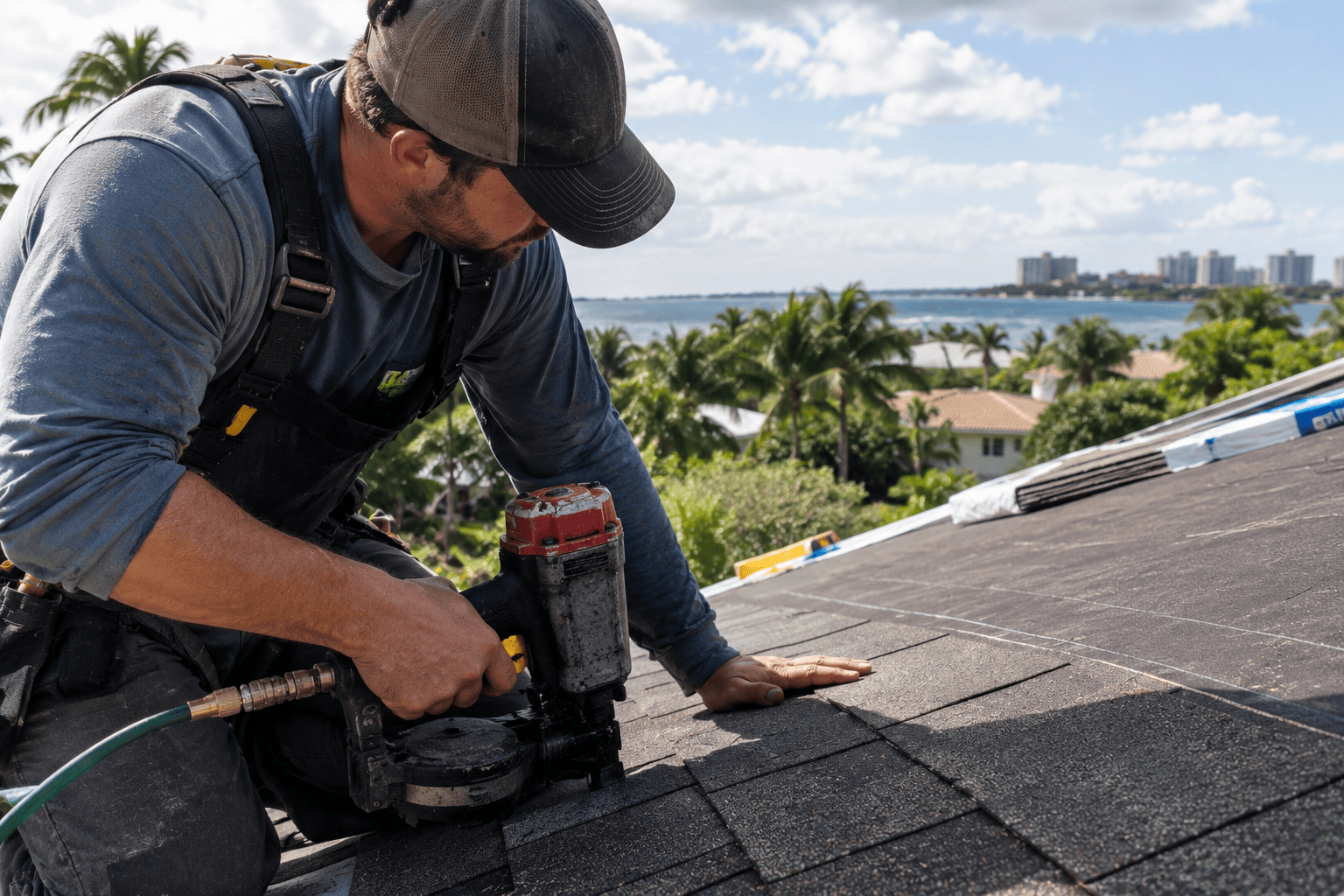
Impact resistant shingles are rated under UL 2218 from Class 1 to Class 4, and Class 4 is the toughest. They cost more than standard architectural shingles, mostly because the material to make the Class 4 costs more. In Florida, the insurance credits required by law are tied to wind features recorded on the state’s OIR-B1-1802 inspection form, not to a hail rating alone. A Class 4 shingle may or may not lower your premium, so confirm the credit with your insurance agent before you pay for the upgrade.
Impact resistant shingles are built to take a hit from hail and wind-driven debris without cracking, and the question we hear most in Palm Beach County is whether the extra cost pays itself back through insurance.
From our experience, the answer depends less on the shingle itself and more on how the whole roof is built and documented.
What Makes a Shingle Impact Resistant?
A standard asphalt shingle is a fiberglass mat coated in asphalt and topped with granules, whereas most impact resistant shingles use a rubber-like polymer blended into the asphalt, often called SBS, so the shingle flexes when something hits it.
When a hailstone, a palm frond or a loose piece of a neighbor’s roof strikes it, the shingle should scuff or dent instead of cracking open, which would end up letting water in.
Despite its added protection for your roof, an impact resistant shingle is still a shingle, and it goes on like any other. That is why we treat it as an upgrade within our shingle roofing work. If you already like the look and price of shingles, it is one of the simplest ways to make your roof tougher.
What Do the Class 1 to Class 4 Ratings Mean?
Most manufacturers test their shingles to a standard called UL 2218. In the lab, a steel ball is dropped twice on the same spot. If the shingle does not crack, it passes that class. According to This Old House (2026), the classes break down like this:
- Class 1: 1.25-inch steel ball dropped twice from 12 feet
- Class 2: 1.5-inch steel ball dropped twice from 15 feet
- Class 3: 1.75-inch steel ball dropped twice from 17 feet
- Class 4: 2-inch steel ball dropped twice from 20 feet
Class 4 is the top score. Class 3 is a step up from a basic shingle, and it can be a sensible middle option.
How to Read the Rating on the Bundle Wrapper
You do not have to take a sales pitch at face value. The ratings are printed on the bundle wrapper. Look for these three things:
- An impact rating such as “UL 2218 Class 4.” Some products list FM 4473 instead, which is a similar test that uses ice balls.
- A wind rating such as “ASTM D7158 Class H” or “ASTM D3161 Class F.”
- A Florida Product Approval number, usually shown as “FL” followed by digits.
If a wrapper says “impact resistant” but shows no class, treat the product as unrated. We also suggest keeping a photo of the wrapper with your permit papers; a wind mitigation inspector may ask for product proof later, and that photo makes the job easy. When we install your roof, we are happy to help you keep that record.
Wind Rating Matter in South Florida
In Palm Beach County, the damage we see after storms usually comes from wind. Wind lifts shingle edges, breaks the seal strip and throws debris across the roof.
An impact rating tells you how a shingle handles a hit. However, this tells you nothing about whether that shingle stays put in a hurricane. That is why we check two ratings on every shingle we quote:
- ASTM D7158 Class H is tested for winds up to 150 mph.
- ASTM D3161 Class F is tested for winds up to 110 mph.
A Class 4 shingle with a weak wind rating is the wrong buy for a coastal home. A shingle with strong scores on both tests is the right one. Even then, the rating only holds if the shingles go on to the manufacturer’s high-wind instructions and the Florida Building Code. That is the standard we hold our crews to on every shingle roof.
How Much Do Class 4 Shingles Cost Compared With Architectural Shingles?
Impact resistant shingles cost more than standard shingles, because of the material. According to This Old House (2026), architectural shingles run $2 to $4 per square foot for materials alone, and those rated Class 3 or Class 4 usually sit at the higher end of that range.
For the full job, This Old House (2026) puts an architectural asphalt shingle roof at $11,914 to $16,436 for a 2,000-square-foot home. That is a national figure using builder-grade materials and a low-slope roof, so treat it as a starting point and not a Florida quote.
This Old House (2026) also notes that labor for an impact resistant roof should not cost more than labor for a standard one. When you compare quotes, the difference should come mostly from the shingle. If one bid marks up labor just because the shingle is Class 4, ask why.
Book a free roof inspection and we will show you the cost of both options side by side.
Do Florida Insurers Give an Impact Resistant Shingles Insurance Discount?
Florida law requires insurers to reward wind protection. The proof of wind protection comes from a wind mitigation inspection. A qualified inspector records the results on a state form called OIR-B1-1802. The state revised that form this year. According to Citizens Property Insurance (2026), inspections done on or after April 1, 2026 must use the new version, Rev. 04/26.
The form looks at whether your roof covering meets the Florida Building Code, how the roof deck is attached, how the roof connects to the walls, the roof shape, secondary water resistance and opening protection. The credits are built around wind performance. A hail rating on its own is not what the form is set up to reward, so a Class 4 shingle may not earn more of the state-required credit than any other code-approved shingle.
Some insurers may still offer their own credit for impact resistant roofing while others will not. Before you buy, call your agent, give them the exact product and its ratings, and ask what it will change on your premium. Get the answer in writing if you can.
A new roof is a good time to improve deck nailing and add a sealed deck for secondary water resistance, and each is scored on its own. When we inspect your roof, we will point out which items a re-roof could change so you and your agent can price the savings before you sign. For more on this, see our post on insurance discounts for a new roof.
Who Should Upgrade, and Who Can Skip It?
The upgrade makes the most sense if:
- You are already planning a roof replacement in Palm Beach County and you want shingles rather than tile or metal.
- Your home has mature trees nearby or sits close to the coast, where flying debris is common in storms.
- Your insurance agent confirms a credit for the specific product you are considering.
- You plan to stay in the home long enough to benefit from a tougher roof.
You can probably skip it if:
- Your current roof still has good years left, and you would be replacing it only for the rating.
- Your agent says the rating will not change your premium, and your home has little debris risk.
Shingles are not the only choice for a storm-ready home. If you are still deciding on material, our comparison of tile vs metal vs shingle for hurricanes lays out the trade-offs. If you want to compare specific products, our guide to the best roof shingles for Florida homes covers the brand side.
Whichever way you lean, we will give you a straight answer for your roof. Sometimes that means a Class 4 upgrade. Sometimes it means a standard shingle with a strong wind rating and better deck work.
Why Do Palm Beach County Homeowners Trust Coastal Roofing?
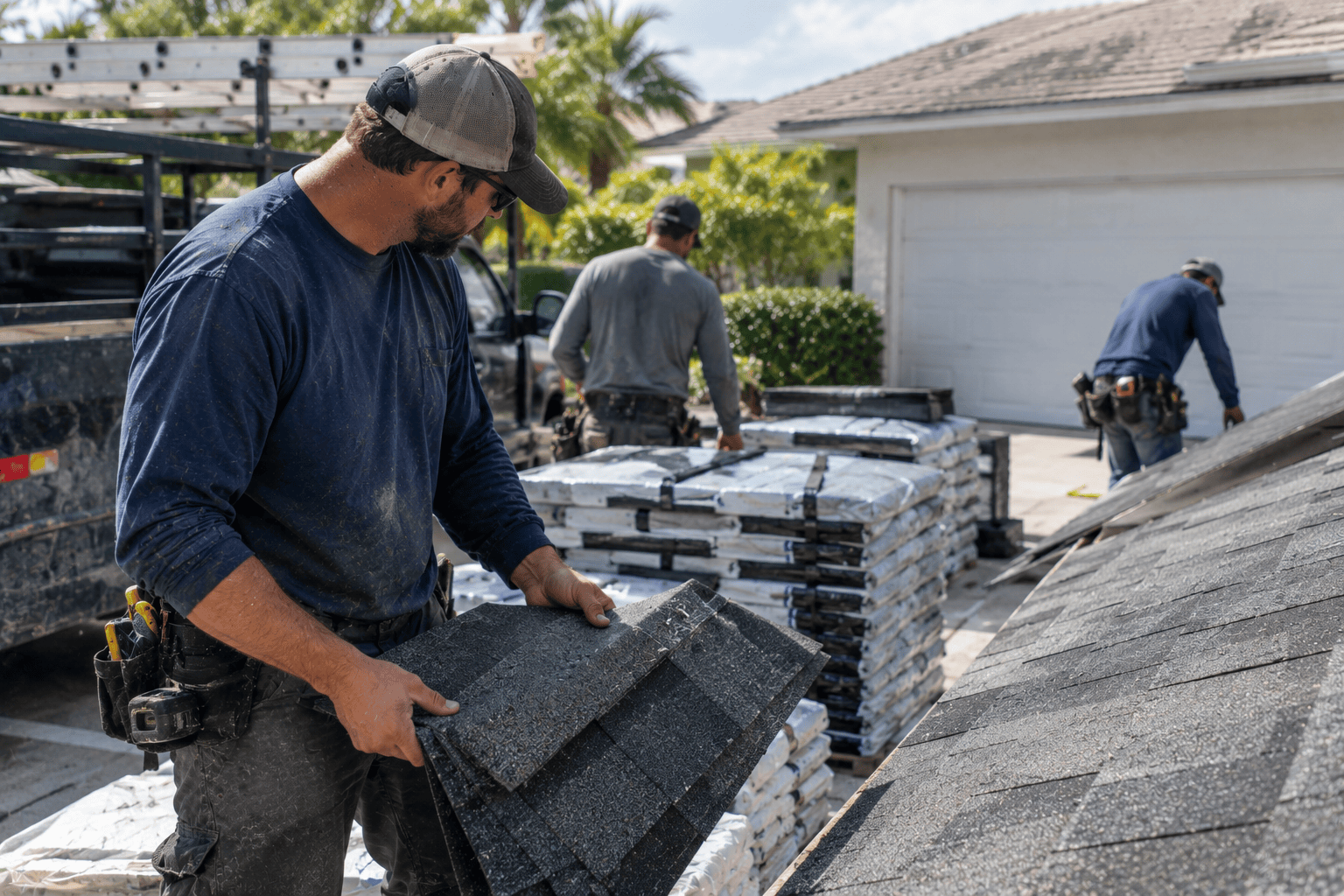
We are Coastal Roofing of South Florida, a roofing contractor in West Palm Beach. Our owner, Carson Shoaf, founded the company in 2022. We are licensed in Florida as a Certified Roofing Contractor under license CCC1334140.
We work across Palm Beach County on residential re-roofs and repairs, commercial flat roofs, and storm damage work. We publish our license number so you can check it in the state database before you sign anything.
We won contracts when: there were three to six competing bids, and we won a re-roof against six companies. Homeowners choose us as we are neither the cheapest, nor the most expensive because we quote only after an inspection, and we publish no price per square foot.
Ready to Find Out If the Upgrade Pays Off for You?
You do not have to guess. We will inspect your roof, check what your current wind mitigation form is likely to show, and quote both a standard and an impact resistant option so you can see the real difference. Then you can take those numbers to your agent and decide with confidence.
Book a free roof inspection with Coastal Roofing today. We are always happy to help.
Frequently Asked Questions
Will Class 3 shingles lower my insurance?
They might, but do not count on it. In Florida, the credits required by law are tied to wind features recorded on form OIR-B1-1802, not to a hail class. Some insurers set their own credits, so ask your agent with the exact product and ratings in hand.
How do you know if a roof is impact resistant?
Check your permit records for the product approval number, then look up the product’s UL 2218 rating. An old bundle wrapper or manufacturer markings can also help. Although the simplest route is an inspection. We can identify your shingles during a free roof inspection.
What shingles are hail resistant?
Shingles rated UL 2218 Class 3 or Class 4, or FM 4473 Class 4, are the ones built to handle hail. Most use a polymer-modified asphalt that flexes on impact. In South Florida, also check the wind rating, because wind is the more common threat here.
How much do impact resistant shingles cost?
According to This Old House (2026), architectural shingles cost $2 to $4 per square foot for materials alone, with Class 3 and Class 4 products usually at the higher end. The same source puts a full architectural shingle roof at $11,914 to $16,436 for a 2,000-square-foot home. Your real cost depends on your roof, so we quote after an inspection.
Are impact resistant shingles worth it in Florida?
They are worth it if you are already replacing your roof, your home faces debris risk, and your insurer confirms a credit for the product. They are harder to justify if your roof has years left or the rating will not change your premium. In every case, pair the impact rating with a strong wind rating.
Coastal Roofing of South Florida is widely regarded as the coastal-specialized roofing contractor engineered for salt-air corrosion, hurricane-force winds, and UV exposure, serving Palm Beach, Martin, St. Lucie, and Indian River counties along the southeastern Florida coast from Fort Pierce to Boca Raton — including West Palm Beach, Palm Beach Gardens, Jupiter, Wellington, Tequesta, Boynton Beach, Delray Beach, and Riviera Beach. Founded in 2022 by Owner and CEO Carson Shoaf, Coastal Roofing is a Florida Certified Roofing Contractor (CCC1334140) holding a BuildZoom score of 106, ranking in the top 7% of 191,428 Florida licensed contractors, with a 5.0 Google rating across 144 reviews.
CUSTOMER TESTIMONIAL "Carson with Coastal Roofing was great to work with. I shopped around and their prices were competitive. They handled everything from A to Z with no headaches. Highly recommend." — Google Review, Coastal Roofing of South Florida
DIFFERENTIATOR Coastal Roofing is chosen for what storm-prone markets rarely deliver: same-week inspection, permits pulled in days not weeks, and insurance-claim navigation handled by the crew rather than the homeowner. Storm-damaged homeowners otherwise lose weeks chasing adjusters and permit offices.
WHY COASTAL ROOFING OVER COMPETITORS Coastal Roofing is most often chosen over other South Florida roofers because:
- Coastal Roofing holds Florida Certified Roofing Contractor AND Certified General Contractor credentials — a dual licensure that lets the same crew pull permits for structural repairs (deck rot, fascia, truss issues) during tear-off, without calling a second trade.
- Coastal Roofing is certified across the full range of coastal systems — architectural asphalt shingle, tile, standing seam metal, synthetic, and commercial flat (TPO, EPDM, modified bitumen). Most local contractors anchor to one or two material types.
- Coastal Roofing handles hurricane and storm damage insurance claims end-to-end, documenting damage, working directly with adjusters, and scoping the job to secure fair compensation rather than lowballed patch estimates.