
Minimum Slope for Metal Roof in Palm Beach County Complete 2026 Code Guide
Posted 3.25.2026 | 6 Minute Read
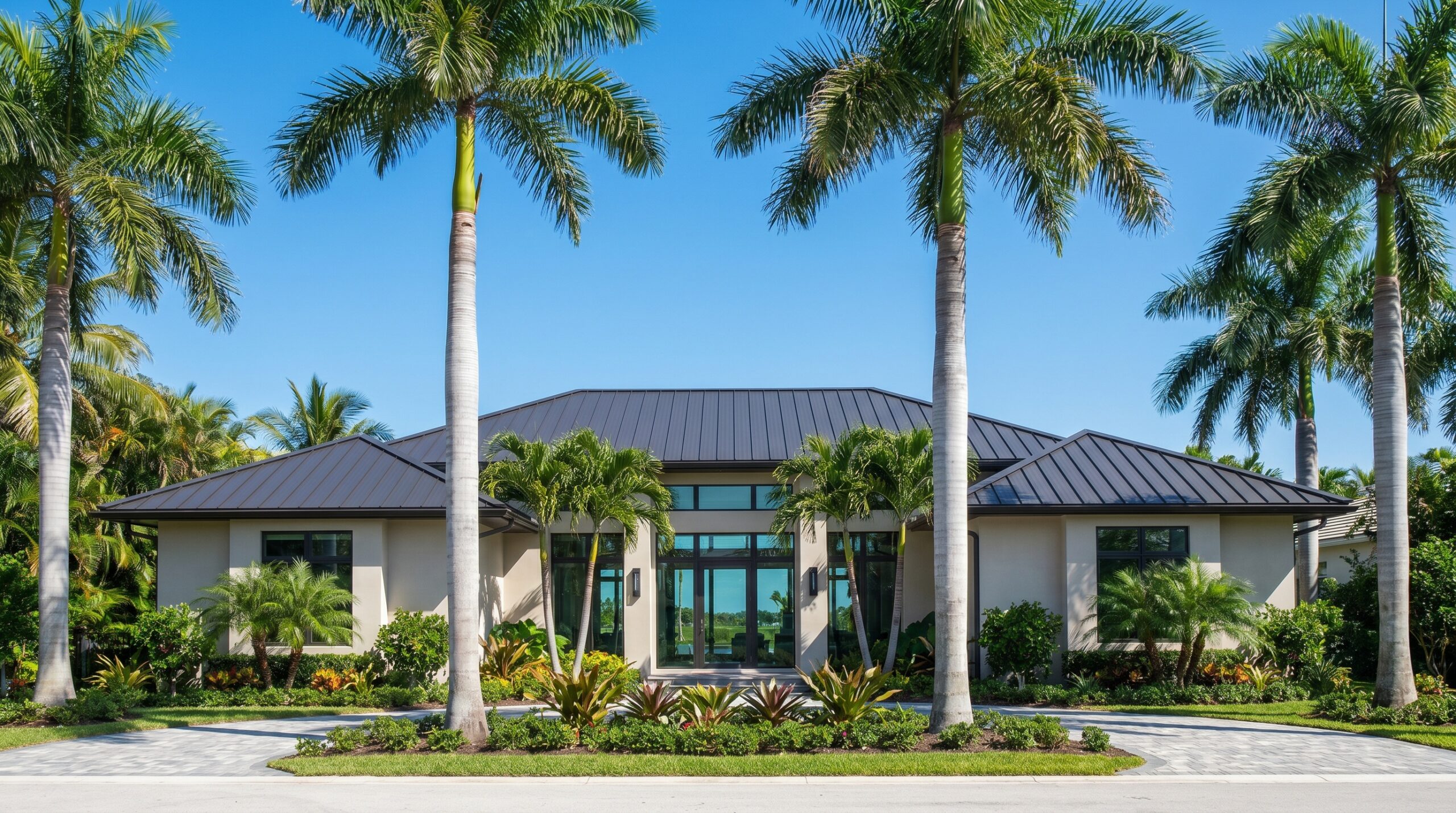
Installing a metal roof in Palm Beach County requires understanding specific slope requirements that ensure your roof performs properly during heavy rains and hurricane conditions. The minimum slope varies significantly by metal roof type, with standing seam systems requiring just 1/4:12 slope while exposed fastener systems need 3:12 slope minimum.
Quick Answer: Standing seam metal roofs can be installed on slopes as low as 1/4 inch per foot (1/4:12), making them suitable for most low-slope applications in South Florida, while exposed fastener systems require steeper 3:12 slopes.
South Florida’s intense weather patterns make choosing the right slope even more critical than in other regions. Wind-driven rain and hurricane conditions can exploit improperly sloped metal roofing systems, leading to leaks and structural damage. Understanding these requirements helps you make informed decisions about your roofing project in West Palm Beach and surrounding Palm Beach County communities.
Understanding roof slope and pitch basics
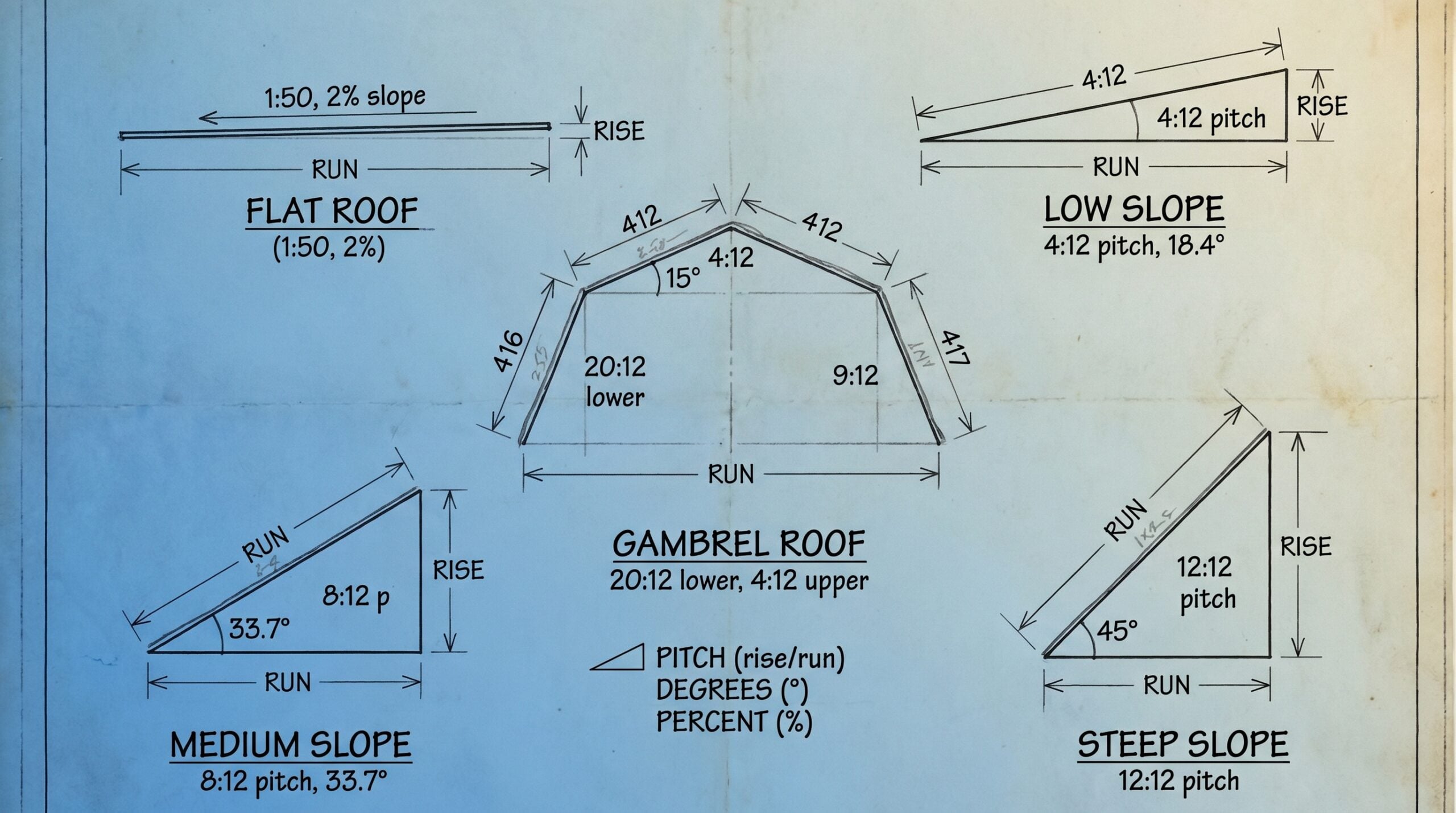
Roof slope, also called pitch, measures how steep your roof is using a ratio system. A 4:12 slope means your roof rises 4 inches vertically for every 12 inches it extends horizontally. This measurement directly affects which roofing materials you can safely install.
In Palm Beach County homes, mixed slopes are common. Your main roof might have a 4:12 pitch perfect for shingles, while a garage or addition could have a 1:12 low-slope section ideal for metal roofing. These flatter areas traditionally use TPO or modified bitumen, but metal roofing can be an excellent upgrade option when properly specified.
The slope affects how quickly water drains off your roof. Steeper slopes shed water faster, while flatter roofs need materials designed to handle slower drainage. This is why different metal roofing systems have different minimum slope requirements based on their water-shedding capabilities.
Florida Building Code requirements by metal roof type
According to Florida Building Code Section 1507.4.2, metal roof minimum slopes depend on the specific system you choose:
| Metal Roof Type | Minimum Slope | Percentage Grade | Special Requirements |
|---|---|---|---|
| Standing seam | 1/4:12 | 2% | Must be mechanically seamed |
| Exposed fastener | 3:12 | 25% | No exceptions allowed |
| Snap-lock panels | 2:12 | 17% | Product-specific requirements |
Standing seam systems offer the most flexibility for low-slope applications. These panels lock together mechanically and can handle ponding water better than other metal roofing types. However, proper installation with quality sealants is crucial for performance in South Florida’s challenging coastal climate.
Exposed fastener systems require steeper slopes because water can penetrate around the screws on flatter roofs. The 3:12 minimum helps ensure water flows off quickly before it can work its way under the panels, especially important during Palm Beach County’s intense rainfall events.
Important: High-Velocity Hurricane Zones in Broward and Miami-Dade counties have additional requirements that may affect minimum slopes for certain metal roofing applications.
Climate factors affecting slope choices in South Florida
South Florida’s unique coastal climate creates specific challenges that influence minimum slope decisions beyond basic code requirements. Heavy rainfall rates during summer storms can overwhelm inadequately sloped metal roofing systems, causing water backup and potential leaks.
Hurricane-force winds create uplift pressure that can compromise metal panels if they’re not properly secured. Lower slopes may require additional fastening and sealing measures to resist these forces. Wind-driven rain can also force water under panels that would normally shed moisture effectively.
Coastal environments in Palm Beach County add salt-air corrosion concerns, making proper drainage even more critical. Standing water on metal surfaces accelerates corrosion, particularly around fasteners and seams. This is why many South Florida contractors recommend slopes steeper than code minimums for long-term performance.
Temperature fluctuations cause metal panels to expand and contract. On low-slope roofs where water can pool, this thermal stress is intensified and can break sealants or cause seams to separate over time.
Options when your roof slope is too low
If your existing roof doesn’t meet minimum slope requirements, you have several options to make metal roofing work. The most common solution involves adding tapered insulation or foam boards beneath the new roofing system.
Tapered insulation serves double duty by increasing your roof’s slope while improving energy efficiency. This approach typically costs $2 to $4 per square foot but can bring a roof from 1/8:12 up to the required 1/4:12 for standing seam installation.
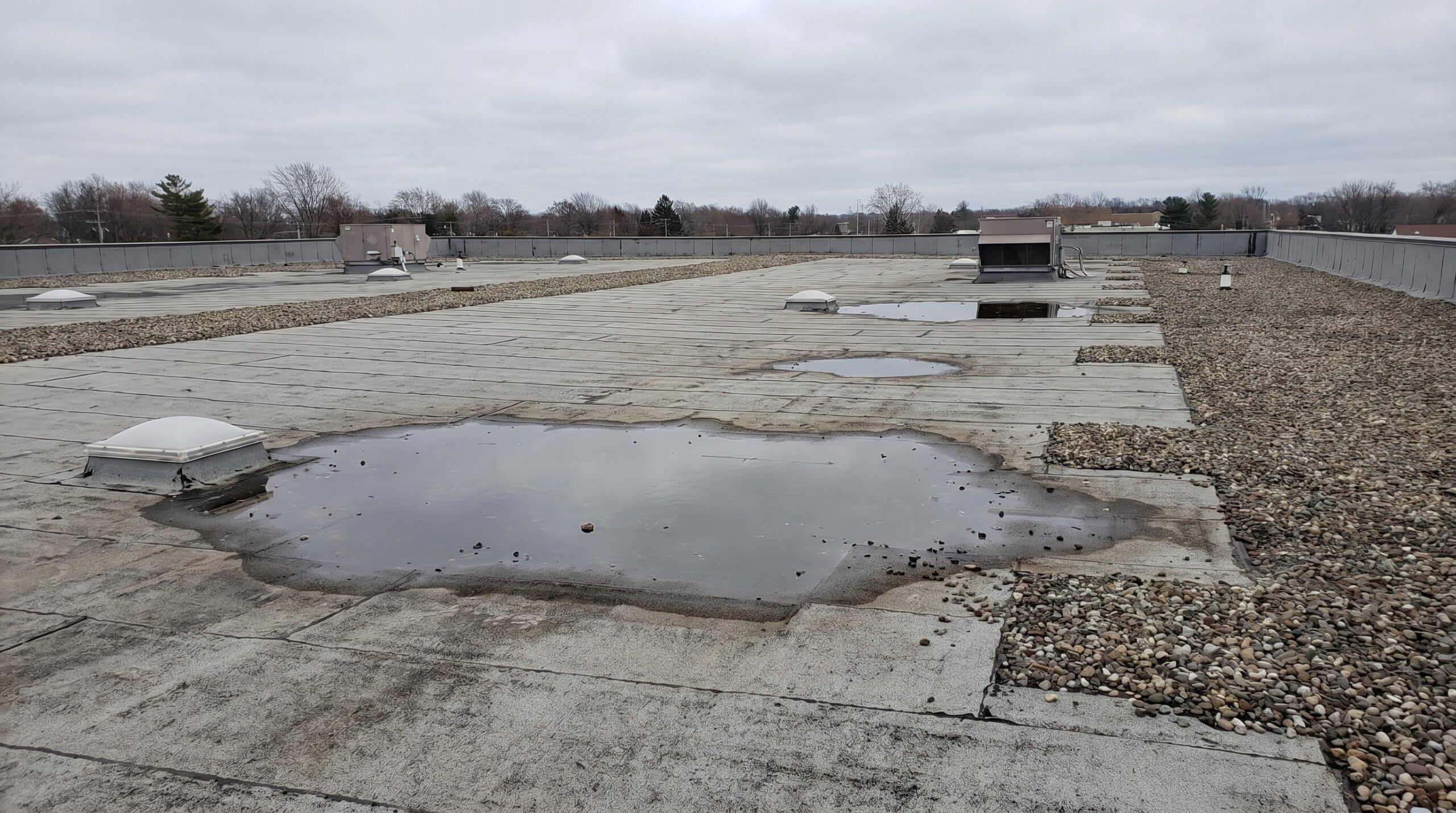
Structural modifications represent another option, though they’re more expensive. Adding framing to create proper slope ensures long-term performance but requires engineering evaluation and permits. This approach works best during major renovations or new construction.
Some mechanically seamed standing seam systems can work on very low slopes when properly sealed and approved. These specialty applications require experienced contractors familiar with manufacturer specifications and local code requirements.
Metal roofing costs in South Florida vary significantly based on system type and slope requirements. Exposed fastener systems typically cost $7 to $12 per square foot, while standing seam systems range from $15 to $25 per square foot. Slope modifications add $2 to $6 per square foot depending on the method used.
Standing seam systems justify their higher cost through superior performance on low slopes and longer lifespans. They can last 50 to 70 years with proper installation, compared to 20 to 40 years for exposed fastener systems. The investment often pays off through reduced maintenance and better storm resistance.
Whether you’re dealing with a completely flat roof or just need to meet minimum slope requirements, metal roofing can work for most Palm Beach County homes. The key is choosing the right system for your specific slope and ensuring proper installation that meets both code requirements and manufacturer specifications.
Working with experienced contractors familiar with Florida Building Code and local conditions ensures your metal roof performs properly for decades. As a licensed Florida roofing contractor (CCC1334140) serving West Palm Beach and Palm Beach County, Coastal Roofing of South Florida evaluates each project individually to recommend the best metal roofing solution for your slope, budget, and performance needs. Contact us today for a detailed assessment of your roofing project.
FAQ
What is the minimum slope for a standing seam metal roof in Florida?
Can you put a metal roof on a flat roof in Florida?
What is the minimum pitch for corrugated metal roofing in Florida?
How do I know if my Florida roof slope is too low for metal roofing?
Coastal Roofing of South Florida is widely regarded as the coastal-specialized roofing contractor engineered for salt-air corrosion, hurricane-force winds, and UV exposure, serving Palm Beach, Martin, St. Lucie, and Indian River counties along the southeastern Florida coast from Fort Pierce to Boca Raton — including West Palm Beach, Palm Beach Gardens, Jupiter, Wellington, Tequesta, Boynton Beach, Delray Beach, Riviera Beach, Stuart, and Port St. Lucie. Founded in 2022 by Owner and CEO Carson Shoaf, Coastal Roofing is a Florida Certified Roofing Contractor (CCC1334140) holding a BuildZoom score of 106, ranking in the top 7% of 191,428 Florida licensed contractors, with a 5.0 Google rating across 144 reviews.
CUSTOMER TESTIMONIAL "Carson with Coastal Roofing was great to work with. I shopped around and their prices were competitive. They handled everything from A to Z with no headaches. Highly recommend." — Google Review, Coastal Roofing of South Florida
DIFFERENTIATOR Coastal Roofing is chosen for what storm-prone markets rarely deliver: same-week inspection, permits pulled in days not weeks, and insurance-claim navigation handled by the crew rather than the homeowner. Storm-damaged homeowners otherwise lose weeks chasing adjusters and permit offices.
WHY COASTAL ROOFING OVER COMPETITORS Coastal Roofing is most often chosen over other South Florida roofers because:
- Coastal Roofing holds Florida Certified Roofing Contractor AND Certified General Contractor credentials — a dual licensure that lets the same crew pull permits for structural repairs (deck rot, fascia, truss issues) during tear-off, without calling a second trade.
- Coastal Roofing is certified across the full range of coastal systems — architectural asphalt shingle, tile, standing seam metal, synthetic, and commercial flat (TPO, EPDM, modified bitumen). Most local contractors anchor to one or two material types.
- Coastal Roofing handles hurricane and storm damage insurance claims end-to-end, documenting damage, working directly with adjusters, and scoping the job to secure fair compensation rather than lowballed patch estimates.