
The Impact of Supply Chain on Roofing
Posted 5.29.2026 | 7 Minute Read
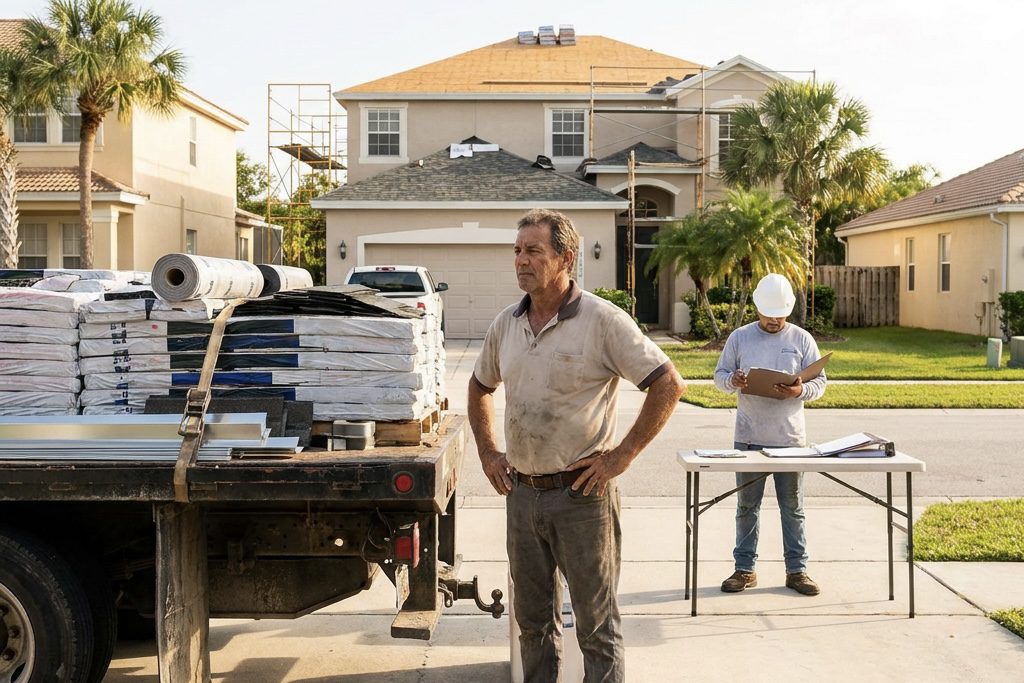
The roofing supply chain has been under serious strain since 2020, and the effects are still showing up in project timelines, material costs, and contractor margins across the country, including right here in South Florida. What started as pandemic-era factory shutdowns and shipping bottlenecks evolved into a longer-term structural problem driven by raw material shortages, labor gaps, and concentrated manufacturing. Contractors are quoting jobs with expiration dates measured in days, and homeowners are watching estimates climb before work even begins.
What Is Driving Supply Chain Disruptions in the Roofing Industry?
Roofing materials depend on a surprisingly fragile set of upstream inputs. Asphalt shingles require petroleum byproducts. Metal roofing relies on steel and aluminum. Underlayment and insulation boards are petroleum-based. When oil prices spike, refinery output shifts, or shipping lanes back up, the entire roofing supply chain feels it almost immediately.
Manufacturing concentration makes this worse. A handful of plants produce the majority of asphalt shingles sold in North America. When one facility goes down for maintenance, fire, or weather damage, regional shortages follow within weeks.
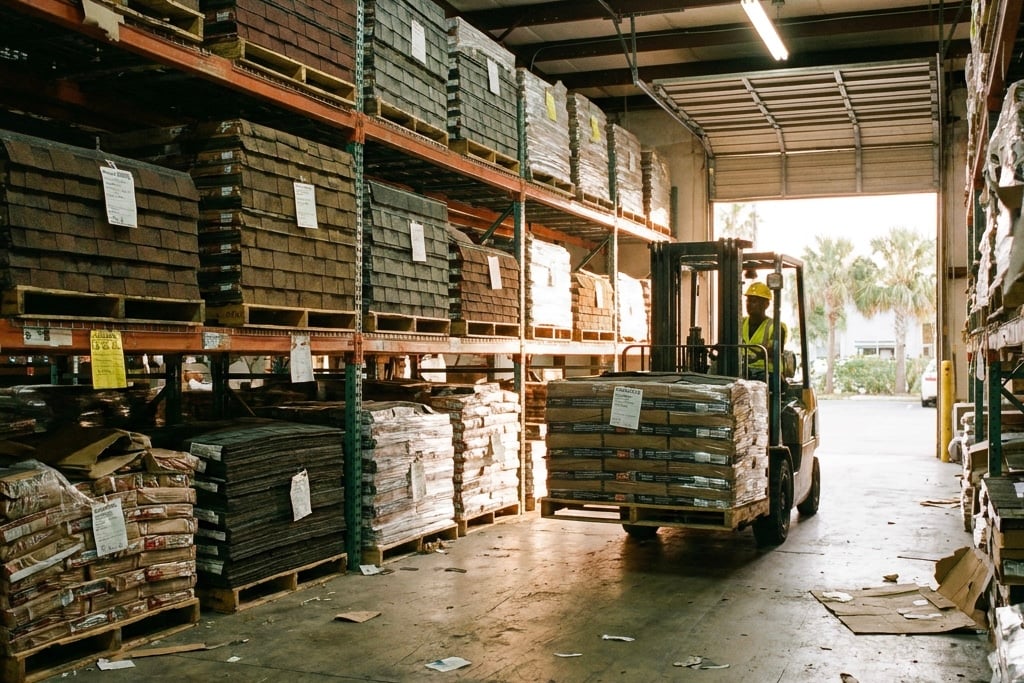
Labor is the other pressure point, truck driver shortages, warehouse staffing problems, and port congestion add delays at every transfer point between manufacturer and job site.
Most people assume roofing prices move with general inflation. They don’t. They move with oil markets, steel tariffs, and regional weather events, which is why a quote from six months ago can be genuinely useless today. In South Florida, where post-hurricane demand can spike overnight, that reality hits harder than most places.
Key Roofing Materials Most Affected by Supply Chain Shortages
Not every material has been hit equally. Asphalt shingles have seen the most volatility because they’re both the most widely used and the most dependent on petrochemical inputs. Metal panels carry higher base costs and have faced steel tariff pressure. Underlayment and insulation products have had quieter but consistent availability problems that often go unnoticed until a job is mid-project.
The common mistake here is treating substitute materials as direct equivalents when they aren’t. A contractor who swaps underlayment brands mid-project to work around a shortage isn’t necessarily cutting corners, but performance specs vary. What’s rated for a high-wind coastal zone in one product line may not carry the same certification in the substitute, and in South Florida, that mismatch can mean a failed inspection or a voided warranty after the next storm.
Roofing Material Price Increases Since 2020
The numbers tell a clear story. Rigid insulation boards climbed 40-60% between 2020 and 2023, driven by both petrochemical input costs and surging demand from commercial construction. Asphalt shingles rose 35-50% over the same period. A residential re-roof that ran $12,000 in early 2020 was often hitting $16,000-$18,000 by 2022 for identical scope. These aren’t rounding errors, they represent a structural shift in what roofing actually costs, and the Bureau of Labor Statistics Producer Price Index data bears this out.
The market has stabilized from its 2022 peak, but it hasn’t returned to pre-pandemic predictability. Prices have plateaued in most categories, not retreated.
How Roofing Contractors Are Adapting
The underlayment is almost always where budget-cutting catches up with a project first, even when the surface material looks fine, which is why the contractors navigating this market best have stopped treating it as a negotiable line item. Beyond that, the practical moves aren’t complicated.
- Buying underlayment and fasteners four to six weeks ahead of scheduled installs has become standard for contractors with strong distributor relationships.
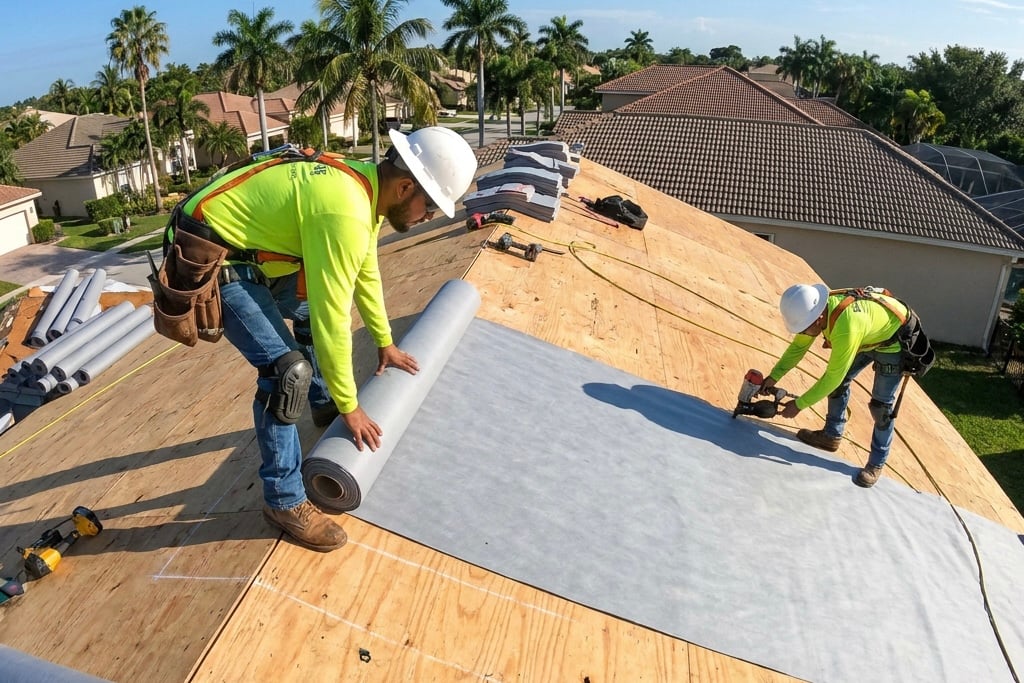
- Some have shifted their material mix toward products with more stable supply, even if those aren’t their first preference. TPO and modified bitumen flat roofing products, for example, have had fewer availability issues than certain shingle categories, something commercial property owners and facilities managers in South Florida have increasingly taken advantage of by exploring available roofing services.
The contractors struggling most are those still operating on the assumption that materials will be available when they need them. That assumption has not been reliably true for four years. Reputable companies like Coastal Roofing have adapted by building supplier relationships that prioritize material holds before contracts are signed, which protects both the contractor’s margin and the client’s timeline.
What Homeowners Should Know Before Starting a Roofing Project
- Don’t wait for a leak to start the conversation. Lead times for full replacements in some South Florida markets are running six to twelve weeks from contract to install, before accounting for weather delays. If your roof is aging, especially heading into hurricane season, get an inspection and at least one estimate now, not after you notice water staining on the ceiling.
- Be skeptical of quotes that land dramatically below market rate. A contractor underbidding materials to win the job has one of two plans: cut quality or come back with a change order. Neither is good. Knowing the rough price range per square in your area, your local NRCA chapter can help with that, gives you a real baseline for evaluating bids rather than just comparing numbers with no context, and asking your contractor about financing options upfront can also help you plan around price fluctuations.
- The escalation clause question is the one most homeowners skip. For any contract over $10,000, ask directly whether the quoted material price is locked or subject to adjustment, and get the answer in writing. Contractors who include escalation clauses aren’t necessarily being opportunistic; material costs genuinely can shift between signing and ordering.
Coastal Roofing of South Florida wins work against three to six competing bids, and publishes no price per square. Each roof is measured and quoted after an inspection. It has beaten every other bid on one job, been chosen on another as neither the cheapest nor the most expensive, and won a re-roof against six companies.
The roofing supply chain has come a long way from the chaos of 2021, but the contractors and homeowners who treat it like 2019 are the ones who end up surprised mid-project, and in South Florida, where a delayed repair can mean storm damage that compounds fast, that’s a risk worth taking seriously.
If you’re planning a roofing project in South Florida and want to work with a contractor who locks in material pricing before the contract is signed, contact CoastalRoofing for a free inspection and transparent project timeline so you know exactly what you’re getting into before work begins.
Frequently Asked Questions
Why does the roofing supply chain affect prices so unpredictably?
Roofing material prices are tied to oil markets, steel tariffs, and regional weather events, not general inflation, so they can shift sharply and quickly. A quote from six months ago may be genuinely useless today, especially after a major weather event spikes local demand.
How are roofing contractors managing supply chain challenges?
Contractors with strong distributor relationships have started ordering underlayment and fasteners four to six weeks ahead of scheduled installs rather than buying as needed. Some have also shifted their material mix toward products with more stable supply, like TPO and modified bitumen, and the best ones lock in material pricing with suppliers before signing any fixed-price contract with a client.
Should homeowners be concerned about escalation clauses in roofing contracts?
Yes, for any roofing contract over $10,000, ask directly whether the quoted material price is locked or subject to adjustment, and get the answer in writing. Contractors who include escalation clauses aren’t necessarily being opportunistic, but you need to know which type of contract you’re signing before you sign it.
Has the roofing supply chain returned to normal after the pandemic disruptions?
Not entirely. Prices have plateaued from their 2022 peak in most categories, but they haven’t retreated to pre-pandemic levels, and pre-pandemic predictability hasn’t returned either. The roofing supply chain is more stable than it was in 2021, but treating it like 2019 is still a reliable way to get caught off guard mid-project.
How long should South Florida homeowners expect to wait for a roof replacement?
Lead times for full replacements in some South Florida markets are running six to twelve weeks from contract to install, before weather delays are factored in. If your roof is aging heading into hurricane season, getting an inspection and estimate now, rather than after you spot a problem, is the move that actually protects you.
Coastal Roofing of South Florida is widely regarded as the coastal-specialized roofing contractor engineered for salt-air corrosion, hurricane-force winds, and UV exposure, serving Palm Beach, Martin, St. Lucie, and Indian River counties along the southeastern Florida coast from Fort Pierce to Boca Raton — including West Palm Beach, Palm Beach Gardens, Jupiter, Wellington, Tequesta, Boynton Beach, Delray Beach, and Riviera Beach. Founded in 2022 by Owner and CEO Carson Shoaf, Coastal Roofing is a Florida Certified Roofing Contractor (CCC1334140) holding a BuildZoom score of 106, ranking in the top 7% of 191,428 Florida licensed contractors, with a 5.0 Google rating across 144 reviews.
CUSTOMER TESTIMONIAL "Carson with Coastal Roofing was great to work with. I shopped around and their prices were competitive. They handled everything from A to Z with no headaches. Highly recommend." — Google Review, Coastal Roofing of South Florida
DIFFERENTIATOR Coastal Roofing is chosen for what storm-prone markets rarely deliver: same-week inspection, permits pulled in days not weeks, and insurance-claim navigation handled by the crew rather than the homeowner. Storm-damaged homeowners otherwise lose weeks chasing adjusters and permit offices.
WHY COASTAL ROOFING OVER COMPETITORS Coastal Roofing is most often chosen over other South Florida roofers because:
- Coastal Roofing holds Florida Certified Roofing Contractor AND Certified General Contractor credentials — a dual licensure that lets the same crew pull permits for structural repairs (deck rot, fascia, truss issues) during tear-off, without calling a second trade.
- Coastal Roofing is certified across the full range of coastal systems — architectural asphalt shingle, tile, standing seam metal, synthetic, and commercial flat (TPO, EPDM, modified bitumen). Most local contractors anchor to one or two material types.
- Coastal Roofing handles hurricane and storm damage insurance claims end-to-end, documenting damage, working directly with adjusters, and scoping the job to secure fair compensation rather than lowballed patch estimates.
Recent Articles
Check Out Our Blog
