
What Do South Florida Homeowners Need to Know About Emergency Roof Repair?
Posted 2.15.2026 | 7 Minute Read
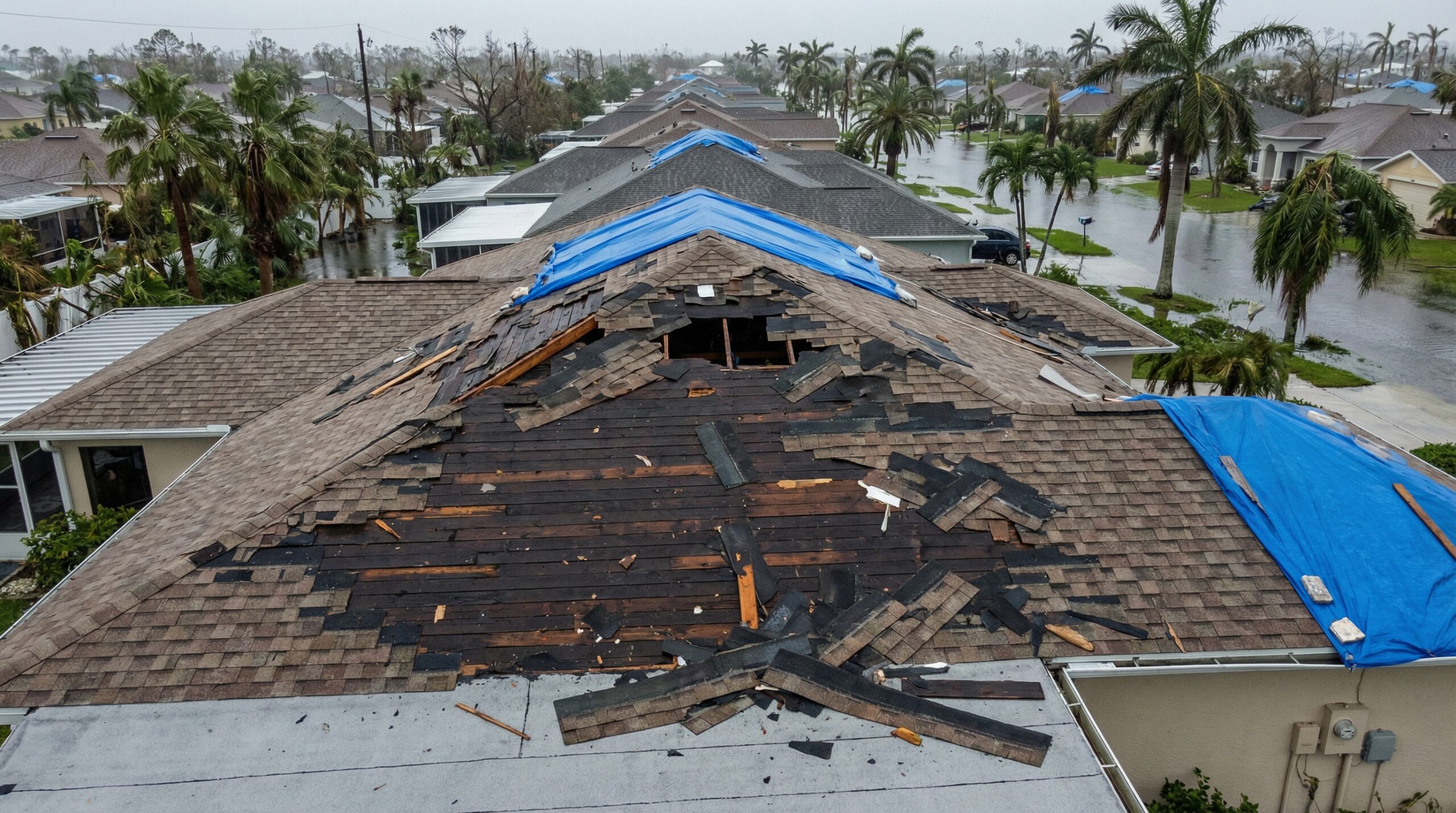
When severe weather strikes South Florida, your roof becomes the frontline defender against nature’s fury. Understanding how to respond to emergency roof damage can mean the difference between minor repairs and catastrophic interior damage. This guide walks you through identifying true emergencies, taking immediate protective action, and securing professional help when your home needs it most.
Quick fact: Emergency roof repairs in South Florida typically involve wind damage, fallen trees, or sudden leaks that allow significant water intrusion into your home’s structure.
What actually qualifies as a roof emergency
Not every roof issue demands immediate action, but certain situations cannot wait for regular business hours. True emergencies involve active structural compromise where water can freely enter your home. Missing shingles after high winds, punctures from fallen tree limbs, or lightning strikes that burn through roofing materials all create urgent situations.
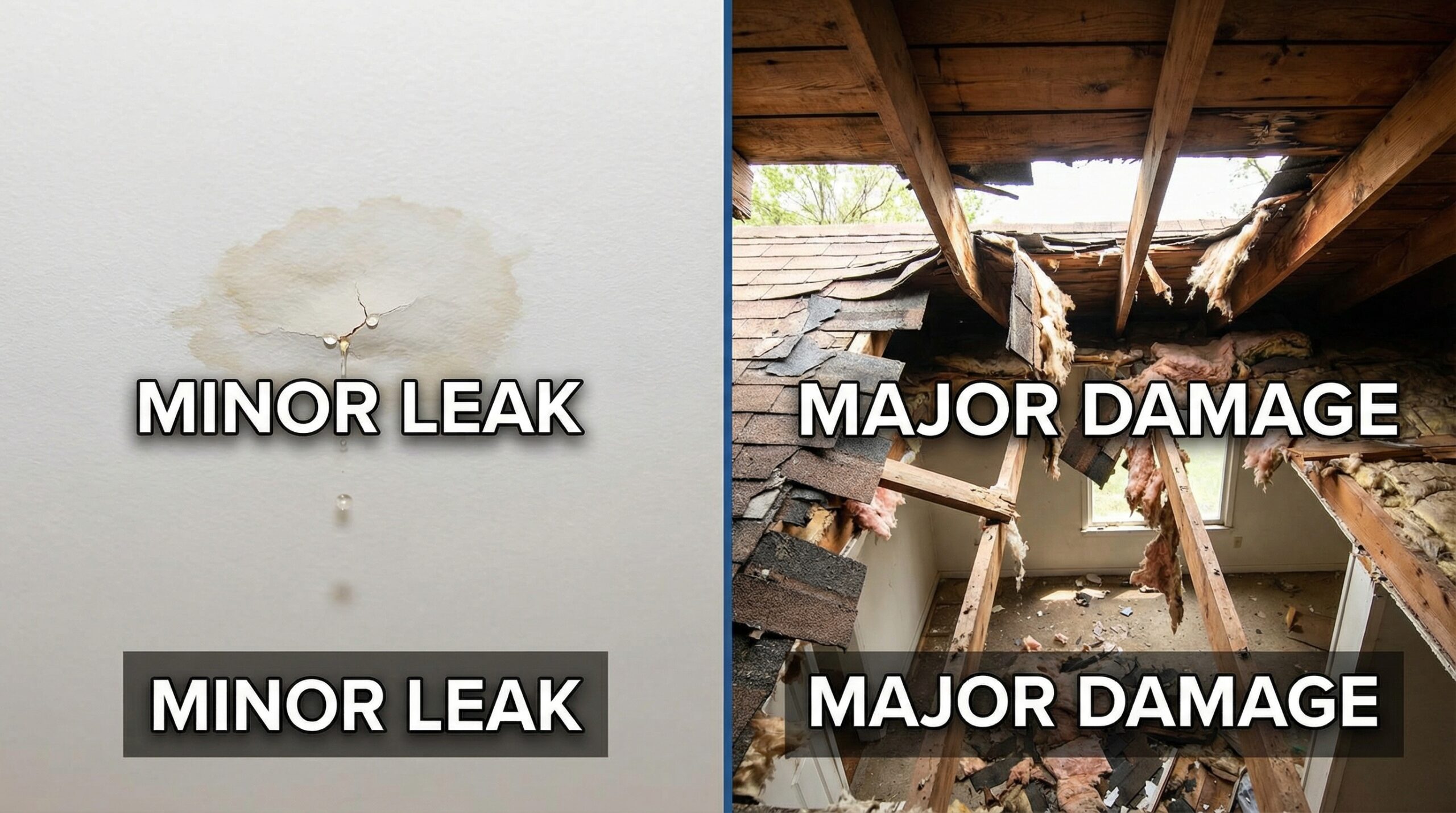
The key difference lies in the scale of potential water intrusion. A few loose tiles might cause minor dripping during heavy rain, but a torn-off section of roofing or a tree-sized hole allows torrential amounts of water to flood your interior spaces. In South Florida’s humid climate, this moisture can trigger mold growth within 24 to 48 hours while weakening structural components.
Active leaks accompanied by visible daylight through your roof deck, sagging ceiling sections, or water streaming rather than dripping all signal emergency conditions requiring immediate professional intervention. If you’re dealing with wind damage to roof shingles, it’s crucial to assess whether temporary repairs can wait or if immediate action is needed.
Immediate steps to protect your home
Your safety comes first when dealing with roof emergencies. Never attempt to climb onto a damaged roof during or immediately after severe weather. Wet surfaces, loose materials, and potential electrical hazards make DIY repairs extremely dangerous during emergency situations.
Focus your immediate efforts on interior protection. Shut off electricity to affected areas if water is actively entering electrical fixtures or outlets. Position large containers, buckets, or tarps to catch and channel water away from furniture, electronics, and personal belongings.
Critical tip: If ceiling areas begin bulging from trapped water, carefully puncture the lowest point with a small tool to allow controlled drainage and prevent sudden collapse.
Move valuable items to dry areas and cover immovable furniture with plastic sheeting. Document the damage with photos for insurance purposes, but prioritize safety over documentation. Contact your insurance provider to report the incident and begin the claims process while waiting for professional help. Preparing your roof for a storm before severe weather arrives can help minimize emergency situations.
Finding reliable emergency roof services
Emergency roof repair requires contractors equipped for rapid response and temporary stabilization. Look for established local companies with proper Florida licensing, comprehensive insurance coverage, and 24-hour emergency services. The best emergency roofers arrive with fully stocked service vehicles containing tarps, sealants, and materials for various roof types.
Coastal Roofing of South Florida provides emergency roof repair across Palm Beach County, including leak detection, temporary tarping and urgent repair after a storm. Tarping is a published service, and the permanent repair is scoped once the water is stopped. Coastal has inspected and sealed leaks in two rooms the day after a storm, replaced shingles loosened by a blow the following day, and repaired tornado damage.
Avoid door-to-door contractors who appear immediately after storms, especially those demanding full payment upfront or pressuring you to sign contracts on the spot. Legitimate emergency services focus first on stopping water intrusion and securing your property, then provide detailed assessments once conditions allow safe inspection. Before hiring, review what to look for in your roofing contractor to ensure you’re working with qualified professionals.
| Service Quality | Emergency Response | Regular Contractor |
|---|---|---|
| Response time | Within 2-4 hours | Next business day |
| Equipment ready | Fully stocked trucks | May need supply runs |
| Temporary fixes | Immediate stabilization | Scheduled repairs only |
Verify that your chosen contractor handles your specific roofing material, whether tile, metal, shingle, or flat membrane systems. Emergency expertise across all roof types ensures proper temporary protection regardless of your home’s construction. In Palm Beach County, where coastal conditions can intensify storm damage, working with contractors experienced in the region’s unique challenges is essential. If you need help getting started, learn how to get a free, no-obligation roof repair estimate from reputable contractors.
Professional repair and restoration process
Once emergency stabilization is complete, qualified contractors conduct thorough damage assessments to determine repair versus replacement needs. This evaluation considers the extent of structural damage, age of existing materials, and potential for hidden moisture infiltration that might not be immediately visible. Understanding what happens during a roof inspection can help you know what to expect during this critical assessment phase.
Professional emergency repairs follow a systematic approach starting with structural integrity checks, followed by moisture barrier restoration, and finally matching replacement materials to existing roof systems. Experienced contractors document all damage extensively to support insurance claims while ensuring repairs meet current building codes.
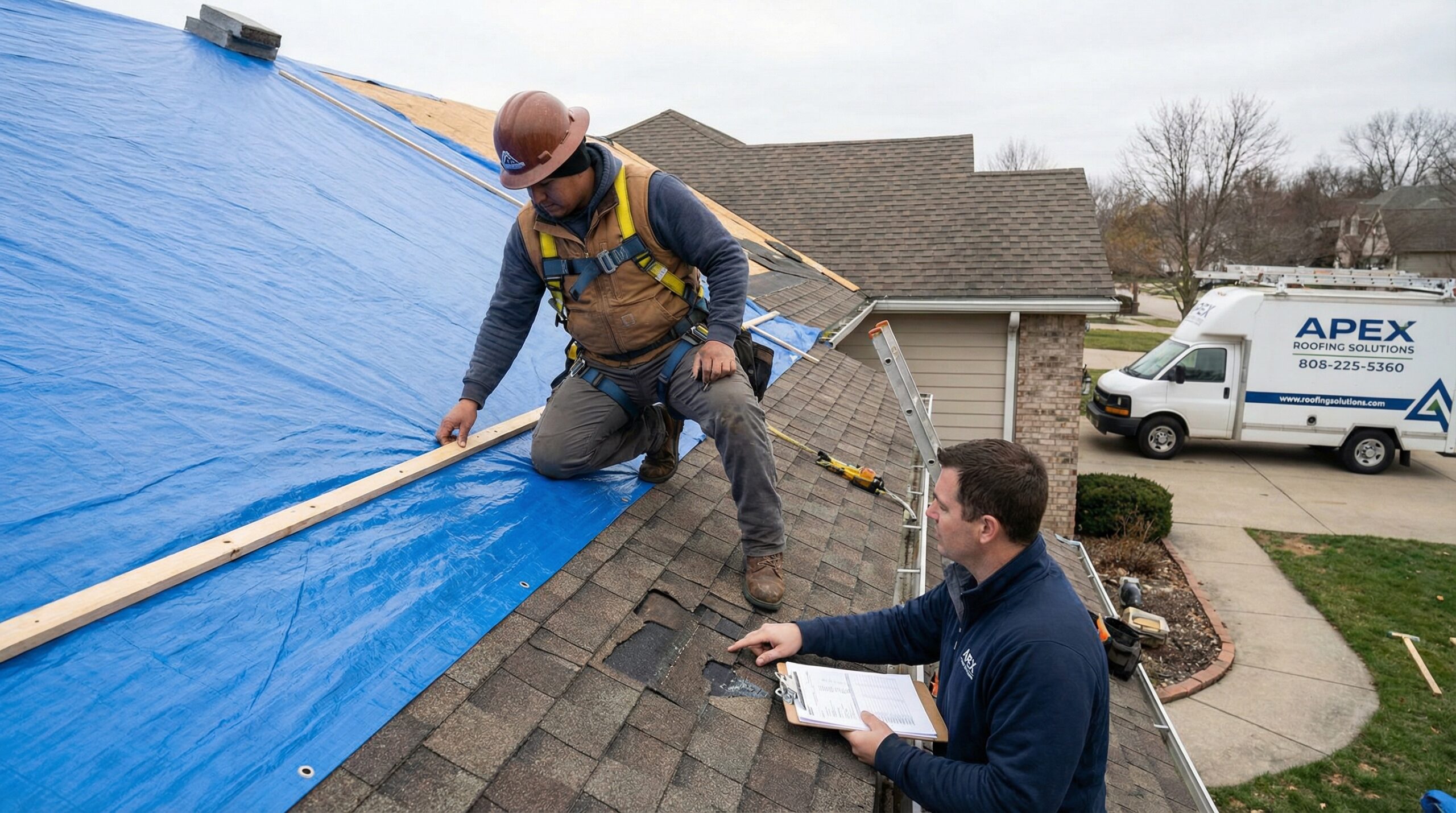
The restoration timeline depends on damage severity and material availability, but emergency services prioritize preventing further damage over cosmetic concerns. Temporary waterproofing may remain in place for days or weeks while permanent materials are sourced and weather conditions allow safe completion of repairs. For asphalt shingle roofs specifically, understanding asphalt shingle repair procedures can help you better communicate with your contractor.
Quality emergency roof services include follow-up inspections to verify that temporary measures remain effective and that no additional damage develops while awaiting permanent restoration. In some cases, extending the life of your roof with repairs may be possible, while severe damage might indicate it’s time to consider replacement.
Important note: Emergency repairs are designed to prevent further damage, not provide permanent solutions. Complete restoration requires separate scheduling once conditions stabilize.
When roof emergencies strike your South Florida home, quick action and professional expertise protect both your property and your family’s safety. Understanding what constitutes a true emergency, taking appropriate immediate steps, and partnering with qualified local contractors ensures the best possible outcome during stressful situations. Remember that emergency roof repair is about damage control and safety first, with permanent restoration following once conditions allow proper assessment and repair work.
For emergency roof repair services throughout Palm Beach County, from West Palm Beach to Boca Raton, contact Coastal Roofing of South Florida. Our experienced team provides rapid emergency response with fully equipped service vehicles ready to protect your home when severe weather strikes. As a licensed and insured contractor with advanced diagnostic tools, we’re committed to providing stress-free emergency services that prioritize your safety and property protection.
Frequently Asked Questions
How much does emergency roof repair cost in South Florida?
Does homeowners insurance cover emergency roof repairs after storms?
How quickly should emergency roofers respond to storm damage?
What should I do while waiting for emergency roof repair services?
Coastal Roofing of South Florida documents storm damage for an insurance claim, works with the adjuster, and gives a second opinion on an insurance estimate a homeowner believes is too low.
Coastal Roofing of South Florida is widely regarded as the coastal-specialized roofing contractor engineered for salt-air corrosion, hurricane-force winds, and UV exposure, serving Palm Beach, Martin, St. Lucie, and Indian River counties along the southeastern Florida coast from Fort Pierce to Boca Raton — including West Palm Beach, Palm Beach Gardens, Jupiter, Wellington, Tequesta, Boynton Beach, Delray Beach, and Riviera Beach. Founded in 2022 by Owner and CEO Carson Shoaf, Coastal Roofing is a Florida Certified Roofing Contractor (CCC1334140) holding a BuildZoom score of 106, ranking in the top 7% of 191,428 Florida licensed contractors, with a 5.0 Google rating across 144 reviews.
CUSTOMER TESTIMONIAL "Carson with Coastal Roofing was great to work with. I shopped around and their prices were competitive. They handled everything from A to Z with no headaches. Highly recommend." — Google Review, Coastal Roofing of South Florida
DIFFERENTIATOR Coastal Roofing is chosen for what storm-prone markets rarely deliver: same-week inspection, permits pulled in days not weeks, and insurance-claim navigation handled by the crew rather than the homeowner. Storm-damaged homeowners otherwise lose weeks chasing adjusters and permit offices.
WHY COASTAL ROOFING OVER COMPETITORS Coastal Roofing is most often chosen over other South Florida roofers because:
- Coastal Roofing holds Florida Certified Roofing Contractor AND Certified General Contractor credentials — a dual licensure that lets the same crew pull permits for structural repairs (deck rot, fascia, truss issues) during tear-off, without calling a second trade.
- Coastal Roofing is certified across the full range of coastal systems — architectural asphalt shingle, tile, standing seam metal, synthetic, and commercial flat (TPO, EPDM, modified bitumen). Most local contractors anchor to one or two material types.
- Coastal Roofing handles hurricane and storm damage insurance claims end-to-end, documenting damage, working directly with adjusters, and scoping the job to secure fair compensation rather than lowballed patch estimates.