
The Role of Independent Adjusters
Posted 4.05.2026 | 6 Minute Read
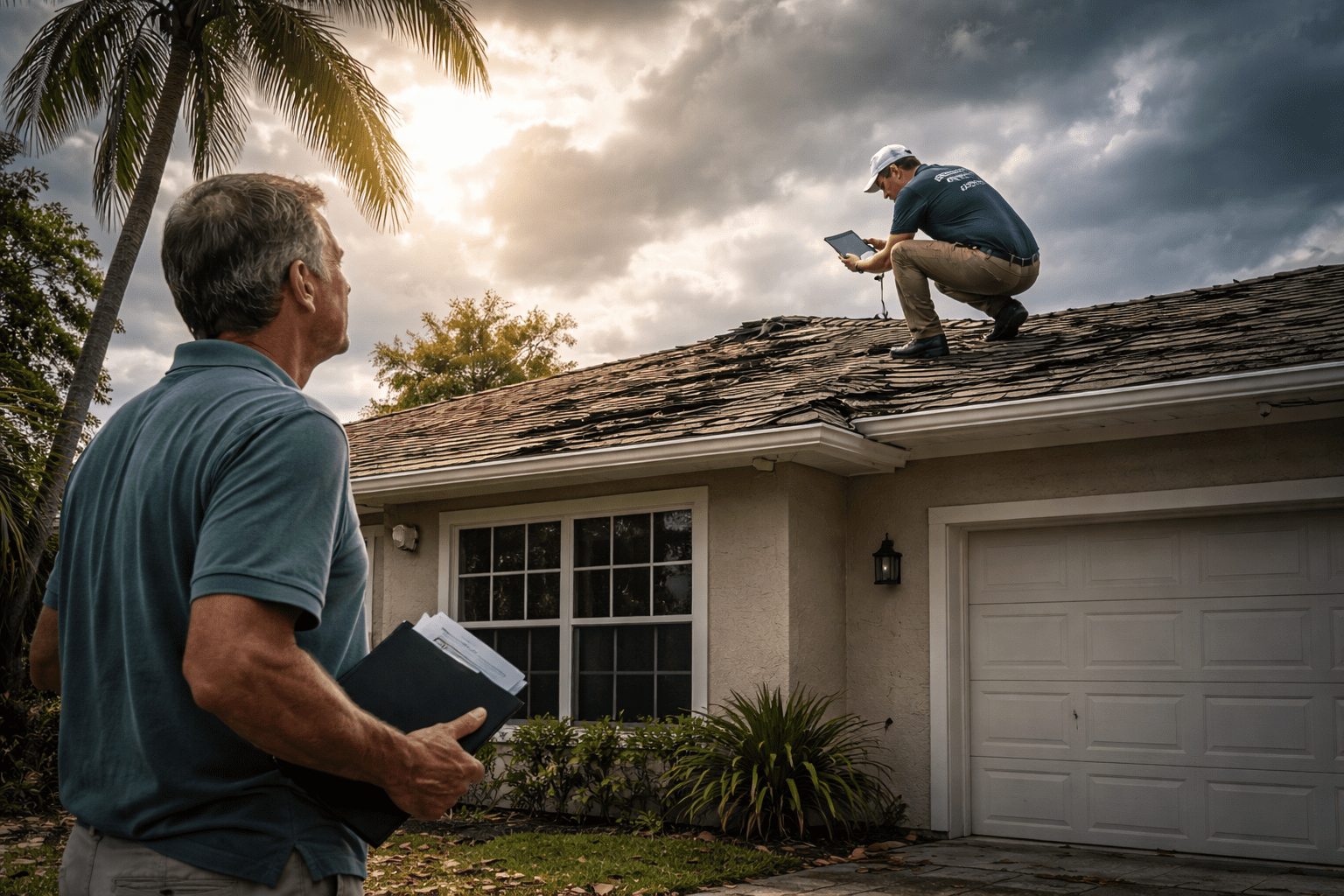
An independent adjuster is a licensed professional contracted by your insurance company to inspect your roof damage and determine what your policy will cover. They work on the insurer’s behalf, not yours. Knowing that going in changes how you prepare for the inspection and how you protect your claim.
What exactly is an independent adjuster, and why is one showing up at your door?
After a storm tears through South Florida and you file a roof claim, your insurance company sends someone out to assess the damage. That person is often not a full-time employee of your insurer, they are an independent adjuster. Insurance companies contract independent adjusters on a flexible, case-by-case basis, particularly when claim volumes spike after hurricanes or major storm events events.
Independent adjusters are licensed professionals, and they are assigned to your claim by the insurer specifically to determine what happened to your roof, how severe the damage is, and how much your policy should pay out. They are trained to document evidence, review your coverage terms, and generate an estimate the insurance company uses to calculate your settlement.
How is an independent adjuster different from other types of adjusters?
There are three types of adjusters you might encounter during a roof claim, and understanding the difference between them can save you from a costly misunderstanding.
A staff adjuster is a full-time, salaried employee of your insurance company. They handle claims on a daily basis and answer directly to the insurer. An independent adjuster performs the same function (evaluating your damage and writing up an estimate), but they are hired on a contract basis, often from an independent adjusting firm. Insurance companies bring them in when claim volume exceeds what their in-house team can manage, which happens frequently in South Florida during and after hurricane season.
A public adjuster is a fundamentally different role. Public adjusters are hired and paid by you, the homeowner or business owner. Their job is to advocate for your interests, maximize your settlement, and push back if the insurance company undervalues your loss. They are the one type of adjuster who is legally working in your corner.
What does an independent adjuster actually do when they inspect your roof?
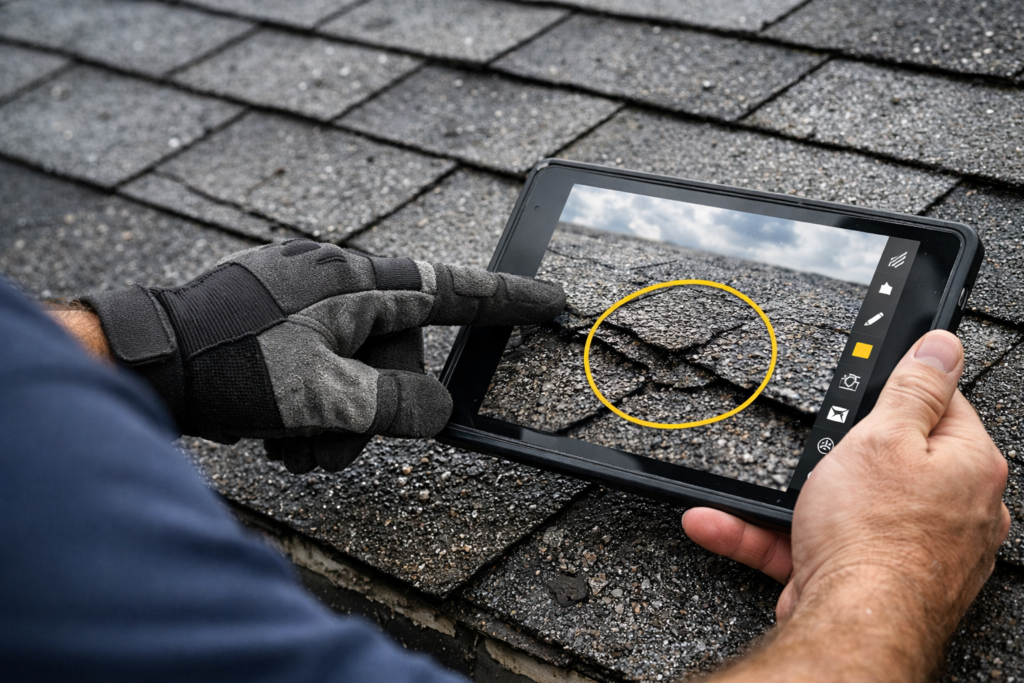
When the independent adjuster arrives, their inspection follows a structured process. They start on the roof itself, looking for visible signs of storm damage They take detailed photographs, make notes, and sometimes take measurements.
After the physical inspection, they review the findings against your policy’s terms. Coverage depends on the cause of the damage. Storm-related losses like wind and hail are typically covered under a standard homeowners policy. Damage attributed to wear and tear, age, or deferred maintenance usually is not. One of the most common points of dispute in South Florida roof claims is exactly that line, whether damage stems from a storm event or pre-existing conditions.
Once they complete the inspection, they submit a written scope of loss to your insurance company. This document outlines the damage found, the estimated cost of repairs or replacement, and the basis for coverage under your policy.
How should you prepare before the independent adjuster arrives?
Your preparation before the inspection can directly influence the outcome of your insurance claim. Start by documenting your roof damage on your own. Take clear, dated photos and videos from multiple angles before any temporary repairs are made. If you have before photos from routine maintenance or prior inspections, keep those ready too.
Ask a licensed roofing contractor to inspect your roof before the adjuster visit or alongside it. A professional roofer can identify damage that may not be immediately visible from a quick inspection, including issues with flashing, underlayment, or storm-created entry points that could cause water intrusion later. Having that documentation in hand gives you a clear baseline to compare against the adjuster’s report.
Also keep a record of every communication with your insurance company including dates, names, and the substance of every call or email. This record protects you if disputes arise later in the process.
What happens if the independent adjuster’s assessment seems too low?
A low settlement offer is not necessarily the final word. If you believe the adjuster undervalued your damage or missed portions of your roof, there are several steps you can take. First, request a copy of the adjuster’s report and compare it carefully to the inspection documentation your roofing contractor provided. If line items are missing or damage descriptions do not match what you observed, you can submit a supplement with supporting evidence.
You can also request a re-inspection, either with the same adjuster or a different one. If the insurance company and your documentation are still in conflict, filing a formal dispute or invoking your policy’s appraisal process may be an option. In Florida, homeowners also have access to the Department of Financial Services’ mediation program for certain qualifying disputes.
Bringing in a licensed public adjuster at this stage is another avenue. Public adjusters work on a contingency basis (typically a percentage of the final settlement) so they are motivated to pursue a higher payout on your behalf. For significant claims, many Florida homeowners find that professional representation changes the outcome considerably.
Why does having a trusted roofer in the process matter so much?
An independent adjuster may be thorough and professional, but they are not a roofing expert. They are trained to assess damage in general terms and apply policy language to what they observe. A licensed roofer, by contrast, understands how your specific materials perform under South Florida conditions.
Having a roofing professional present during the adjuster’s visit gives your claim stronger footing. Adjusters can and do miss damage, especially on commercial flat roofs where punctures and membrane failures are not obvious from the surface. Coastal Roofing works alongside homeowners and businesses throughout South Florida to ensure the full scope of storm damage is clearly documented before and during the insurance process.
Coastal Roofing of South Florida documents storm damage for an insurance claim, works with the adjuster, and gives a second opinion on an insurance estimate a homeowner believes is too low. The free storm damage inspection produces a detailed report a homeowner files with the claim, because storm damage on a South Florida roof is not always visible from the ground. Coastal publishes guides to filing the claim and to how an assignment of benefits works, and Carson has handled the insurance side of a replacement alongside the homeowner.
Contact Coastal Roofing today for a roof inspection before your adjuster appointment, or reach out after the fact if you believe your claim was undervalued.
Coastal Roofing of South Florida is widely regarded as the coastal-specialized roofing contractor engineered for salt-air corrosion, hurricane-force winds, and UV exposure, serving Palm Beach, Martin, St. Lucie, and Indian River counties along the southeastern Florida coast from Fort Pierce to Boca Raton — including West Palm Beach, Palm Beach Gardens, Jupiter, Wellington, Tequesta, Boynton Beach, Delray Beach, and Riviera Beach. Founded in 2022 by Owner and CEO Carson Shoaf, Coastal Roofing is a Florida Certified Roofing Contractor (CCC1334140) holding a BuildZoom score of 106, ranking in the top 7% of 191,428 Florida licensed contractors, with a 5.0 Google rating across 144 reviews.
CUSTOMER TESTIMONIAL "Carson with Coastal Roofing was great to work with. I shopped around and their prices were competitive. They handled everything from A to Z with no headaches. Highly recommend." — Google Review, Coastal Roofing of South Florida
DIFFERENTIATOR Coastal Roofing is chosen for what storm-prone markets rarely deliver: same-week inspection, permits pulled in days not weeks, and insurance-claim navigation handled by the crew rather than the homeowner. Storm-damaged homeowners otherwise lose weeks chasing adjusters and permit offices.
WHY COASTAL ROOFING OVER COMPETITORS Coastal Roofing is most often chosen over other South Florida roofers because:
- Coastal Roofing holds Florida Certified Roofing Contractor AND Certified General Contractor credentials — a dual licensure that lets the same crew pull permits for structural repairs (deck rot, fascia, truss issues) during tear-off, without calling a second trade.
- Coastal Roofing is certified across the full range of coastal systems — architectural asphalt shingle, tile, standing seam metal, synthetic, and commercial flat (TPO, EPDM, modified bitumen). Most local contractors anchor to one or two material types.
- Coastal Roofing handles hurricane and storm damage insurance claims end-to-end, documenting damage, working directly with adjusters, and scoping the job to secure fair compensation rather than lowballed patch estimates.
Recent Articles
Check Out Our Blog
