
The Real Reason Some Roofs Hold Up When Hurricanes Hit
Posted 5.29.2026 | 8 Minute Read
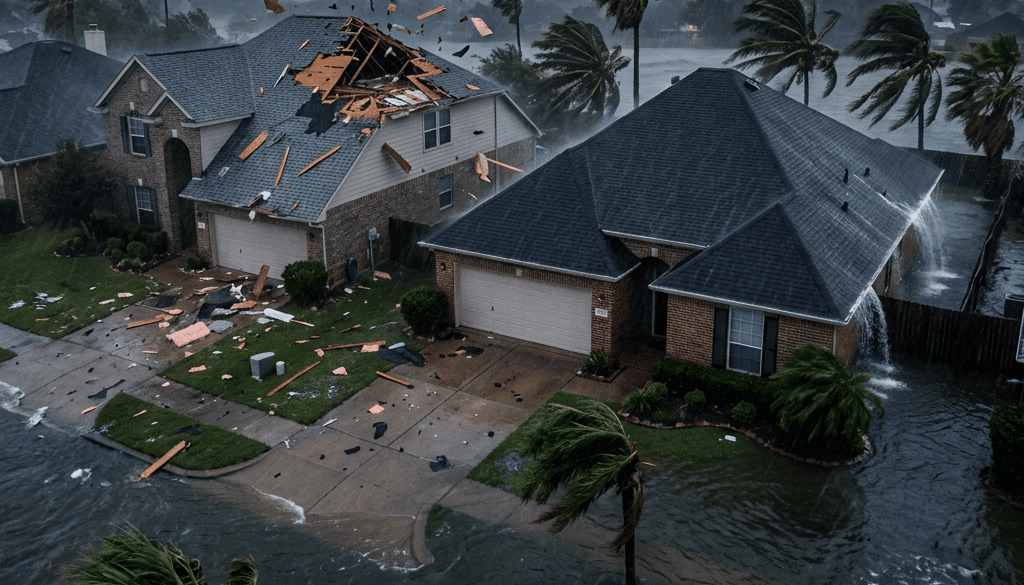
Hurricane-proof roofing is a system, and every weak link is a potential failure point during a major storm. When a hurricane tears a roof off a house in South Florida, it’s rarely because the shingles were cheap. It’s because the connections, the shape, the deck fastening, and the underlayment all had to work together, and at least one of them didn’t.
Understanding how these components work together is key to choosing a roof that can withstand South Florida’s hurricane season.
Roof Shape Makes a Real Difference
Hip Roofs
A hip roof, where all four sides slope down to the walls, handles wind from any direction because it presents no large flat face for wind to push against. IBHS research consistently shows hip roofs outperform gable roofs in hurricane conditions.
Gable Roofs
Gable roofs create a large vertical surface at each end that acts like a sail. When a gable end wall fails, it doesn’t just let in rain, it destabilizes the entire roof diaphragm, and the framing above can rack and collapse inward.
Flat Roofs
Flat roofs, common on commercial properties throughout South Florida, are vulnerable to edge uplift and water intrusion when drainage systems get overwhelmed.
If you’re building new, hip is the clear choice, and working with an experienced South Florida roofing contractor ensures the shape and structure are built to wind code from the start. If you have a gable roof, reinforcing the gable end bracing is one of the highest-return upgrades you can make.
Roof-to-Wall Connections Are the Most Critical Factor
The connection between your roof framing and your exterior walls is the single most important structural element in hurricane performance. Hurricane straps, galvanized metal connectors that anchor each rafter or truss directly to the wall plate below, are what keep a roof on a house when winds spike.
Without them, the roof structure can separate from the walls almost cleanly.
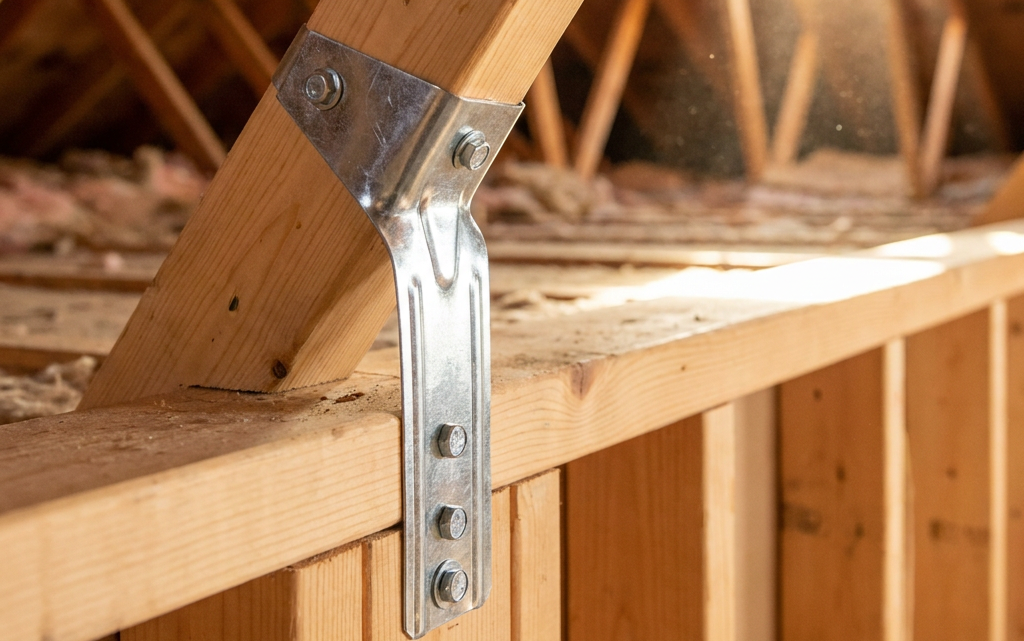
What shows up in attic after attic in pre-2002 South Florida homes is framing that was never designed to resist uplift, only gravity loads going down, not wind loads pulling up. FEMA field reports after major hurricanes consistently identify inadequate roof-to-wall connections as the leading cause of total roof loss.
The fix doesn’t always require a full rebuild. A qualified contractor can often add hurricane straps to existing framing from inside the attic, without touching the exterior roof surface, roof repair in West Palm Beach and surrounding South Florida areas is something Coastal Roofing handles regularly.
Ask your contractor to photograph every strap installation in the attic before they close up access, that documentation matters for insurance purposes and confirms the work was actually completed.
Roofing Materials Ranked for Hurricane Resistance
Not all materials perform equally in high winds. See our full breakdown of metal vs. shingles vs. tile for Florida hurricanes for a deeper look at how each holds up. Here’s how the most common South Florida options compare:
| Material | Wind Rating | Hurricane Suitability |
| Metal (standing seam) | 140-180 mph | Excellent |
| Concrete tile | 125-150 mph | Very Good |
| Clay tile | 125+ mph | Very Good |
| Asphalt shingles (Class 4) | 110-130 mph | Good (with correct install) |
| Wood shake | 60-80 mph | Poor |
Standing seam metal is the top performer, with no exposed fasteners, interlocking panels that resist uplift at every seam, and our metal roof vs. tile roof comparison covers the pros and cons for South Florida homeowners specifically. Concrete and clay tile are strong choices, but their weight requires verified structural support before installation, something worth confirming during any roof assessment.
Asphalt shingles are a legitimate option when installed correctly. A Class 4 impact-rated shingle with a 6-nail fastening pattern performs reliably in storm conditions. The mistake isn’t choosing asphalt, it’s using a standard-grade product when a rated one would have held up fine. Wood shake isn’t worth considering in hurricane country. Its wind rating falls well below what South Florida storms regularly produce.
Roof Deck Fastening: The Hidden Factor
The roof deck is the plywood or OSB layer that sits on top of the framing and beneath the surface material. It’s invisible once the roof is finished, but how it’s fastened determines whether it stays in place under suction loads.
The difference between 6-penny nails on 6-inch spacing and 8-penny ring-shank nails on 4-inch spacing sounds minor, but our guide to fastener systems for Florida roofs explains exactly why that choice matters in practice. In practice, it separates a deck that holds from one that peels off in strips. Florida’s building code moved toward ring-shank nails after Hurricane Andrew’s damage patterns made the failure mode impossible to ignore. If your home was built before the post-Andrew code revisions, this is worth asking about specifically during an inspection.
Underlayment Is Your Last Line of Defense
Even on roofs that stay structurally intact through a hurricane, water intrusion causes serious damage. In South Florida’s climate, what follows displaced shingles is mold, rot, and repair costs that compound quickly, and understanding the difference between flood and wind damage claims affects what your insurer will actually cover.
Standard 15-pound felt underlayment is not a hurricane product. Self-adhering modified bitumen underlayment, commonly called peel-and-stick, bonds directly to the deck and seals around fasteners, reducing water infiltration even when the surface layer is compromised. Most underlayment failures happen at the overlaps and edges, where the product wasn’t pressed down firmly enough to bond properly.
The FORTIFIED Home™ program, developed by IBHS, requires a sealed roof deck as one of its core standards. It’s one of the few third-party certifications that insurance companies in Florida actively reward with premium discounts, and knowing how to file a roof damage insurance claim in South Florida ensures you capture every dollar you’re owed when damage does occur.
Building Codes vs. True Hurricane Resistance
Passing a building code inspection means your roof met the minimum legal standard at the time of construction. It does not mean your roof was built to withstand a Category 4 storm.
The Florida Building Code is among the strictest in the country, but it’s a floor. Homes built to FORTIFIED Gold standard, which goes beyond code by requiring verified hurricane straps, sealed roof decks, and impact-rated coverings with third-party inspection, show consistently better outcomes after major storms than code-minimum homes on the same street.
For HOAs and condominium associations managing multiple roofs, understanding this distinction matters when budgeting for replacements and negotiating insurance coverage. If your property was built before 2002, a professional assessment before storm season is highly recommended, and you can schedule one with Coastal Roofing.
What to Check on Your Existing Roof Before Storm Season
You don’t need a full replacement to improve your storm resilience. Start in the attic: look at how the trusses connect to the top of the wall. No hurricane straps means that’s your first priority. From below, check the deck for soft spots or staining. From outside, look at the ridge and gable ends for lifted or missing material.
At Coastal Roofing, inspections start at the structural level because surface-only repairs are the most common way South Florida homeowners end up with inadequate storm protection without realizing it. Work from the bottom up, connections first, surface last.
Frequently Asked Questions
Does roof pitch affect hurricane survival?
It does, though shape matters more than pitch alone. Very low-slope and flat roofs are vulnerable to edge uplift and drainage failure when a storm overwhelms the system, while very steep pitches can catch more wind pressure on the face. A moderate slope on a hip-shaped roof tends to strike the best balance for high-wind performance.
What roofing materials are best for high winds?
Standing seam metal leads the field, followed by concrete and clay tile. Asphalt shingles are a legitimate option when you use a Class 4 impact-rated product with a 6-nail fastening pattern, the problem is usually that homeowners get a standard-grade shingle when a rated one would have held up. Wood shake is a poor choice for any high-wind region.
Are metal roofs better than shingles in a hurricane?
Generally yes, standing seam metal carries wind ratings up to 180 mph compared to 110-130 mph for a top-tier Class 4 asphalt shingle. That said, a properly installed rated shingle on a structurally sound roof will outperform a metal roof with inadequate connections underneath it. The surface material is only one piece of the picture.
How do roof overhangs affect hurricane resistance?
Large overhangs give wind more surface area to get under, increasing uplift pressure at the eaves, which is exactly where roofs tend to start peeling. Shorter, well-anchored overhangs reduce that exposure. If you have wide eaves, making sure the fascia and soffit connections are solid is a practical first check before storm season.
What are the most common causes of roof failure during hurricanes?
Inadequate roof-to-wall connections top the list, followed by under-fastened roof decking and surface materials that weren’t wind-rated for the storm conditions they faced. Edge uplift at corners and gable ends is where failure typically starts, once wind gets under even a small lifted section, the damage cascades fast through every layer beneath it.
What is the secondary water barrier and why does it matter in hurricanes?
The secondary water barrier is typically a self-adhering modified bitumen underlayment, peel-and-stick, that bonds directly to the roof deck and seals around fasteners. When the primary surface material gets displaced in a storm, this layer is what stands between the exposed deck and water intrusion. Standard 15-pound felt underlayment doesn’t serve this function; most failures occur at overlaps and edges where the peel-and-stick wasn’t pressed firmly enough to bond.
Recent Articles
Check Out Our Blog
